
When we picture a wildfire, flood, or earthquake, we usually think first about getting the people we love to safety. But for so many of us, that list includes someone with four legs. And sadly, pets are often the ones left out of emergency plans.
A university in Japan has spent years quietly working on that problem, and in March 2025 its plan was tested by a real wildfire.
A university that opens its doors to pets
Okayama University of Science has a campus in Imabari, a city on the island of Shikoku in western Japan. According to the university, a 2018 agreement made its Imabari campus Japan’s first university-designated pet-friendly evacuation shelter.
That means in an emergency, local families can bring their pets with them instead of having to choose between their own safety and their animals’ safety.
The work is led by Professor Masumi Eto and Dr. Kaori Saeki, and it includes a student group called Psfull, with 23 members who run preparedness drills, seminars, and research presentations. The group’s name comes from words like Pets, Peace, Happy, People, and Positive.
The day it was needed
In March 2025, a wildfire broke out about 10 kilometers from the campus. The shelter plan moved from practice to reality.
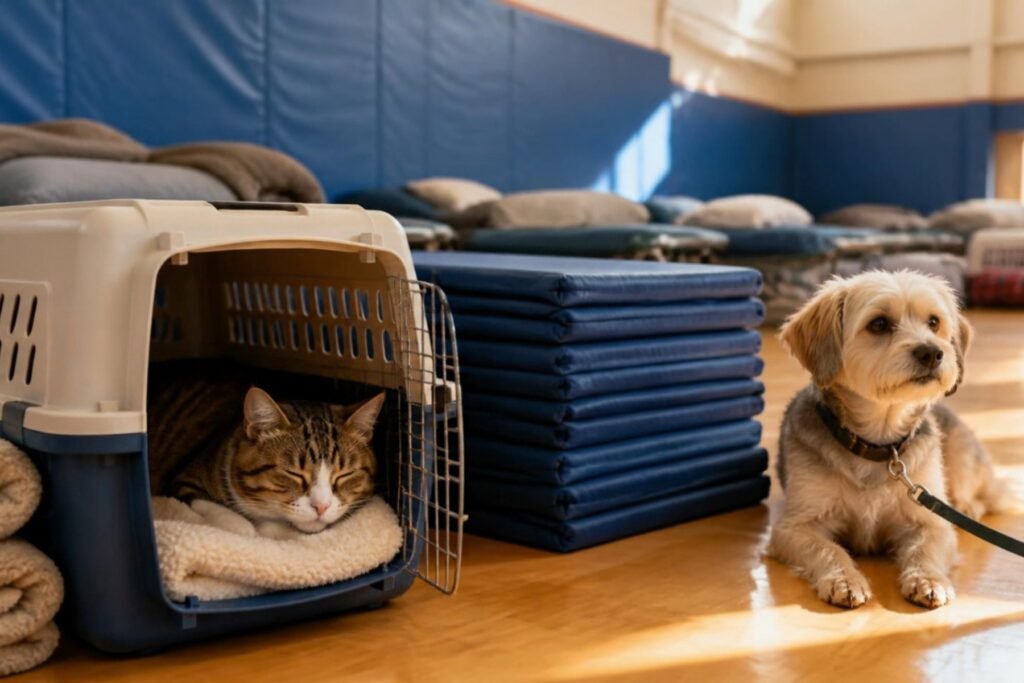
Three households evacuated to the campus gymnasium, bringing 7 people and 11 cats.
A small detail from that day really stayed with me. One cat was so stressed that it refused to eat. But it did eat the special emergency pet food that the university’s own project had developed. In a crisis, small things like that matter.
💡 Did you know? Stress can make pets stop eating during emergencies, just like it can for people. That’s one reason it helps to pack food your pet already knows and likes in your emergency kit.
What the team is working on next
The researchers are developing tools to help care for animals in shelters with less stress, including:
- a way to check breathing, pulse, and temperature without touching the animal
- a device to measure pressure when putting on a bandage
- video-based technology to help assess an animal’s condition
The goal, they explain, is to monitor pets’ health while keeping both pets and owners as calm as possible.
Why this matters everywhere
Not every emergency shelter accepts pets. The ASPCA notes this is one of the most important things to plan for ahead of time. Japan’s Ministry of the Environment even publishes a disaster preparedness guide written just for people and their pets.
How to prepare your own pet
The ASPCA recommends a few simple steps before disaster ever strikes:
- Put a rescue alert sticker near your front door listing the types and number of pets inside, plus your vet’s phone number.
- Find a safe place in advance. Ask your vet, local shelters, pet-friendly hotels, or friends and family outside your area where your pets could stay.
- Make sure your pet can be identified, with a collar, an up-to-date ID tag, and ideally a microchip.
- Bring pets inside at the first sign of danger, so you’re not searching for them when it’s time to leave.
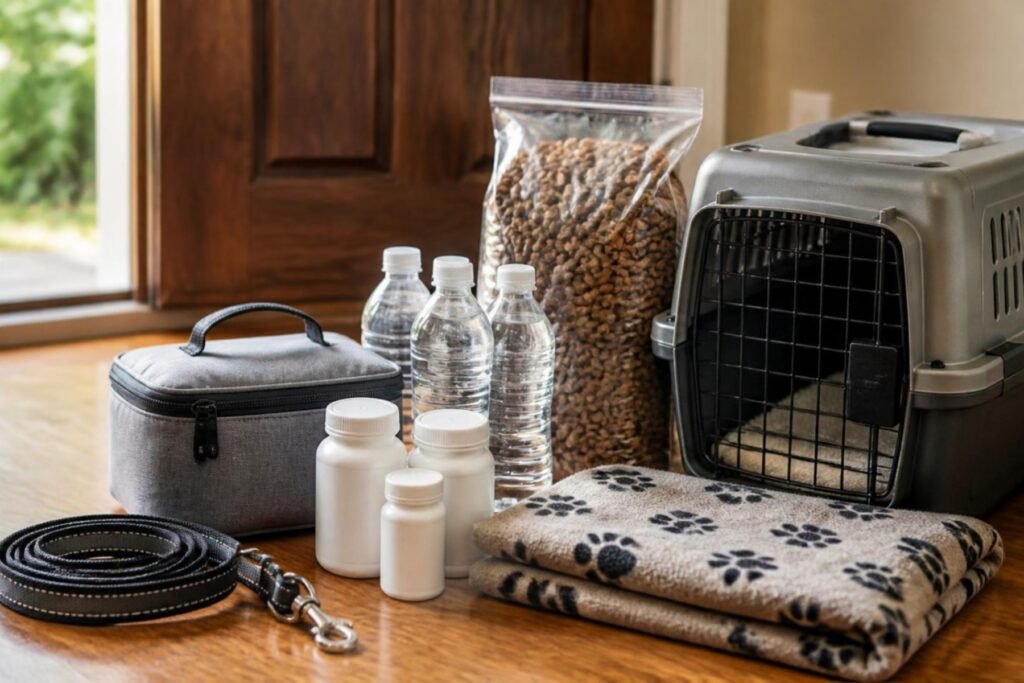
💡 Good to know: the ASPCA suggests an emergency kit with 7 to 10 days of food, at least a two-week supply of medications, bottled water, bowls, an extra leash and collar, a carrier, blankets, a pet first-aid kit, and recent photos of your pet. Keep it near an exit where everyone in your family can find it.
Angel Jake Note 🐾
Reading about this university made me so emotional. Eleven cats and their families found a safe place together on one of the scariest days of their lives, because a group of people planned for it years before it happened.
I hope none of us ever need an emergency shelter. But if you have a few minutes this week, maybe put together a little kit for your dog. It’s a quiet act of love, and a kit you hope you’ll never have to use.
A Note on This Story
This post summarizes the reports and official sources linked in the Sources section. Details can change as a story develops, so please check those sources for the latest updates.
Sources
- EurekAlert!: When disaster strikes, what happens to our pets? (2026)
- Phys.org: When disaster strikes, what happens to our pets?
- ASPCA: Disaster Preparedness
- Ministry of the Environment, Japan: Disaster Preparedness Guideline for Humans and Pets (PDF)