
One of the hardest parts of loving a dog is knowing when to wait, when to call your regular vet, and when something is serious enough to go straight to the emergency hospital.
Our dogs can’t tell us what hurts. And when something suddenly changes, it’s so easy to second-guess yourself. Should I wait and see? Am I overreacting? Can this wait until morning?
Sometimes it can. But there are some signs where waiting can really be dangerous. Knowing them ahead of time can make it so much easier to act when your dog needs you most.
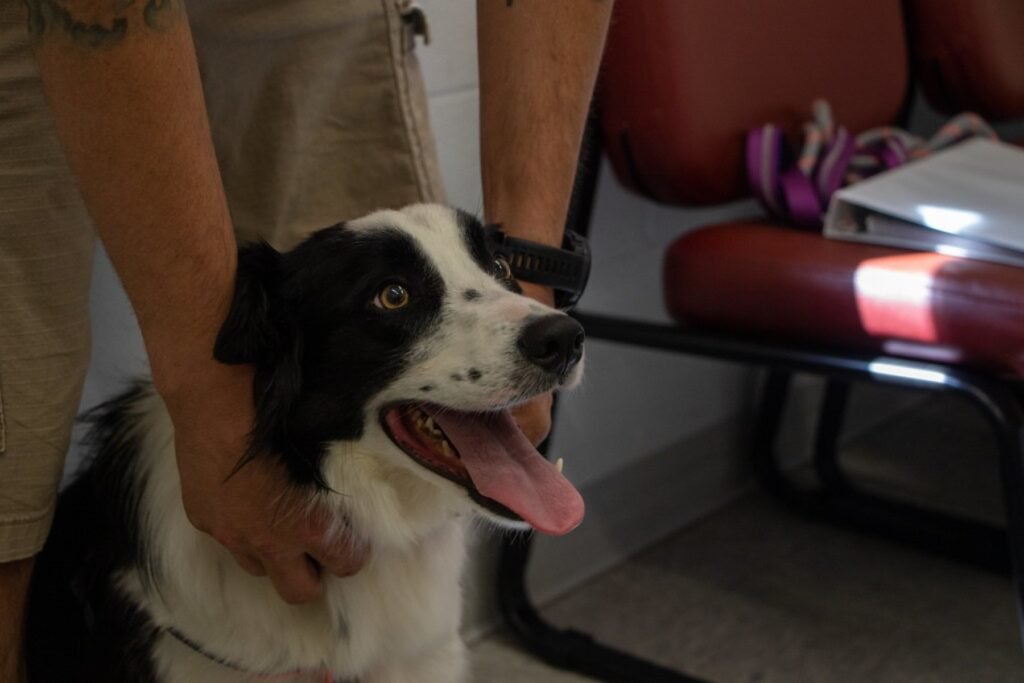
1. They’re struggling to breathe
Breathing trouble is always serious. Panting after exercise, in the heat, or when excited is normal. A dog who looks like they’re working hard just to breathe is different.
Warning signs include:
- fast or labored breathing while resting
- their belly moving a lot with each breath
- stretching their head and neck forward to breathe
- loud breathing, wheezing, or gasping
- blue, gray, or purple gums or tongue
- weakness or collapse
Cornell University College of Veterinary Medicine advises taking a dog with signs of respiratory distress to the nearest emergency hospital right away. If you can, call on the way so the team can get ready for you. Breathing problems are not something I would ever wait overnight on.
2. They collapse or won’t respond
A dog who suddenly collapses, passes out, or is really hard to wake needs urgent care. It can be caused by so many things — the heart, circulation, the nervous system, blood sugar, toxins, or serious illness — and there’s no safe way to figure it out at home.
Even if your dog seems to bounce back quickly, please still call a vet. A short episode doesn’t mean whatever caused it is gone.
3. They have a seizure
Watching your dog have a seizure is terrifying. They may fall over, shake, go stiff, drool, paddle their legs, or seem completely unaware.
If it happens, try to keep the area around them safe so they don’t get hurt. Keep your hands away from their mouth — dogs don’t swallow their tongues during a seizure, and you could accidentally get bitten.
A first seizure should always be talked about with a vet. Emergency care is especially important if a seizure lasts several minutes, if they come one after another, or if your dog doesn’t recover normally afterward. Cornell advises immediate emergency care for cluster seizures or a seizure lasting more than five minutes.
4. There’s heavy bleeding or a major injury
A small scrape and serious bleeding are two very different things. If blood is flowing heavily, won’t stop with gentle pressure, or your dog has had a big injury, go right away.
And please remember that internal bleeding isn’t always visible. After being hit by a car, falling from a height, or any major trauma, a dog can look surprisingly okay at first. Shock and adrenaline can hide pain for a while. Big accidents deserve a vet exam even when your dog seems fine.
5. They might have eaten something toxic
This is another time when waiting is risky. Certain human medications, household chemicals, plants, foods, and pesticides can all be dangerous. What matters is what they ate, how much, when, and your dog’s size and health.
If you think your dog ate something toxic, call your vet, an emergency hospital, or a pet poison hotline right away. Please don’t make your dog vomit on your own — it isn’t safe for every substance and can sometimes make things worse. The professionals will tell you exactly what to do.
6. Their belly swells and they keep trying to vomit
⚠️ Please don’t wait. A swollen or tight belly along with repeated retching where nothing comes up can be a sign of gastric dilatation-volvulus — GDV, or “bloat.” It’s a life-threatening emergency where the stomach fills up and may twist.
Other signs can include restlessness, belly pain, lots of drooling, fast breathing, and weakness. Large, deep-chested breeds are at higher risk, but any dog with sudden belly swelling and unproductive retching needs help right away. Please don’t wait to see if it goes down.
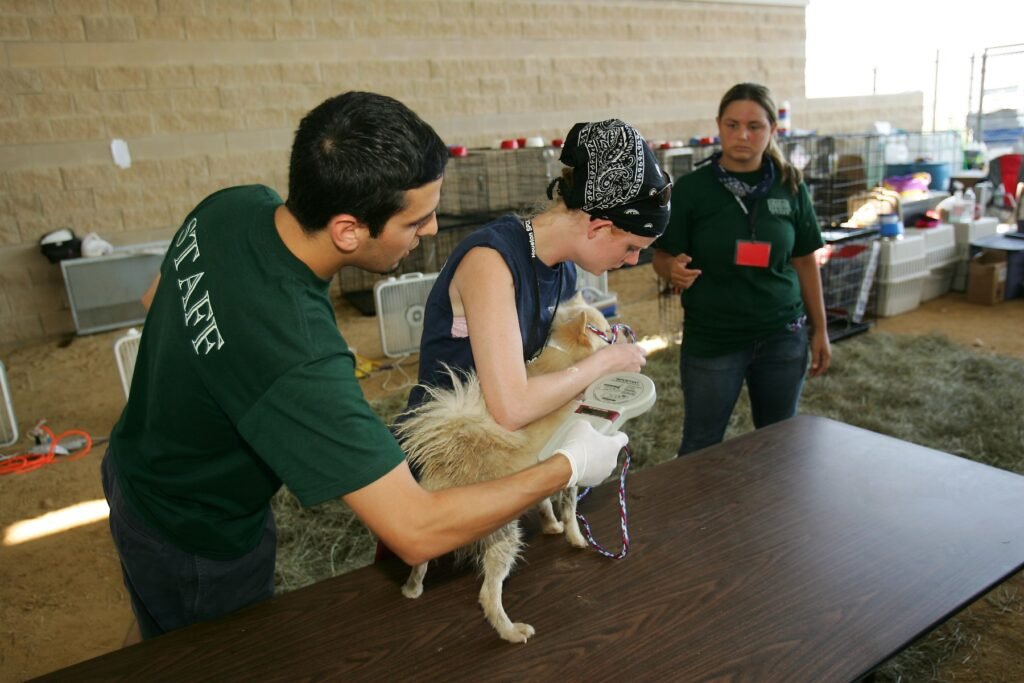
7. They can’t pee
If your dog keeps trying to pee but little or nothing comes out, that can be an emergency. A urinary blockage can become life-threatening. You might see straining, discomfort, lots of attempts, crying, restlessness, or only a few drops. If your dog clearly can’t pee, get them seen quickly.
8. They suddenly can’t walk or are extremely weak
Sudden paralysis, not being able to stand, severe weakness, or losing coordination can come from nerve problems, a spine injury, toxins, metabolic problems, or other serious conditions. These are time-sensitive. Try to keep them as still as possible, especially if you think they hurt their back or neck, and call the emergency hospital for advice on moving them safely.
9. Their gums look blue, gray, purple, or very pale
Gum color can be an important clue in an emergency. Healthy gum color varies a little from dog to dog, and some dogs have naturally dark gums. But a sudden change to blue, gray, purple, white, or very pale can point to problems with oxygen, circulation, anemia, shock, or internal bleeding. If you see that along with weakness, breathing trouble, collapse, or an injury, go now.
10. Repeated vomiting or severe diarrhea
One round of vomiting or loose stool doesn’t always mean a trip to the ER. Lots of mild tummy troubles pass on their own. But repeated vomiting or severe diarrhea can lead to dehydration and may point to something bigger.
Call your vet soon if your dog:
- vomits many times in a short period
- can’t keep water down
- has blood in their vomit or stool
- becomes very weak or lethargic
- seems painful
- has a swollen belly
- is a young puppy, a senior, or has a health condition
The whole picture matters more than any one symptom.
You don’t have to know what’s wrong
This is something I really want every dog parent to hear: you don’t have to figure out what’s wrong before you call. That’s the vet’s job. Your job is just to notice that something isn’t right and describe what you see.
Tell them what happened, when it started, whether it’s getting worse, what medications your dog takes, any health conditions, and whether they might have eaten something they shouldn’t have. Calling ahead also helps the hospital get ready for you.
Get ready before you ever need it
💡 Good to know: The middle of an emergency is the worst time to start searching for a hospital. Take a few minutes while your dog is healthy to find your nearest 24-hour emergency vet, how long it takes to get there, and their phone number. Find out whether your regular vet offers after-hours care, and keep your dog’s medication list and health information somewhere easy to grab.
Save that emergency number in your phone. It sounds so simple, but when you’re scared and trying to help your dog, it makes a real difference.
When you’re not sure, call
Not every strange symptom needs an ER visit, and nobody wants to spend hours in an emergency waiting room for something that could have waited. But if you’re genuinely unsure, calling is always okay. Tell them exactly what you’re seeing and ask whether your dog should be seen now. It’s so much safer than trying to diagnose from a social media post or a list of symptoms online.
Korean emergency vets use the same kind of checklist. In December 2024, the Korean Veterinary Emergency and Critical Care Society held its first seminar for pet owners, Daily Vet (데일리벳) reported. Speakers walked through the AVMA’s list of situations that need urgent care, including trouble breathing, being unable to pee or poop, seizures, bleeding that doesn’t stop within 5 minutes, and suspected poisoning from things like antifreeze, xylitol, chocolate, or rat bait.
Angel Jake Note 🐾
I think one of the hardest parts of loving a dog is never quite knowing if you’re worrying too much or not enough. You notice something different, and suddenly you’re watching everything — their breathing, the way they walk, whether they eat, whether they look comfortable. And you keep asking yourself, “Should I wait a little longer?”
I know that feeling so well. But when something looks truly wrong — especially with breathing, consciousness, severe weakness, or big sudden changes — I would always rather ask for help than spend that time hoping it gets better.
Knowing the emergency signs isn’t about living in fear. It’s about being ready. We can’t prevent every emergency. But we can know where to go, who to call, and which signs we should never ignore.
Sometimes acting quickly is one of the most loving things we can do for a dog who depends on us for everything.
Veterinary Sources
This article was prepared using veterinary guidance from:
American Animal Hospital Association (AAHA) — Help! Is This a Pet Emergency?
Cornell University College of Veterinary Medicine — Emergency and Critical Care and canine emergency guidance.
Merck Veterinary Manual — Evaluation and Initial Treatment of Dog and Cat Emergencies, What to Do in a Dog or Cat Emergency, and veterinary guidance on gastric dilatation-volvulus.
- AAHA: Help! Is This a Pet Emergency?
- Cornell University: Recognizing and responding to canine respiratory distress
- 데일리벳: 언제 동물병원에 응급내원해야 할까? 보호자 세미나 연 수의응급중환자의학회
Related Reading
- My Dog Ate Chocolate. What Should I Do?
- 7 Subtle Changes That May Mean Your Dog Isn’t Feeling Well
- Dog Not Eating? When to Worry and When to Call the Vet
Medical Disclaimer
I’m not a vet, and nothing here replaces a real exam. If something about your dog feels off, please trust that feeling and call your veterinarian.