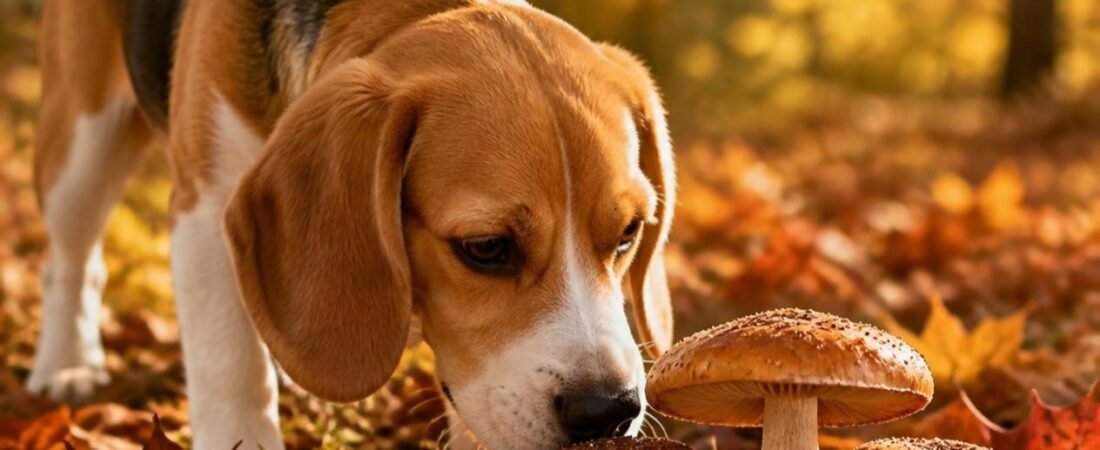
Fall can be such a lovely season with a dog. Cooler walks, crunchy leaves, that happy nose-to-the-ground energy when the air finally changes.
But fall also brings a few hazards that sneak up on even careful dog parents. Some of them show up in the yard after a rainy week. Some show up in the garage. And a couple of them are dangerous precisely because they seem so harmless.
What surprised me most while researching this is why dogs are drawn to some of these things in the first place. Once you understand the why, it’s much easier to stay one step ahead.
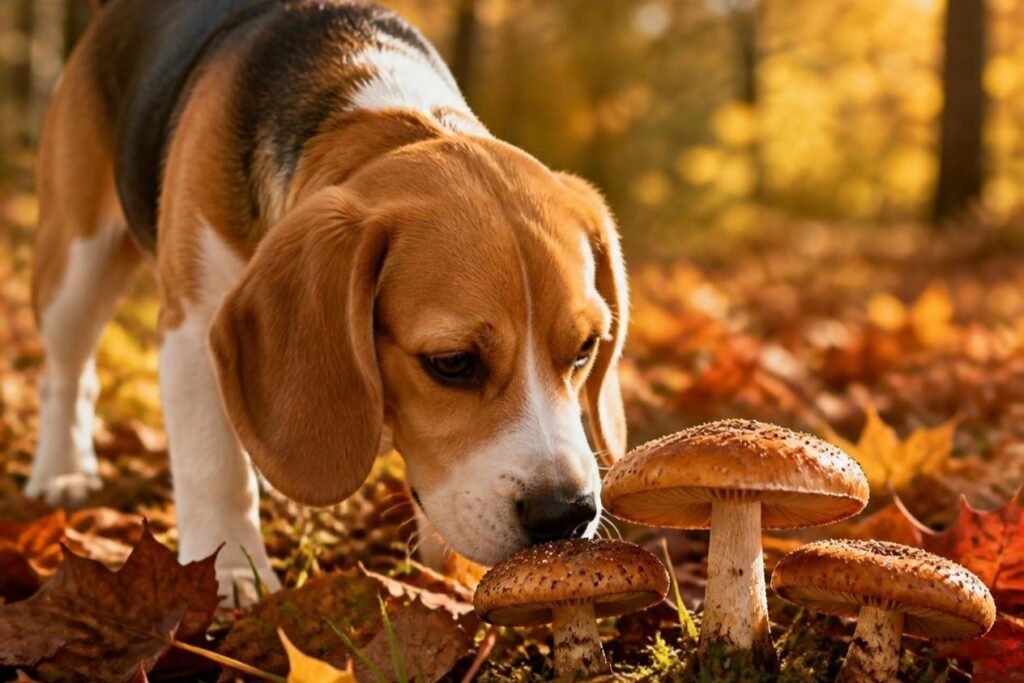
Wild mushrooms: why some of them smell like dinner to your dog
After a few days of rain, mushrooms can pop up almost overnight in lawns, parks, and wooded trails. The ASPCA points out that most mushrooms are harmless, but “the 1% that are highly toxic can cause life-threatening problems in pets.” And since toxic and harmless mushrooms can look almost identical, even experts don’t guess.
Here’s the part most people don’t know. According to the North American Mycological Association, dogs seem especially attracted to some of the most dangerous mushrooms, including the death cap (Amanita phalloides) and Inocybe species, because of their fishy odor. To us they look like mushrooms. To a dog’s nose, they may smell like something worth eating.
There’s another twist. Some Inocybe and Clitocybe mushrooms contain a toxin called muscarine. NAMA notes that muscarine hasn’t caused any human deaths they’re aware of, but it can be lethal to dogs. So “people eat these without much trouble” is never a safe rule for your dog.
Why the delay makes death caps so dangerous
With the deadliest mushrooms, the ones containing amatoxins, symptoms often don’t start right away. NAMA describes a 6 to 12+ hour delay before severe stomach and intestinal signs begin. By then, the toxin may already be damaging the liver. That’s why waiting to see if your dog “seems okay” can cost precious time.
If your dog eats a mushroom
- Call your vet or a pet poison hotline right away, even if your dog looks fine.
- If you can, pick a sample of the mushroom (use gloves) and put it in a paper bag, not plastic, and refrigerate it. NAMA recommends this so it can be identified.
- Take a photo of where it was growing.
💡 Good to know: Pet Poison Helpline puts it simply: every mushroom ingestion should be treated as toxic unless a specialist can quickly identify it as safe.
Antifreeze: sweet, and far more dangerous than it looks
Fall is when many people top off or change their car’s coolant, and the ASPCA notes that spills around homes become more likely this time of year.
Traditional antifreeze is made with ethylene glycol, and VCA Animal Hospitals explains that dogs are drawn to it because it tastes sweet. That’s the heartbreaking part: it doesn’t taste like poison to them at all.
Why such a small amount can be deadly
The body turns ethylene glycol into other chemicals, and those are what do the real damage. According to the Merck Veterinary Manual, byproducts called glycolic acid and oxalate injure the kidneys, and calcium oxalate crystals form inside the tiny tubes of the kidneys. The minimum lethal dose of undiluted ethylene glycol for dogs is listed at just 4.4 to 6.6 mL per kilogram of body weight. For a small dog, that’s only a few teaspoons.
The timeline is tricky, too. Merck describes a first stage, 30 minutes to 12 hours after drinking it, where a dog may look wobbly or “drunk” and may vomit. Kidney failure follows about 36 to 72 hours later. Because the early signs can look mild, it’s easy to lose valuable time.
⚠️ Please don’t wait. VCA is blunt about it: the prognosis is very poor once signs have developed. If you even suspect your dog licked antifreeze, go to the vet immediately. Treatment works best when it starts early.
A little-known fact
Since 2012, antifreeze and engine coolant manufacturers in the United States have added a bittering agent to their products to discourage animals and kids from drinking them, according to Merck. That helps, but it doesn’t make antifreeze safe. The ASPCA suggests choosing propylene glycol-based coolants, which are much less toxic, and cleaning up any spill right away.
Rat and mouse poison: why fall is peak season
As temperatures drop, rodents look for warm places to spend the winter, which often means our garages, sheds, and basements. That’s why rodent baits tend to come out in the fall, and the ASPCA warns that they are highly toxic to pets.
What makes rodenticides extra tricky is that there are several very different kinds, and the treatment depends on which one your dog ate. The Merck Veterinary Manual explains that:
- Anticoagulant baits stop the blood from clotting properly. Signs like bleeding and weakness can take time to appear because the poison slowly uses up the body’s vitamin K. The antidote is vitamin K1, often given for 2 to 4 weeks.
- Bromethalin affects the nervous system and has no specific antidote.
- Cholecalciferol (a form of vitamin D) raises blood calcium, with signs showing up 18 to 36 hours after it’s eaten.
Because many baits look alike, Merck recommends keeping the packaging so your vet can see the active ingredient. If you use rodent control at home, consider placing it only where your dog can never reach, and remember that dogs can also be affected by eating a poisoned rodent.
Acorns: usually not deadly, but not a snack
Acorns are everywhere in fall, and some dogs treat them like toys or treats. They contain tannic acid, which can upset the stomach.
The good news, according to the Veterinary Poisons Information Service, is that in most reported cases the dogs stayed symptom-free or made a full recovery. But acorns can still cause vomiting, diarrhea (sometimes bloody), belly pain, and lethargy. Their hard shells can also cause a blockage, especially in smaller dogs or dogs who gulp a lot of them.
If your dog is an acorn vacuum, a “leave it” cue and a quick sweep of the yard go a long way.
A few other fall surprises
- School supplies. Glue sticks, pencils, and markers can cause stomach upset or blockages if chewed and swallowed, the ASPCA says.
- Snakes. As temperatures drop, snakes get ready for winter and may be more active on trails. The ASPCA recommends learning which venomous snakes live in your area.
- Leaf piles. They’re fun, but they can hide mold, sharp sticks, or mushrooms underneath. Let your dog play in fresh piles, not old soggy ones.
Save these numbers now
I really hope you never need them, but it’s so much easier to save them before an emergency:
- ASPCA Animal Poison Control Center: (888) 426-4435
- Pet Poison Helpline: (855) 764-7661
Both are available 24/7 and may charge a consultation fee. And of course, your own vet or nearest emergency animal hospital should be the first call when you can reach them.
Angel Jake Note 🐾
I don’t want fall to feel scary. Most walks will be nothing but sniffing, leaf crunching, and happy tired dogs.
But I’ve learned that a lot of pet emergencies happen with things that seem too ordinary to worry about: a mushroom in the lawn, a puddle in the garage, a trap behind the shed. Knowing why our dogs are drawn to them helps us see the world a little more the way they do.
So enjoy the season. Keep your eyes on the ground a little more than usual, save those two phone numbers, and trust your gut. If something feels off, it’s always okay to call.
Sources
- ASPCA: Autumn Safety Tips
- ASPCA: Don’t Let Your Pet Fall for These Seasonal Hazards
- North American Mycological Association: Mushroom Poisonings in Dogs and Cats
- Pet Poison Helpline: Mushrooms
- VCA Animal Hospitals: Ethylene Glycol Poisoning in Dogs
- Merck Veterinary Manual: Ethylene Glycol Toxicosis in Animals
- Merck Veterinary Manual: Rodenticide Poisoning
- Veterinary Poisons Information Service: Oak and Acorns
Related Reading
- My Dog Ate Chocolate. What Should I Do?
- When Should You Take Your Dog to the Emergency Vet? Signs You Shouldn’t Ignore
- 7 Subtle Changes That May Mean Your Dog Isn’t Feeling Well
Medical Disclaimer
I’m not a vet, and nothing here replaces a real exam. If something about your dog feels off, please trust that feeling and call your veterinarian.