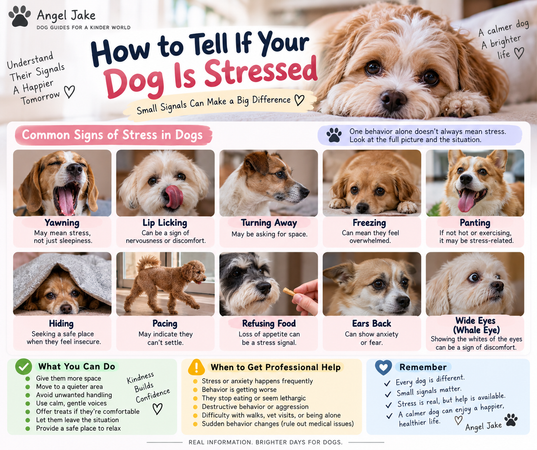
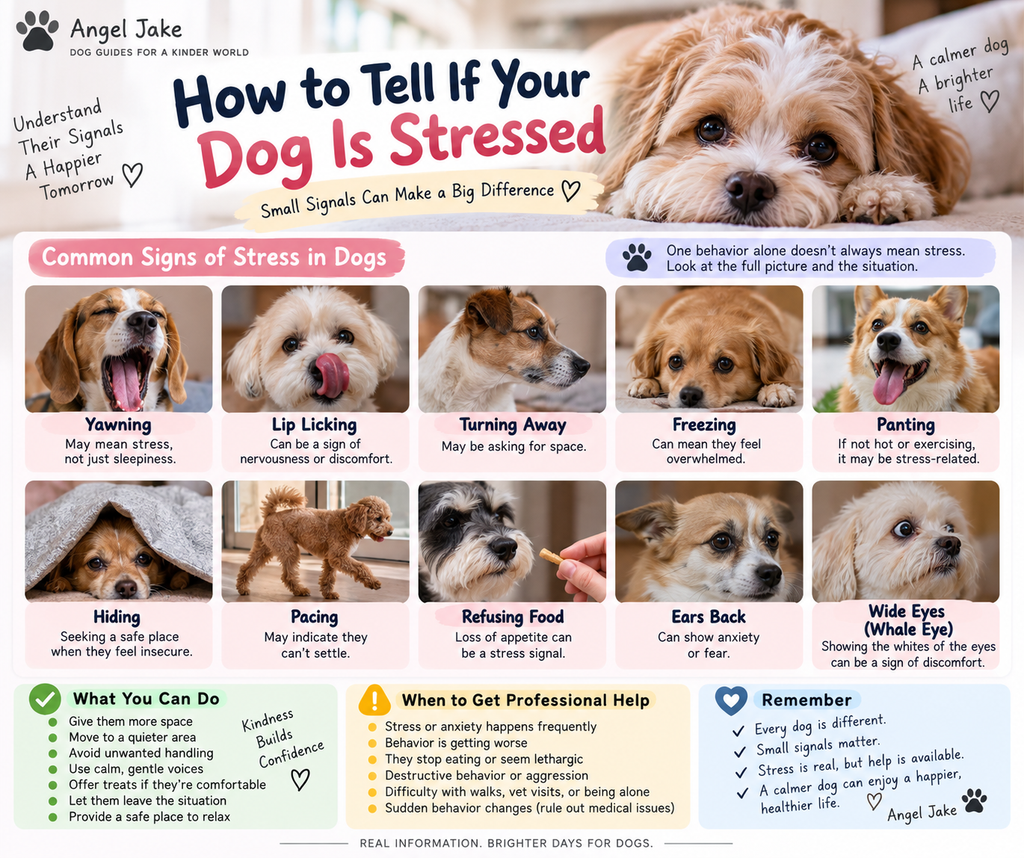
Our dogs can’t tell us “I’m overwhelmed,” or “I need a minute,” or “this place scares me.” So they tell us the only way they can — with their bodies.
Some of those signs are easy to see. A dog shaking during a thunderstorm, or disappearing under the bed when the fireworks start. But a lot of them are small and quick. A yawn. A little lick of the lips. Turning their head away. Suddenly not wanting a treat they’d normally love. Going still for a second or two.
None of those automatically mean your dog is stressed. But in the right moment, they can be your dog quietly saying, “I’m not okay with this.”
One sign on its own doesn’t tell you much
This is the part I think matters most. A yawn might just mean your dog is tired. Lip licking might mean they smell dinner. Panting might just mean it’s hot, or you just got back from a walk.
AAHA lists panting, trembling, lip licking, yawning, hiding, pacing, freezing, turning away, and changes in eating or drinking as possible signs of anxiety or distress. But the real question is always: what else is happening at the same time?
Lip licking
You might see your dog flick their tongue quickly over their nose or lips. Sometimes that’s just about food. But if there’s no food around, and your dog is also avoiding your eyes, lowering their head, or trying to step away, that little lick may be part of a stress response. Cornell includes lip licking among the behaviors often seen in anxious dogs. It happens so fast that it’s really easy to miss.
Yawning when they’re not sleepy
Dogs yawn for all the normal reasons. But yawning also shows up when a dog feels uncomfortable — at the vet, during grooming, at a crowded event, during a tense moment with another dog, or while being handled in a way they don’t like. AAHA includes yawning among common signs of distress.
One yawn doesn’t mean much. A lot of yawns, alongside other signals, tells you more.
Turning away
Some dogs never growl or bark when they’re uncomfortable. They just turn their head. Or they turn their whole body and move away. AAHA describes this as a kind of social disengagement that can happen during stress.
I think this one is easy for us to misread. A dog turning away is often asking, very politely, for a little space. If we keep reaching for them anyway, they may eventually feel they have to say it louder. That’s why these quiet signals are worth learning.
Freezing
A dog who suddenly goes completely still can look calm. People sometimes think, “Oh good, they finally relaxed.” But freezing can mean the opposite. AAHA lists freezing among possible signs of anxiety and distress.
💡 Good to know: If your dog freezes while being hugged, handled, approached by another dog, or backed into a corner, please give them space. Stillness doesn’t always mean comfort.
Panting when it isn’t hot
Panting after exercise or on a warm day is normal. But if your dog is panting hard in a cool room and hasn’t been running around, it’s worth looking closer. Stress, fear, pain, and medical problems can all cause panting.
If it happens during something stressful, along with pacing, trembling, hiding, or not being able to settle, anxiety may be part of it. But if the panting is unexplained or keeps happening, don’t assume it’s just behavior. It’s worth checking with your vet.
Ears, eyes, and the whole body
A stressed dog often changes their whole posture. Cornell mentions ears pulled back and visible whites of the eyes among signs that can show up with anxiety. You might also notice a lowered head, a tucked tail, a crouched body, tense muscles, avoiding eye contact, scanning the room, or just not being able to relax.
These signals make much more sense together than on their own.
Pacing
A dog who keeps walking back and forth may be trying to cope with something that feels uncertain or uncomfortable. AAHA lists pacing and unusually increased activity among possible distress signs. You might see it during storms, fireworks, travel, boarding, or when a dog is apart from someone they depend on. If they still can’t settle after the trigger is gone, pay a little closer attention.
Hiding
Some dogs come toward their person when they’re scared. Others go away — under the furniture, behind someone’s legs, into another room, into their crate. AAHA lists hiding and attempted hiding among common signs of distress.
If your dog picks a safe spot during something stressful, pulling them back out usually doesn’t help. Sometimes a quiet place is exactly what they need.
Suddenly not wanting treats
A dog who normally loves treats may refuse them when they’re overwhelmed. AAHA notes that stress can change eating and drinking. This can be a really helpful clue during training or around other dogs: if your dog usually takes treats but won’t eat when another dog is nearby, they may be too uncomfortable to learn anything right then. Moving farther away can help.
Stress looks different in every dog
One dog hides. Another barks. Another paces, freezes, or clings to their person. AAHA even notes that both more closeness and less closeness to familiar people can happen during distress. That’s why getting to know your own dog’s “normal” is one of the most useful things you can do.
Please don’t punish the signals
💡 Did you know? If your dog growls, hides, freezes, or tries to get away, punishment can make things worse. Those behaviors are information. They’re your dog trying to communicate.
Merck explains that treating fear and anxiety generally focuses on changing how the dog feels and using reward-based methods, not punishment. When your dog is uncomfortable, the first step is usually to take some pressure off. More distance. Less intensity. Time to recover.
What you can do in the moment
If you notice several stress signals together, try to make things easier for them. Create more distance from whatever’s bothering them, or move somewhere quieter. Stop any handling they don’t want, and let them leave if they need to. Speak softly. Offer treats if they’re comfortable enough to eat, and give them time.
AAHA recommends calm handling and positive reinforcement to reduce fear, especially at the vet. The goal isn’t to make them “get over it.” It’s to help them feel safe again.
When to get help
Every dog gets nervous sometimes. That’s normal. But I’d talk to your vet if the fear or anxiety is happening often, getting worse, getting in the way of normal life, leading to destructive behavior or aggression, affecting eating or sleep, or making walks, vet visits, or time alone really hard.
Merck points out that medical problems should be ruled out when behavior changes, because pain or illness can play a part. Your vet may also suggest a qualified behavior professional if needed.
Angel Jake Note 🐾
I think the hardest part of understanding our dogs is that the quiet signals are the easiest ones to miss.
We notice the bark. We notice the growl. We notice when they try to run. But so often, they were telling us they were uncomfortable long before that. They turned their head. They licked their lips. They stopped taking treats. They went still.
Not every yawn means something is wrong. But when you start watching the whole dog instead of just one behavior, their language gets a lot easier to understand.
And maybe that’s one of the kindest things we can do for them. Not expect them to learn our language — but get a little better at hearing theirs.
Veterinary & Behavior Sources
I used guidance from the American Animal Hospital Association, Cornell University College of Veterinary Medicine, and the Merck Veterinary Manual. They describe panting, trembling, lip licking, yawning, hiding, pacing, freezing, avoidance, posture changes, and changes in eating or drinking as possible signs of fear or stress, and they all stress looking at the whole situation, not one behavior.
These veterinary behavior sources describe panting, trembling, lip licking, yawning, hiding, pacing, freezing, avoidance, posture changes, and altered eating or drinking as possible signs of fear, anxiety, or distress. They also emphasize that behavior should be interpreted in context and that medical causes should be considered when behavior changes suddenly.
- Merck Veterinary Manual: Behavior Problems in Dogs
- Cornell University Riney Canine Health Center: Canine Health Topics
Disclaimer
This article is for general educational purposes and does not replace veterinary or professional behavioral advice.
If your dog suddenly develops major behavior changes, seems painful or ill, becomes dangerously aggressive, or experiences frequent or severe fear and anxiety, contact your veterinarian.