
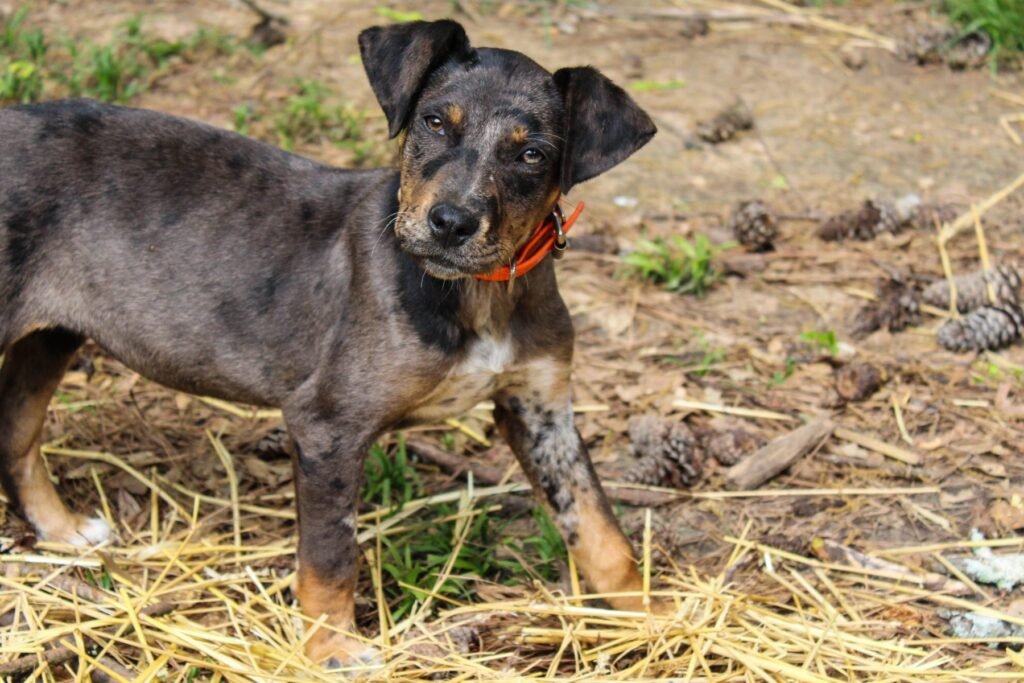
You say “walk?” or “treat?” in that slightly higher voice, and there it is. Your dog’s head drops gently to one side, ears up, eyes fixed on you as if you’ve just asked a very interesting question.
It’s one of the most adorable things a dog does, and most of us have probably repeated a word or two just to see it again. But why do dogs do it? Scientists have a few good ideas, and one study from 2021 added a surprising new piece to the puzzle.
The study that tested “smart” dogs
Researchers at the Family Dog Project at Eötvös Loránd University in Budapest came to head tilts through their work on dogs who learn the names of toys. Some of those dogs tilted their heads when their owners asked for a toy by name, and the team wanted to know why.
So they took a closer look. In a paper published in the journal Animal Cognition in 2021, Dr. Andrea Sommese and colleagues compared two groups of dogs. Seven were what the team calls “Gifted Word Learners,” dogs who pick up the names of objects quickly. The other 33 were typical family dogs who had been trained for three months but couldn’t learn toy names.
When owners asked their dogs to fetch a named toy, the gifted dogs tilted their heads in 43% of trials, compared with just 2% for the typical dogs.
The researchers suggest a link between head tilting and processing information that is “relevant and meaningful” to the dog. Sommese told Live Science, “It seems that this behavior is strongly associated with sound perception, and it might be something they do when they’re trying to listen more closely, or maybe when they are a bit confused, just like humans do.”
He also described the moment to BBC Science Focus in a way many owners will recognize: “It seemed to be as if the dog was saying, ‘Okay, now I’m focused, I’m concentrated on the task.’”
💡 Did you know? Each dog in the study seemed to have a favorite side. The team found that the direction of a dog’s head tilt stayed the same across the different experiments, so the researchers suggest it may be a stable individual trait. Think of it a little like being left- or right-handed.
The team is careful about what this means, though. The study looked only at one very specific situation, an owner asking a dog to fetch a named toy, and the gifted group was small. According to ScienceAlert, all seven gifted dogs were Border Collies. Co-author Andrea Temesi warned against assuming that only gifted dogs tilt their heads in everyday situations the study didn’t test. And as fellow researcher Shany Dror put it, “All dogs, however, are good at understanding their humans.”
Maybe it’s about the ears
One of the most common explanations is hearing. Jill Goldman, Ph.D., a certified applied animal behaviorist, told the American Kennel Club that dogs may tilt their heads to work out where a sound is coming from.
Interestingly, she points out that when you’re standing right in front of your dog, finding you isn’t really the problem. In that case, she suggests your dog may be listening hard to that “high-pitched baby talk” to figure out what you’re saying.
The Budapest study complicates this a little. IFLScience reported that the direction of the tilt didn’t line up with where the owner was standing or where the sound came from. So for the dogs in that study, at least, the tilt didn’t seem to be simply about pointing an ear at the voice.
Maybe it’s about the nose getting in the way
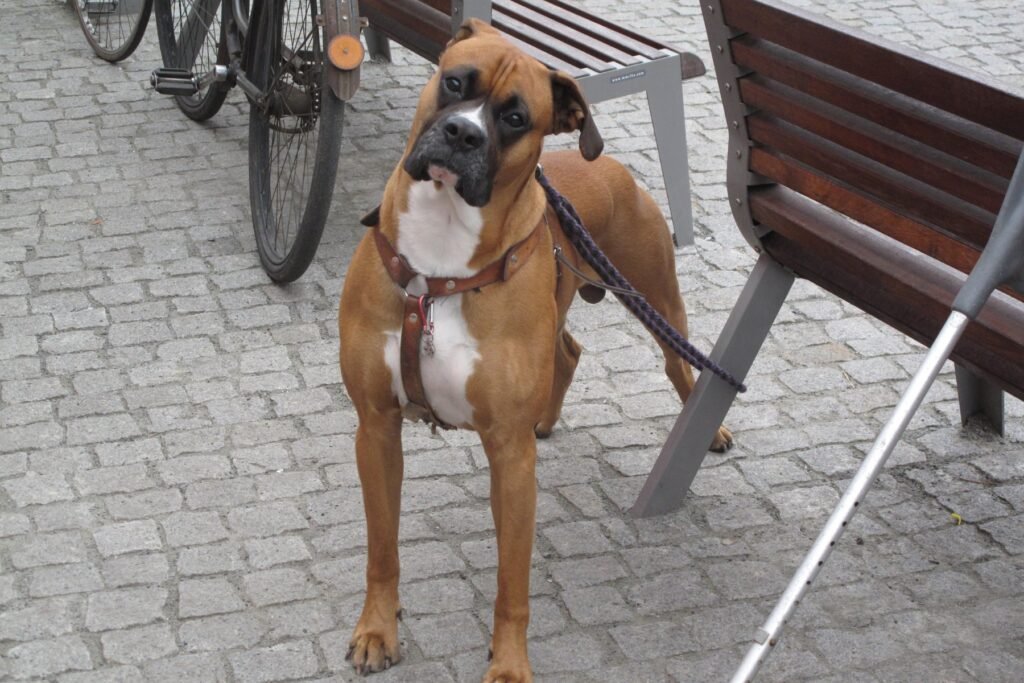
This next idea is a clever one. Psychologist and dog researcher Stanley Coren suggested that a dog’s muzzle may block part of their view.
Coren wrote in Psychology Today that the muzzle can “reduce your ability to see the lower part of their face” when looking at a person. And the lower face, especially the mouth, is a big part of how humans show emotion. Tilting the head moves the muzzle out of the way.
To test this, Coren surveyed 582 dog owners. Overall, 62% said their dogs frequently or always tilted their heads when spoken to. But there was a difference by face shape: 71% of dogs with longer muzzles tilted often, compared with 52% of flat-faced (brachycephalic) dogs.
The AKC describes this as a pilot study, and Coren acknowledged that other factors may play a part too. Still, his reasoning is lovely: “Dogs continually scan our faces for information and to read our emotional state.”
And yes, we might be training them
Think about what happens the moment your dog tilts their head. Most of us laugh, coo, reach for a phone, or offer a treat.
Goldman told the AKC, “I think it might happen more often in certain dogs than others because it’s reinforced.” Dogs repeat what works. If the head tilt reliably earns smiles and attention, it may show up more and more often.
That’s not a bad thing. It just means your dog may have learned that this cute little move gets a wonderful reaction from you.
A few fun facts about the head tilt
People do it too. Sommese pointed out to Live Science that humans tilt their heads as well, sometimes when we’re listening closely or feeling a bit confused.
Some of the data came by livestream. During COVID-19 restrictions, the Budapest team kept the study going online, with owners setting up two cameras at home so researchers could watch the toy-fetching tests remotely.
It may connect to the two halves of the brain. The paper builds on earlier research showing that the way dogs focus their visual and listening attention reflects lateralization, meaning the left and right sides of the brain divide up the work. As Sommese told ZME Science, “Tilting the head is yet another asymmetrical movement in dogs, but it had never been studied.”
There’s a Korean word for it. In Korean, the gesture is called gyaut (갸웃). A 2026 Lady Kyunghyang article on head tilting lists the same main theories you’ve read here: hearing better, seeing your face past the muzzle, recognizing a learned word, and a habit rewarded with praise and treats.
When a head tilt isn’t cute anymore

A quick tilt while you talk is completely normal. A head that stays tilted is a different story.
The AKC quotes Goldman plainly: “If you see a persistent head tilt, and it seems not to be related to anything, go straight to your veterinarian.” A constant tilt can point to an ear infection or a problem with the vestibular system, the part of the body that keeps your dog balanced.
According to VCA Animal Hospitals, vestibular disease often comes on suddenly. Along with a head tilt, signs can include:
- loss of balance, stumbling, or falling to one side
- circling
- quick, darting eye movements called nystagmus
- reluctance to stand or walk
- nausea and vomiting
It can happen at any age, but VCA notes it frequently affects older dogs. One form, idiopathic vestibular syndrome, has no clear cause and tends to improve quickly. VCA says signs are usually worst in the first 24 to 48 hours, and many dogs improve within 72 hours. Most dogs recover completely within two to three weeks, although some keep a slight head tilt.
Korean researchers at Konkuk University described one of these cases in 2006: a 10-year-old Beagle whose sudden right-sided head tilt and wobbly walk resolved within two weeks after discharge, without any specific treatment. That’s reassuring, but only a vet can rule out the more serious causes.
Inner ear infections are another possible cause. VCA describes a head tilt “usually to the side of the infected ear”, sometimes with head shaking, pawing at the ear, or a foul-smelling discharge. Dogs with long, heavy ears seem more prone to chronic ear infections.
⚠️ Please don’t wait. If your dog’s head stays tilted, or a tilt comes with stumbling, circling, flickering eyes, vomiting, or ear pain, call your vet the same day. VCA says inner ear infections need prompt care, and only an exam can tell the possible causes apart.
💡 Good to know: Sudden balance trouble can be frightening to see. A Korean veterinarian writing on Brunch explains that this kind of vestibular episode is common in senior dogs and is sometimes called “old dog vestibular syndrome,” and that many dogs improve over the following days and weeks with good care.
Angel Jake Note 🐾
There’s something so sweet about knowing that a head tilt might mean your dog is really listening, trying to catch the word that matters to them, or trying to see your smile.
So go ahead and enjoy it. Say their favorite word and watch that little head drop to the side. Just keep a gentle eye on the difference between a tilt that comes and goes and one that stays. The first is a conversation. The second is a reason to call your vet.
Medical Disclaimer
I’m not a vet, and nothing here replaces a real exam. If something about your dog feels off, please trust that feeling and call your veterinarian.
Sources
- Animal Cognition (Sommese et al.): An exploratory analysis of head-tilting in dogs
- Eötvös Loránd University: Talk-to-tilt: head tilting in dogs
- Live Science: Why do dogs tilt their heads?
- BBC Science Focus: Scientists discover what’s going on inside a dog’s mind when they tilt their head
- ScienceAlert: New study explains why dogs do the head tilt
- ZME Science: Dogs that tilt their heads aren’t just adorable, they’re super smart
- IFLScience: Why do dogs tilt their heads? Study investigates adorable behavior
- Psychology Today (Stanley Coren): Why Some Dogs Tilt Their Heads When You Talk to Them
- American Kennel Club: Why Do Dogs Tilt Their Heads?
- VCA Animal Hospitals: Vestibular Disease in Dogs
- VCA Animal Hospitals: Inner Ear Infection (Otitis Interna) in Dogs
- Konkuk University (2006): Idiopathic Vestibular Disease in a Beagle Dog: Clinical Findings and Outcome (비글 견에서 발생한 특발성 전정계 질병 증례)
- 레이디경향: “강아지는 왜 고개를 갸웃할까?”…귀여움 뒤에 숨은 뜻
- Brunch (수의사 칼럼): 수의사가 읽어주는 외국 수의학 저널 #23 전정계문제