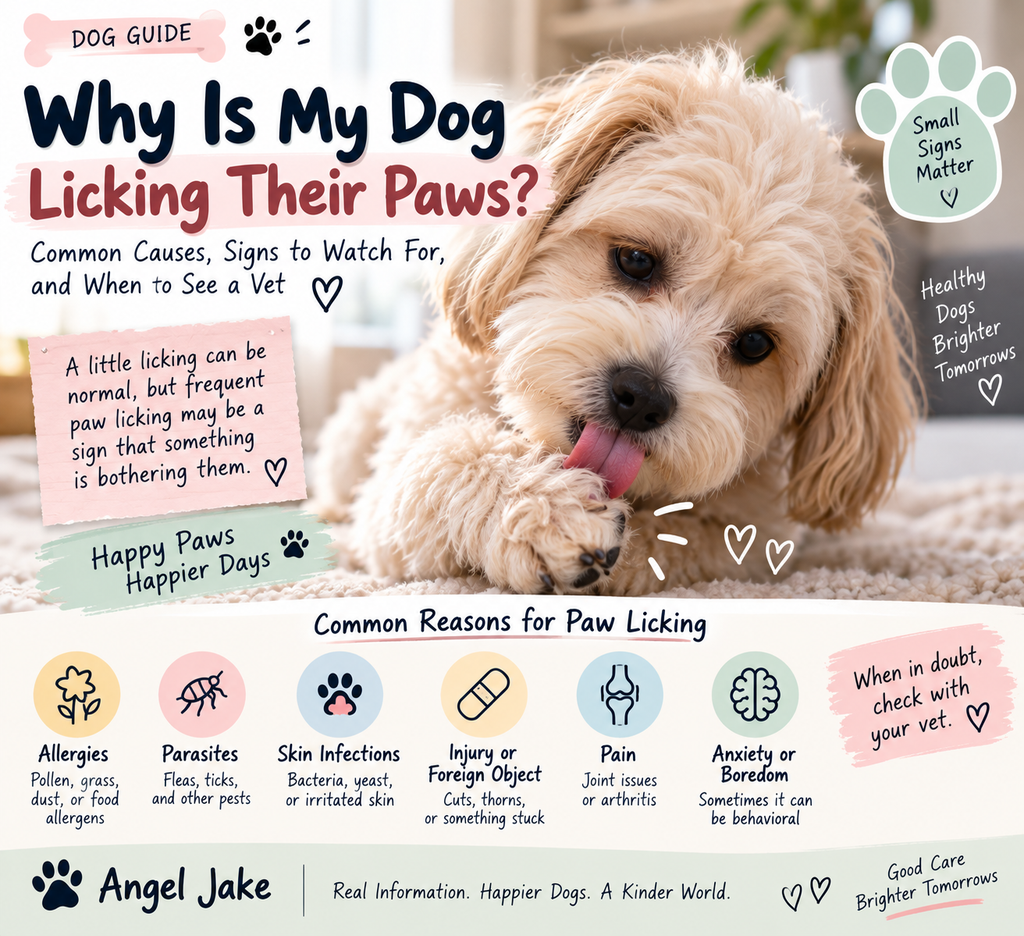
At first, paw licking can seem harmless.
Your dog comes inside, lies down, and starts licking one paw.
Then maybe another.
A few minutes later, they stop.
That can be completely normal.
Dogs groom themselves, and sometimes they lick their paws after walking outside or getting something on them.
But when the licking becomes frequent, intense, or starts causing redness and hair loss, it may be a sign that something is bothering them.
The tricky part is figuring out what.
Sometimes It Really Is Just Normal Grooming
An occasional lick is not automatically a problem.
Dogs may lick their paws after walking through wet grass, dirt, salt, or something sticky.
They may also briefly clean their feet after coming back inside.
What matters is the pattern.
A dog who licks once in a while and then moves on is very different from a dog who repeatedly chews the same paw every day.
If the licking is becoming more frequent, harder to interrupt, or is leaving the skin red or sore, it is worth paying closer attention.
Allergies Are One Common Reason
Allergies are one of the most common reasons dogs lick and chew their paws.
AAHA notes that dogs with allergic skin disease may scratch, lick, chew, or rub areas such as the paws, face, belly, ears, limbs, and rear end.
Environmental allergens can include things such as:
- pollen
- grass
- mold
- dust mites
Some dogs also develop reactions related to food ingredients.
Cornell notes that dogs with atopic dermatitis commonly lick and chew their feet, and that the itching may be seasonal at first but can become year-round in some dogs.
So if your dog’s paw licking seems worse during certain seasons, allergies may be one possibility.
But they are not the only one.
Fleas, Ticks, and Other Parasites Can Cause Itching Too
Parasites can also make paws itchy.
VCA notes that fleas and ticks are among the common causes of itchiness that can lead to paw licking.
That is why veterinarians often ask about flea and tick prevention when evaluating an itchy dog.
Even if you do not see parasites yourself, they can still be part of the problem.
This is one reason it is better not to assume every itchy paw is “just allergies.”
One Paw Can Tell a Different Story
If your dog is licking only one paw, look closely.
Sometimes the problem is local rather than whole-body itching.
Possible causes can include:
- a small cut
- a cracked paw pad
- a torn nail
- something stuck between the toes
- irritation after walking on rough ground
- a thorn, burr, or other foreign material
- pain in the foot or leg
Check gently between the toes and around the nails.
Do not dig deeply into the paw or try to remove anything embedded in the skin if it looks painful or difficult to reach.
If your dog is limping, swelling is present, or the paw is very painful, contact your veterinarian.
Licking Can Lead to a Bigger Skin Problem
This is where paw licking can turn into a cycle.
A dog feels itchy.
They lick.
The skin becomes irritated.
Then bacteria or yeast may take advantage of the damaged skin.
That can make the area even itchier.
VCA describes this as a cycle where damaged skin may develop secondary bacterial, fungal, or yeast infections, which can increase itching.
Signs of a possible skin infection can include:
- redness
- swelling
- odor
- moist or greasy skin
- discharge
- crusting
- hair loss
Once the skin reaches that point, simply stopping the licking usually does not solve the original problem.
The underlying cause and any secondary infection may both need treatment.
Brown Fur Around the Paws Does Not Always Mean Dirt
Some light-colored dogs develop reddish-brown staining around the feet.
Cornell notes that repeated licking can cause brown discoloration of the hair because of saliva staining.
The stain itself is not the diagnosis.
It is more of a clue that the dog may have been licking that area repeatedly.
If you suddenly notice staining where there was none before, look at how often your dog is licking their feet.
Could It Be Anxiety or Boredom?
Sometimes licking can have a behavioral component.
Dogs may repeat certain behaviors when they are stressed, under-stimulated, or anxious.
But it is important not to label paw licking as “anxiety” too quickly.
Skin disease and pain should be considered first.
A dog who seems to lick more during quiet or stressful moments may still have an itchy or painful paw.
If medical causes have been ruled out, then a veterinarian or qualified behavior professional can help determine whether stress or repetitive behavior is part of the picture.
Should You Wash Your Dog’s Paws After Walks?
For some dogs with environmental allergies, reducing contact with allergens can help.
VCA notes that gently cleaning the feet and other areas that contacted the ground after outdoor exposure may reduce the amount of pollen or other material left on the coat.
A damp cloth or plain water may be enough for routine cleanup.
But do not use harsh soaps, disinfectants, essential oils, or human skin products unless your veterinarian recommends them.
Those products can irritate already-sensitive skin.
What You Should Not Do
Try not to guess the cause and treat it blindly.
For example:
Do not automatically change your dog’s food every time they lick their paws.
Do not assume it must be yeast because the paws smell different.
Do not use leftover antibiotics or steroid creams.
And do not apply human medications without veterinary guidance.
AAHA’s allergy guidelines emphasize that allergic skin disease is diagnosed through history, physical examination, and ruling out other causes such as parasites and infection. Allergy testing alone does not automatically diagnose atopic dermatitis.
That is why identifying the cause matters more than simply stopping the licking.
When Should You Call the Vet?
Consider making an appointment if the paw licking is:
- happening every day
- getting worse
- focused intensely on one foot
- causing hair loss
- making the skin red or raw
- accompanied by odor or discharge
- associated with limping
- happening along with ear problems or widespread itching
You should also contact your veterinarian if your dog seems painful or if you notice swelling, bleeding, a damaged nail, or a foreign object you cannot safely remove.
Why Ear Problems and Paw Licking Sometimes Happen Together
This is something many owners do not realize.
Dogs with allergic skin disease may have both itchy paws and recurring ear problems.
AAHA lists head shaking, ear inflammation or infections, paw licking, and irritated skin among signs that may occur with allergies.
So if your dog is constantly licking their paws and also seems to have frequent ear issues, mention both problems to your veterinarian.
They may be connected.
The Best Clue Is Often the Pattern
Before your vet visit, try to notice:
- when the licking started
- whether it affects one paw or several
- whether it is seasonal
- whether your dog is also scratching elsewhere
- whether there are ear problems
- whether there is limping
- whether the skin looks red
- whether flea and tick prevention is current
AAHA specifically recommends looking at the history and pattern of itching, including seasonality, parasite prevention, age of onset, and previous treatment response when evaluating allergic skin disease.
Sometimes those details are what help the veterinarian narrow things down.
Angel Jake Note 🐾
Paw licking is one of those things that can be easy to ignore at first.
A few licks here and there do not seem like much.
But dogs cannot tell us:
“My foot is itchy.”
“Something is stuck here.”
“My skin hurts.”
So sometimes the licking is the message.
That does not mean every lick is a medical problem.
It just means that when a behavior changes, it is worth noticing.
I think one of the best things we can do as dog owners is learn what is normal for our own dog.
Because when you know their normal, you are much more likely to notice when something quietly starts to change.
Veterinary Sources
This article was prepared using guidance from the American Animal Hospital Association, Cornell University College of Veterinary Medicine, and VCA Animal Hospitals.
Veterinary sources agree that paw licking can occur with allergic skin disease, parasites, secondary skin infections, injury, pain, and other causes. Persistent licking should be evaluated based on the dog’s history, physical examination, and other symptoms rather than assuming one cause.
Medical Disclaimer
This article is for general educational purposes only and does not replace veterinary examination, diagnosis, or treatment.
If your dog’s paw licking is persistent, causes skin damage, is associated with limping or pain, or is accompanied by swelling, discharge, odor, or other signs of illness, contact your veterinarian.