

Yorkshire Terriers look like tiny royalty. That silky blue and tan coat, the little bow on top, the confident way they trot around like they own the place. It’s easy to think of them as delicate lapdogs.
But the real Yorkie story starts somewhere much grittier: in the noisy, rat-filled mills and mines of northern England. And one tiny Yorkie went on to become a war hero, and possibly the world’s first therapy dog.
From Scottish weavers to Yorkshire mills
The AKC traces the Yorkie’s story back to the mid-1800s and the Industrial Revolution. Scottish weavers moved south to Yorkshire, England, looking for work in the booming textile mills. They brought their small terriers with them.
Those terriers were crossed with local dogs, including the Waterside Terrier and the Old English Terrier, and the result was a small, fearless dog that was brilliant at one job: catching rats. In crowded mills, coal mines, and cramped workers’ homes, rats were a real problem, and a quick little terrier was worth its weight in gold.
Pretty far from the pampered lapdog image, right?
Huddersfield Ben, the father of the breed
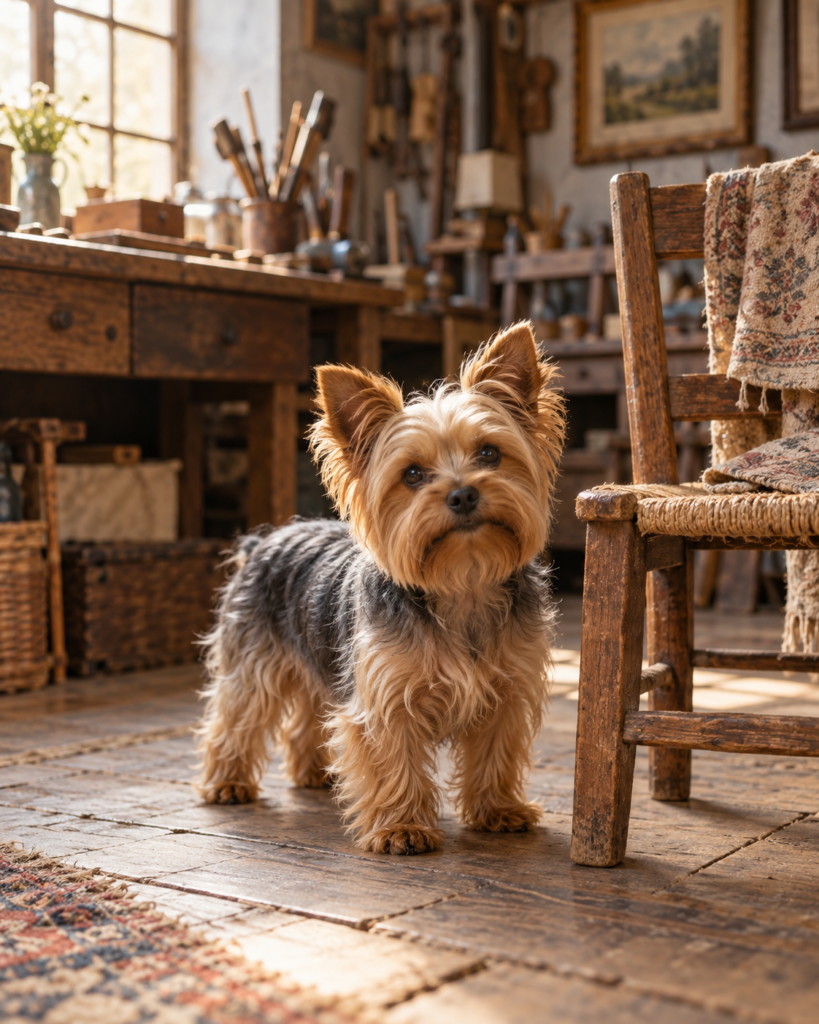
Almost every Yorkie alive today can trace its family tree back to one dog: Huddersfield Ben.
Ben was born in 1865 in Huddersfield, England. He wasn’t tiny by today’s standards. He weighed somewhere around 9 to 12 pounds. But he had a special talent: he consistently produced smaller puppies. According to the AKC, “his genes have come down to virtually every Yorkshire Terrier alive today.”
Ben was also a star in the show ring, winning 74 prizes, including at famous shows in Manchester and London’s Crystal Palace. Sadly, his life was short. In 1871, at just 6 years old, he was run over by a carriage and killed. His body was preserved and displayed for years, but it has been missing since World War II.
From rat catcher to Victorian lapdog
As the breed became smaller and more elegant, something surprising happened. The AKC explains that fashionable Victorian ladies fell in love with the Yorkie’s “confident manner and charm.” The little rat catcher moved from the factory floor into the drawing room.
Show owners took coat care very seriously. The AKC notes that exhibitors developed the Yorkie’s signature topknot, and some even put little leather boots on their dogs’ feet to keep them from scratching and damaging their long coats.

Smoky: the four-pound war hero
This is one of the most amazing dog stories I’ve ever read.
In February 1944, during World War II, a tiny Yorkshire Terrier was found in an abandoned foxhole in the jungle of New Guinea. An American soldier, Corporal William Wynne, bought her for two Australian pounds and named her Smoky. She weighed just 4 pounds and stood only 7 inches tall.
Smoky went everywhere with Wynne. She flew 12 air-sea rescue and photo reconnaissance missions, survived 150 air raids, rode out a typhoon at Okinawa, and earned eight battle stars.
Her most famous moment came at an airfield at Lingayen Gulf in the Philippines. Engineers needed to run a telegraph wire through a 70-foot pipe that was only 8 inches wide and partly filled with dirt. Digging it up would have been a dangerous job that could take around three days. So Wynne tied a string to Smoky’s collar, and she crawled through the pipe. She finished the job in minutes. Her work helped protect about 250 ground crew members and kept 40 fighter and reconnaissance planes operating.
💡 Did you know? Smoky weighed just 4 pounds, yet in minutes she did a job that would have taken engineers about three days of digging.
And her story doesn’t end there. Smoky is often called the first recorded therapy dog. Starting in 1944, she visited wounded soldiers in hospitals, and she continued this work for 12 years. She passed away in 1957 at about 14 years of age, and today there’s a bronze memorial to her in Lakewood, Ohio.
A dog small enough to fit in a helmet, and brave enough to change the course of a mission. I still get a little emotional thinking about it.
Why that coat feels like human hair
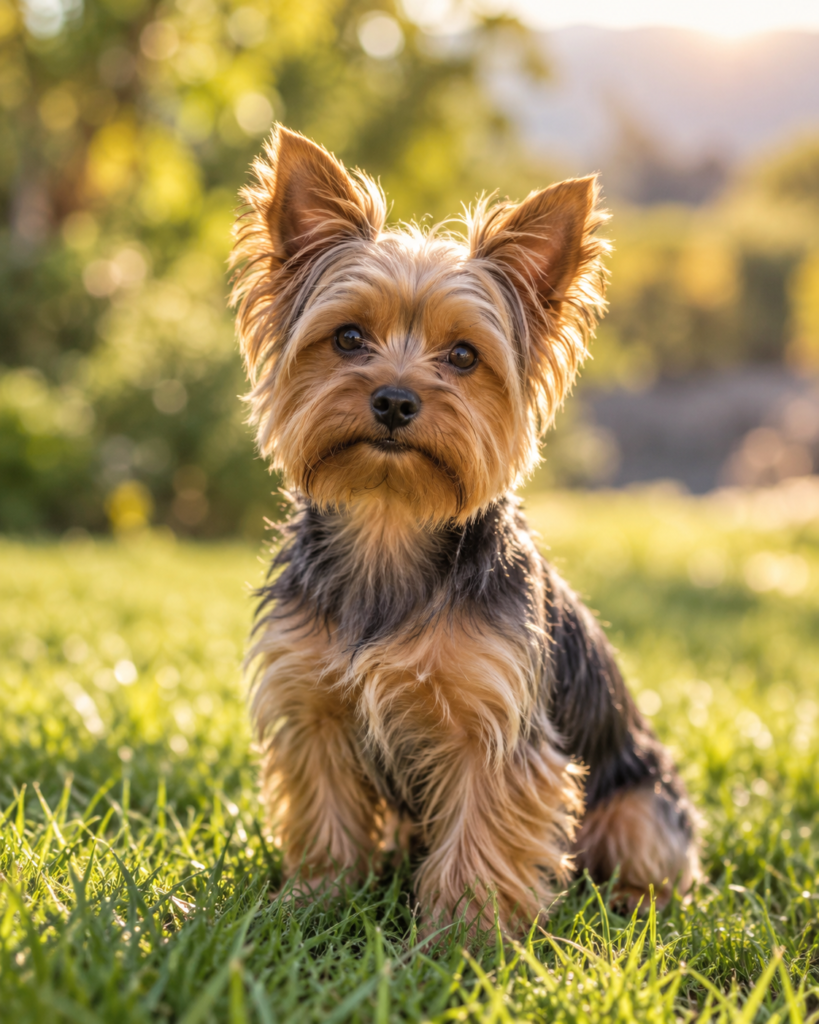
Yorkies have hair, not fur. Their coat is a single layer of silky hair that keeps growing, a lot like ours. That’s why many Yorkies need regular haircuts, and why their coats can tangle so easily.
And here’s the part that really surprises people. Yorkie puppies are born black and tan. Their famous steel-blue and tan color develops slowly, and it can take three years or more to reach its final shade.
The AKC notes that the Yorkie’s blue and tan coloring comes from its Scottish terrier ancestors, including the Clydesdale Terrier.
Size
Yorkies are one of the smallest dog breeds. The breed standard calls for a weight of no more than 7 pounds. Many are smaller, though some family Yorkies are a bit bigger, and that’s perfectly fine for a pet.
Their small size is part of their charm, but it also means they can get hurt easily from falls, being stepped on, or rough play with bigger dogs or young kids.
Personality: a big dog in a tiny body
Yorkies are bold, curious, and full of personality. That rat-catching past still shows up in their confidence and their alertness. Many make excellent little watchdogs and will happily bark to let you know someone is at the door.
They can also be very affectionate and deeply attached to their people. Some can be a little bossy, and like many terriers, they may test the rules. Gentle, consistent, reward-based training works best.

Health: what to watch for
Yorkies often live long lives. UK research has found average lifespans of around 12.5 to 13.3 years, and many Yorkies live well into their teens.
A few health issues show up more often in the breed:
- Dental disease. Their tiny mouths are crowded with teeth. In a 2019 study of 50 Yorkies published in BMC Veterinary Research, 98% of the dogs checked at 37 weeks of age (about 8 or 9 months old) already had early periodontitis in at least one tooth. Daily tooth brushing really matters for this breed.
- Collapsing trachea. The windpipe can weaken over time, causing a honking cough. Many owners use a harness instead of a collar for this reason.
- Luxating patella. The kneecap can slip out of place, causing skipping or limping.
- Portosystemic shunt. A liver blood vessel problem present from birth that can cause poor growth, seizures, or unusual behavior.
- Legg-Calvé-Perthes disease. A hip condition that can cause limping in young dogs.
- Low blood sugar. Tiny puppies especially can become weak or shaky if they go too long without eating.
💡 Good to know: Start brushing your Yorkie’s teeth while they’re young, even if it’s just a few seconds a day at first. With a breed this prone to dental disease, the habit matters more than perfection.
Fun facts and true stories 🐾
The smallest dog on record was a Yorkie. According to Guinness World Records, a tiny Yorkshire Terrier owned by Arthur Marples of Blackburn, England, stood just 2.8 inches tall at the shoulder and measured 3.75 inches from nose to tail. It died in 1945, just before its second birthday. That’s about the size of a closed fist.
They were once one of Korea’s favorite breeds. Many Korean dog lovers remember when Yorkies were everywhere. Namuwiki describes Yorkies as among the top one or two breeds in Korea through the early-to-mid 2000s, alongside Maltese and Shih Tzus. In KB Financial Group’s 2025 report, they no longer appear in the top seven, with Maltese and Poodles now leading.
Their bows aren’t just for looks. Tying up the hair on top of the head keeps the long hair out of their eyes, which is one reason the topknot became part of the breed’s classic look.
Is a Yorkie right for you?
A Yorkie might be a great fit if you want a small, loyal, lively companion, you live in an apartment or smaller home, and you’re ready for regular grooming and daily dental care.
It might be harder if you have very young children, want a quiet dog, or don’t have time for coat care and training.

Angel Jake Note 🐾
I think Yorkies are the perfect example of why we shouldn’t judge a dog by its size or its bow. Behind that silky coat is a breed of rat catchers, a line that traces back to one special dog named Ben, and a four-pound hero who crawled through a pipe during a war and then spent years comforting wounded soldiers.
If you share your life with a Yorkie, you already know how much heart fits into such a tiny body. Protect those little knees and teeth, keep them safe from falls, and let them be the brave little terrier they were born to be.
Small dog. Enormous spirit.
Sources
- American Kennel Club: Yorkshire Terrier History, Where the Breed Originated
- Wikipedia: Huddersfield Ben
- Wikipedia: Smoky (war dog)
- National Geographic: Smoky, a Healing Presence for Wounded WWII Soldiers
- Wikipedia: Yorkshire Terrier
- Wallis et al. (2019), A longitudinal assessment of periodontal disease in Yorkshire terriers, BMC Veterinary Research
- Guinness World Records: Smallest dog ever
- 나무위키: 요크셔 테리어
- KB Think: 한국 반려동물 현황 (KB Financial Group, 2025)
Related Reading
- Dental Disease in Dogs: Signs, Stages, Treatment, and How to Prevent It
- West Highland White Terrier: Personality, Size, Lifespan, Grooming, Health & Fun Facts
- How to Introduce a New Puppy to Your Older Dog
Medical Disclaimer
I’m not a vet, and nothing here replaces a real exam. If something about your dog feels off, please trust that feeling and call your veterinarian.