

You look down and your dog is shaking. Maybe it’s a fine little quiver in their back legs, or maybe their whole body is trembling while they stare up at you. Either way, your stomach drops a bit.
A Korean veterinary column put it nicely: when a dog trembles, the owner’s “worry switch” turns on. Most of the time the reason is ordinary, like a chilly room or a doorbell. Sometimes it isn’t, and knowing the difference can help you stay calm and act quickly when it counts.
The everyday reasons: cold, excitement, and nerves
Cold is the simplest one. PetMD describes shivering as a warming response that’s more common in small breeds and in thin or short-coated dogs, and it should stop once they warm up. In a column for the Korean health outlet 헬스경향 (K-Health), veterinarian Park Han-byeol of Ansan Onnuri Animal Medical Center suggests feeling your dog’s ear tips, neck, and paws. If they’re cold, a blanket and a warmer room are a good first step.
Excitement can look surprisingly similar. Some dogs quiver when they see their leash, a favorite person, or a treat on its way. “Shaking isn’t always about being scared—it can also be about feeling happy,” trainer Nicole Kohanski told PetMD.
Then there’s fear. The American Kennel Club (AKC) calls shaking “a classic symptom of stress in dogs.” Dr. Park explains what’s going on inside: when a dog feels threatened, a rush of adrenaline gets the body ready to fight or run, which speeds up the heart, widens the pupils, and sets the muscles trembling. Thunder, strangers, and the vet’s office are common triggers, and the shaking usually fades once the scary thing goes away.
That full-body shake after a bath is pure physics
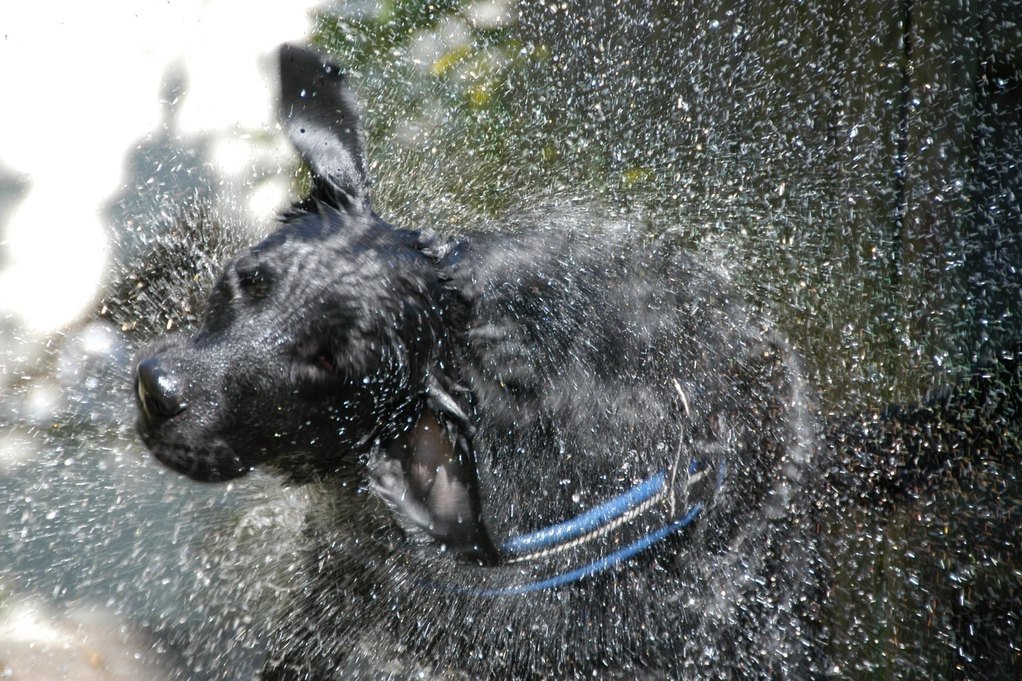
The “wet dog shake” is different. It’s on purpose, and it’s remarkably efficient. In 2012, Georgia Tech engineers Andrew Dickerson, Zachary Mills, and David Hu filmed 33 animals, covering 16 species and five dog breeds, with high-speed cameras. They found that shaking removes about 70 percent of the water in a dog’s coat. According to the AKC, a dog can shake that much off in about four seconds.
The secret is loose skin. In their paper in the Journal of the Royal Society Interface, the team found that while a dog’s spine swings about 30 degrees during a shake, the loose skin swings about 60 degrees on its own, and that extra whip flings water off faster. Labradors in the study shook about 4.5 times per second.
Why go to all that trouble? The researchers estimated that a wet 60-pound dog carrying one pound of water in its fur would burn 20 percent of its daily calories just to air-dry. A few seconds of shaking is a much better deal, even if your bathroom wall disagrees.
Older dogs and wobbly back legs
The AKC says older dogs can have a harder time regulating their body temperature, and many develop tremors in their legs, especially the hind legs, as they lose muscle mass. Dr. Park recommends regular light walks to help keep those muscles strong. PetMD also links a so-called “senior shake” to canine cognitive dysfunction, so new tremors in an older dog are worth mentioning to your vet.
When shaking means something hurts
Pain is easy to miss. PetMD lists arthritis, back problems, dental disease, ear infections, urinary tract infections, and severe stomach upset among the painful conditions that can cause trembling. Nausea can bring on the shakes too.
Dr. Park describes a posture worth knowing: dogs with pancreatitis or disc problems often tremble while standing hunched over. Pain can also lower appetite and energy, so if the shaking comes with a dog who won’t eat or seems flat, take it seriously.
Toxins: a bigger cause than most of us realize
PetMD says whole-body tremors are most often linked to something a dog ate. Its list includes xylitol, chocolate, grapes and raisins, marijuana, caffeine, and snail bait.
Xylitol is a sneaky one. This sugar substitute has little effect on insulin in most mammals, but the Merck Veterinary Manual says it triggers a rapid insulin release in dogs. Blood sugar can crash within 30 minutes, or 12 to 18 hours later if it was in something like gum that slows absorption. Higher doses can damage the liver. And it isn’t only in gum. Merck lists peanut butter, toothpaste, and chewable vitamins.
💡 Did you know? In a 2025 study of 198 dogs with generalized tremors seen at the UK’s Royal Veterinary College over 20 years, 46 percent turned out to be poisoned. That made intoxication the single most common cause, ahead of every disease on the list.
If you think your dog got into something, call your vet or the Pet Poison Helpline (855-764-7661, a fee applies) right away.
“Little white shaker syndrome”
Generalized tremor syndrome was first noticed in small white breeds like the Maltese, the West Highland White Terrier, and the Poodle, which is how it got the nickname “little white shaker dog.” According to Purdue University’s Animal Disease Diagnostic Laboratory, it can affect dogs of any coat color. It usually starts before about two years of age in dogs under roughly 15 kg (33 pounds).
The tremors range from mild to severe. They get worse with exercise, stress, or excitement and settle down during sleep. The cause is unknown, but steroids like prednisone are the usual treatment, which is why the AKC notes it’s also called corticosteroid-responsive tremor syndrome. Purdue says the tremors generally go away within one to two weeks once treatment starts. In the Royal Veterinary College study, it was the second most common cause of generalized tremors, at about a quarter of cases.
Tiny puppies and low blood sugar
Toy-breed puppies have very little fat and muscle to store energy, and their livers are still immature. That makes them prone to hypoglycemia, or low blood sugar. AKC chief veterinary officer Dr. Jerry Klein says these are often toy-breed puppies under 12 weeks old. Signs include trembling, weakness, wobbliness, drowsiness, and in serious cases seizures or collapse.
Dr. Klein says a little light corn syrup or honey, even rubbed on the gums, can temporarily help a small puppy, but only as a bridge on the way to the vet. The AKC also recommends regular meals on a set schedule to help prevent it.
Addison’s disease, the “great pretender”
Addison’s disease happens when the adrenal glands don’t make enough hormones. The University of Illinois College of Veterinary Medicine calls it “the great pretender” because its early signs, like lethargy, vomiting, diarrhea, and low appetite, come and go and look like many other everyday problems. Dr. Park lists shaking among its signs.
It affects less than 0.5 percent of dogs overall, but about 8 percent of Standard Poodles, according to Illinois. In a crisis, dogs can collapse, tremble, and become severely dehydrated, which can become dangerous within hours. With medication and monitoring, though, the outlook is good.
Other medical causes include distemper in unvaccinated puppies (often with a fever and cough), end-stage kidney disease, and low calcium. PetMD warns that low calcium in a nursing mother, called eclampsia, is potentially life-threatening.
Tremor or seizure? How to tell
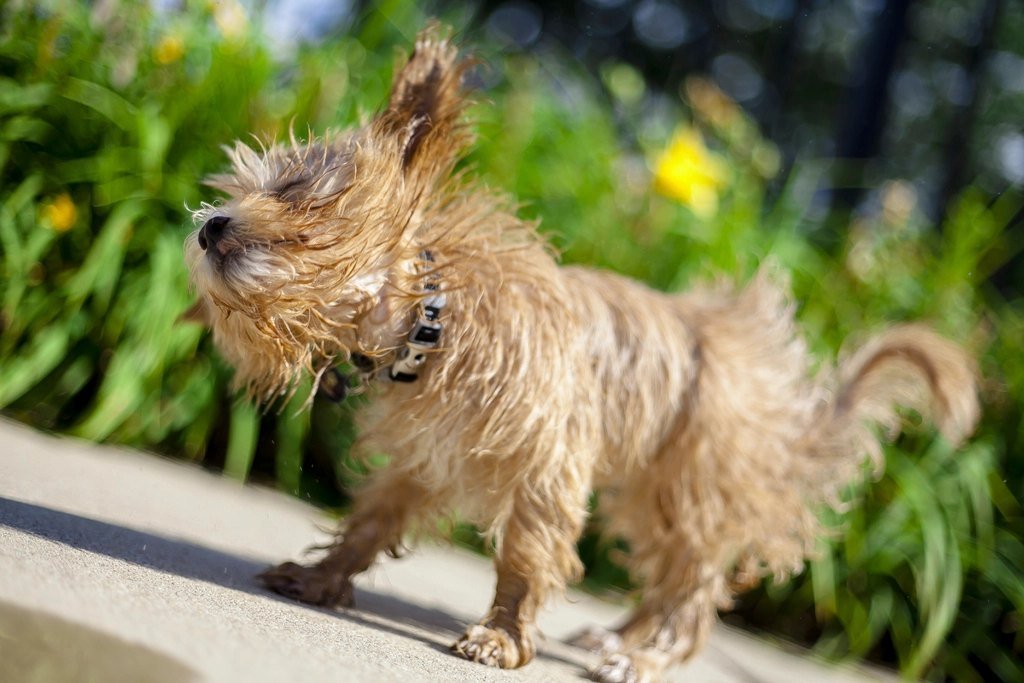
The biggest clue is awareness. PetMD explains that tremors and muscle spasms leave a dog conscious, responsive, and aware. Seizures come from abnormal brain activity and can cause a loss of consciousness.
Cornell University’s Riney Canine Health Center describes a classic generalized seizure as a dog suddenly falling over with jerking spasms in all four legs. They may paddle, foam at the mouth, and lose control of their bladder or bowels. Focal seizures are trickier and can look like twitching of one eyelid, lip, or ear, snapping at the air (“fly-biting”), or jaw clacking.
If your dog is having a seizure, Cornell says to move things they could hit and keep your hands away from their mouth so you don’t get bitten by accident.
When to call the vet
An occasional shiver from cold, nerves, or excitement usually isn’t a problem. “Any time a pet isn’t responsive or otherwise acting themselves, the pet should always be seen ASAP,” veterinarian Daniel Dixon told PetMD. Call your vet if the shaking:
- Starts suddenly with no clear reason
- Comes with vomiting, weakness, or reduced alertness
- Follows a possible toxin, like gum, chocolate, grapes, or medication
- Shows up in a weak toy-breed puppy or an unvaccinated puppy with a fever
- Happens in a mother dog who recently gave birth or is nursing
- Comes with whining, limping, or a hunched posture
⚠️ Please don’t wait. If your dog collapses, can’t respond to you, or has a seizure that lasts more than about five minutes, go to an emergency vet right away. Cornell explains that a seizure that long can be fatal, and that more than one seizure in 24 hours also needs veterinary attention.
💡 Good to know: Shaking episodes rarely happen on cue at the clinic. Both Dr. Park and Cornell recommend filming an episode on your phone and noting how long it lasted, which can help your vet a lot.
Fun facts 🐾
Mice are the champion shakers. In the Georgia Tech study, mice shook at about 30 times per second, while bears shook about four times per second. The smaller the animal, the faster it has to shake to fling water off.
Some head bobbing isn’t a seizure. PetMD says some Boxers, English Bulldogs, Beagles, and Doberman Pinschers get idiopathic head tremors that are often mistaken for seizures. These episodes can often be stopped by getting the dog to focus on a toy or a treat.
Xylitol is a dog-specific danger. According to Merck, dogs are the only domestic species in which xylitol poisoning has been reported.
Angel Jake Note 🐾
It’s hard not to panic when your dog is trembling and can’t tell you why. I think the most useful thing is to look at the whole picture. If there’s an obvious reason, like a cold room or a thunderstorm, and your dog is otherwise their usual self, a blanket or a calm voice may be all they need.
If the shaking is new, doesn’t stop, or comes with anything that feels off, trust that feeling. Grab a quick video and call your vet. You know your dog better than anyone.
Medical Disclaimer
I’m not a vet, and nothing here replaces a real exam. If something about your dog feels off, please trust that feeling and call your veterinarian.
Sources
- American Kennel Club: Why Is My Dog Shaking?
- PetMD: Why Do Dogs Shake?
- PetMD: Why Is My Dog Shaking? (Barri J. Morrison, DVM)
- Journal of the Royal Society Interface (Dickerson, Mills, and Hu, 2012): Wet mammals shake at tuned frequencies to dry
- Merck Veterinary Manual: Xylitol Toxicosis in Dogs
- Journal of Veterinary Internal Medicine (Liatis, Bhatti, and De Decker, 2025): Generalized tremors in dogs, 198 cases (2003–2023)
- Purdue University Animal Disease Diagnostic Laboratory Newsletter (Spring 2004): Tremors
- American Kennel Club: Hypoglycemia in Dogs
- University of Illinois College of Veterinary Medicine: The Great Pretender: Understanding Addison’s Disease in Dogs
- Cornell Riney Canine Health Center: Managing Seizures
- 헬스경향 (K-Health): 반려동물 건강이야기, 사시나무마냥 부들부들, 강아지가 떠는 이유