

You’re standing in the kitchen, and suddenly there’s a warm weight pressed against your legs. Your dog has parked their whole body against you and isn’t going anywhere. It’s sweet, a little funny, and maybe a little puzzling too.
Most of the time, a lean is exactly what it feels like: a dog who wants to be close to you. But it can also mean your dog is nervous, wants something, or (less often) isn’t feeling steady on their feet. Knowing which is which makes it a lot easier to respond.
Mostly, it’s a hug without arms
Dogs can’t wrap their arms around us, so they use what they’ve got. Veterinarian Dr. Patty Khuly, writing for Vetstreet, says that in most cases leaning is “affection-seeking behavior, plain and simple.” Dogs enjoy cuddling, and when you’re standing or sitting, your legs are the easiest thing to cuddle. She also points out that dogs, as social animals, like close contact because it feels safe.
The American Kennel Club (AKC) sees it the same way. Dr. Mary Burch, a certified applied animal behaviorist who directs the AKC Family Dog Program, calls a dog sitting on your feet “the canine version of a hug or cuddle,” and the AKC describes the leg lean as a source of comfort and support.
If your dog also trails you from room to room, that’s part of the same story. I covered it in Why Does My Dog Follow Me Everywhere?, so I won’t repeat it here.
Leaning in when the world feels scary
Sometimes the lean shows up at very particular moments: at the vet, during a thunderstorm, or when a stranger walks into the house. The AKC lists new places, new situations, separation anxiety, and loud or sudden noises like fireworks, thunder, and construction among the things that can send a dog to press against their person. Staying close gives an anxious dog reassurance.
So if your dog leans hardest when something is going on, notice what else they’re doing. The AKC’s list of fear signs includes drooling, shaking, panting, crouching, a tucked tail, a hanging head, and ears pulled back. A lean plus a few of those usually means “I’m worried, and you’re my safe spot.”
“Hey, I’m right here”: leaning for attention
Leaning works, and dogs figure that out fast. The AKC notes that this kind of contact often earns petting, ear rubs, and a kind word, which makes it more likely to happen again. Greyhound Adoption Program NSW, an Australian greyhound rescue group, adds a few more motives: asking for food, a treat, or a trip outside, and occasionally nudging you out of their favorite spot on the couch.
None of that is bad. It just means your dog has learned that leaning is a good way to start a conversation.
Why touching your dog feels so good (for both of you)
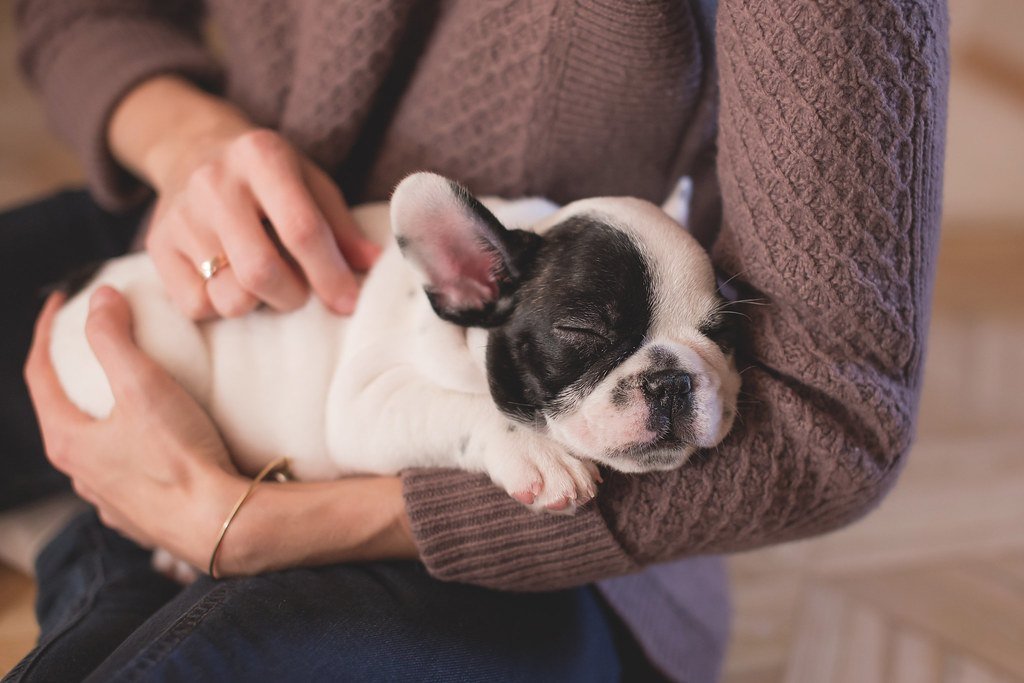
There’s real chemistry behind those quiet cuddles. In 2003, researchers J.S.J. Odendaal and R.A. Meintjes measured several “feel-good” brain chemicals in people and their dogs before and after a session of positive interaction. In The Veterinary Journal, they reported that beta-endorphin, oxytocin, prolactin, phenylethylamine, and dopamine rose in both species, while the stress hormone cortisol dropped in the humans.
Oxytocin is the one people call the “love hormone.” In 2015, a team led by Miho Nagasawa and Takefumi Kikusui at Azabu University in Japan published a now-famous study in Science. They had 30 dog owners spend about half an hour with their dogs and measured oxytocin in urine before and after. Dogs who gazed at their owners longest had owners whose oxytocin rose the most, and those owners in turn spent more time looking at, touching, and talking to their dogs. And the dogs who got the most attention back showed the biggest oxytocin rises of all. The researchers called it an “oxytocin-gaze positive loop.”
💡 Did you know? The same team tested 11 hand-reared wolves who saw their keepers every day. The wolves rarely made eye contact, and their gaze didn’t raise anyone’s oxytocin. The loving loop seems to be something dogs developed alongside us.
In a second part of the study, 27 dogs were given a dose of oxytocin and placed in a room with their owner and two strangers. The female dogs spent more time gazing at their owners, and the owners’ oxytocin rose in response. Nobody is quite sure yet why only the females reacted that way.
A lean isn’t the same as a long gaze, of course. But it’s the same kind of closeness, and it helps explain why those moments feel so calming to both of you.
Are some breeds bigger leaners?
Great Danes are famous for it. Chewy’s vet-reviewed breed guide (reviewed by veterinarian Dr. Barri Morrison) says Danes like to say “I love you” with their trademark “lean,” and that leaning affectionately against the people they love is a common Great Dane trait. GAP NSW says the behavior is generally more common in larger breeds, and it also mentions that short-coated dogs may lean in for warmth when they’re cold or wet.
That said, I’d be careful with breed labels. Plenty of small dogs lean, and plenty of big dogs don’t. Your dog’s personality and history matter more than their breed.
Is my dog trying to be the “alpha”?
You may have heard that a leaning dog is trying to dominate you by putting their weight on you. Dr. Khuly mentions this idea in her Vetstreet piece, but she doesn’t buy it, and neither do most behavior experts today.
The whole “alpha” idea has an interesting backstory. It grew from studies of captive wolves, including Rudolph Schenkel’s work at Switzerland’s Zoo Basel in the 1930s and 1940s. In 1999, wolf biologist L. David Mech reviewed the evidence along with 13 summers of watching wild wolves on Ellesmere Island in the Canadian Arctic. His conclusion, published in the Canadian Journal of Zoology, was that a typical wild pack is simply a family led by its parents, not a group of rivals fighting for rank.
The American Veterinary Society of Animal Behavior (AVSAB) says in its position statement that “most undesirable behaviors in our pets are not related to priority access to resources.” In other words, your dog isn’t plotting a takeover. They’re leaning on you because they like you, they’re worried, or they want something.
When leaning might be something more
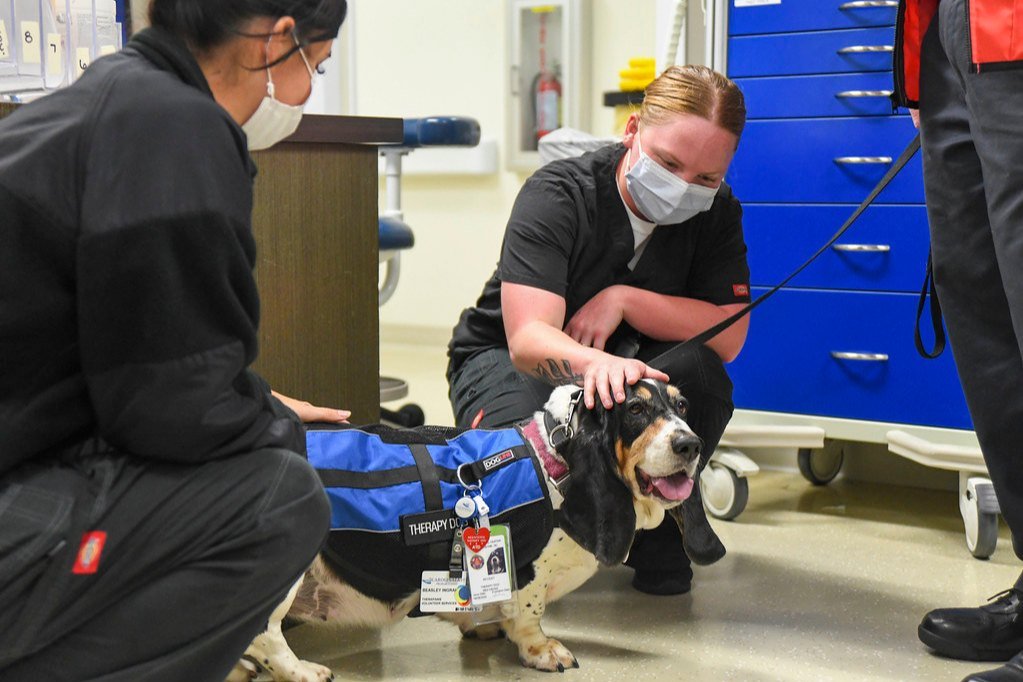
This is the part worth watching more closely, especially if the leaning is new or looks different from your dog’s usual snuggles.
Balance problems. PetMD lists leaning in the same direction as a head tilt as a sign that needs urgent care, and notes that leaning and falling over are often signs of an inner ear or neurological disorder. VCA Animal Hospitals lists a sudden loss of balance, falling or circling to one side, a head tilt, darting eye movements (nystagmus), and nausea among the signs of vestibular disease. When no cause can be found, it’s called idiopathic vestibular disease, and PetMD says that form is most common in senior dogs. It looks frightening, but VCA says many dogs with it begin improving within 72 hours, and most recover completely in two to three weeks. Other causes, like ear infections or tumors, need a vet to sort out.
Wobbliness and weakness. PetMD says ataxia, a loss of coordination that can look like “drunk-like” walking, swaying, or stumbling, is generally considered a medical emergency. It can come from spinal disc disease, ear or brain inflammation, low blood sugar, toxins, and more, and it won’t resolve on its own.
Pain and stiff joints. The AKC notes that an older dog may prefer sitting against or on your feet because a raised position can be easier on arthritic joints than bending all the way down.
Vision loss. The AKC’s guide to vision loss in senior dogs lists bumping into furniture, trouble finding toys or food, stopping eye contact, reluctance to jump on or off the couch, and new anxiety or “becoming clingy” among the signs. A dog who suddenly sticks to your side and leans into you more than before may be using you as a steady landmark.
💡 Good to know: Leaning on you isn’t the same as head pressing. PetMD explains that head pressing is when a dog compulsively pushes their forehead against a wall or piece of furniture, and it usually points to a neurological problem. A dog pressing their head into you is typically just showing affection, but pressing into walls or objects means you should call your vet right away.
How to respond kindly
If your dog is leaning out of love, enjoy it. A hand on their back or a few slow strokes is a perfectly good answer.
If it happens at a moment that doesn’t work for you (say, you’re carrying a hot pan), you don’t need to push them away. The AKC suggests using a treat to cue your dog to move, and AVSAB recommends rewarding the behavior you want rather than punishing the one you don’t. Asking for a “sit” and rewarding it fits that advice, and it’s much kinder than scolding.
If your dog is leaning because they’re scared, comfort is fine and kind. AVSAB notes that “pinning a dog down when he is scared will not address the root of his fear,” so the fear itself is what needs your attention. Try to find and reduce whatever is worrying them, and talk to your vet or a qualified trainer if the anxiety is frequent.
For a senior dog with failing eyesight, the AKC suggests speaking before you touch them and keeping your furniture where it is, so your dog can find their way back to you easily.
Call your vet if the leaning:
- Is new and comes with a head tilt, circling, or falling to one side
- Comes with stumbling, swaying, or a wide, wobbly stance
- Shows up along with limping, stiffness, or reluctance to jump
- Happens alongside bumping into things or trouble finding toys
- Includes pressing their head against walls or furniture
⚠️ Please don’t wait. If your dog suddenly can’t stand, keeps falling to one side, or walks like they’re drunk, see a vet right away. PetMD considers ataxia a medical emergency, and it’s always better to have it checked quickly.
Fun facts 🐾
Germany made the Great Dane its national breed in 1876. According to the AKC, the breed started out as a giant boarhound, and statesman Otto von Bismarck kept Danes as bodyguards. Today’s gentle leaners have come a long way.
The oxytocin story started with a 2009 study. As Korea’s 코메디닷컴 reported at the time, Nagasawa and Kikusui studied 55 owners, and those who shared more than about two and a half minutes of eye contact with their dogs during a 30-minute session saw their oxytocin rise by roughly 20 percent. Kikusui, a big-dog lover, said he started the research after noticing changes in himself while making eye contact and playing with large dogs.
One wolf expert isn’t a fan of his own book. Mech’s 1970 book, The Wolf, helped popularize the alpha idea. Even after his later research on wild packs, Gizmodo reported that it remains in print “much to Mech’s chagrin.”
Angel Jake Note 🐾
There’s something about a dog leaning their whole weight into you that says more than any wag could. Most of the time, it’s simply love and trust, and it’s one of the sweetest things a dog does.
Still, you know your dog’s normal better than anyone. If the leaning starts suddenly, looks wobbly, or comes with anything that feels off, trust that instinct and check in with your vet. Otherwise, lean right back.
Medical Disclaimer
I’m not a vet, and nothing here replaces a real exam. If something about your dog feels off, please trust that feeling and call your veterinarian.
Sources
- Vetstreet (Dr. Patty Khuly): Why Does My Dog… Lean on Me?
- American Kennel Club: Why Does My Dog Sit on My Feet and Lean on My Legs?
- Greyhound Adoption Program NSW: Why do some dogs lean on people?
- Chewy (medically reviewed by Barri Morrison, DVM): Great Dane
- The Veterinary Journal (Odendaal and Meintjes, 2003): Neurophysiological correlates of affiliative behaviour between humans and dogs
- National Geographic: Through This Chemical Loop, Dogs Win Our Hearts (on Nagasawa et al., *Science*, 2015)
- EurekAlert! (AAAS): Eye Contact Secures Dogs’ Place in Human Heart
- Canadian Journal of Zoology (Mech, 1999): Alpha status, dominance, and division of labor in wolf packs
- Gizmodo: Why Everything You Know About Wolf Packs Is Wrong
- AVSAB: Position Statement on the Use of Dominance Theory in Behavior Modification of Animals
- PetMD: Dog Head Tilt: Causes, Symptoms and Treatment
- VCA Animal Hospitals: Vestibular Disease in Dogs
- PetMD: Ataxia in Dogs: What It Is, Symptoms, and Treatment
- American Kennel Club: Dog Vision Loss: Signs, Symptoms, and Management
- PetMD: Head Pressing in Dogs: Causes, Diagnosis, and Treatment
- American Kennel Club: Great Dane History: The Apollo of Dogs
- 코메디닷컴 (Kormedi): 개 키우면 사랑호르몬 펑펑