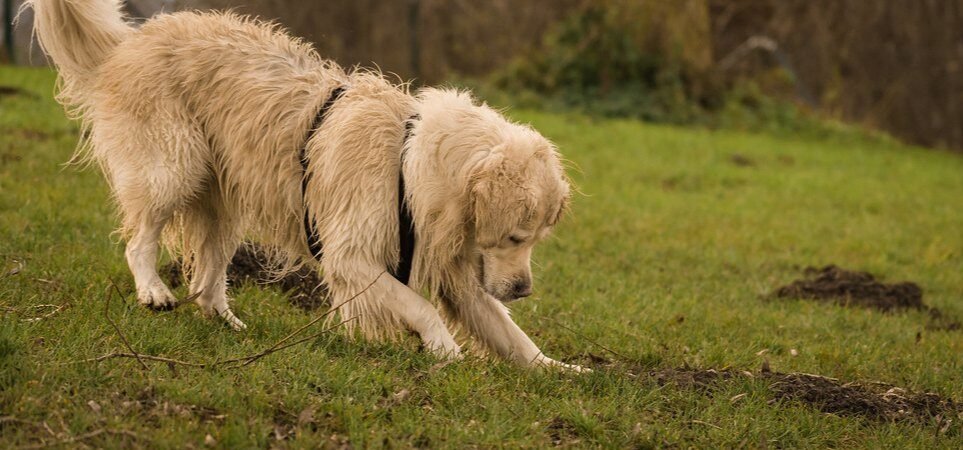
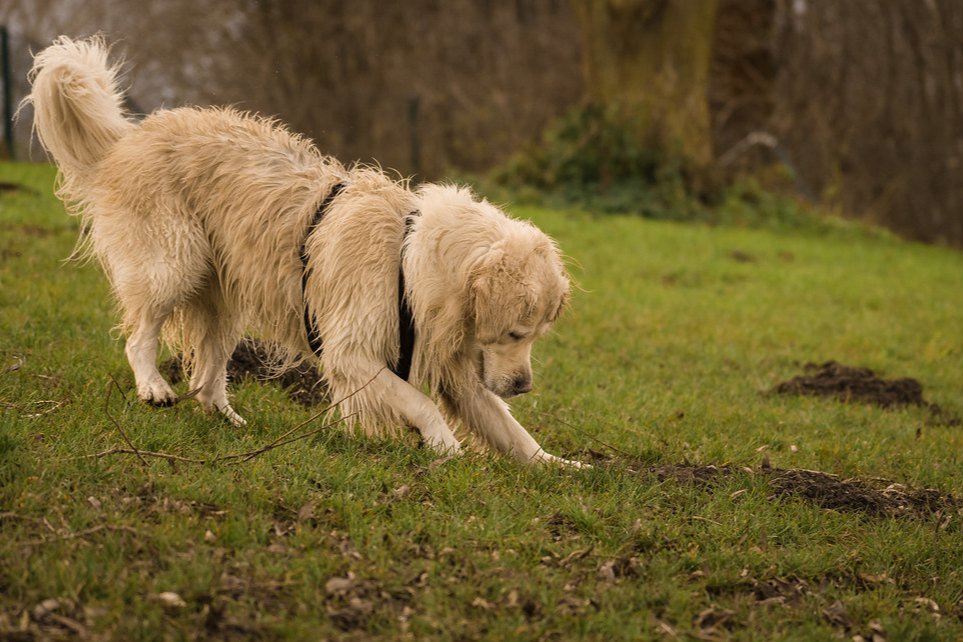
You hand your dog a chew, and instead of settling down with it, they trot off looking very serious. A few minutes later you find it wedged between the couch cushions, or you catch them in the garden with dirt all over their nose. It’s funny, a little puzzling, and sometimes a bit worrying. Do they not like it? Is something wrong?
Most of the time, nothing is wrong at all. Burying is one of the oldest things a dog knows how to do. Certified dog behavior consultant Kate Naito summed it up for the American Kennel Club (AKC) as “nature, not naughtiness.” Still, there are a few times when it’s worth a closer look, and one safety issue every owner should know about.
So why do dogs bury things in the first place?
It comes down to food caching, which simply means storing food to eat later. Many birds and mammals do it. The AKC describes the diet of dogs’ wild ancestors, including the gray wolf, as “feast or famine.” Some days there was meat, some days there wasn’t, so when there was plenty, they ate a lot and buried the leftovers instead of letting them go to waste. The AKC calls it “the wolf’s pantry.”
Wolves can be surprisingly committed to this. In 1999, wolf researchers L. David Mech and Layne Adams described two wolves on Ellesmere Island, Canada, that killed a muskox. Afterward, one wolf cached a leg and carried food as far as 2.3 km away, and probably farther. Live Science also points to a 1976 study in Ethology that found wolf pups cache food too, and even move their caches to hide them from their own siblings.
Your dog has probably never gone a day without a meal. That doesn’t matter much to instinct. The UK’s Kennel Club calls burying leftovers an “insurance policy for leaner times” and notes that the urge sticks around even in well-fed pets. Dallas trainer Nicole Kohanski explained the logic to PetMD: dogs that cached had more food when food was scarce. “Caching is like putting something in a pantry, closet, or safe for humans,” she said.
Do they actually remember where they hid it?
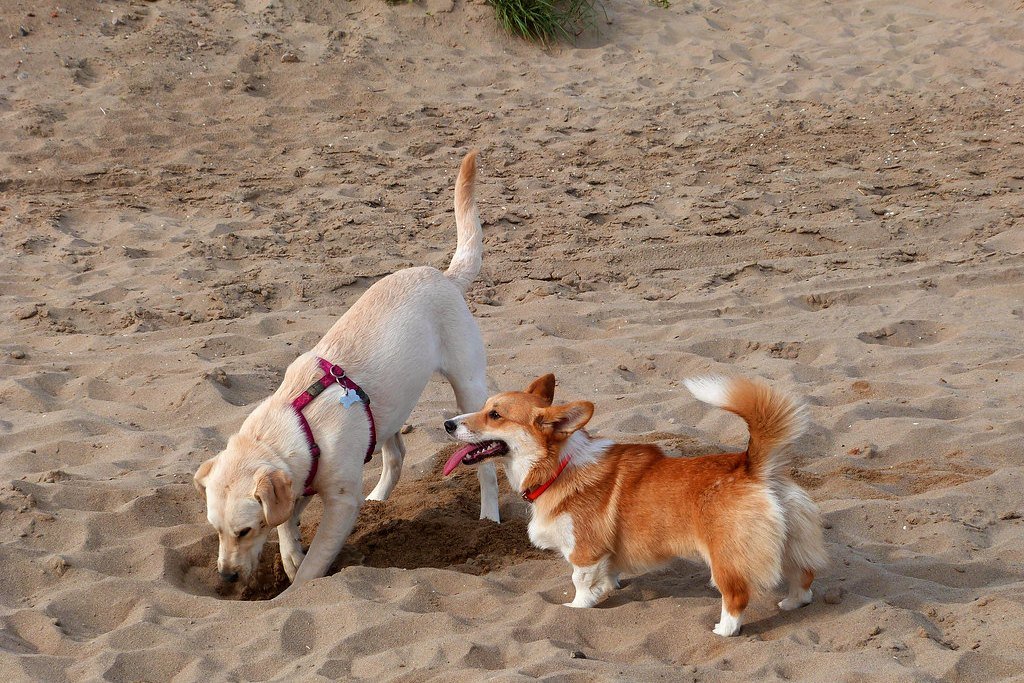
Usually, yes. A dog’s nose does a lot of the work here. Kohanski told PetMD that dogs use scent, including the scent from glands in their paws, along with visual cues to find their stash again.
💡 Did you know? In a 2023 PLOS ONE study from the University of Veterinary Medicine Vienna, researchers tested 9 wolves and 8 dogs at Austria’s Wolf Science Center. When the animals had watched a person hide food, they found the caches faster and traveled less, which suggests they remembered the spots rather than relying on scent alone. The wolves did better overall, but the authors felt that was likely about persistence and food motivation, not memory.
Every dog has their own style, too. Florida trainer Teoti Anderson told Live Science that some dogs stash a treat and then ignore it for a week, and some move a prize about 20 times before they’re happy with the spot. Others really do forget. “I once knew a dog who would bury rocks,” she said.
Some breeds were made for digging
All dogs can cache, but some are especially good at the digging part, and that’s no accident. The AKC explains that the name for terriers’ underground work, “earthdog,” comes from terra, the Latin word for “earth.” Terriers were bred to go after rodents and other burrowing animals that raided henhouses and damaged crops. Short-legged terriers followed prey into underground dens, while long-legged ones dug down from above.
Then there’s the Dachshund. In German, the name means “badger dog.” According to the AKC, German foresters and hunters were breeding the type consistently by the 18th century to go into badger tunnels. Their bodies show it. The AKC describes tight, compact feet that push soil backward and well-angled shoulders that give them a wide range of motion for digging. The Dachshund is also the only hound breed eligible to compete in AKC Earthdog trials.
Hill’s Pet Nutrition notes that the instinct to bury is strongest in dogs bred to hunt small game, naming terriers and smaller hounds like Dachshunds, Beagles, and Basset Hounds. Anderson gave Live Science a very familiar picture: a Dachshund burying a bone under the couch pillows.
The couch, the blanket, and that little nose push
Not every dog has a yard, and even dogs with one sometimes pick the living room instead. The Kennel Club says dogs may hide things behind cushions, under rugs, or under furniture. Certified applied animal behaviorist Maddie Messina told The Farmer’s Dog that a space under furniture can stand in for a hole dug outdoors.
You may also see your dog nudging a treat into a blanket or under a pillow with their nose. Messina points out that dogs use their noses to move things whether they’re caching or playing, so it isn’t always easy to tell which one is happening. A dog who’s caching often doesn’t want the item back right away, which can make it look less like a game.
PetMD’s advice for treats tucked into beds is simple: beds are soft and easy to dig into, so give your dog a better place to do it (more on that below).
Normal caching or resource guarding?
Here’s where it’s worth paying attention. Caching on its own is relaxed. Your dog hides the thing, wanders off, and maybe comes back for it later.
Resource guarding looks different. The ASPCA lists signs like standing stiffly over food, gulping it, tensing or freezing, growling, staring, snapping, and snarling. PetMD adds that some dogs protect a buried stash or toy with the same kind of warnings, including bared teeth and air-snapping. The ASPCA notes that guarding is normal dog behavior, but it isn’t something you want in a pet, especially when it’s aimed at people.
If you see those signs, please don’t punish your dog or try to take the item by force. The ASPCA warns that “dominating” a dog this way can make guarding worse and damage your relationship. Trainer Alexandra Bassett told PetMD the same thing and recommends positive reinforcement instead. If you think your dog might bite, the ASPCA recommends working with a certified applied animal behaviorist, a board-certified veterinary behaviorist, or a qualified trainer, and it says guarding around children is too risky to leave alone.
When burying is about boredom or stress
Sometimes a dog buries things simply because they have extra energy and not much to do. Bassett told PetMD that burying “can indicate that a dog is bored and has excess energy to burn.” The AKC also notes that hiding can be a sign that a dog is being overfed, and the Kennel Club suggests weighing meals so you know you’re following feeding guidelines.
Stress can play a part too. The AKC says dogs who guard their things may have some underlying anxiety, for example from living with another dog who takes their stuff. The Kennel Club adds that possessive food behavior is commonly seen in rescue dogs who once had to compete for food or went through neglect. If that’s your dog’s story, a little extra patience goes a long way. Hiding food can help them feel more in control.
In a column for the Korean magazine 주간동아 (Weekly Donga), veterinarian Choi In-young of Love Pet Animal Hospital in Seoul says digging is mostly normal behavior and hard to call a “problem.” She lists hiding or finding treats and toys, boredom, and stress from too little walking or play among the reasons. Instead of focusing on the behavior itself, she suggests asking which of your dog’s needs might not be met.
The safety part: old buried food can make dogs sick
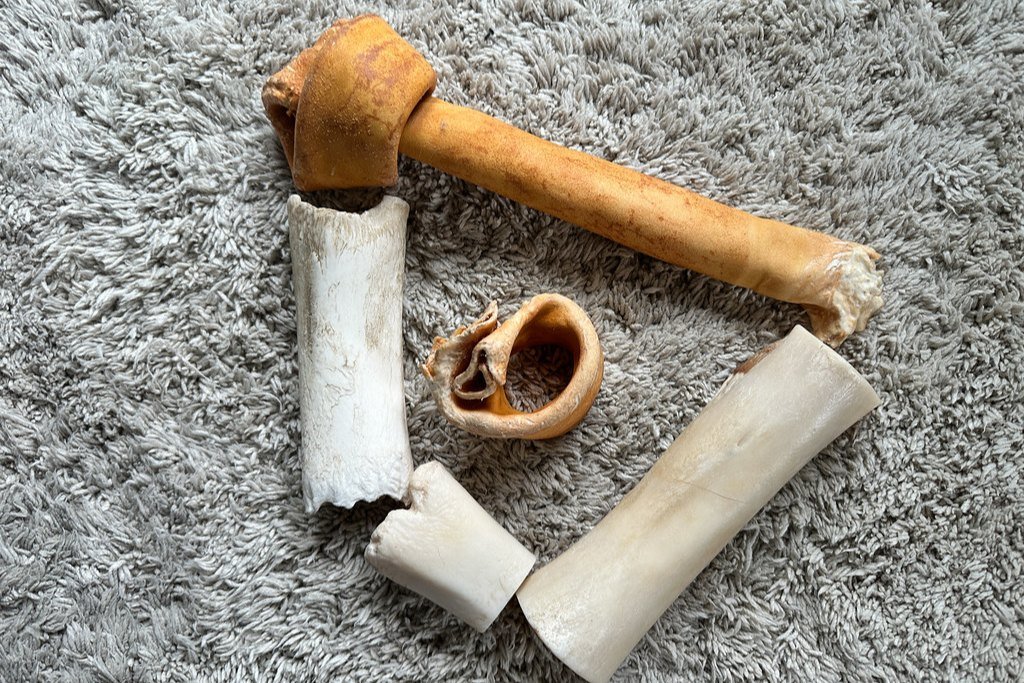
A little dirt on a treat isn’t a big deal. The Kennel Club says “a bit of dirt on your dog’s food won’t harm them.” The concern is what happens when food sits for days. Spoiled food can cause an upset stomach, vomiting, and diarrhea, and the Kennel Club also warns that dogs can swallow foreign objects while digging, which may lead to an intestinal blockage.
Mold is the bigger worry. The Merck Veterinary Manual explains that Penicillium molds growing on food, food waste, and compost can produce tremorgenic mycotoxins, which affect the nervous system. ASPCA Poison Control says these molds like protein- and fat-rich organic material, and that it’s common for its poison center to get calls about dogs with tremors. Merck lists signs like vomiting, drooling, a high body temperature, wobbliness, tremors, and seizures, which can start within 1 to 2 hours or up to several hours later.
⚠️ Please don’t wait. If your dog digs up and eats an old treat, a bone, or anything moldy and then starts vomiting, trembling, or acting unsteady, call your vet or an animal poison hotline right away.
Bones themselves are worth a second thought, too. PetMD notes that veterinary dentists advise against giving bones or anything harder than your thumbnail can dent, since they can break teeth, and bone pieces can get stuck in the esophagus, stomach, or intestines.
How to respond kindly
The good news is that you don’t have to stop this behavior. You can give it a safer place to happen.
PetMD suggests a digging pit outdoors, such as a kids’ plastic pool filled with dirt, sand, or mulch, with a few treats hidden inside. Indoors, a cardboard box filled with old T-shirts works too. Dr. Choi offers another idea: put a little water in a bathtub or kiddie pool and float frozen treats and toys in it.
You can also turn it into a game. The AKC suggests teaching your dog to “bury” a toy or treat in blankets or pillows on cue and then find it again. Dr. Choi recommends hiding treats in a blanket for your dog to sniff out, which uses their nose and their brain.
💡 Good to know: The AKC suggests giving just one or two toys at a time and rotating them weekly. Too many toys or chews at once can leave your dog with extras, and the AKC says a surplus is what encourages burying.
A fuller day makes a difference too. Walks, training, puzzle toys, and sniffing games all count. The AKC mentions scent work and trick training as good outlets. If digging becomes constant, your dog damages their paws or nails, or you see guarding, PetMD recommends talking to your vet and a certified trainer or behaviorist.
Fun facts 🐾
Wolves spread their stash around. Live Science describes gray wolves as “scatter hoarders” that tuck food into hideaways spread over fairly large areas instead of keeping it all in one place.
Your dog’s nose is built for finding treasure. Live Science cites research in Applied Animal Behaviour Science estimating a dog’s sense of smell at about 10,000 to 100,000 times more powerful than ours. That’s a big reason dogs rarely lose track of a hiding spot.
Not burying is fine too. Anderson told Live Science that a dog who never shows the burying instinct is nothing to worry about.
Angel Jake Note 🐾
It’s easy to wonder if a dog who hides their food doesn’t like it or doesn’t feel safe. Usually, it’s the opposite. They like it so much they want to save it for later. That little pantry instinct has been passed down for a very long time.
What I’d keep an eye on is the mood around it. A relaxed dog stashing a chew in the couch is just being a dog. A tense dog who growls over their stash, or a dog who suddenly can’t stop digging, may need a bit more help. And if any old buried snack gets eaten, watch for shaking or vomiting and call your vet if you see it. You know your dog’s normal better than anyone.
Medical Disclaimer
I’m not a vet, and nothing here replaces a real exam. If something about your dog feels off, please trust that feeling and call your veterinarian.
Sources
- American Kennel Club: Why Do Dogs Bury Bones? The Answer Is Surprisingly Simple
- American Kennel Club: Why Is My Dog Hiding Things?
- American Kennel Club: Dachshund History: The Badger Dog’s Fascinating Past
- American Kennel Club: The Terrier Group: Planet Earthdog
- PetMD: Why Do Dogs Bury Bones?
- Live Science: Why do dogs bury bones? It’s the ‘wolf’ in them
- The Kennel Club: Why do dogs bury food?
- Hill’s Pet Nutrition: Why Do Dogs Bury Things?
- The Farmer’s Dog: Why Does My Dog Push the Ball Under the Couch?
- ASPCA: Food Guarding
- Canadian Field-Naturalist (Mech and Adams, 1999): Killing of a muskox by two wolves and subsequent caching (USGS)
- PLOS ONE (Vetter et al., 2023): Observational spatial memory in wolves and dogs
- Merck Veterinary Manual: Tremorgenic Neuromycotoxicosis in Dogs
- ASPCApro: Moldy Food Dangers to Pets
- 주간동아 (Weekly Donga): 반려견의 ‘땅 파기’, 문제 행동인가요?