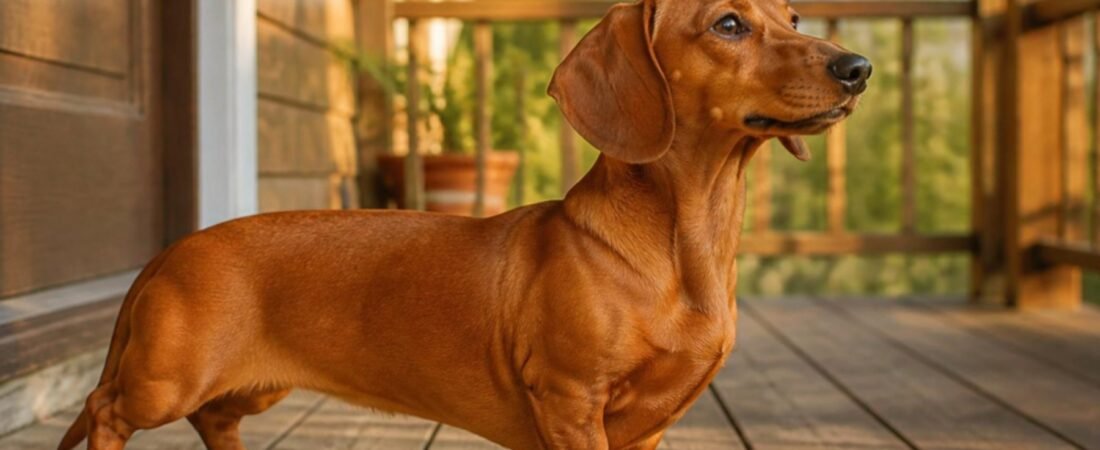
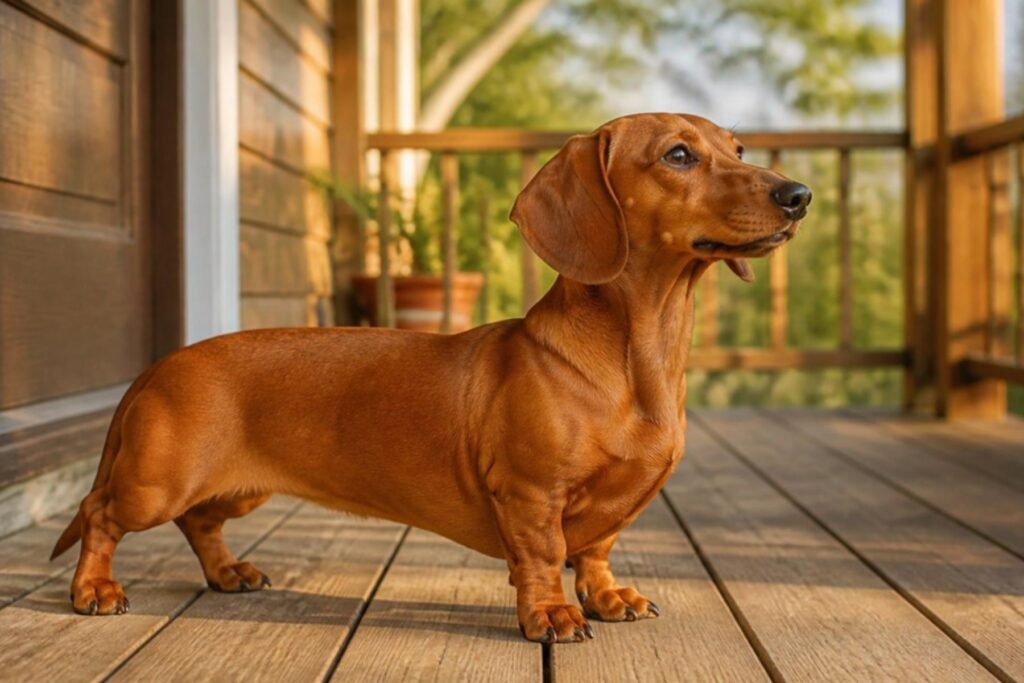
Long body, short legs, big ears, and an even bigger attitude. It’s hard to look at a Dachshund and not smile. They waddle like little sausages on legs, and they seem to have absolutely no idea how small they are.
But that funny shape wasn’t made to be cute. Every part of a Dachshund was designed for one of the toughest jobs a dog could have: going underground to face a badger. And that history explains so much about the way they act today, from the loud bark to the stubborn streak.
The “badger dog”
The name says it all. In German, Dachs means “badger” and Hund means “dog.” According to Wikipedia, the earliest clear references to the breed date back to the early 18th century, when they were also called “Dachs Kriecher,” or “badger crawler.”
The AKC explains that German foresters and hunters began breeding them carefully in the 1700s. Their job was to track a badger by scent, follow it into its tunnel, and hold it there until the hunters could dig down. Badgers are strong and fierce, so this took a very brave little dog.
The breed standard still describes the Dachshund as “courageous to the point of rashness”, and anyone who has watched one bark at a big dog knows that’s true.

Why they’re built this way
This is the part I found fascinating. Almost every “odd” feature of a Dachshund had a purpose:
- Short, strong legs let them fit into narrow tunnels and move through them.
- Big, paddle-shaped front paws are great for digging.
- A deep, long chest gives plenty of room for the heart and lungs, which helped them keep going during long, tiring work underground.
- A loud, deep bark, surprisingly big for their size, helped hunters above ground find out exactly where the dog was.
- A sturdy tail is easy to spot sticking out of tall grass or a hole.
💡 Did you know? That big bark isn’t a flaw. It was bred into them on purpose, so hunters could hear them from under the ground. So when your Dachshund barks at the mail carrier like a much bigger dog, they’re doing exactly what their ancestors were bred to do.
Standard, miniature, and three coat types
Dachshunds come in two main sizes in the United States. The AKC says standard Dachshunds usually weigh 16 to 32 pounds, while miniatures are 11 pounds or less. In Germany, there’s also a third, smaller size called the Kaninchen, or “rabbit” Dachshund, originally meant for hunting rabbits in even smaller burrows.
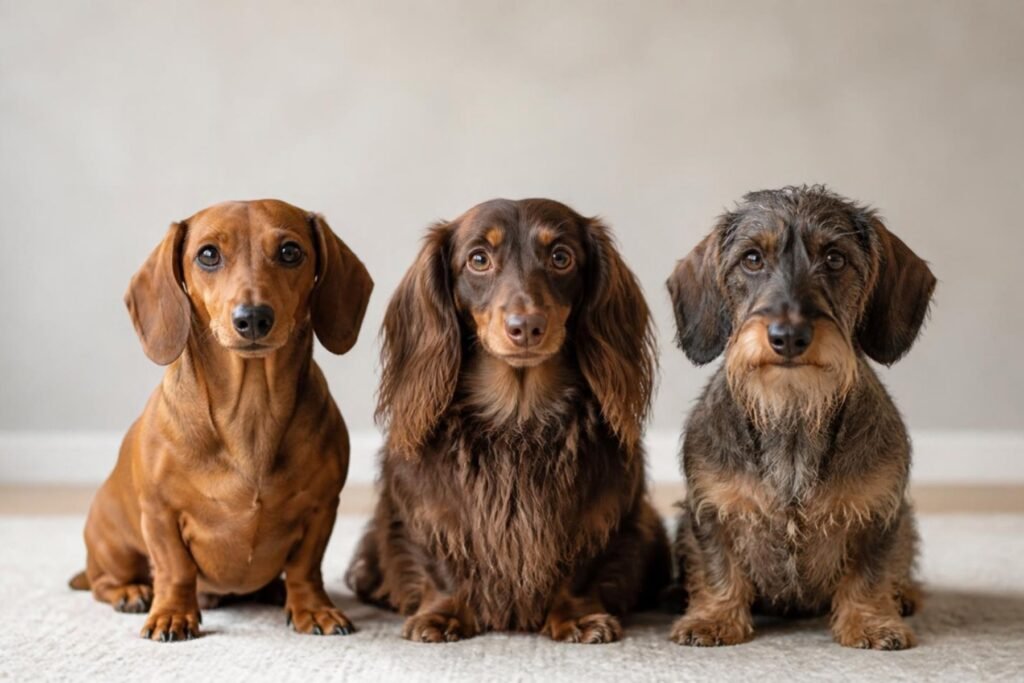
They also come in three coat types:
- Smooth, the most common, short and shiny
- Long-haired, soft and flowing, with a gentle look
- Wire-haired, with a rough coat, bushy eyebrows, and a little beard
Kaiser, war, and “liberty hounds”
Dachshunds became a symbol of Germany, and that wasn’t always good for them.
The AKC tells a funny story about Kaiser Wilhelm II’s two Dachshunds, Wadl and Hexl. They were described as “biting, snarling little brutes”, and on one royal visit, they killed a prized pheasant belonging to an archduke.
But during World War I, anything German became unpopular in the United States and Britain. Political cartoons used Dachshunds to make fun of Germany, and the breed’s numbers dropped. To protect them, some owners started calling them liberty hounds, the same way sauerkraut was renamed “liberty cabbage.” The AKC even tried calling them “badger dogs” for a while.
Thankfully, Dachshunds bounced back, and today they’re one of the most popular breeds in America.
The first Olympic mascot was a Dachshund
Here’s a fact that surprised me. The very first official Olympic mascot was a Dachshund. His name was Waldi, a colorful striped Dachshund created for the 1972 Summer Olympics in Munich. Organizers chose him because the breed was so closely linked to Germany and was especially loved in Munich.
💡 Did you know? According to the AKC, the “hot dog” was named after the Dachshund, not the other way around. The sausage was first compared to the long little dog, and over time the name was shortened to “hot dog.”
Famous Dachshund lovers
Some very creative people fell in love with this breed:
- Pablo Picasso had a Dachshund named Lump, who is thought to have inspired some of his artwork.
- Andy Warhol painted his Dachshunds, Archie and Amos. Archie often went with him to parties and even traveled with him to Europe.
- E.B. White, the author of Charlotte’s Web, joked that he’d rather train a zebra than get his Dachshund, Fred, to obey. I think every Dachshund owner has felt that at least once.
Personality: loyal, brave, and a little stubborn
Dachshunds are playful, clever, and very loyal to their families. Many are true “one-person dogs” who follow their favorite human everywhere.
Because they were bred to make decisions on their own underground, they can also be independent and stubborn. They know what they want, and they’re not always interested in what you want. Short, fun training sessions with lots of rewards work far better than a strict approach.
Korean Dachshund owners often talk about how surprisingly loud and energetic they are. Namuwiki even compares asking a Dachshund to stop barking to asking a bird to stop flying. It’s a joke, but it’s not far from the truth.
Health: protecting that long back
This is the most important section for any Dachshund parent.
Dachshunds are the breed most famously linked to intervertebral disc disease (IVDD). The discs between the bones of the spine can bulge or burst and press on the spinal cord, causing pain, weakness, or even paralysis. Wikipedia notes that about 20 to 25% of Dachshunds will develop IVDD in their lifetime.
For a long time, people assumed it was simply because their backs are so long. But a 2017 study from UC Davis found something deeper. Researchers discovered an extra copy of a gene called FGF4, which causes both the short legs and early changes in the spinal discs. Dogs with IVDD were about 50 times more likely to carry it. In other words, the same gene that gives Dachshunds their famous short legs also makes their discs weaker.
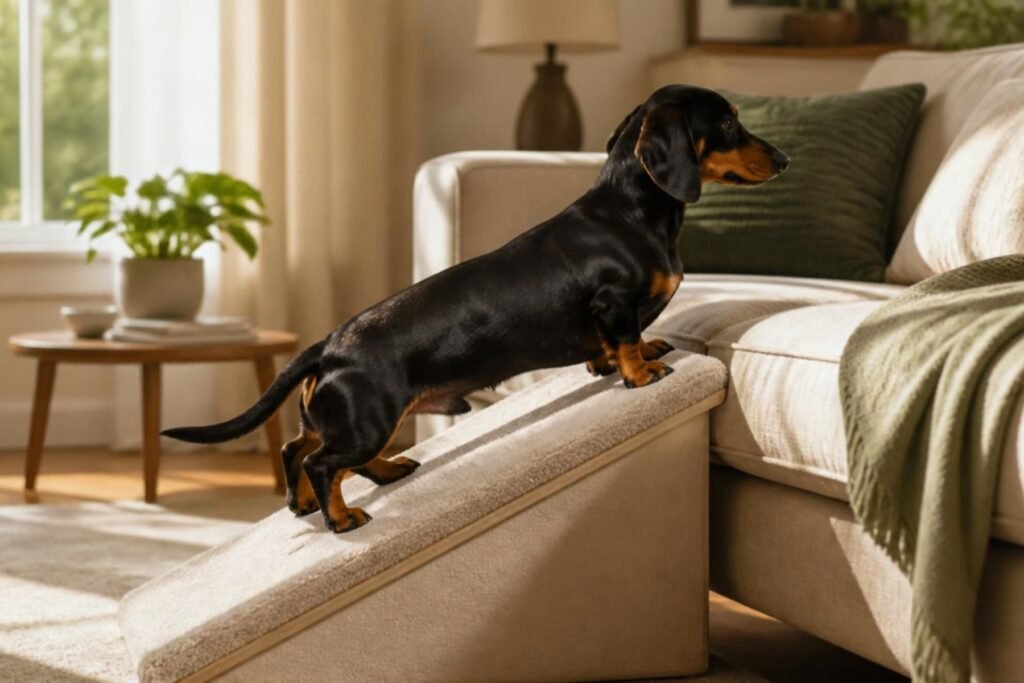
Some everyday ways to protect your Dachshund’s back:
- Keep them at a healthy weight. Extra pounds put more strain on the spine.
- Use ramps or steps for sofas and beds instead of letting them jump.
- Limit stairs when you can, especially for older dogs.
- Support their back and bottom when you pick them up, instead of lifting them only under the front legs.
- Keep them fit. Regular walks help build the muscles that support the spine.
⚠️ Please don’t wait. If your Dachshund suddenly cries out, refuses to move, wobbles when walking, drags their back legs, or seems to have a hunched back, call your vet right away. With IVDD, getting help quickly can make a huge difference.
Other things to watch for include dental disease, obesity, and eye problems. Dachshunds often live a long time, too. A 2024 UK study found an average life expectancy of about 13.2 years, and about 14 years for miniatures.
Fun facts and true stories 🐾
One Dachshund survived 529 days alone on an island. In November 2023, a tiny Dachshund named Valerie slipped away during a camping trip on Kangaroo Island in South Australia. Her owners, Georgia Gardner and Josh Fishlock, searched for her but had to go home without her. More than a year later, locals spotted a small Dachshund in a pink collar. A rescue group called Kangala Wildlife Rescue spent over 1,000 volunteer hours trying to catch her. In April 2025, they finally caught her using a trap filled with her old toys and a T-shirt Georgia had worn to carry her scent. Rescuers said she was “fit and well” after 529 days in the wild.
A Dachshund once held the record for the world’s oldest dog. According to the AKC, a Dachshund named Chanel was recognized by Guinness World Records and lived to 21 years old.
There are Dachshund races. Dachshund racing started in Australia in the 1970s and spread around the world. In Southern California, the Wiener Nationals have been held since 1995.
Britain’s first cloned dog was a Dachshund. A Dachshund named Winnie was cloned in the UK, and her puppy, “Mini Winnie,” looked just like her.
Is a Dachshund right for you?
A Dachshund might be a great fit if you want a loyal, funny, and affectionate companion, you’re patient with training, and you’re willing to take good care of their back throughout their life.
It might be harder if you live somewhere that needs to stay quiet, have lots of stairs you can’t avoid, or want a dog who follows every command right away.
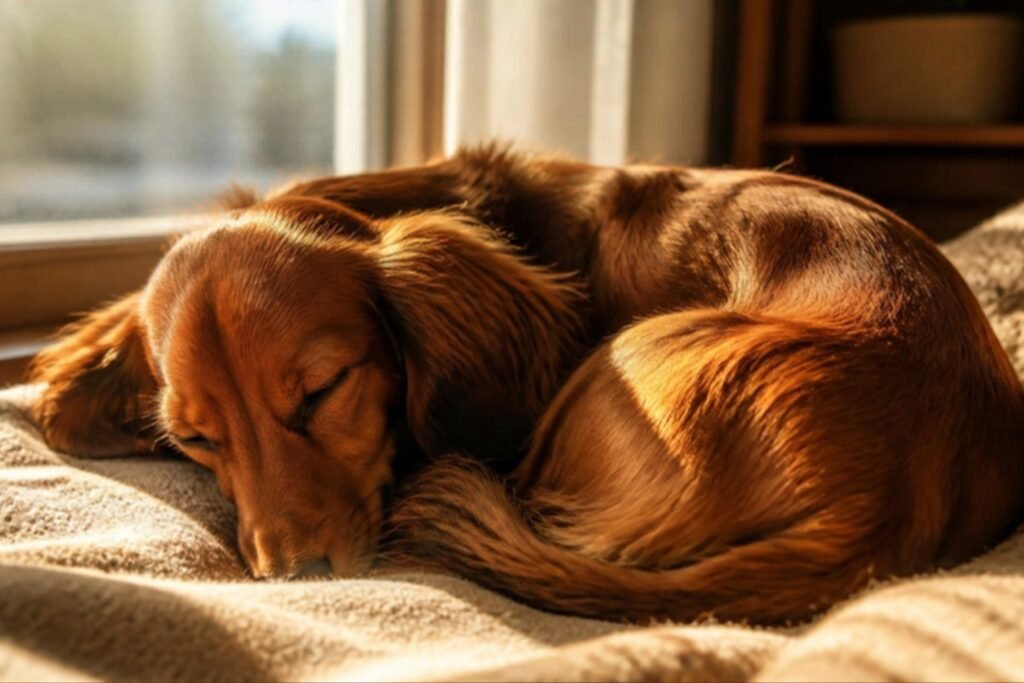
Angel Jake Note 🐾
I think Dachshunds are a perfect reminder that a dog’s shape tells a story. Those short legs and that long body were built for courage, for going into dark tunnels that bigger dogs couldn’t reach. And somewhere along the way, those brave little hunters became some of the most loving couch companions in the world.
If you share your life with a Dachshund, take good care of that precious back, and enjoy every stubborn, silly, sausage-shaped moment. They may be small, but their hearts are enormous.
Medical Disclaimer
I’m not a vet, and nothing here replaces a real exam. If something about your dog feels off, please trust that feeling and call your veterinarian.
Sources
- American Kennel Club: Dachshund History, the Badger Dog’s Fascinating Past
- American Kennel Club: Facts About the Dachshund You May Not Know
- Wikipedia: Dachshund
- UC Davis: Unraveling the Genetics of Disc Disease in Dogs
- PNAS: FGF4 retrogene on CFA12 is responsible for chondrodystrophy and intervertebral disc disease in dogs (2017)
- Smithsonian Magazine: Valerie the Miniature Dachshund Has Been Rescued After 529 Days
- ABC News: Valerie the dachshund found ‘fit and well’ after 529 days
- 나무위키: 닥스훈트