
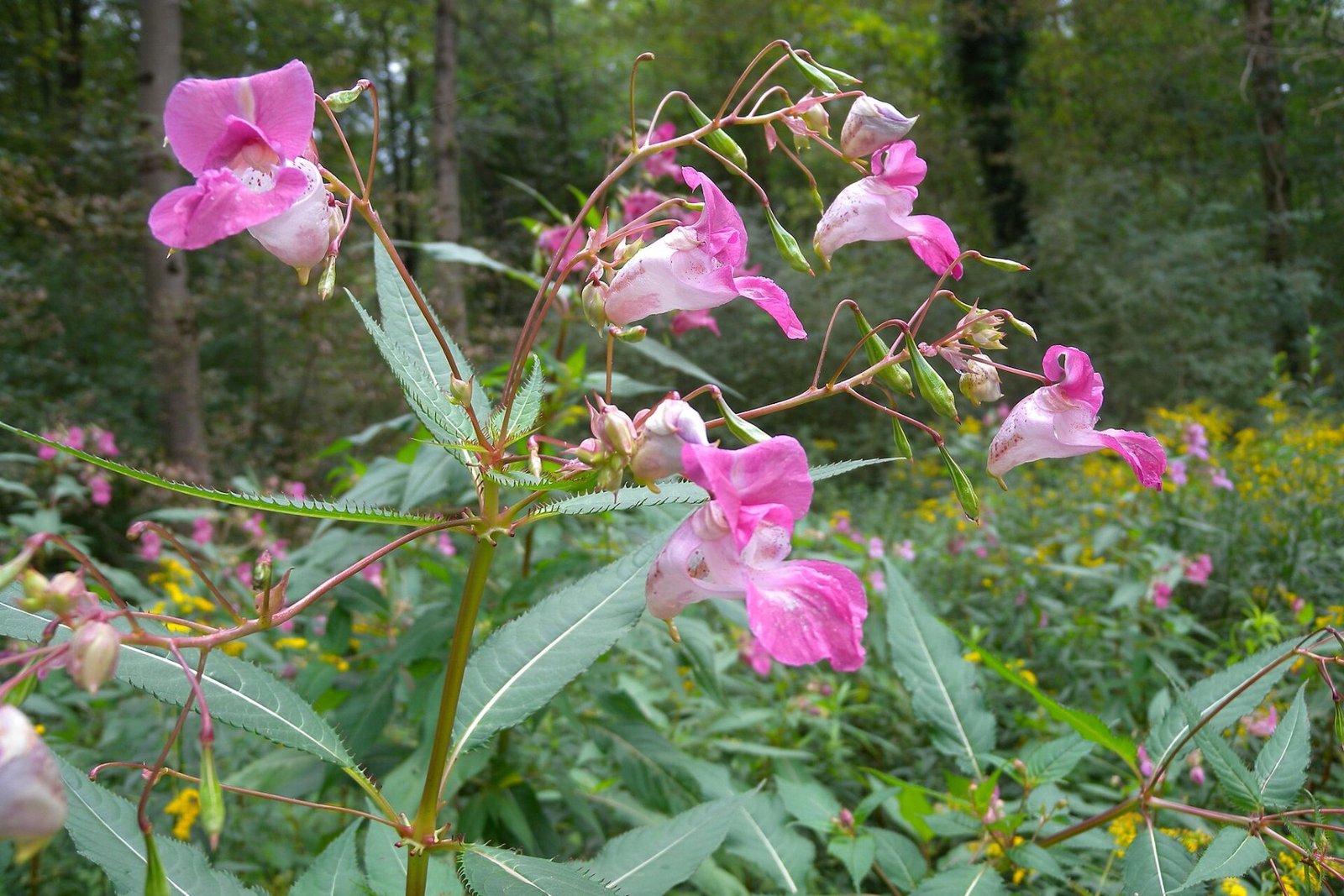
We usually think of detection dogs as professionals: airport beagles, search-and-rescue teams, police dogs. A new study from Germany asked a different question. Could ordinary dog owners and their dogs, working as volunteers, learn to find invasive plants in the wild?
The answer, at least in this first test, looks like yes.
What the study did
Researchers at the Helmholtz Centre for Environmental Research (UFZ) in Germany trained 31 dogs and their volunteer handlers between 2021 and 2023 to find three invasive plant species. One of them, shown in the study’s photos, was Himalayan balsam (Impatiens glandulifera).
The work was published on November 4, 2026, in the journal PLOS One. Annegret Grimm-Seyfarth led the study.
At the end of the training, the teams faced a real field test out in nature. The authors describe it as one of the rare volunteer-based detection dog projects aimed at finding invasive plants in the field “and not in experiments.”
How well did the dogs do?
Twelve teams made it to the field test. Of those, 11 teams passed, with an average detection success rate of 75%, according to the UFZ release.
That’s a promising number for a volunteer-run project. The paper describes it as a feasibility study, so it’s an early look rather than a final verdict. The release doesn’t say why only 12 of the 31 trained teams reached the field test.
💡 Good to know: This was a small pilot. The 75% figure comes from 12 field-tested teams, so it’s a first result that larger projects will need to confirm.
Why it takes more than a good nose
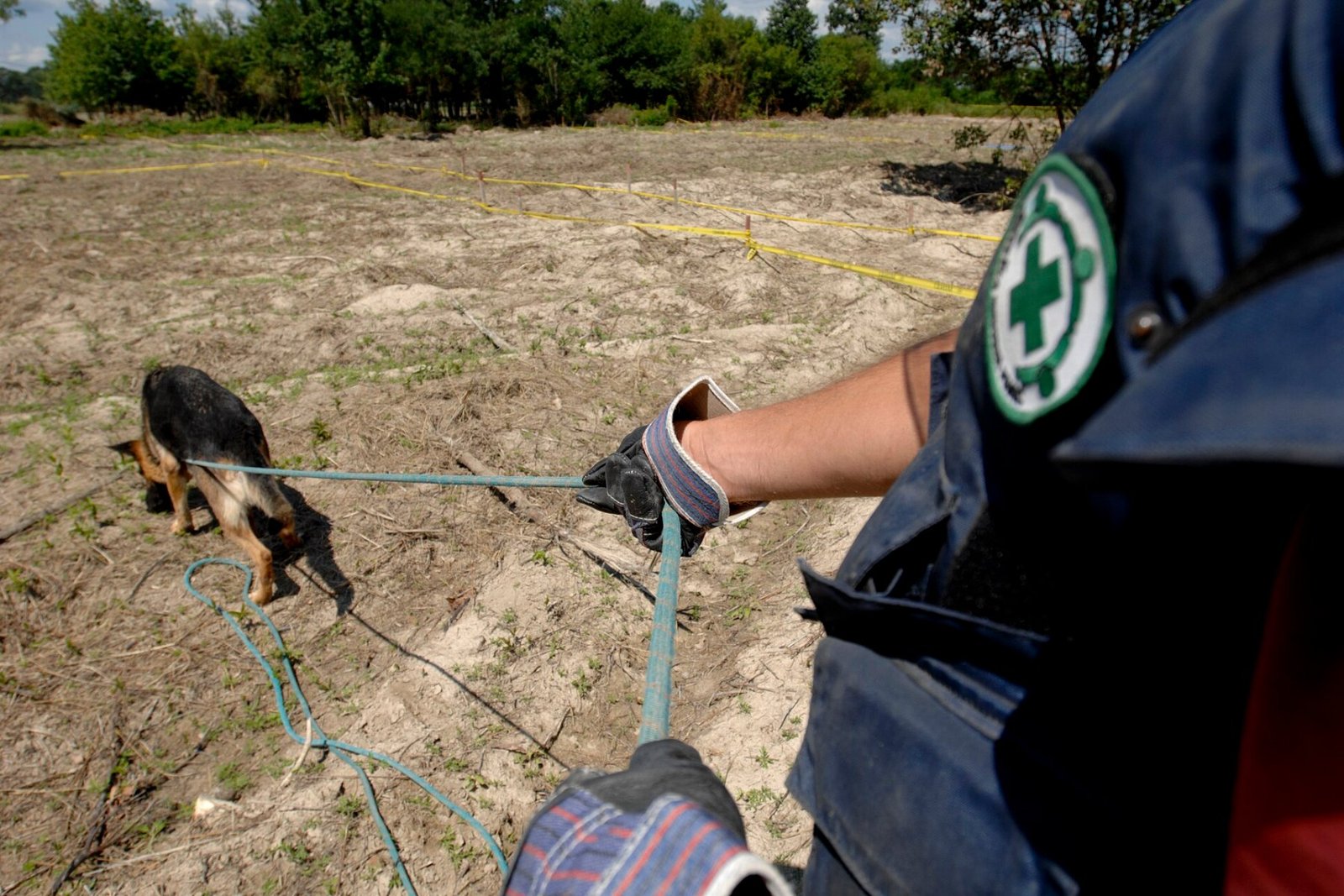
The researchers were careful not to make it sound easy. Training dogs to identify target species reliably was one challenge, and the volunteers also had to learn how to work with their dogs in the field. In their words, “reliable monitoring requires more than a good nose.”
Based on what they learned, the team made recommendations about how to choose and coordinate volunteers, how to train the dogs, and how to handle the first real deployments.
Why this matters
Keeping track of invasive plants means searching a lot of ground. If trained volunteer teams can help with that monitoring, conservation projects may be able to reach places they otherwise couldn’t.
It also says something nice about everyday dogs. The teams in this project were dogs and their owners, working as volunteers rather than as professional handlers.
Detection dogs at work in Korea
Korea has its own detection dogs guarding against unwanted plants and animal products. The Animal and Plant Quarantine Agency (농림축산검역본부) uses quarantine detector dogs at airports and seaports across the country to sniff out agricultural and livestock products that travelers bring in.
Many of them are beagles. When the agency’s Incheon Airport office looked for families to adopt 12 retired detector dogs in late 2022, 10 of them were beagles and 2 were English springer spaniels, Daily Vet (데일리벳) reported. The agency described them as smart and friendly after years of training and detection work.
Data analysis has helped too. In a 2018 test, an assignment algorithm that sent detector dogs to higher-risk flights at Incheon Airport produced a catch rate about 24.4% higher than the experience-based method, Daily Vet reported.

Angel Jake Note 🐾
There’s something lovely about the idea of a family dog and their person heading out on a weekend to help protect a riverbank.
Every dog has a nose that’s far more powerful than ours. This study is a good reminder that, with patience and training, that nose can do some real good in the world.
A Note on This Study
This post summarizes a published study for everyday dog lovers. One study can’t tell the whole story, and its findings may not apply to every dog. For the full methods and limitations, please see the original research linked in the Sources section.
Sources
- EurekAlert! (UFZ): Trained dogs detected invasive plant species in Germany with 75% accuracy
- Grimm-Seyfarth et al. (2026): Opportunities and challenges in training volunteer wildlife detection dog-handler teams for invasive plant monitoring, PLOS One
- Talker: Study reveals canines could help sniff out invasive plants
- 데일리벳: 은퇴 검역탐지견 12마리 민간입양..1월 18일까지 신청 접수
- 데일리벳: 인공지능·빅데이터 분석으로 탐지견 검역단속률 24.4% 상승