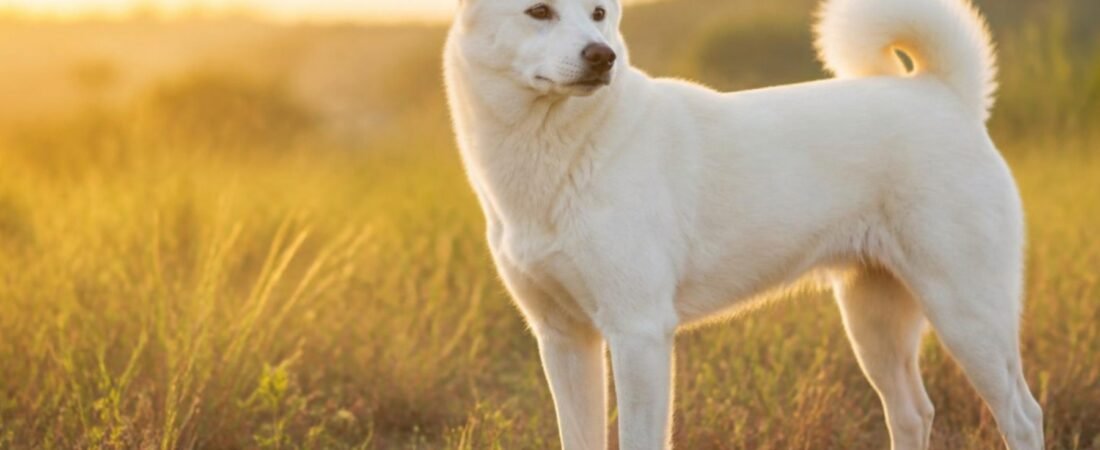
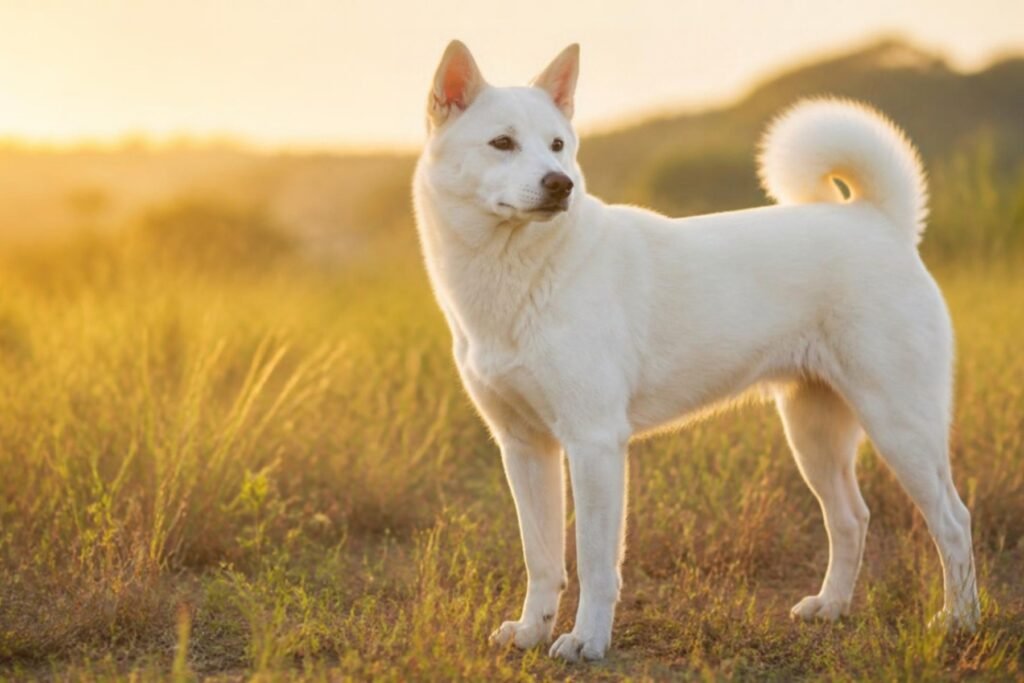
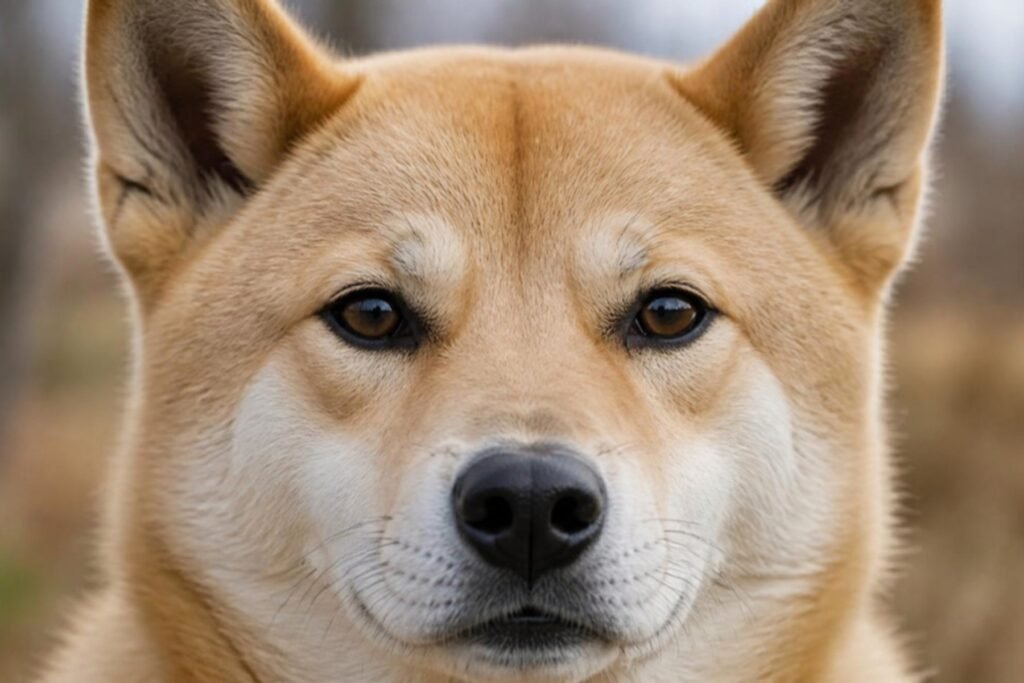
If you’ve ever met a Korean Jindo, you probably remember the look. Upright triangle ears and a thick tail curled over the back. And those calm dark eyes that seem to be deciding whether you’re worth their time.
In Korea, this dog is a national symbol. It’s protected by law, and one Jindo’s long walk home became a story Korean kids grew up with. In the US, though, a lot of Jindos and Jindo mixes arrive through rescues and shelters. Both sides of that story matter, so I want to tell you about each.
A dog from an island, with no written beginning
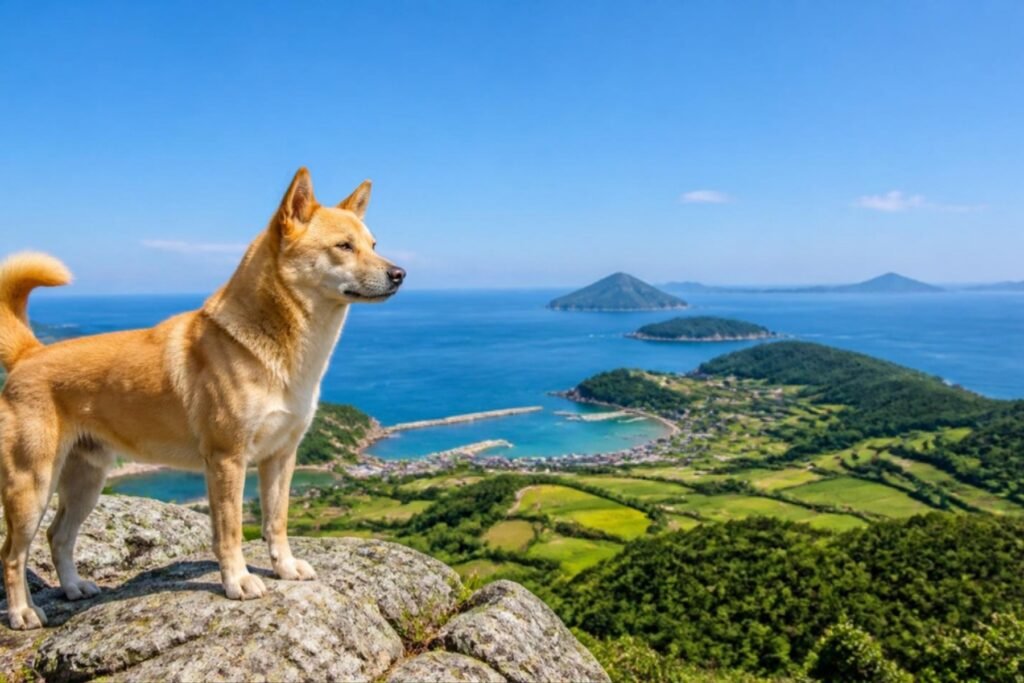
The Jindo comes from Jindo Island, off the southwestern tip of the Korean Peninsula. PetMD notes that these dogs are assumed to have been roaming the island for thousands of years, but there’s no written record of exactly how they got there.
That leaves room for theories. Purina mentions the idea that they descend from dogs brought to Korea by the Mongols in the 13th century. The Encyclopedia of Korean Culture offers a much older one: that the breed’s ancestors came from Southeast Asia about 3,000 years ago, along with rice farming. Nobody can say for sure which is right, and I kind of like that the Jindo keeps a little mystery.
What we do know is that they worked as hunters. According to the Encyclopedia of Korean Culture, they hunted small game like rabbits and civets, and Wikipedia adds larger prey like water deer and wild boar.
A living national treasure
The Jindo was first registered as a natural monument in 1938, under Japanese colonial rule. Then in 1962, the South Korean government designated the Jindo dog of Jindo Island as Natural Monument No. 53. A separate law to protect and promote the breed followed in 1967.
This protection is taken seriously. Wikipedia explains that only dogs born on Jindo Island are officially registered as pure Jindos, and that it’s very difficult to export pure island-born Jindos outside of Korea. As of 2016, it listed just two registered island-born Jindos in the US, one in Los Angeles and one in Seattle.
Outside Korea, the breed took a while to get noticed. The United Kennel Club recognized it on January 1, 1998, and the FCI followed in 2005. In the US, the Jindo is still in the AKC’s Foundation Stock Service, which means it’s recorded by the AKC but not yet fully recognized.
There’s a harder side to this system, too. The Korean animal rights group KARA has pointed out that only dogs that pass official certification in Jindo County are protected as a Natural Monument. Dogs that don’t qualify are sent off the island or sterilized, and KARA says many of them have ended up on dog farms. I’ll come back to that, because it’s one reason so many Jindos need homes today.
Six colors, pointy ears, and that famous tail
Jindos are medium-sized dogs. The Encyclopedia of Korean Culture lists males at 50 to 55 cm (about 20 to 22 inches) and females at 45 to 50 cm (about 18 to 20 inches). Most US sources put their weight somewhere between 30 and 50 pounds, with males on the heavier side.
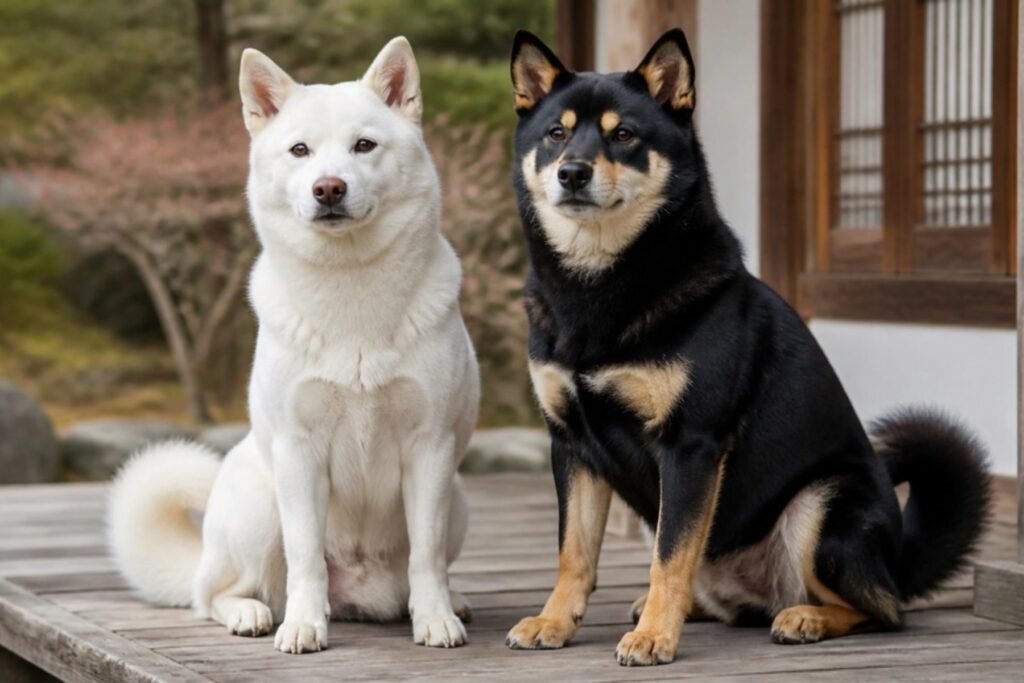
In Korea, people traditionally describe them by color:
- White, called Baekgu (백구)
- Yellow or red fawn
- Black
- Gray or wolf gray
- Brindle
- Black and tan
White and fawn are the colors you’ll see most in Korea. Namuwiki notes that breeding for the official, heritage-protected Jindo has focused on those two.
Their ears stand up and tip slightly forward, and the head looks almost octagonal from the front. The tail is either curled over the back or held up like a sickle. Namuwiki explains that curled tails were once the standard, but many people later came to prefer the straighter, sickle-shaped tail because they believed it was better for hunting. Today, both are accepted.
The Jindo’s double coat does a lot of work. Purina says it repels mud and dirt fairly well on its own, but it also sheds quite a bit seasonally, so a good brush will become your friend.
Why are Jindos so loyal to “their” people?
The Jindo’s loyalty is legendary. Purina describes them as “usually devoted to one owner,” and Wikipedia notes that Jindos are instinctively wary of strangers and don’t take food from anyone other than their owners.
I think that makes sense when you picture where they came from. A hunting dog on an island, working closely with one family, doesn’t need to be friends with everyone. It needs to know who its people are.
That said, “one-person dog” can be a little misleading. Gina Boehler, executive director of Korean K9 Rescue, told Daily Paws, “They’re super loyal, not only to one human, but to family members. They are people pleasers; they want to be by your side.”
So a Jindo can love a whole family. They just tend to take their time with new people.
Clean as a cat, and just as good at escaping
Here’s a trait that surprises a lot of people. These dogs keep themselves very clean. Daily Paws says they’re known for it, and that it makes them very easy to potty train.
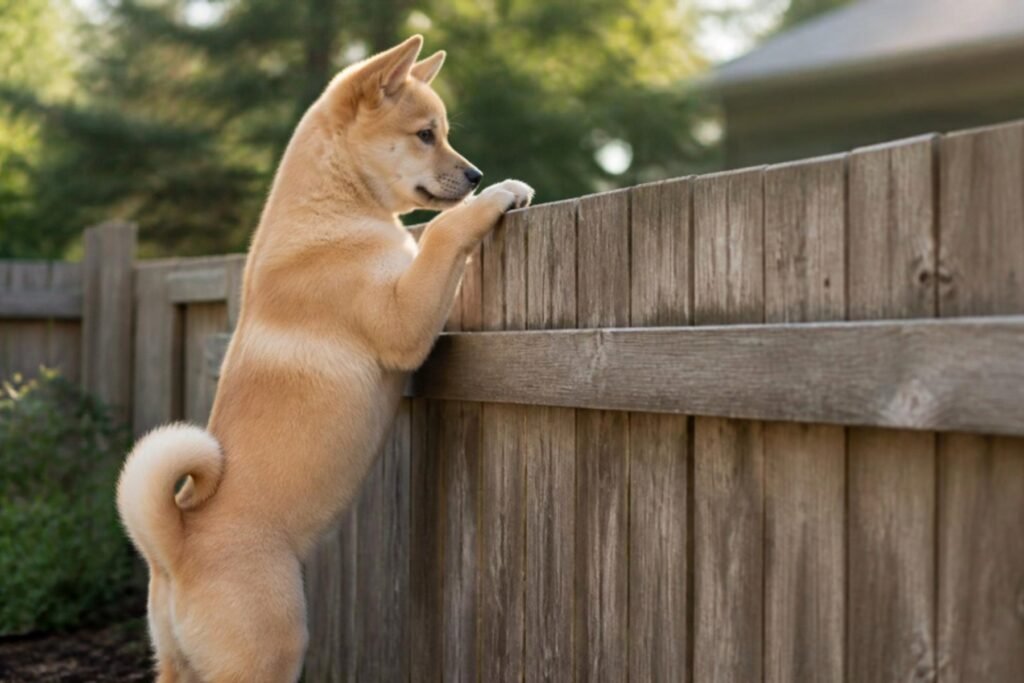
The other thing owners talk about? Escapes. PetMD mentions their “notorious escape artist abilities,” and the Korean Jindo Dog Association of America (KJDAA) says they can learn how to open cages or get out of yards. Daily Paws warns that a Jindo can get out even with a fenced yard.
Part of that comes from their prey drive. PetMD says it “can go beyond play,” and the KJDAA says unfamiliar small animals will most likely be seen as prey. A squirrel on the other side of the fence can be a very strong reason to leave.
⚠️ Please don’t wait. If your Jindo ever slips out, start looking right away. Call your local shelters and animal control, and post on neighborhood groups. Keeping your dog’s microchip registration current and an ID collar on them makes a happy reunion much more likely.
Why force doesn’t work with a Jindo
Jindos are smart. The trouble is, they’re also independent, and they like to know why they’re being asked to do something.
Purina says their independent streak can make them stubborn in training. The KJDAA goes further, saying Jindos “will balk and shut down” with heavy-handed trainers. PetMD recommends consistent positive training that uses rewards instead of punishment.
For a dog who bonds this deeply, trust is everything. If a Jindo feels safe with you, they’ll work with you. If they feel pushed around, many of them will simply check out.
💡 Good to know: rescue Jindos often need patience at first. Gina Boehler told Daily Paws that it takes 3 to 12 months for these dogs to really feel at home.
Health: what to watch for
Jindos tend to live long lives. PetMD and Purina both say they can live 14 to 15 years, while Daily Paws gives a range of 12 to 15.
A few health issues are mentioned in breed guides:
- Hypothyroidism. An underactive thyroid, listed by PetMD, Purina, and Daily Paws.
- Discoid lupus erythematosus (DLE). An immune-related skin condition, mentioned by PetMD and Purina.
- Allergies. Purina notes they can be prone to them.
- Cataracts and hip dysplasia. Both are listed by Daily Paws.
If you notice changes in your Jindo’s skin, coat, weight, or energy, it’s always worth a visit to your vet.
Fun facts and true stories 🐾
Baekgu walked home. This is one of the best-known dog stories in Korea. In 1993, a white Jindo named Baekgu, raised by Park Bok-dan on Jindo Island, was sold to a new owner in Daejeon, about 300 km (190 miles) away. She got loose and made it back to the island about seven months later, very thin but alive. Jindo County put up a statue of her in 2004. Her story became a children’s book and an animated TV series. To be fair, Korean Wikipedia notes that a reporter later said some details were exaggerated, including where she was really sold, and that she may not have been a purebred Jindo at all. But the long walk home is what people remember.
💡 Did you know? Baekgu’s name simply means “white dog” in Korean. White is one of the two colors breeders of the official heritage Jindo have focused on.
Two Jindos named “Peace” and “Unification.” At the 2000 inter-Korean summit, President Kim Dae-jung gave North Korean leader Kim Jong-il a pair of Jindos with those names. North Korea sent back two Pungsan dogs, who were renamed Uri and Duri in the South. According to a 2018 Seoul Shinmun report citing Kyodo News, the Jindos lived at the Pyongyang Central Zoo and had 40 puppies over seven years.
The LAPD tried Jindos as police dogs. In 2010, two Jindo puppies were donated to the Los Angeles Police Department. Their names were Daehan and Mingook, which together spell out “Republic of Korea.” The program didn’t work out. The chief trainer, Sgt. Doug Roller, said the dogs lacked the “lasting, hard-driven hunt” instinct police work requires, and both were placed in private homes in Los Angeles.
They’ve been on the Olympic stage. Purina and Wikipedia both note that Jindos were part of the 1988 Seoul Olympics.
Is a Jindo right for you?
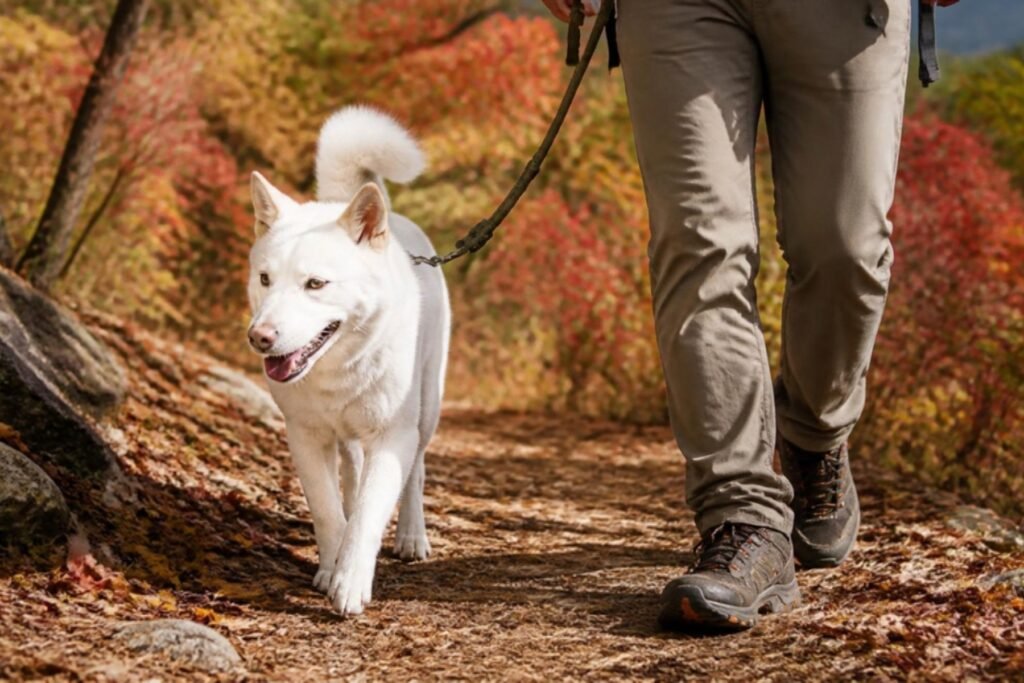
A Jindo might be a great fit if you love being outdoors and you’re patient enough to earn a dog’s trust instead of demanding it. A secure yard and good leash habits are a must.
Patti Kim, president of Jindo Love Rescue, put it clearly to Daily Paws: “For Jindos, we look for active people who go on hikes or already do a lot outdoors.” She added that if you mostly stay home and walk around the block a couple of times a day, “then the Jindo is not the right dog for you.”
It can be harder if you have cats or other small pets, or another dominant dog of the same sex. The KJDAA warns about both.
If you decide a Jindo is for you, please think about adoption. Humane World for Animals has closed 18 dog meat farms in South Korea and rescued more than 1,900 dogs, including Jindos and Jindo mixes. Many of them were flown to the US to find families. South Korea passed a law on January 9, 2024, to end the dog meat industry by 2027, but there are still plenty of Jindos waiting in rescues and shelters here.
Angel Jake Note 🐾
The Jindo gives so much once they decide you’re theirs. They don’t hand out trust to everyone. But when they choose you, they really mean it.
If you share your home with a Jindo, especially one who came from a hard start, give them time. Keep that fence high and your training kind, and let them decide when they’re ready to lean in. When they do, you’ll understand why a whole country treasures them.
Medical Disclaimer
I’m not a vet, and nothing here replaces a real exam. If something about your dog feels off, please trust that feeling and call your veterinarian.
Sources
- American Kennel Club: Korean Jindo Dog
- Wikipedia: Korean Jindo
- 한국민족문화대백과사전: 진도의 진도개
- 나무위키: 진돗개
- 위키백과: 돌아온 백구
- PetMD: Jindo Dog Breed Health and Care
- Purina: Korean Jindo
- Daily Paws: Jindo Dog Breed Information and Characteristics
- Korean Jindo Dog Association of America: Do I Really Want a Jindo?
- 동물권행동 카라: 모든 ‘진돗개’를 위한 제대로 된 보호관리가 필요합니다
- Character Media: LAPD Gives Jindo Recruits the Boot
- 서울신문: 2000년 진돗개·풍산개, 2007년 병풍·송이버섯
- 서울신문: 2000년 남북정상회담 당시 선물한 진돗개, 모두 ‘죽은’ 듯
- Humane World for Animals: Closing South Korea’s Dog Meat Farms
- Humane World for Animals: South Korea Passes Law to End Dog Meat Industry by 2027