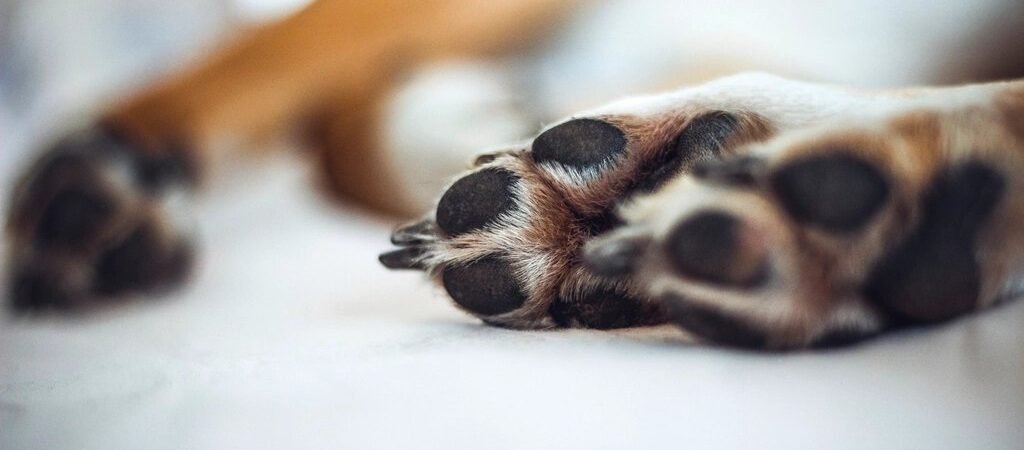

You pick up the clippers, and your dog is suddenly across the room. Or maybe they stay put, but you’re the nervous one, staring at a dark nail and wondering exactly where the line is. If nail trims feel like a small battle in your house, you’re far from the only one.
The good news is that this is a skill, for both of you. Dogs can learn that paw handling predicts good things, and you can learn what a safe cut looks like. A little patience goes a long way, and so does knowing the “why” behind each step.
Why nail length matters more than it looks
It’s easy to think of nails as cosmetic. The American Kennel Club (AKC) says otherwise: overgrown nails can turn a sound paw into a splayed foot and reduce traction, and over time they can deform the feet and injure tendons. Every time a long nail hits the ground, that pressure travels up through the foot and leg. VCA Animal Hospitals adds that a long nail is more likely to snag and break, which is very painful and can bleed for a long time.
Veterinarians Karen Gellman and Judith Shoemaker, writing for the AKC Canine Health Foundation, go a step further. They explain that when long nails press into the ground, the brain reads the signal as if the dog were standing on a slope. The result, they write, is an unnatural posture that puts extra weight on the hind legs and overloads those joints.
VCA offers a quick home check: if you can hear their nails clicking when they trot, they’re probably too long. Gellman and Shoemaker set an even stricter standard. On a firm, level floor, a dog’s nails shouldn’t touch the ground at all.
💡 Did you know? The posture theory is widely repeated, but it’s still being tested. In a small 2026 study in Frontiers in Veterinary Science, researchers measured seven healthy dogs on a pressure-sensing treadmill before and after a trim and found no meaningful change in stride length or weight distribution. They wrote that the posture idea is not scientifically validated yet, though their study was tiny and only looked at immediate effects.
Meet the quick, and why it moves
Inside every nail is the quick, the pink, living core that carries blood vessels and nerves. Cut into it, and your dog feels pain and the nail bleeds.
Here’s the part many owners don’t know: the quick isn’t fixed. When nails are left long, it grows longer too, and VCA explains that the nail can then only be trimmed back so far. The flip side is encouraging. The AKC says regular trimming makes the quick recede from the tip, and Gellman and Shoemaker note that shortening the quick takes weekly cuts.
A Korean column in 매일신문 (Maeil Shinmun) by veterinarian Park Soon-seok of Tops Animal Medical Center explains why the quick is so easy to hit. Our nails grow close to the skin, but a dog’s nail is firmly attached to the last bone of the toe.
So how short is too short?
Washington State University’s Veterinary Teaching Hospital (WSU) says it’s best not to cut within 2 millimeters of the quick. As you take thin slices, watch the cut surface, and stop when a gray-to-pink oval appears. VCA describes the same moment a little differently: the center of the nail starts to look shiny and changes texture, like the inside of a jellybean.
Clippers or a grinder?
Both work. The AKC says nail scissors, guillotine clippers, and dog-specific grinders are all safe when used correctly, and the best one is the one you and your dog are comfortable with.
VCA’s behavior team prefers sharp scissor or plier-style clippers, warning that guillotine types with one sharp blade often crush the nail instead of cutting it. Grinders take off a little at a time, and some dogs tolerate them better. VCA says a 1 to 2 second grind is enough, since grinding longer can heat the nail. Whichever you pick, keep styptic powder within reach.
How to trim, one small slice at a time

1. Pick a comfortable spot. Some dogs are happy on your lap or a table, and a non-slip mat helps them feel steady.
2. Hold the paw firmly but gently. Put your thumb on the toe pad and your forefinger on top of the toe, just above the nail. Push the fur out of the way.
3. Press your thumb slightly up and back on the pad while pushing your forefinger forward. This extends the nail so you can see it clearly.
4. Clip only the tip, straight across. Don’t go past the point where the nail starts to curve.
5. Take thin slices rather than one big cut, and check the cut surface each time for that gray-to-pink oval or the shiny, jellybean-like center.
6. If you’re grinding, work a second or two at a time across the bottom of the nail, then smooth in from the tip. Keep long fur away from the grinder.
7. Don’t forget the dewclaws on the inner side of the paw.
If you’ve never done this before, AKC Chief Veterinarian Dr. Jerry Klein suggests asking your veterinarian or a vet tech to give you a lesson.
Black nails and those sneaky dewclaws
Dark nails hide the quick, so you’re working by feel and by sight of the cut surface. WSU recommends cutting dark nails in several small cuts to lower the chance of hitting the quick. The AKC says a chalky white ring is your signal to stop, and Dr. Park adds that you should stop if your dog shows any sign of pain.
Dewclaws need their own attention. VCA points out that these extra toes don’t touch the ground, so walking never wears them down. WSU warns that the dewclaw often grows into the toe pad and causes pain. Since it’s attached by loose skin, you can gently bend it away from the leg to trim it. Some dogs have none and some have two per paw, so check all four feet.
If your dog is scared of the clippers
First, you didn’t fail. According to VCA, dogs have more nerve endings in the skin over their toes than over their shoulders or hips, so it makes sense that feet feel personal.
The approach veterinary behaviorists recommend has two parts. Desensitization breaks the process into tiny steps, and counter-conditioning pairs each step with a small, delicious treat, so the feeling slowly shifts from “uh oh” to “oh, nice.”
VCA suggests touching your dog’s shoulder, giving a treat, and slowly working down the leg. Once your dog is comfortable with two hands on the leg and paw for 10 seconds, bring the clippers closer in about 1-inch steps. At first, trim one tiny flake from one nail and call it a win. Keep sessions to a minute or two, a few days a week, and if your dog gets worried, go back a step.
Trainer Pat Miller, writing in Whole Dog Journal, says to keep the treats coming the whole time you’re touching and to change only one thing at a time. Her goal is a dog who willingly participates, which is the idea behind cooperative care. Fear Free, the veterinary training program, teaches behaviors like a chin rest, consent cues, and scratch board training for nail care.
So where do lick mats fit in? The AKC suggests peanut butter on a silicone mat to keep a dog busy during trims. VCA adds a caution for dogs who are already afraid: “Do not give a spoonful of peanut butter, then quickly try to trim the nails.” Being tricked can damage trust and often makes fear worse. Put together, the advice suggests a lick mat works well for a dog who’s already comfortable, but for a fearful dog, treats should come with each small, predictable step.
VCA also warns that forcibly restraining a dog carries a high risk of worsening fear. And never scold your dog for pulling away or growling. That’s them asking for a pause.
💡 Good to know: A calm-looking dog isn’t always a relaxed one. The American College of Veterinary Behaviorists notes that a dog who seems calm during a trim may actually be frozen with fear. VCA lists signs like pulling the paw away, panting, tense lips, or ears held back. If you see them, take a break.
What to do if you cut the quick
It happens, even to careful people. Take a breath.
PetMD veterinarian Laci Schaible recommends pressing a small pinch of styptic powder onto the nail tip. No styptic powder? She says you can dab the nail into cornstarch or flour, or onto a bar of soap. WSU says that without styptic powder, bleeding may take about 5 minutes to stop.
Afterward, keep an eye on the toe. Dr. Park says water or dirt can still cause an infection that travels along the quick toward the bone, and he recommends disinfecting the area for at least five days.
⚠️ Please don’t wait. If the bleeding continues for more than several minutes, PetMD says to call your veterinarian. A broken nail usually needs a vet too, to help prevent infection.
How often should you trim?
The AKC says most dogs need a trim every three to four weeks, depending on activity level and how fast their nails grow. VCA adds that some dogs need one weekly. If you’re trying to bring a long quick back, Gellman and Shoemaker say weekly trims are the way to do it.
Walks help, but they aren’t a replacement. VCA says pavement can wear down the back nails of very active dogs, but it still leaves nails too long.
In Korea, “short” became a debate of its own. A 2020 report in 아시아경제 (Asia Economy) described a social media backlash against “발톱 날리기,” cutting nails all the way into the quick. Veterinarian Kim Eung-cheol warned that, although it’s rare, infection can travel along the nerves and blood vessels inside the nail and cause bone infection or sepsis. For owners worried about their dog’s joints, his suggestion was simple: more walks.
When to let a vet or groomer take over

There’s no shame in handing off the clippers. VCA notes that if your dog’s nails are very long and training isn’t finished, your veterinarian can use a light sedative to trim them quickly, and some dogs benefit from vet-prescribed medicine to reduce fear. The American College of Veterinary Behaviorists says that if a dog stays distressed for more than a few tries or a few seconds, a vet may suggest anti-anxiety medication and another try on a different day.
It’s also worth getting help if a dewclaw has curled into the pad, a nail is broken, or the nails are so overgrown you can’t find a safe place to start. If a few weeks of training haven’t helped, VCA recommends a behavior consultant or trainer skilled in nail care.
Fun facts 🐾
Some breeds see the vet for nails a lot more often. A 2025 Royal Veterinary College study of UK dogs found that 5.64 percent had their nails clipped at a vet clinic at least once a year. The highest rates were in Chihuahuas (13.29 percent), Beagles (12.58 percent), Greyhounds (11.98 percent), and Pugs (9.36 percent).
Flat faces and short legs are linked to nail care too. The same study found flat-faced breeds were 1.67 times more likely to need clipping than medium-skulled breeds, and short-legged breeds were 1.44 times more likely than straight-legged ones.
Dogs can learn to do their own pedicure. A scratch board is a board covered in medium or coarse sandpaper, and dogs file their own nails by pawing at it. Trainer Teoti Anderson, writing for Fear Free Happy Homes, says it works best on front paws, and most dogs naturally flex their nails outward when they scrape, which helps protect the pads.
Angel Jake Note 🐾
If nail trims are hard in your house, please go easy on yourself. A lot of the stress comes from not knowing where the safe line is, and from a dog who hasn’t yet learned that paw handling can be a good thing. Both of those can change.
I’d start small. One nail, one tiny slice, one great treat, and done for the day. It might feel slow, but slow is how trust gets built. And if your dog’s fear is big or their nails are already very long, letting your vet help isn’t giving up. It’s just a kind choice for both of you.
Medical Disclaimer
I’m not a vet, and nothing here replaces a real exam. If something about your dog feels off, please trust that feeling and call your veterinarian.
Sources
- American Kennel Club: How to Trim Your Dog’s Nails Safely
- AKC Canine Health Foundation (Karen Gellman, DVM, PhD, and Judith M. Shoemaker, DVM): Feet on the Ground
- VCA Animal Hospitals: Successful Nail Trims: Training for Happy Handling
- VCA Animal Hospitals: Taking the Stress out of Nail Trimming for Dogs
- VCA Animal Hospitals: Dogs who regularly walk on pavement and cats who routinely use scratching posts don’t need to have their nails trimmed
- Washington State University Veterinary Teaching Hospital: How to clip a dog’s nails
- PetMD (Laci Schaible, DVM): How to Stop a Dog’s Nail From Bleeding
- Whole Dog Journal (Pat Miller): A Counter-Conditioning Protocol for Nail Trimming
- Fear Free Happy Homes (Teoti Anderson): Shorter Nails, Less Stress. How to Use a Scratchboard
- Fear Free: Next Level Nail Trims: Cooperative Care Behaviors
- Psychology Today (American College of Veterinary Behaviorists): The True Cost of a Nail Trim
- Frontiers in Veterinary Science (Häusler and Söhnel, 2026): Trimming of nails in healthy dogs does not change gait parameters when comparing pre- and post-nail trim
- Royal Veterinary College: New RVC study reveals novel insights into nail clipping in dogs in the UK (Journal of Small Animal Practice, 2025)
- 매일신문 (Maeil Shinmun): 박순석의 동물병원 24시, 개는 발톱이 짧아야 건강하다
- 아시아경제 (Asia Economy): 강아지 발톱날리기, 동물학대 논란 (김수완의 동물리포트)