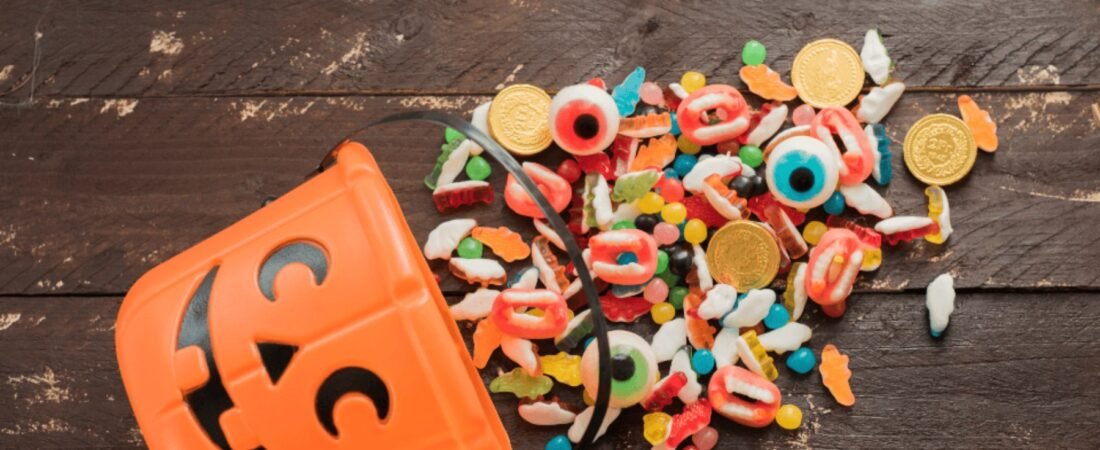
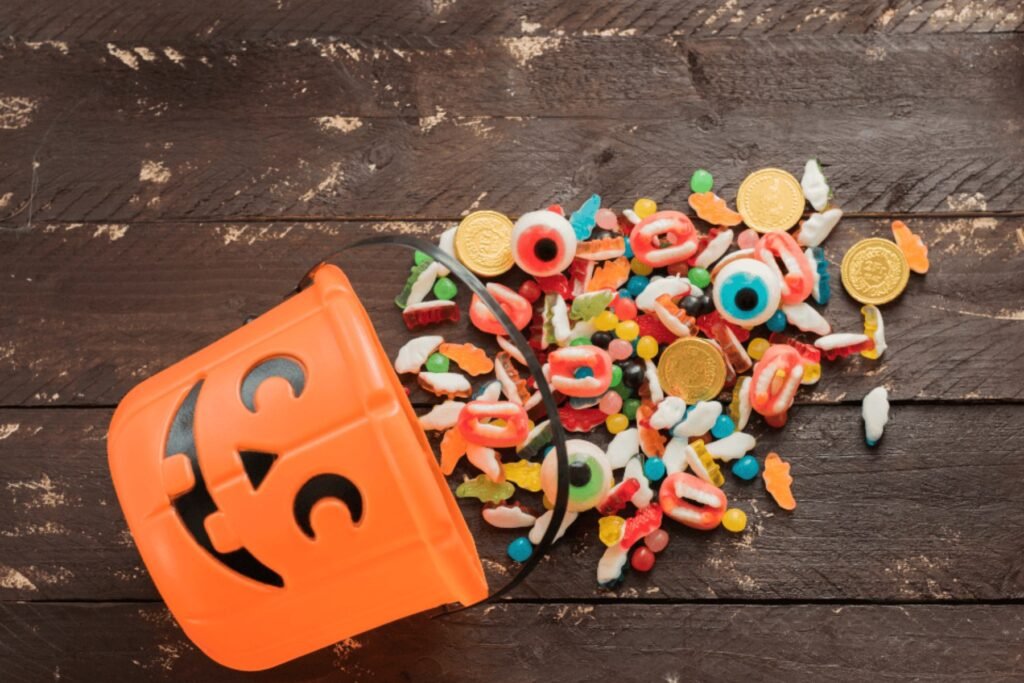
Little ghosts at the door, bowls of candy, pumpkins glowing on porches. Halloween is a lot of fun for people. For many dogs, though, it’s a very strange evening: the doorbell won’t stop ringing, strangers in masks keep showing up, and the whole house suddenly smells like sugar.
None of this means you have to skip the fun. It just helps to know where the real risks are hiding, so you can enjoy the night without a late-night trip to the emergency vet.
Why Halloween is such a tricky night for dogs
Most Halloween dangers fall into a few groups. Some treats are toxic to dogs. Some things aren’t toxic but can get stuck once they’re swallowed. And then there’s the stress and chaos of the night itself, with an open door that a nervous dog might bolt through.
The ASPCA puts it simply: kids love to stash candy in their rooms, “but a dog’s keen sense of smell will lead them to even the most cleverly hidden treasure.” So the safest candy is the candy your dog can’t reach.
A quick word on chocolate: it’s still one of the biggest Halloween worries, especially dark and baking chocolate. I’ve covered it in detail in My Dog Ate Chocolate. What Should I Do?, so I won’t repeat it all here.
Sugar-free candy and xylitol
If there’s one ingredient I’d want every dog owner to recognize, it’s xylitol. It’s a sugar substitute found in sugar-free candy and gum, and the FDA lists it in things you might not expect, like mints, baked goods, cough syrup, chewable vitamins, toothpaste, some nut butters, and sugar-free ice cream. On a label, it may also show up as “birch sugar” or “wood sugar.”
Pet Poison Helpline adds that xylitol isn’t only in sugar-free products. Some products that also contain sugar have it too, which is why it’s worth reading the label instead of assuming.
Why is xylitol dangerous to dogs but not to us?
Here’s the surprising part. According to the FDA, xylitol doesn’t trigger insulin release from the pancreas in people. In dogs, it’s absorbed into the bloodstream more quickly and “may result in a potent release of insulin from the pancreas.”
Cornell University’s Riney Canine Health Center says that insulin surge can be 3 to 7 times the amount that would normally be needed to handle regular sugar. All that insulin pulls sugar out of the blood fast, and the FDA says the drop can happen within 10 to 60 minutes of eating xylitol. Signs can include vomiting, weakness, staggering, collapse, and seizures.
That’s not the whole story, either. The Merck Veterinary Manual explains that larger doses can also injure the liver, and signs of liver damage may not show up until 24 to 48 hours later. Cornell notes that the amount of xylitol in products “varies wildly and can even vary between flavors of the same brand,” so there’s no easy rule like “two pieces of gum is fine.”
Interestingly, the American Animal Hospital Association (AAHA) notes that xylitol doesn’t affect cats the same way. Dogs are the ones who need the extra caution.
Raisins: the “healthy” treat that isn’t
Some families hand out little boxes of raisins instead of candy. It’s a kind idea for kids, but raisins and grapes are dangerous for dogs. The AVMA warns that raisins can cause a dog’s kidneys to fail, and AAHA notes that even one of those small snack-size boxes can be a problem, regardless of the dog’s size.
The Merck Veterinary Manual now points to tartaric acid as the likely culprit. Dogs lack certain transporters that other species have, so the acid builds up in the cells of the kidneys. Merck says more than one grape or raisin per 10 pounds (4.5 kg) of body weight may contain enough tartaric acid to pose a risk. Vomiting or diarrhea often starts within 6 to 12 hours, and kidney failure can develop within 24 to 72 hours.
💡 Did you know? The tartaric acid link has an unusual backstory: homemade playdough. A 2022 report in the Journal of Veterinary Emergency and Critical Care described dogs with kidney injury after eating homemade playdough made with cream of tartar, or tamarind pods and paste. Both contain tartaric acid, which helped researchers connect the dots to grapes and raisins.
Wrappers, lollipop sticks, and other things that don’t belong in a belly
A dog who raids the candy bowl usually doesn’t stop to unwrap anything. That’s its own problem. Pet Poison Helpline warns that “candy wrappers can obstruct your pet’s bowel and require surgical intervention to remove.”
Purdue University’s College of Veterinary Medicine has warned that “lollipop or popsicle sticks and foil wrappers also can become lodged in pets’ throats or digestive tracts.” The AKC warns about wrappers too, and suggests picking them up quickly and keeping candy bowls out of reach.
A quick sweep of the floor and the couch after trick-or-treating can help. Little hands drop a lot of things.
Glow sticks: awful taste, usually not a crisis
Glow sticks help kids stay visible in the dark, and some dogs find them irresistible. According to VCA Animal Hospitals, they contain an oily liquid called dibutyl phthalate (DBP). When a dog bites through one, it can cause gagging, drooling, an upset stomach, and irritation of the eyes, mouth, and skin.
The ASPCA says glow sticks have “an extremely bitter taste,” so the drooling can look dramatic. VCA suggests wiping your dog’s mouth with a damp cloth, offering water or a treat to wash away the taste, and bathing your dog if any liquid got on their fur. If your dog swallowed a whole stick, or seems really distressed, call your vet or a poison helpline.
Costumes: cute for us, maybe not for them
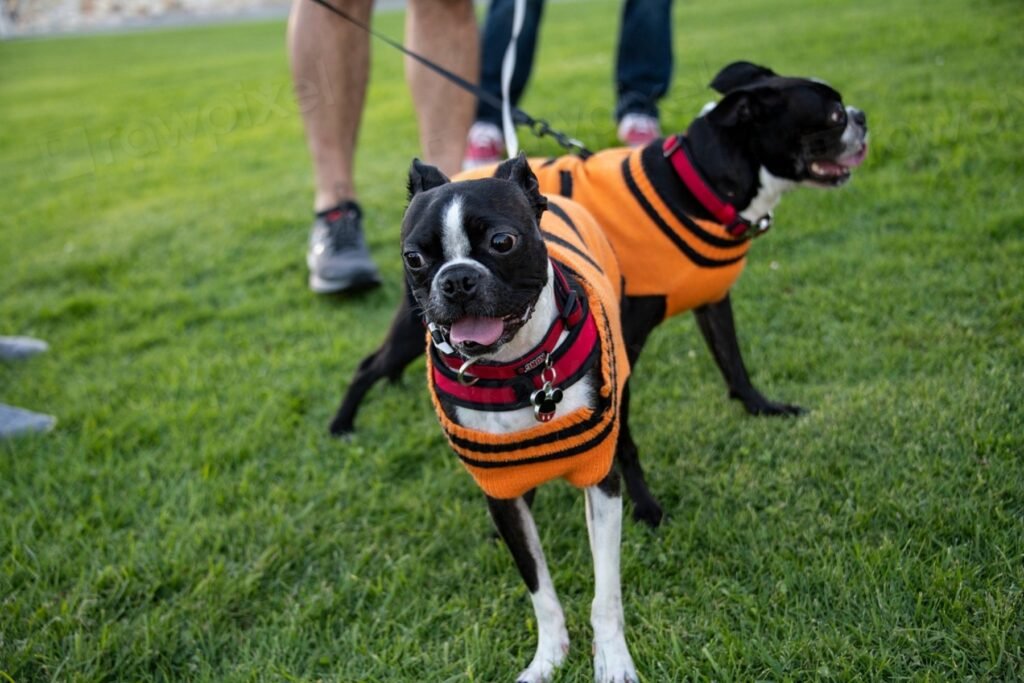
A dog in a little pumpkin sweater is hard to resist. But not every dog enjoys dressing up.

The AVMA suggests a costume that fits comfortably, has no choking hazards, and doesn’t block your dog’s breathing, sight, or hearing. It also helps to let your dog get used to it before the big night. The ASPCA adds: “Never leave a costumed pet unattended.” The AKC suggests skipping costumes with dangling accessories or small parts like beads, buttons, and ribbons.
Purdue points out that costumes may frighten many pets and lead to barking, trying to escape, or even biting. So if your dog freezes, tucks their tail, or keeps trying to wriggle out, that’s your answer. A festive bandana or simply their everyday collar is perfectly fine.
The doorbell problem: trick-or-treaters and escapes
The AKC warns that “frequent door openings during trick-or-treating increase the risk of dogs slipping outside or becoming frightened by unexpected activity.”
A few things can help. The AKC suggests keeping your dog behind a gate or on a leash when you’re greeting visitors, and watching their body language to see whether they’d be more comfortable in a crate or a quiet room away from the action. The ASPCA notes that keeping pets away from trick-or-treaters may be enough, but if you think your dog will need more help, talk to your vet well before Halloween about calming options.
ID tags and microchips
If your dog does slip out, ID makes all the difference. The AVMA recommends a microchip, a collar, and an ID tag, so it’s easy for someone to contact you and bring your dog home.
Microchips really do help. In a study of more than 7,700 stray animals entering shelters, described by the AVMA, microchipped dogs were returned to their owners 52.2% of the time, compared with 21.9% for dogs without chips. The most common reason chipped animals didn’t make it home was incorrect or missing owner information. So if you moved or changed your phone number, it’s worth checking that your dog’s registration is up to date.
💡 Good to know: In Korea, dogs 2 months and older that are kept as pets must be registered with the local government, either with an implanted microchip or an external tag. According to Asia Economy (아시아경제), the Ministry of Agriculture, Food and Rural Affairs says owners who don’t register can face a fine of up to 1 million won.
Candles and jack-o’-lanterns
The AKC warns that candles “may cause burns if a wagging tail or curious nose comes into contact with the flame,” and Purdue notes they can also become a fire hazard. The AVMA recommends keeping lit candles, jack-o’-lanterns, and other decorations out of pets’ reach.
Battery-powered lights are a nice swap. Just keep them, and any loose batteries, where your dog can’t chew them.
⚠️ Please don’t wait. If you think your dog ate xylitol, raisins, chocolate, or something they could choke on, call your vet or an emergency clinic right away, even if your dog seems fine. You can also call the ASPCA Animal Poison Control Center at (888) 426-4435 or Pet Poison Helpline at (855) 764-7661. Both are open 24/7, and fees may apply (Pet Poison Helpline currently lists an $89 incident fee that includes follow-up calls).
Angel Jake Note 🐾
Halloween doesn’t need to be scary for our dogs. Most of the risks come down to a few simple habits: candy up high, wrappers in the trash, real flames swapped for battery lights, and a quiet room for the dog who’d rather sit the whole thing out.
And if something does go wrong, please don’t feel guilty. Dogs are fast, and noses are clever. What matters most is noticing quickly and making the call. Then you can both get back to the fun part (or, for some dogs, the nap part).
Medical Disclaimer
I’m not a vet, and nothing here replaces a real exam. If something about your dog feels off, please trust that feeling and call your veterinarian.
Sources
- U.S. Food and Drug Administration: Paws Off Xylitol; It’s Dangerous for Dogs
- Merck Veterinary Manual: Xylitol Toxicosis in Dogs
- Cornell University Riney Canine Health Center: Xylitol Toxicities
- Merck Veterinary Manual: Grape, Raisin, and Tamarind Toxicosis in Dogs
- Pet Poison Helpline: Journal Review of Wegenast et al. (2022), Journal of Veterinary Emergency and Critical Care
- Pet Poison Helpline: Spooky Scary Poisons, Halloween Pet Safety
- Pet Poison Helpline: Home
- ASPCA: Your Guide to a Pet-Safe Halloween
- ASPCA: Tips on Costumes, Candy and Celebrating Safely With Your Pets This Halloween
- ASPCA: Animal Poison Control
- American Veterinary Medical Association: Halloween Pet Safety
- AVMA (JAVMA News): Pet owners, shelters, and clinics: Check the chip
- American Kennel Club: Halloween Safety Tips for Dogs
- American Animal Hospital Association: My pet got into the Halloween candy bucket, now what?
- VCA Animal Hospitals: True or False: Glowsticks Are Horribly Poisonous to Pets
- Purdue University: Purdue veterinarian offers tips on Halloween safety for pets
- Asia Economy (아시아경제): 농식품부, 7월까지 동물등록 자진신고·단속기간 운영