

When a dog is rescued from abuse, most of us imagine the hard part is over. Someone stepped in. The dog is safe now.
But for many of these dogs, the waiting was only beginning. In California, animals taken from their owners in cruelty cases can end up living in a shelter kennel for months while the criminal case moves through the courts. A new state law is meant to shorten that wait.
What California just changed
Gov. Gavin Newsom signed Assembly Bill 2344 on Friday, Sept. 25, 2026. The bill was written by Assemblymember Matt Haney, a Democrat from San Francisco, and co-sponsored by the Los Angeles County District Attorney’s Office and the advocacy group Social Compassion in Legislation.
The idea is simple, even if the legal details aren’t. The law targets animals who are considered “evidence” in a criminal case. According to the Los Angeles Times, animals seized without a warrant can be deemed abandoned after a 14-day period, which allows them to be adopted or placed in foster homes instead of spending months in a kennel.
The Van Nuys News Press explains it a little differently: the law expands an existing pre-conviction forfeiture process in California’s Penal Code so it covers animal seizures under all California laws. If the accused owner doesn’t pay the cost of the animal’s care within 14 days, the animal is considered abandoned and can become available for adoption.
Supporters say the law still keeps due process protections in place for the person accused. What changes is that the animal no longer has to put their whole life on hold until the case is over.
Why the wait mattered so much
Here’s the part that’s hard to read. The Los Angeles Times reported that evidence animals in L.A. County shelters can stay anywhere from three months to nearly a year.
A 2022 Times investigation found that for years, the city of Los Angeles kept dogs seized in abuse or neglect cases confined to their kennels, without exercise time with volunteers. Shelter staff said that was because those dogs weren’t the city’s property.
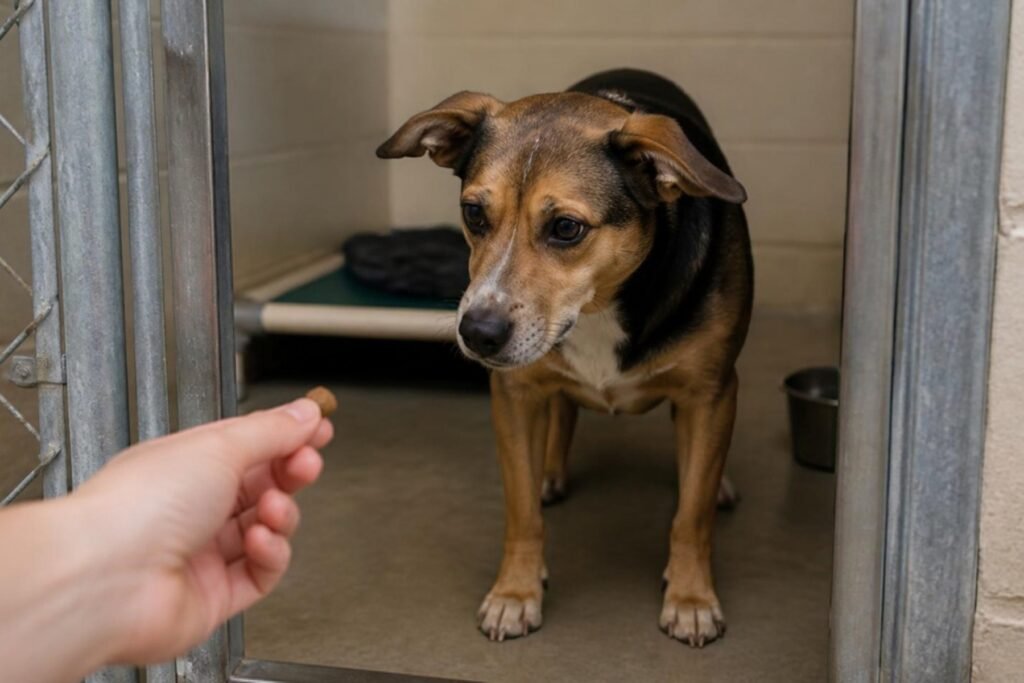
One of those dogs was named Bruce. His neck had been slashed by his owner, the Times reported, and he spent seven months at the shelter while investigators sought charges. Visitors described him trembling in his kennel and looking scared. Because of the open case, he wasn’t allowed out for regular walks or yard time.
I keep thinking about that. A dog who had already been hurt by a person, stuck in a kennel for months, while the volunteers who wanted to walk him weren’t allowed to.
💡 Did you know? The Los Angeles Times reported that it costs about $35,550 a year to shelter a dog or a cat in Los Angeles County. Supporters of the bill say long stays like these also strain limited shelter resources.
What the people behind the bill said
In a statement, Haney said: “Animal cruelty is unacceptable, and when animals are held for unnecessary periods, this puts a roadblock to their recovery.”
Los Angeles County District Attorney Nathan Hochman said that “people accused of serious animal cruelty should not be allowed to keep control of abused animals while a case slowly moves through the court system.”
And Judie Mancuso, founder of Social Compassion in Legislation, said the bill “creates a clear pathway for prosecutors to seek forfeiture so these animals can finally leave behind the trauma they endured and begin healing in safe, loving homes.”
The coalition backing the bill included more than 40 organizations and 1,800 individuals, the Van Nuys News Press reported. Mancuso also called the signing “truly bittersweet,” since this is Newsom’s final year as governor.
A similar conversation is happening in Korea
In Korea, the National Assembly’s Agriculture, Food and Rural Affairs Committee passed an amendment to the Animal Protection Act on Sept. 2, 2026, according to Korea NGO News (한국NGO신문).
The amendment would let courts restrict people convicted of animal abuse from raising or caring for animals for a period of time if there’s a risk they’ll do it again. It would also allow animals protected in an abuse case to stay separated from their owner until the trial is over, instead of being sent back.
An animal welfare forum quoted in the report described it, in Korean, as a minimum safeguard to keep abuse from happening again. The amendment still has more steps to go before it can become law, but people in both countries seem to be asking the same question: who should the system protect while the courts take their time?
💡 Good to know: If you ever adopt a dog with a hard past, it can help to go slowly, give them a quiet space of their own, and learn the small signs that they’re feeling overwhelmed. Your vet or shelter staff can help you make a plan for their first weeks.
What this could mean for shelter dogs
For the dogs themselves, getting out in as little as 14 days instead of seven months could be the difference between healing in a home and waiting in a kennel. For shelters, it could mean more space for the next animal who needs it.
Laws like this don’t fix everything. Abuse cases are still heartbreaking, and a faster timeline doesn’t erase what these animals went through. But it does mean a dog like Bruce could get a real chance at a couch, a walk, and a person who’s gentle with him a lot sooner.
Angel Jake Note 🐾
Stories like Bruce’s are hard for me to sit with. Nobody wants to picture a scared dog waiting for months just because paperwork hasn’t caught up.
That’s why this news made me feel hopeful. It’s a quiet change on paper, but for the dogs it touches, it could mean going home months earlier. If you’ve ever thought about fostering, this might be a good week to call your local shelter and ask what they need.
A Note on This Story
This post summarizes the reports and official sources linked in the Sources section. Details can change as a story develops, so please check those sources for the latest updates.
Sources
- The Spokesman-Review (Los Angeles Times): Newsom signs bill that seeks to help abused dogs and cats avoid long shelter stays
- Van Nuys News Press: Governor Gavin Newsom Signs Assembly Bill 2344 Into Law
- Contra Costa News: California Legislature Sends Bill to Get Abused Animals Into Safe Homes Faster to Governor
- Korea NGO News (한국NGO신문): 동물사육금지명령, 국회 첫 관문 넘어