If you’ve ever met a Labrador Retriever, you probably remember the tail first. That thick, happy “otter tail” that wags so hard their whole body joins in. Labs have a way of making you feel like the most important person in the room — even if they met you thirty seconds ago.
It’s no surprise they’ve been one of America’s favorite dogs for decades. The Lab was the AKC’s most popular breed for 31 years in a row, and in the 2025 rankings it came in at No. 2, just behind the French Bulldog. But the story of how this dog came to be is so much stranger — and sadder, and more fascinating — than most people know. So let’s start there.
A dog named after the wrong place
Here’s the first surprise: the Labrador Retriever doesn’t come from Labrador. Its ancestors came from Newfoundland, the island just south of it.
According to the AKC, fishermen from Spain, France, Portugal, and England who worked the waters off Newfoundland around 500 years ago brought dogs with them, and over time those dogs became a local type known as the St. John’s dog, after the island’s capital. These dogs worked alongside the fishermen in icy water — hauling nets, bringing in long fishing lines, and even diving after cod that slipped off the hooks. They were said to fetch fishermen’s hats that blew into the sea, too.
The fishermen preferred dogs with shorter, water-resistant coats, because ice didn’t build up on them the way it did on long fur. That one practical choice still shapes every Lab alive today.
How a British earl saved the breed
In the 1800s, English nobles visiting Newfoundland noticed these remarkable water dogs and brought some home. The Earl of Malmesbury was so impressed that he started a breeding program for duck hunting at his estate. He described their coats as turning the water off “like oil” and their tails as being “like an otter.”
Then something close to a miracle happened. In the 1880s, a chance meeting between the Malmesbury family and the Duke of Buccleuch in Scotland led the Earl to send two of his dogs, Ned and Avon, to the Duke. Those two dogs became part of the foundation of the modern Labrador.
The heartbreaking disappearance of the St. John’s dog
While Labs were thriving in Britain, their ancestors back home were quietly vanishing. The AKC explains that Newfoundland placed heavy taxes on dogs that weren’t sheepdogs, to encourage sheep farming, and in 1885 Britain brought in strict quarantine laws on imported dogs to control rabies. With fewer reasons to keep them and no market to send them to, the St. John’s dogs slowly disappeared.
By the late 1970s, only two elderly male St. John’s dogs were left in Newfoundland — too late to save the line. Every time I look at a Lab, I think about that. The dog we love so much today survived only because a handful of them happened to be in the right place at the right time.
Why Labs are built the way they are
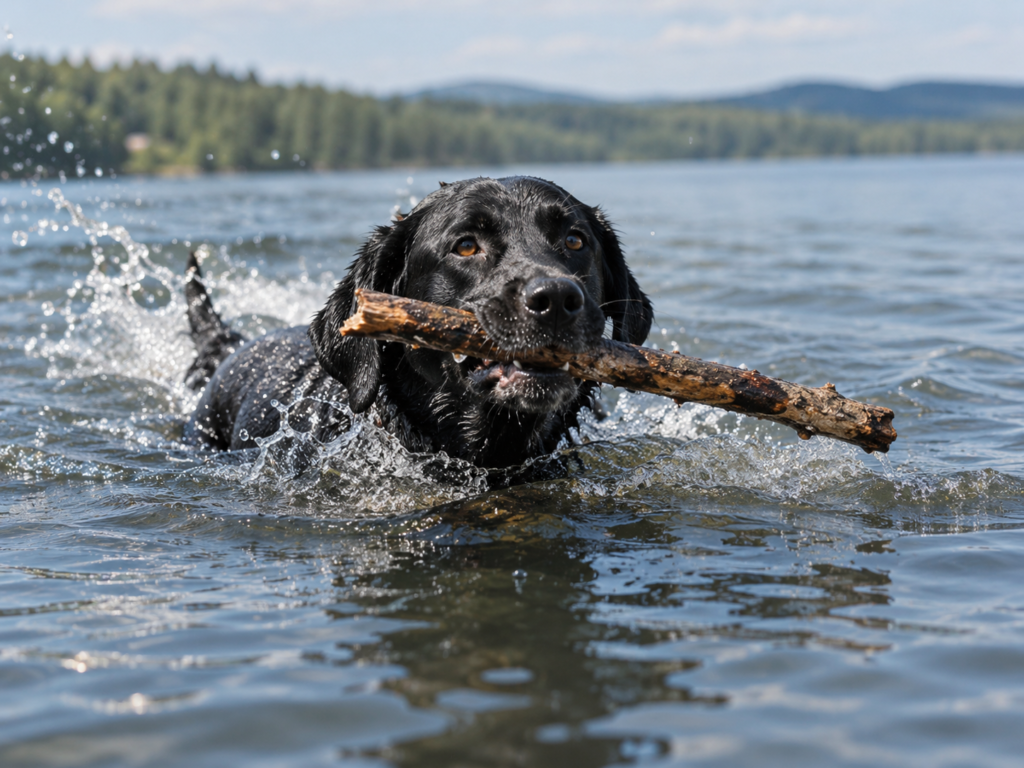
Almost everything about a Lab’s body makes sense once you picture a dog working in freezing North Atlantic water.
That otter tail. A Lab’s tail is thick at the base and tapers toward the tip. In the water, it works like a rudder, helping them steer and change direction while swimming.
Webbed toes. Labs have webbing between their toes, which helps them paddle more efficiently. (Many other breeds have a little webbing too, but it’s especially useful for a water dog.)
The double coat. Their short, dense outer coat sheds water, while the soft undercoat underneath keeps them warm. That’s why a Lab can climb out of a lake, shake once, and look almost dry — and also why they shed so much.
The “soft mouth.” Retrievers were bred to carry birds back to hunters without damaging them. That gentle grip is why so many Labs happily carry socks, shoes, and toys around the house like treasures.
💡 Did you know? That gentle grip was bred into retrievers on purpose, so hunters got their birds back undamaged. It’s the same reason so many Labs greet you at the door with a shoe in their mouth.
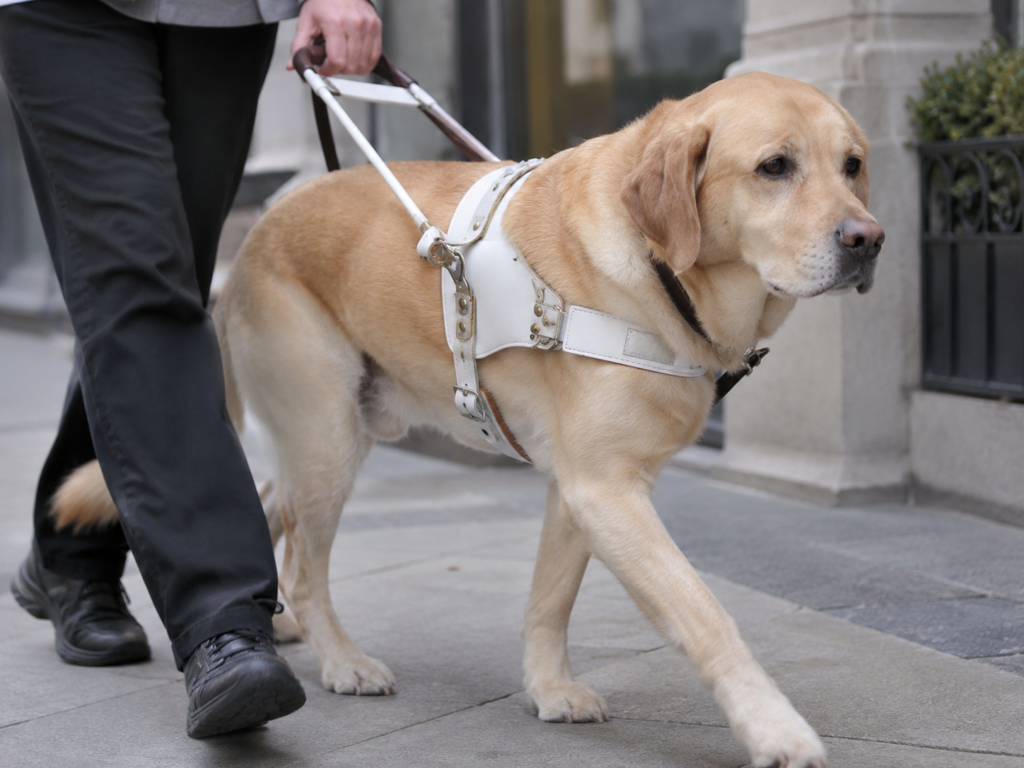
The eagerness to work with people. Generations of dogs were chosen because they listened, cooperated, and loved having a job. That’s exactly why Labs are so often chosen as guide dogs, service dogs, search-and-rescue dogs, and detection dogs today.
Size and appearance
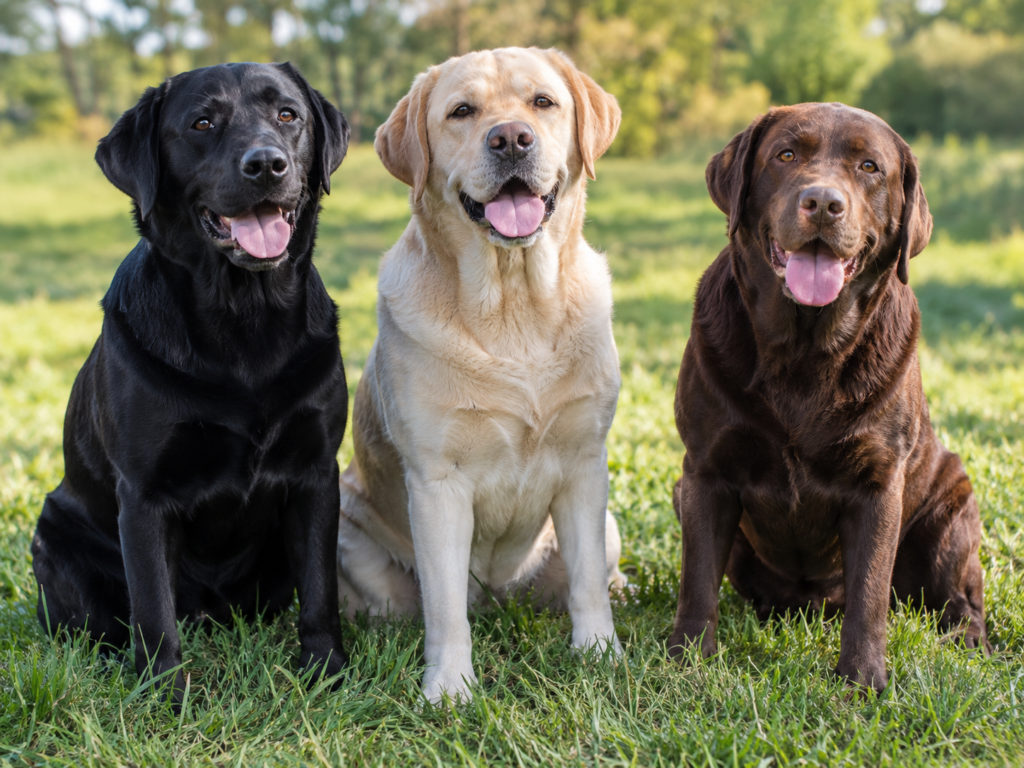
Labs are sturdy, athletic, medium-to-large dogs. Males usually stand about 22 to 22.5 inches tall and weigh roughly 65 to 80 pounds. Females are a little smaller, around 21.5 to 22 inches and 55 to 70 pounds.
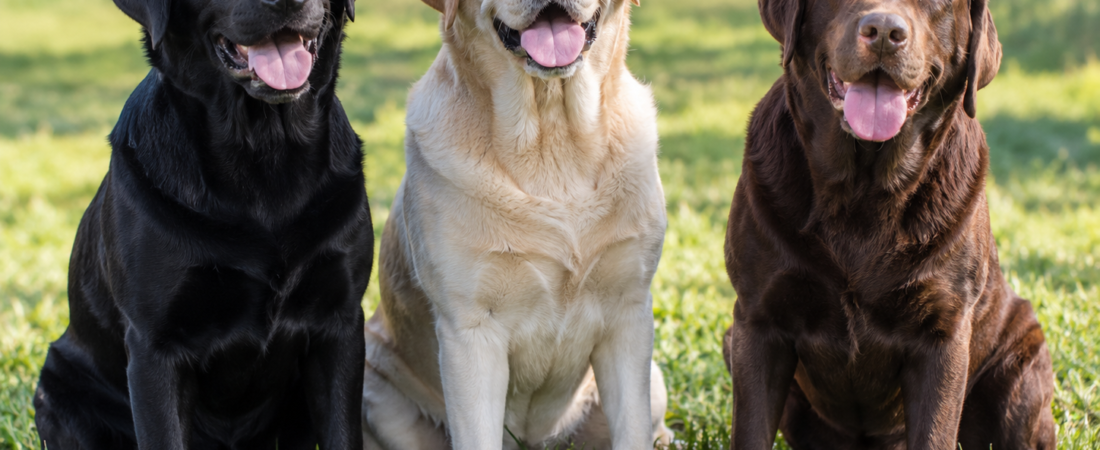
They come in three colors: black, yellow (anywhere from pale cream to fox red), and chocolate. Black was the original, and yellow and chocolate Labs came later as breeders began keeping those colors too.
Yes, they shed. A lot.
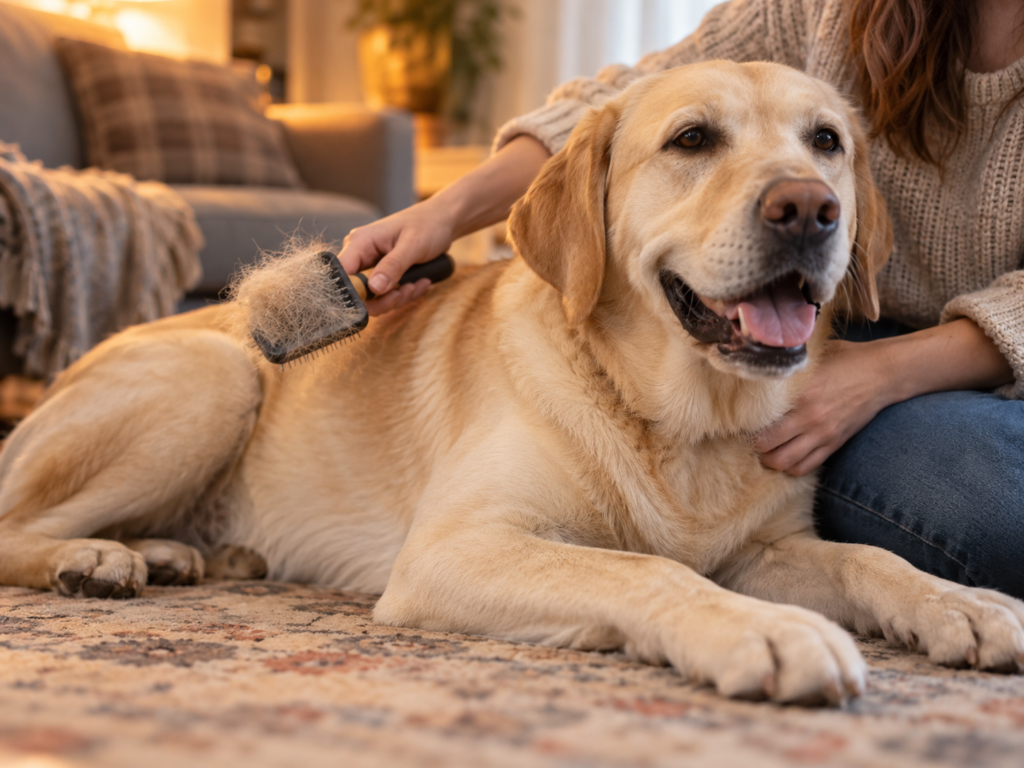
That wonderful waterproof double coat sheds year-round, with bigger “blowouts” a couple of times a year. A good brushing a few times a week really helps, and a lint roller will quickly become your best friend. It’s a small price for all that love, but it’s better to know going in.
Personality: the friend to everyone
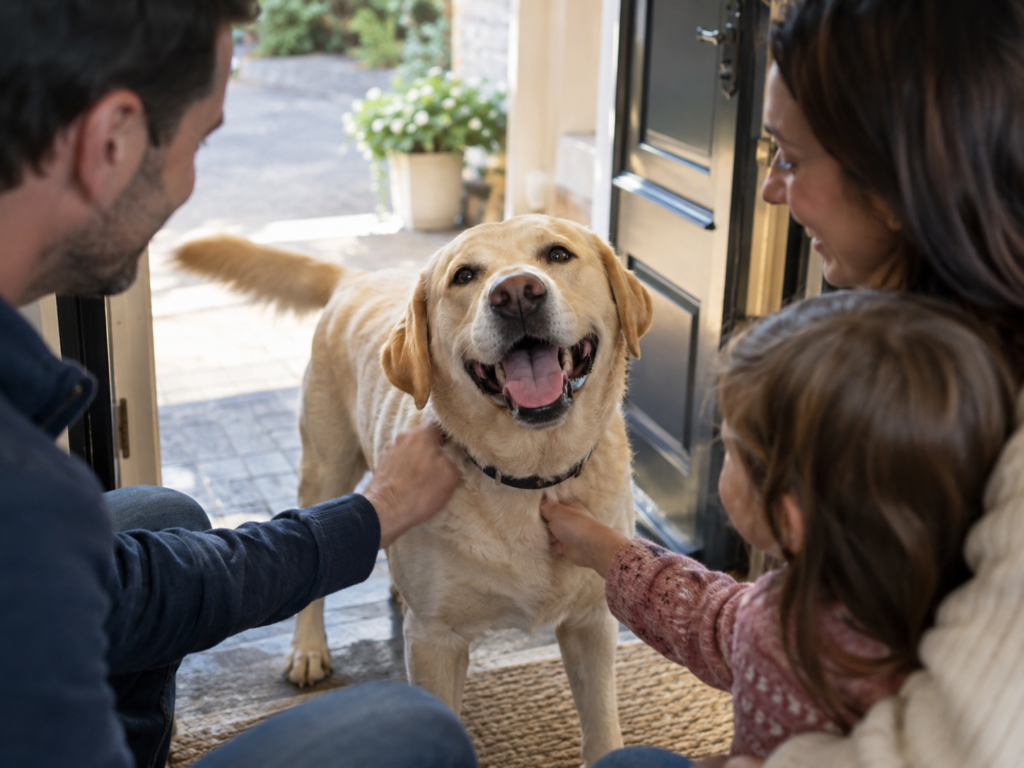
Labs are famously friendly, outgoing, and playful. Most of them adore people — family, guests, the mail carrier, strangers at the park. They’re smart and eager to please, which makes them wonderful family dogs.
That friendliness also means most Labs make terrible guard dogs. They’re much more likely to greet an intruder with a toy than a bark.
They need more exercise than people expect
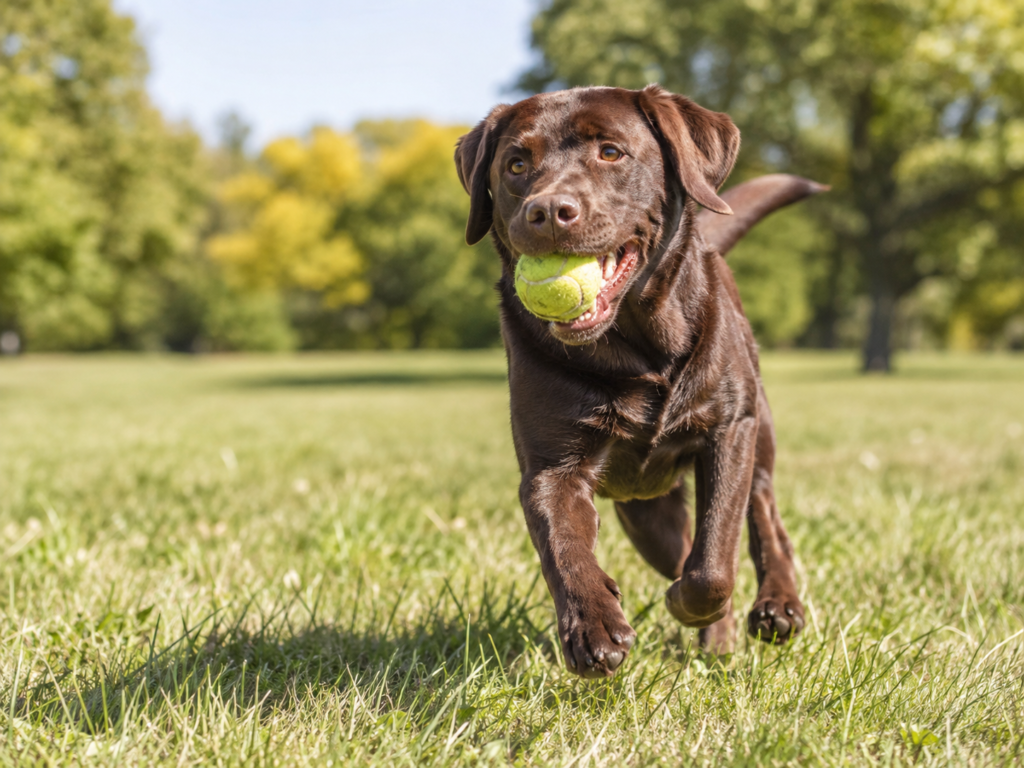
This is the part I really want to be honest about. Labs were bred to work all day, and a bored Lab can become a very creative Lab — chewing, digging, and finding trouble.
Most adult Labs need real daily exercise: long walks, games of fetch, swimming if you have somewhere safe, plus things that work their brains, like training, puzzle feeders, and sniffing games. A tired Lab is usually a happy, calm Lab. And young Labs can stay bouncy and puppyish for quite a while, so patience helps.
Training

Their eagerness to please makes Labs a joy to train, especially with food rewards (they will do almost anything for a snack). Starting early with basic manners, loose-leash walking, and gentle socialization makes such a difference, because a 70-pound dog who jumps on everyone is a lot harder to live with than a 15-pound puppy who does.
Why your Lab is ALWAYS hungry (it’s not just you)

If your Lab acts like they’ve never been fed in their life, there may be a real scientific reason. Researchers at the University of Cambridge found that about 25% of Labrador Retrievers carry a mutation in a gene called POMC.
In a 2024 study, they found that dogs with this mutation feel hungrier between meals and burn about 25% fewer calories at rest than dogs without it. The researchers described it as the brain getting a false “starving” signal, even when the dog has eaten enough. Interestingly, the same study found the mutation in about 66% of flat-coated retrievers, too.
So it’s not that your Lab is being dramatic. Some of them truly are wired to be hungrier. The researchers suggested a few gentle ways to help: splitting the daily food into several smaller meals, using puzzle feeders, or scattering kibble in the yard so eating takes longer and feels more satisfying. Measuring meals and counting treats is one of the most loving things you can do for a Lab’s joints and long-term health.
💡 Good to know: If your Lab always acts like they’re starving, try splitting the daily food into smaller meals or using a puzzle feeder. They’ll feel more satisfied without eating a single extra calorie.
Health: what to watch for
Labs are generally sturdy, but a few things come up often in the breed:
- hip and elbow dysplasia
- obesity
- ear infections and skin problems
- exercise-induced collapse, a condition where some Labs weaken and collapse after intense exercise
- inherited eye conditions such as progressive retinal atrophy
If you’re getting a puppy, ask the breeder about health screening for hips, elbows, eyes, and known genetic conditions.
⚠️ Please don’t wait. If your Lab wobbles, loses coordination, or collapses during or after hard exercise, stop immediately, let them rest somewhere cool, and call your vet.
Does coat color affect a Lab’s health?
This one surprised a lot of people when it came out. A 2018 study by the Royal Veterinary College and the University of Sydney looked at more than 33,000 Labradors in the UK and found that chocolate Labs had a median lifespan of about 10.7 years, compared with about 12.1 years for black and yellow Labs.
Chocolate Labs in the study also had more ear infections — about 23.4%, compared with 12.8% of black Labs and 17% of yellow Labs. The researchers think it’s not the color itself, but the breeding behind it. Because both parents must carry the chocolate gene to have chocolate puppies, breeding for that color may have narrowed the gene pool and carried along more genes linked to ear and skin problems.
That doesn’t mean a chocolate Lab can’t live a long, healthy life. It’s just a good reason to keep an extra eye on their ears and skin.
How long do Labs live?
A large 2024 study of more than 584,000 dogs in the UK, published in Scientific Reports, found a median life expectancy of about 13.1 years for Labrador Retrievers. Every dog is different, of course, and keeping them lean, active, and seen by a vet regularly all help.
Fun facts and true stories 🐾
Two Labs once had a bounty on their heads. In 2007, two black Labradors named Lucky and Flo were trained in Malaysia to sniff out the chemicals used in making DVDs. They helped uncover pirated discs worth millions of dollars — so much that the pirates reportedly put a bounty of about $28,560 on the dogs. The Malaysian government later honored them with medals for outstanding service.
The Lab held the No. 1 spot for 31 years. From 1991 until the French Bulldog took over, the Labrador was America’s most registered breed — one of the longest runs in AKC history.
Their ancestors fetched fish, not balls. St. John’s dogs jumped into freezing water to grab cod that fell off fishing lines. Your Lab’s obsession with fetch has very old roots.
A Lab’s coat is basically a raincoat. The Earl of Malmesbury wasn’t exaggerating when he said it turns water off “like oil.” It’s the reason Labs dry off so quickly — and why they don’t need frequent baths.
The St. John’s dog is gone, but not forgotten. The last known St. John’s dogs lived into the late 1970s. Every Lab (and several other retriever breeds) carries a little piece of them.
Is a Lab right for you?
A Lab might be a wonderful fit if you love being active, you want a dog who’s social and affectionate with just about everyone, you don’t mind dog hair on everything, and you have time for daily exercise and training.
A Lab might be harder if you’re away most of the day, you prefer a calm couch companion, or you’d find it hard to say no to those begging eyes at every meal.
And don’t forget: many Labs and Lab mixes are waiting in shelters and breed rescues, including adult dogs who are already past the chewing-everything stage.
Angel Jake Note 🐾
There’s something about a Lab’s face that just says, “I’m so happy you’re here.” I think that’s why so many families fall in love with them.
But learning their history made me love them even more. These dogs come from centuries of working side by side with people in some of the hardest conditions imaginable — cold water, long days, and a job that depended on trust. That same willingness to be with us is still there in every Lab who follows you from room to room.
I always hope people choose a dog for the life they really have, not just the dog they picture in their head. A Lab needs time, movement, and patience in those bouncy early years. In return, they’ll give you a kind of loyal, joyful, wholehearted love that’s hard to describe until you’ve felt it.
Sources
- American Kennel Club: Labrador Retriever breed information
- American Kennel Club: Labrador Retriever history
- American Kennel Club: The Most Popular Dog Breeds of 2025
- University of Cambridge: Genetic mutation in a quarter of all Labradors hard-wires them for obesity (2024)
- Royal Veterinary College VetCompass: Chocolate Labradors have shorter lifespan than rest of breed
- NBC News: Malaysia rewards pirate-DVD sniffing dogs
- McMillan et al. (2024), Longevity of companion dog breeds, Scientific Reports
Related Reading
- How Much Water Should a Dog Drink Each Day?
- How to Introduce a New Puppy to Your Older Dog
- West Highland White Terrier: Personality, Size, Lifespan, Grooming, Health & Fun Facts
Medical Disclaimer
I’m not a vet, and nothing here replaces a real exam. If something about your dog feels off, please trust that feeling and call your veterinarian.