Some dogs seem to visit the water bowl every five minutes.
Others take a few drinks here and there and barely seem interested.
So how much water is actually normal?
The answer is not quite as simple as one number.
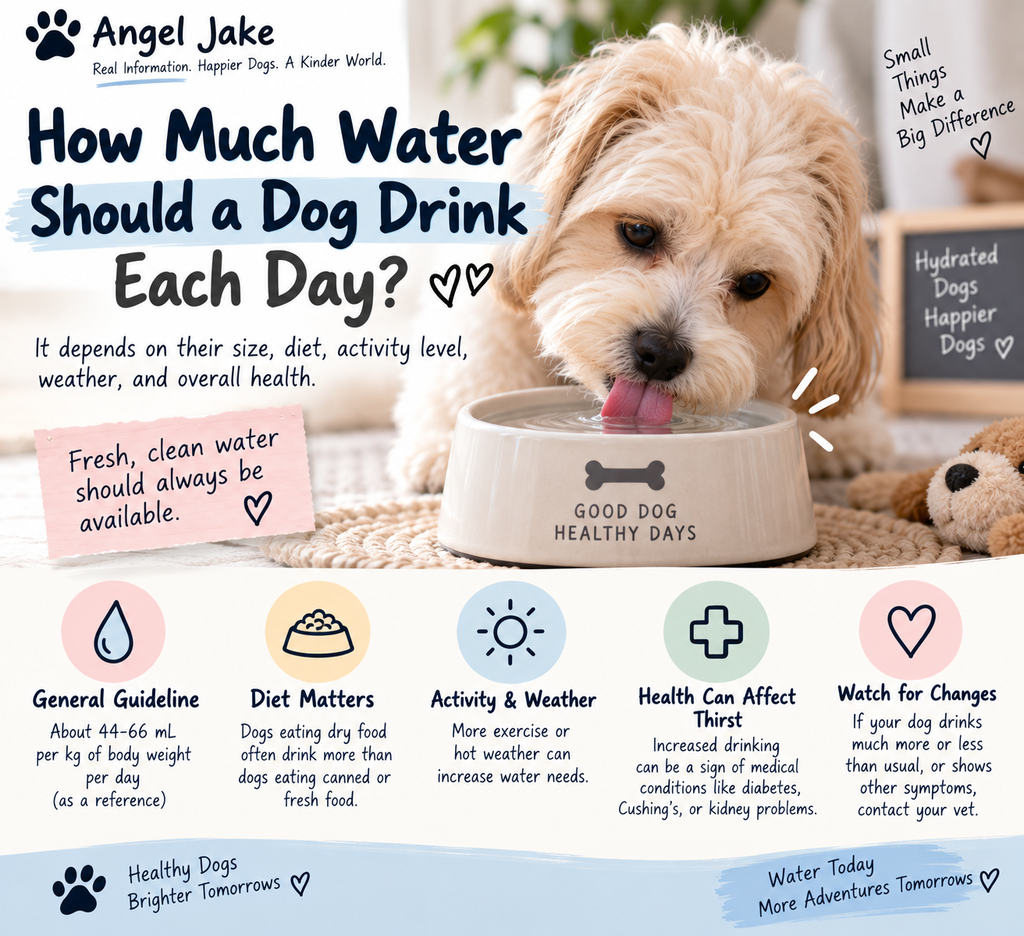
A dog’s water needs can change depending on their size, diet, activity level, environment, and health.
That means the most useful thing is not only knowing an average.
It is knowing what is normal for your dog.
A General Starting Point
According to the Merck Veterinary Manual, healthy mammals in a comfortable environment generally need around 44 to 66 milliliters of water per kilogram of body weight per day.
For a 10-kilogram dog, or about 22 pounds, that would be roughly 440 to 660 mL per day as a general reference.
But that does not mean every healthy 22-pound dog should drink exactly that amount from a bowl.
Some dogs get a large amount of their daily water from food.
Others may need more because they are active or spending time in warm weather.
So think of the number as a guideline, not a daily target that every dog has to hit.
Food Makes a Bigger Difference Than People Realize
A dog eating mostly dry kibble usually needs to drink more water than a dog eating canned or fresh food with a high moisture content.
Merck notes that canned pet foods can contain roughly 60% to more than 87% water, while dry foods contain much less moisture.
That means two healthy dogs of the same size may drink very different amounts from their water bowls simply because they eat different diets.
So if you switch your dog from dry food to wet food and suddenly notice less drinking, that change may make sense.
The opposite can happen too.
Weather and Exercise Matter Too
Think about how thirsty you feel after a long walk on a hot day.
Dogs are similar.
A dog that spends time running, hiking, playing outside, or exercising in warm weather may drink more than they do on a cool, quiet day.
Water needs are not completely fixed.
That is why fresh, clean drinking water should normally be available at all times. Merck specifically advises against routinely restricting water in healthy animals.
How Can I Tell If My Dog Is Drinking Too Much?
This is where knowing your dog’s normal routine becomes especially useful.
Maybe your dog usually finishes one bowl a day.
Then suddenly you notice that you are refilling it constantly.
Or your dog starts waking up at night to drink.
Or they begin needing to urinate much more often.
A noticeable and persistent increase in thirst is worth discussing with your veterinarian.
AAHA lists increased thirst and urination among important signs of diabetes in dogs, because high blood glucose can cause more water to be lost through the urine.
But diabetes is not the only possible cause.
Other medical conditions, including Cushing’s syndrome, kidney problems, some hormone disorders, and certain medications, can also change thirst. AAHA lists increased thirst and urination among common signs associated with Cushing’s syndrome as well.
That is why increased drinking should be investigated rather than guessed at.
Certain Medications Can Make Dogs Thirstier
If your dog suddenly starts drinking more after beginning a new medication, tell your veterinarian.
Merck notes that medications such as corticosteroids and phenobarbital can contribute to increased thirst in dogs.
Do not stop a prescribed medication on your own.
Instead, ask whether the change is expected and whether your veterinarian wants you to monitor how much your dog is drinking.
Measuring Water Can Be Surprisingly Helpful
If you are worried that your dog is drinking too much, you do not have to rely on guessing.
You can measure how much water you put in the bowl over a 24-hour period and then measure what is left.
Do this for several typical days if possible.
If there are multiple dogs sharing the same bowls, measurement becomes much harder.
In that situation, separate bowls for a short period may help, as long as every dog continues to have free access to water.
Keeping a simple record can give your veterinarian useful information.
What About Drinking Too Little?
Drinking less than usual can matter too.
A dog may drink less because they are eating wetter food, but decreased drinking can also happen when a dog feels unwell.
Vomiting, diarrhea, fever, poor appetite, and other illnesses can increase the risk of dehydration.
AAHA’s fluid therapy guidance notes that decreased water intake, vomiting, diarrhea, and illness can all contribute to fluid deficits.
If your dog is refusing water and also seems weak, lethargic, painful, nauseated, or is vomiting repeatedly, contact a veterinarian.
Can I Tell If My Dog Is Dehydrated by Pinching the Skin?
You may have heard about the “skin tent test,” where you gently lift the skin and see how quickly it returns.
It can sometimes provide clues, but it is not a perfect home test.
Age, body condition, skin elasticity, and other factors can affect how the skin behaves.
So do not use one skin test to decide that a sick dog is definitely hydrated.
Instead, look at the whole picture.
Is your dog drinking?
Are they urinating?
Are their gums unusually dry or sticky?
Are they vomiting or having diarrhea?
Are they weak or unusually sleepy?
If you are concerned, a veterinary exam is more reliable.
Should You Ever Limit a Dog’s Water?
In most situations, no.
Healthy dogs should normally have free access to clean water.
And if a dog is suddenly drinking excessively because of an underlying medical problem, taking the water away does not fix the cause and can be dangerous.
Merck specifically warns that abrupt water withdrawal can be unsafe in dogs being evaluated for excessive drinking.
If your veterinarian ever wants water intake restricted for a specific medical reason or diagnostic test, follow their exact instructions.
Do not try it on your own.
What If My Dog Drinks a Lot After Playing?
That can be normal.
A thirsty dog may drink quickly after exercise.
The bigger question is whether the drinking pattern stays unusual throughout the day or continues for several days.
A temporary increase after activity is different from a dog suddenly draining bowl after bowl without an obvious reason.
Again, the change from your dog’s normal pattern often tells you more than one isolated drinking session.
When Should You Call the Vet?
Contact your veterinarian if you notice a clear, persistent change in your dog’s drinking habits, especially if it comes with:
- much more frequent urination
- accidents in the house
- weight loss
- increased or decreased appetite
- vomiting
- diarrhea
- lethargy
- weakness
- changes in behavior
If possible, tell the veterinarian approximately how much water your dog is consuming in 24 hours.
That can be very helpful when deciding what testing may be needed.
Angel Jake Note 🐾
Water seems like such a simple thing that most of us probably do not think about it much.
We fill the bowl.
The dog drinks.
We fill it again.
But sometimes those ordinary routines are where we first notice something changing.
Maybe the bowl suddenly empties twice as fast.
Maybe your dog keeps asking to go outside.
Maybe they are hardly drinking at all.
None of those things automatically tells us what is wrong.
But they are worth noticing.
I think one of the most useful habits we can have as dog owners is simply knowing what normal looks like.
How much they eat.
How much they drink.
How often they go outside.
How they normally sleep and behave.
You do not have to measure every drop of water every day.
But if something suddenly changes, paying attention can give you an early clue that your dog may need help.
Veterinary Sources
This article was prepared using information from the Merck Veterinary Manual, the American Animal Hospital Association, and veterinary nutrition guidance.
Merck explains that water requirements vary with body size, diet, activity, environment, and health status, while AAHA identifies increased thirst and urination as important clinical signs that can occur with conditions such as diabetes and Cushing’s syndrome.
Medical Disclaimer
This article is for general educational purposes only and does not replace veterinary examination, diagnosis, or treatment.
Do not restrict your dog’s access to water unless a veterinarian specifically instructs you to do so. If your dog suddenly begins drinking much more or much less than usual, especially with other symptoms, contact your veterinarian.