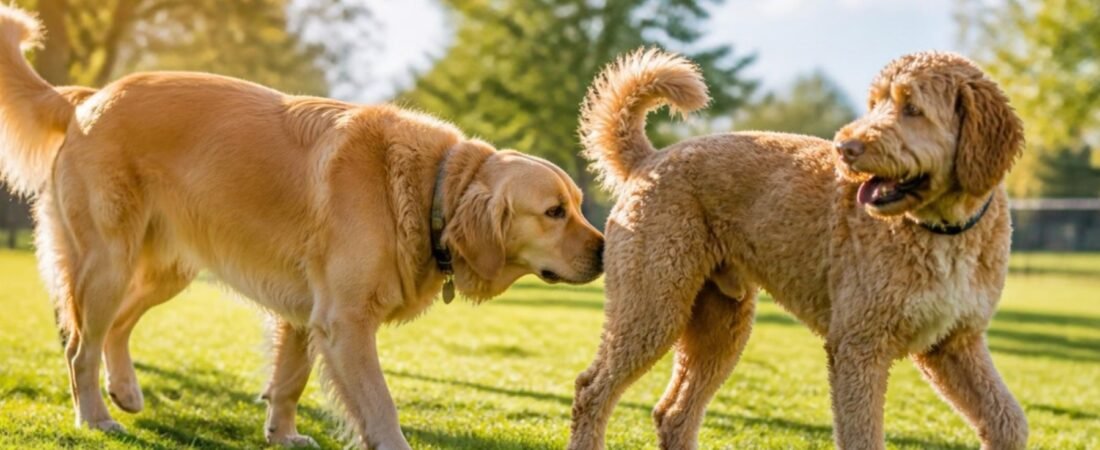
It’s one of those dog habits that makes people laugh, cringe, or quickly look away at the park. Two dogs meet, and within seconds, they’re circling each other, nose to tail.
As awkward as it looks to us, butt sniffing is completely normal, and it’s actually a pretty sophisticated way for dogs to say hello. Once I learned what’s really going on, I started seeing it a little differently.
It’s basically a canine handshake
The American Kennel Club compares it to the way people shake hands when they meet. It’s a polite, quick way to introduce yourself and gather some information about the other dog.
The difference is that dogs don’t need to ask any questions. Their noses do the talking.
Why the rear end, of all places?
This is the part most people don’t know. On either side of a dog’s anus are two small pouches called anal sacs, or anal glands. They produce a strong-smelling fluid that is unique to each dog.
According to the AKC, research published in the journal Veterinary Research Forum analyzed anal gland secretions from male and female dogs and found 64 different compounds. Some were shared by all the dogs, and others were found only in certain individuals. In a way, that makes each dog’s scent a little like a chemical ID card.
So when dogs sniff each other’s rear ends, they’re going straight to the place where that personal information is most concentrated.
A nose built for this
A dog’s nose is made for this kind of detective work. PBS NOVA reports that dogs have up to 300 million scent receptors, compared with about 6 million in humans, and that the part of their brain devoted to smell is, proportionally, about 40 times larger than ours.
Dogs also have a special structure called the vomeronasal organ, sometimes called Jacobson’s organ, located above the roof of the mouth. The AKC explains that it detects pheromones, the chemical signals animals use to communicate. That’s part of why dogs can pick up on things from a quick sniff that we’d never notice.
What dogs might learn from a sniff
Dogs are often thought to learn things like:
- whether the other dog is male or female
- whether they’ve met before
- clues about mood or health
- possibly what the other dog has been eating
It’s worth being honest here, though. The AKC notes that while these ideas are widely believed, there has been little research to prove exactly what information dogs get from these scents. What we do know is that the scent is unique to each dog and clearly matters to them.
It can help dogs relax
VCA Animal Hospitals notes that sniffing can also act as a stress reliever for dogs during social situations. Just like a calm greeting can help two strangers feel more at ease, a quick sniff may help dogs settle into the interaction.
That’s also why some shy or nervous dogs may keep their tails tucked or turn away. Tucking the tail can partly cover those scent glands, a bit like a person avoiding a handshake.
Why dogs sniff people too
Yes, the same instinct is behind the embarrassing crotch sniff that some dogs give visitors. People also carry strong scents in certain areas, and to a dog, that’s simply where the most interesting information is. It’s not rude in dog language. It’s just curiosity.
If it bothers you or your guests, you can gently teach an alternative greeting, like a “sit” for a treat, or redirect your dog to sniff a hand instead.
When should you step in?
Most greeting sniffs last only a few seconds, and that’s perfectly fine. But it’s worth watching both dogs’ body language. The AKC suggests stepping in if either dog seems uncomfortable, with signs like:
- ears pinned back
- tail tucked tightly
- stiff body or freezing
- lip licking, growling, or trying to move away
💡 Good to know: A friendly greeting sniff usually lasts only a few seconds. If one dog keeps sniffing while the other stiffens or tries to leave, calmly call yours away and let them try again later.
If you see those, calmly call your dog away and give both dogs some space. Not every dog wants a close-up introduction, and that’s okay.
A health clue hiding in plain sight
Those anal sacs don’t just help dogs communicate. They can also cause problems when they get too full or irritated. If your dog is scooting their bottom on the floor, licking their rear a lot, or has a strong fishy smell, their anal glands might need attention from your vet.
Angel Jake Note 🐾
I think there’s something kind of sweet about this. We read name tags and faces. Dogs read scent. That quick, awkward sniff at the park is their way of saying, “Hi, who are you, and how are you feeling today?”
So the next time your dog does it, try not to be embarrassed. They’re just being polite, in the most dog way possible.
Sources
- American Kennel Club: Why Do Dogs Sniff Each Other’s Butts?
- VCA Animal Hospitals: Why Dogs Sniff Rear Ends
- PBS NOVA: 6 stinking cool facts about dog noses
Related Reading
- Why Is My Dog Scooting Their Butt on the Floor?
- Why Does My Dog Kick the Grass After Pooping?
- How to Tell If Your Dog Is Stressed
Medical Disclaimer
I’m not a vet, and nothing here replaces a real exam. If something about your dog feels off, please trust that feeling and call your veterinarian.