

If you’ve ever walked past a room on a college campus and seen a line of students waiting to pet a dog, you already know the feeling. Shoulders drop. Faces soften. Someone laughs for the first time all week.
We usually think of therapy dogs as stress relief. But a new study from Canada suggests they may do something just as important for students: help them connect with each other.
What the researchers did
The study comes from Dr. John-Tyler Binfet and his team at the University of British Columbia’s Okanagan campus, and the university shared the findings in September 2026.
The team runs a campus program called B.A.R.K., which stands for Building Academic Retention Through K-9s. Students can drop in and spend time with trained therapy dogs and their volunteer handlers.
For this study, the researchers asked 676 first-year students a simple open-ended question: what made their time with the therapy dogs meaningful?
What students said
The answers fell into a few big themes:
- About a third of students (33%) talked about the dogs themselves, like how gentle, calm, or accepting they were.
- 15% described a sense of connection, not only with the dogs, but with the handlers, volunteers, and other students in the room.
- 11% said the visit simply lifted their mood, helping them feel calmer, happier, or more comforted.
One student wrote, “Dogs are so accepting. I wish humans were more like that.” Another said that talking with the handlers “took my mind off school.”
💡 Did you know? A therapy dog visit isn’t only about the dog. In this study, students also valued the conversations with handlers and other students. The dog can be the reason people start talking.
Why this matters for first-year students
The first year at university can be exciting, but it can also be lonely. Many students are far from home for the first time, living with strangers, and trying to find their people.
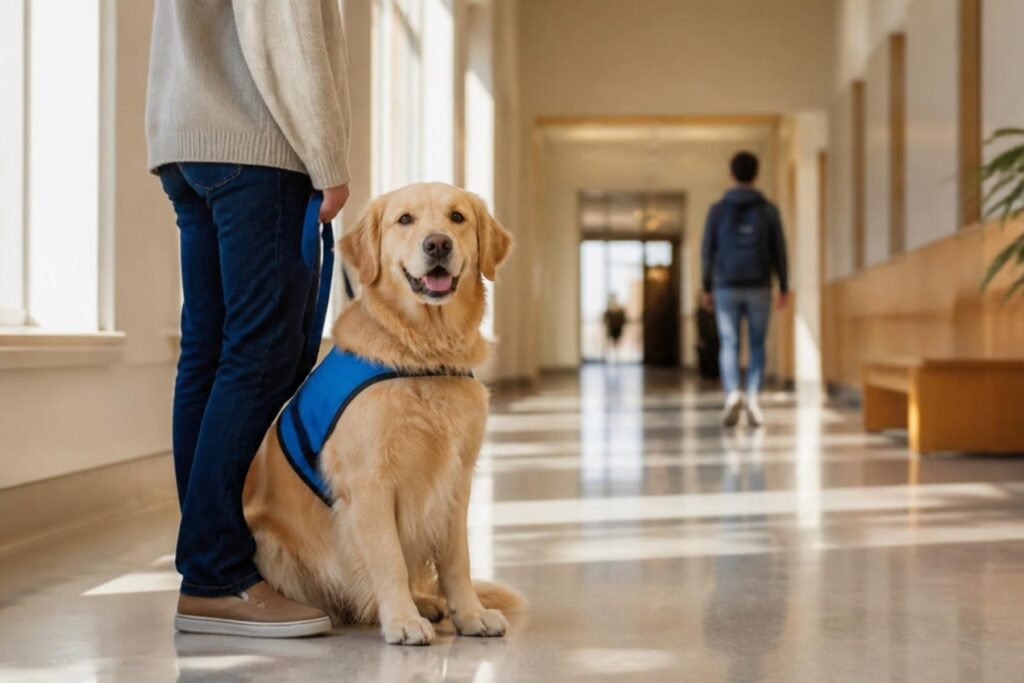
The researchers suggest that therapy dogs may make it easier to take that first step. It’s a lot less awkward to talk to someone new when you’re both kneeling next to the same happy dog. They even propose that campus counseling centers could bring therapy dogs into group sessions to help students open up.
What earlier research has found
This new study adds to a growing pile of research on dogs and students:
- In a 2019 study of 309 college students, researchers at Washington State University found that students who were at higher risk of struggling academically seemed to benefit most from programs that included therapy dogs, showing improvements in attention, memory, and self-control.
- A 2025 study published in the journal Pets followed first-year students who attended regular therapy dog drop-in sessions. Their stress went down, while stress rose among students who were still on the waitlist.
What this study can’t tell us
This study asked students to describe their own experiences in their own words, so it tells us what felt meaningful to them. It doesn’t measure things like grades or long-term mental health, and every student and every dog is different.
💡 Good to know: therapy dogs are specially trained and carefully chosen for calm, gentle personalities, and they visit with their handlers. That’s different from bringing any pet dog into a crowded, noisy room. A good visit should feel good for the dog too.
Angel Jake Note 🐾
I love this study so much. We often talk about what dogs do for us one-on-one: the comfort of a warm head on our lap after a hard day. But here, dogs were doing something even bigger. They were helping people find each other.
If you’re a student, or you remember what it felt like to be one, maybe you know exactly what that means. Sometimes the easiest way to start a friendship is to say, “Isn’t this dog the sweetest?”
Medical Disclaimer
I’m not a vet, and nothing here replaces a real exam. If something about your dog feels off, please trust that feeling and call your veterinarian.
Sources
- UBC Okanagan News: More than puppy love, how therapy dogs bring students together (2026)
- Phys.org: More than puppy love, how therapy dogs bring students together
- Waltham: Therapy dogs can help boost college students’ attention, memory and help them tackle stress (2019)
- The American Institute of Stress: Therapy dogs help first-year students cope with stress, depression, and anxiety