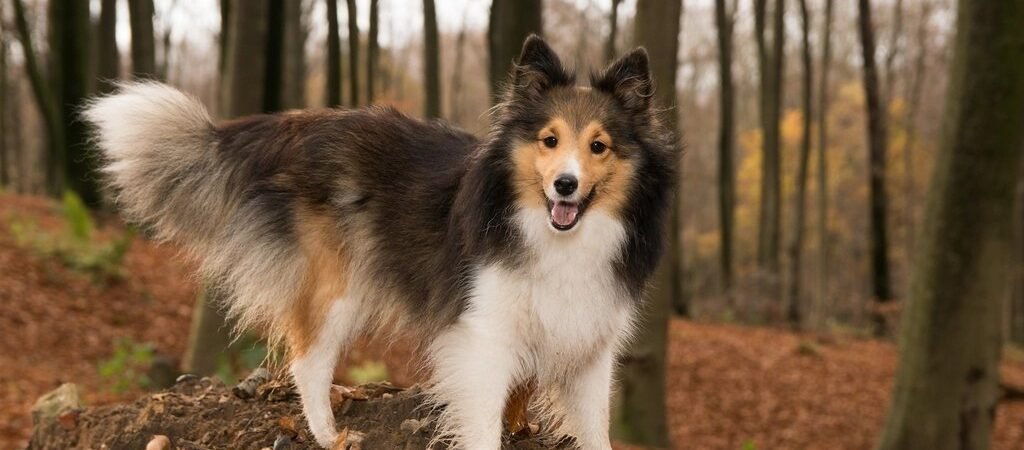
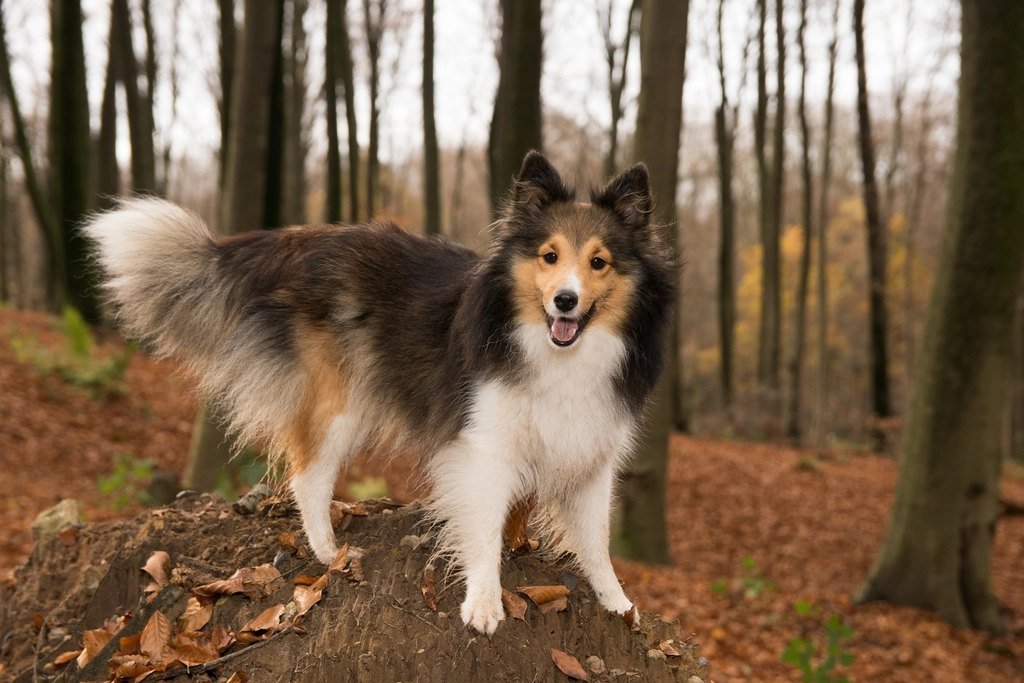
Shelties have a way of looking at you like they’re already two steps ahead. The fine, pointed face, the bright eyes, the ears that tip over just so. They follow you from room to room, notice every sound in the house, and seem to understand what you want before you’ve finished asking.
People often call them “little Collies,” and it’s easy to see why. But the Shetland Sheepdog has its own story, and it starts on a windswept group of islands where almost everything grew up small. There’s also one health issue every Sheltie family should know about before their dog ever needs a vet, so I’ve put the history, the personality, and the research together here.
Where do Shelties come from?
The breed takes its name from the Shetland Islands, which the AKC describes as an “intemperate and craggy” cluster off Scotland’s northern coast.
Shetland’s original sheepdogs looked quite different from the Sheltie you’d meet today. Wikipedia says the early dogs were probably a spitz type, possibly similar to the Icelandic Sheepdog, later crossed with mainland Collies. According to the AKC, the mix also included the Greenland Yakki Dog, Pomeranians, and small spaniels.
These dogs had plenty of jobs. The AKC says islanders used them to keep birds and free-roaming sheep out of gardens and away from fish laid out to dry, to warn of strangers, and as companions. Locals had their own names for them, too. Your Dog magazine lists “the Toonie Dog (the crofter’s dog)” among them, and Dogster explains that the nickname came from the small farms, called “toons,” where these dogs worked.
💡 Did you know? The first Shelties were much smaller than today’s dogs. The AKC says early Shelties stood only 8 to 10 inches at the withers, while the current standard calls for 13 to 16 inches.
Why is everything on Shetland so small?
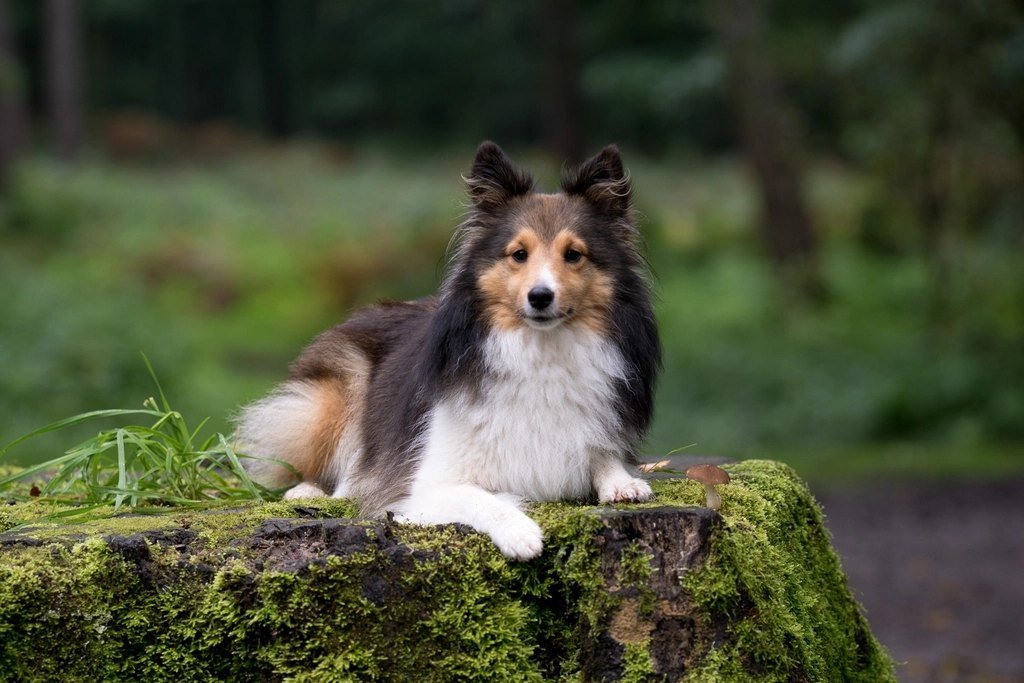
Shetland ponies, Shetland sheep, Shetland sheepdogs. It’s not a coincidence. Your Dog magazine puts it simply: “The Shetland Isles are well known for their miniaturised animals,” and a little dog suited work with those little native animals. Dogster says the Sheltie’s size helped them herd the “small, hardy Shetland livestock,” including sheep and poultry, and suggests (without claiming it as fact) that they may have been bred to match animals like the Shetland pony.
Food mattered just as much. Purina explains that a smaller dog was “easier to feed” than a Rough Collie or a bigger herding dog, which was “an advantage in a harsh environment where food is scarcer.” Wikipedia describes something similar for the ponies, saying the “harsh climate and scarce food developed the ponies into extremely hardy animals.” When every mouthful counts, a small, efficient worker makes a lot of sense.
A name the Collie breeders didn’t like
Wikipedia reports that in the early 20th century, a breeder named James Loggie added a small Rough Collie to the breeding stock, and that Rough Collie crosses continued into the 1940s.
Then came the naming problem. Breeders first called these dogs Shetland Collies. According to Wikipedia, that upset Rough Collie breeders, so the name was changed to Shetland Sheepdog. Dogster describes it as a controversy among Rough Collie breeders. Wikipedia adds that the Kennel Club, after first refusing, recognized the breed in 1909, and the first registered dog was a female named Badenock Rose.
America followed quickly. The AKC recognized the breed in 1911, and Wikipedia names the first AKC registration as “Lord Scott.” The AKC says the American Shetland Sheepdog Association formed in 1929, and the current standard was adopted in 1952 after seven years of discussion.
Ironically, the “little Collie” label never quite went away. The AKC says the Sheltie was long called a “toy Collie” or “little Lassie dog,” and calls both nicknames inaccurate.
Size, coat, and why you shouldn’t shave them
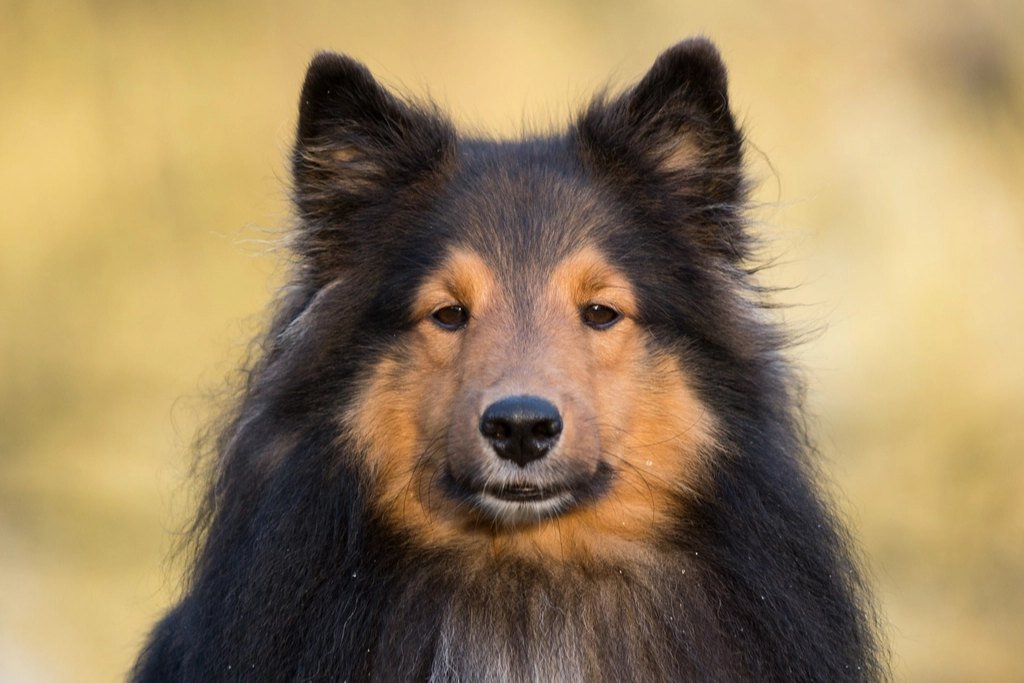
The AKC lists Shelties at 13 to 16 inches tall and 15 to 25 pounds, and Purina gives the same weight range. Dogs outside that height range are disqualified from the AKC show ring.
That coat is a true double coat. Wikipedia describes a harsh, straight outer coat over a soft, short undercoat, with a long mane and a smooth face. The AKC says it “sheds a lot throughout the year,” with heavier sheds once or twice a year, and recommends weekly brushing. VCA goes further and says “brushing and combing every other day is necessary to prevent mats.”
💡 Good to know: A shaved Sheltie isn’t a cooler Sheltie. AKC Chief Veterinary Officer Dr. Jerry Klein says a dog’s coat “actually acts as an insulator,” and that shaving can make a dog more vulnerable to heat stroke and sunburn. The AKC also notes the undercoat can grow back faster than the guard hairs, leaving the coat patchy or changed in texture. Purina says plainly that Shelties “shouldn’t be shaved.”
Personality: why they bark, chase, and feel everything
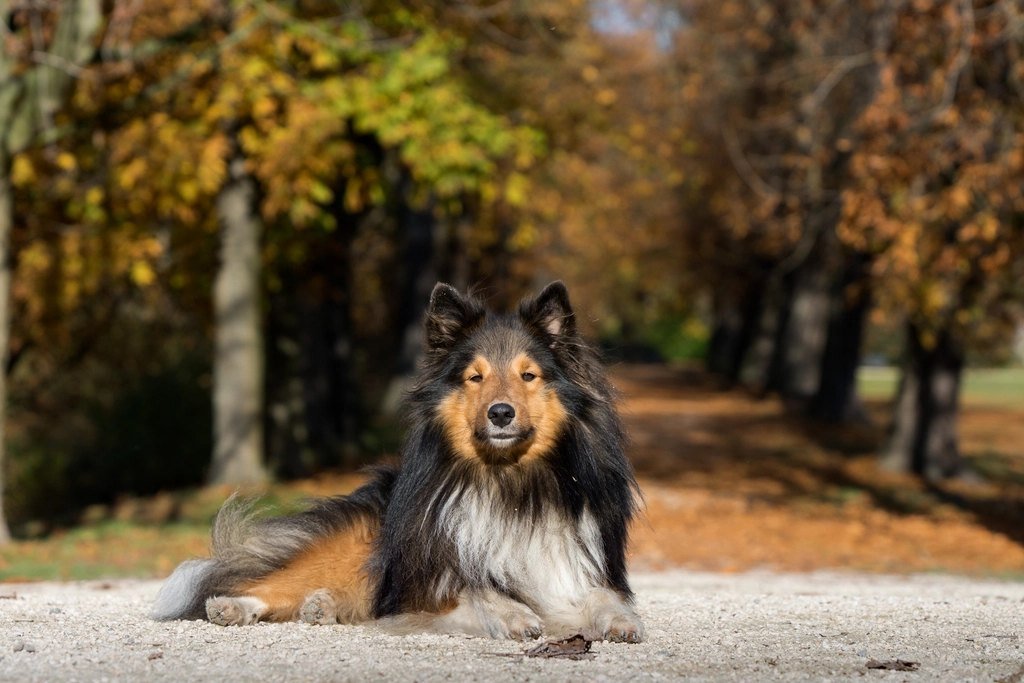
The AKC calls Shelties “extremely intelligent, alert workers,” and the research backs that up. Wikipedia says Stanley Coren’s 1995 research ranked the breed 6th of 138 breeds tested. An average Sheltie learned a new command in fewer than five repetitions and obeyed the first command at least 95% of the time.
That brain comes with some side effects. Shelties bark, and quite a lot. VCA rates their barking 5 out of 5, and the AKC says they have “an alert, loud bark, and strong discernment skills.” Think back to their old jobs on Shetland: warning of strangers and chasing birds and sheep out of the garden. Barking was the whole point. The good news is that the AKC says they can be taught to keep excessive barking to a minimum.
The herding drive is still there, too. According to the AKC, Shelties “will chase just about anything from squirrels to cars,” and will even try to herd birds and children. VCA mentions that some may nip at heels when they’re excited during play.
They’re also sensitive dogs. In the AKC’s breed history, Sandy Ganz describes a “natural tendency to marked sight- and sound-sensitivity,” typical of herding breeds. VCA says Shelties are sensitive to correction and learn best with gentle, reward-based training, and that they can be aloof or shy with strangers. The AKC adds that they don’t do well when left alone for long periods. So if your Sheltie flinches at a raised voice or follows you to the bathroom, try to see it from their side: they come from a long line of dogs built to watch closely and stay near their people.
Shelties in Korea
Shelties have their own fans in Korea. The Korean wiki Namuwiki says the breed is often written and pronounced “셀티” in Korea, which it calls incorrect, since English speakers say “Sheltie” (셸티). It also says Sheltie owners often hear the question, “Is that a miniature Collie?”
According to the same page, Korean breeders generally prefer AKC lines. It also notes that as Border Collies and Shelties have grown more popular in Korea, milbemycin, a heartworm preventive ingredient it suggests as an alternative for herding breeds, has become easy to find at Korean animal hospitals. That brings us to the most important part of this guide.
Health: what the research shows
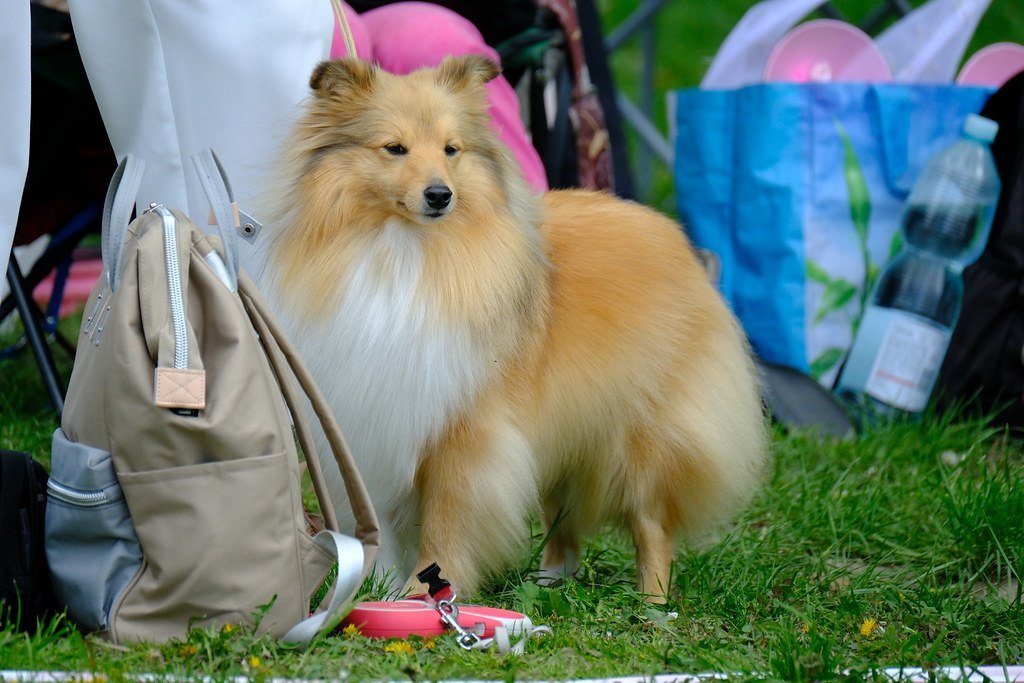
Shelties tend to live long lives. VCA and Purina both list a lifespan of 12 to 14 years. Wikipedia cites a UK study that found a life expectancy of 13.4 years, above the 12.7 years for purebreds overall, and a Japanese pet cemetery study of 239 dogs that found 14.3 years. Still, a few conditions deserve every owner’s attention.
MDR1 drug sensitivity. If you remember one thing from this guide, make it this one. Washington State University’s breed table lists the MDR1 mutation in about 15% of Shetland Sheepdogs. Cornell University explains that the gene normally makes a protein, P-glycoprotein, that helps clear certain drugs from the body and keep some drugs and toxins out of the brain. When the protein doesn’t work, those drugs can build up and cause severe and sometimes fatal reactions. Cornell lists signs such as vomiting, weakness, uncoordinated movement, tremors, seizures, and blindness.
Which drugs? Cornell says ivermectin can cause toxicity at high doses, though heartworm preventives are still safe at their low, FDA-approved doses. Acepromazine and butorphanol need caution and lower doses, and so do some cancer drugs. And one drug should be avoided entirely: loperamide, the anti-diarrheal sold as Imodium. WSU says it causes neurological toxicity in affected dogs even at regular anti-diarrheal doses. As WSU puts it, “the only way to know if an individual dog has the mutant MDR1 gene is to have the dog tested.”
⚠️ Please don’t give your Sheltie any human medicine, including Imodium, without asking your vet first. If you don’t know your dog’s MDR1 status, ask about a genetic test, and tell every new vet that Shelties can carry this mutation. If your dog starts trembling, stumbling, or seems suddenly unable to see after a new medication, call your vet right away.
Collie eye anomaly (CEA). VCA describes CEA as an inherited developmental disease that affects the layers at the back of the eye, and lists Shetland Sheepdogs among the breeds at risk. Many affected dogs keep normal vision, but others lose their sight, especially if the retina detaches. It can’t be reversed, though laser surgery may help in some early cases of partial detachment. VCA says many breeders have puppies checked by a veterinary ophthalmologist at 6 to 8 weeks of age, and genetic tests are now available.
Dermatomyositis. This inflammatory disease of the skin and muscle is close to a Sheltie-and-Collie exclusive. A Clemson University researcher, writing about a 2017 study in PLoS Genetics, explains that of hundreds of breeds, only Collies and Shetland Sheepdogs are routinely affected. It can cause lesions on the face, paws, and tail tip, sometimes with permanent hair loss and scarring. Researchers found risk variants in three genes, and the AKC Canine Health Foundation says the resulting test can help breeders choose lower-risk pairings.
Hypothyroidism. A 2022 Royal Veterinary College study of 905,553 UK dogs found that Shetland Sheepdogs had 8.25 times the odds of being diagnosed with hypothyroidism compared with crossbreeds. The authors describe common signs as weight gain, lethargy, hair loss, and intolerance to cold. Among all the dogs in the study diagnosed that year, the median age at first diagnosis was about 7.7 years.
Gallbladder mucocele. Here the gallbladder fills with thick mucus instead of normal bile. In a 2010 study by Mealey and colleagues, an insertion mutation in the ABCB4 gene turned up in 14 of 15 affected Shelties but only 1 of 21 unaffected ones. A 2022 UK study also named Shetland Sheepdogs as an independent risk factor for developing a mucocele. The American College of Veterinary Surgeons says signs are often vague, like reduced appetite, lethargy, vomiting, diarrhea, yellowing of the skin or gums, and belly discomfort, and that up to half of pets have a ruptured gallbladder by the time they’re diagnosed. The good news is that early diagnosis greatly lowers that risk.
Fun facts and true stories 🐾
They had a fairy name. Besides “Toonie,” Your Dog magazine says one of the breed’s old local names in Shetland was “Peerie,” meaning fairy dog.
A Sheltie lived in the White House. The Presidential Pet Museum says Calvin Coolidge’s family received a Sheltie registered as Diana of Wildwood, a gift from two Michigan children. She arrived looking spotted, but the “spots” turned out to be dirt and grease that rubbed off onto the president’s clothes. The First Lady renamed her Calamity Jane, and Coolidge had a dog bathtub built at the White House for her daily baths.
One dog, 160 champions. Wikipedia names Ch Halstor’s Peter Pumpkin ROM as the breed’s top sire, with 160 champion offspring.
Small dog, long trail. The AKC’s breed history says some Shelties have walked the 2,000-mile Appalachian Trail alongside their owners.
Is a Sheltie right for you?
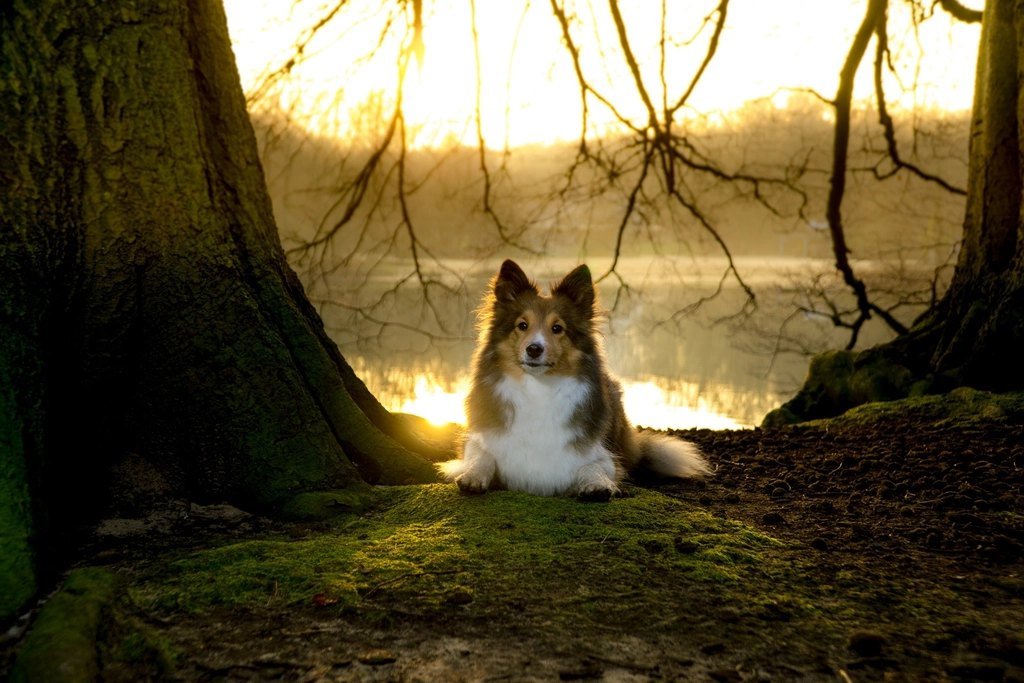
A Sheltie could be a wonderful match if you want a bright, affectionate dog who loves to learn and wants to be part of your day. They’re gentle with children, according to VCA, and the AKC says they shine in agility, obedience, herding, and therapy work. They’re a manageable size, too.
It’s worth pausing if barking would be a problem where you live, if you’re out for long hours, or if daily-to-weekly brushing sounds like too much. A sensitive Sheltie also needs patient, kind training. If you do bring one home, ask the breeder about eye exams and the genetic tests for MDR1, CEA, and dermatomyositis, and keep your vet in the loop about that MDR1 status from day one.
Angel Jake Note 🐾
On the Shetland Islands, these dogs earned their place by paying attention. They watched the gardens, listened for strangers, and kept everything where it belonged. That watchfulness is still in them, which is why so many Shelties still notice every sound and announce every visitor.
So be gentle with them. Give them work for that clever mind, a calm home, and a vet who knows about MDR1. They’ll give you their whole attention in return.
Medical Disclaimer
I’m not a vet, and nothing here replaces a real exam. If something about your dog feels off, please trust that feeling and call your veterinarian.
Sources
- American Kennel Club: Shetland Sheepdog History
- American Kennel Club: Is a Shetland Sheepdog Right for You?
- American Kennel Club: Fun Facts About the Shetland Sheepdog
- American Kennel Club: Is It OK to Shave Your Dog?
- Wikipedia: Shetland Sheepdog
- Wikipedia: Shetland pony
- Dogster: Shetland Sheepdog Facts
- Your Dog: Shetland Sheepdog Breed Profile
- Purina: Shetland Sheepdog
- VCA Animal Hospitals: Shetland Sheepdog
- VCA Animal Hospitals: Collie Eye Anomaly
- Washington State University: Breeds Commonly Affected by MDR1 Mutation
- Washington State University WADDL: MDR1 in Dogs
- Cornell University College of Veterinary Medicine: Drug Sensitivity (MDR1)
- PLOS Biologue: Understanding Images – A Canine Model of Juvenile Dermatomyositis
- AKC Canine Health Foundation: Improvement of Risk Assessments for Dermatomyositis Testing
- O’Neill et al. (2022): Frequency, breed predispositions and other demographic risk factors for diagnosis of hypothyroidism in dogs under primary veterinary care in the UK
- Mealey et al. (2010): An insertion mutation in ABCB4 is associated with gallbladder mucocele formation in dogs
- Butler et al. (2022): A multicenter retrospective study assessing progression of biliary sludge in dogs using ultrasonography
- American College of Veterinary Surgeons: Gallbladder Mucocele
- Presidential Pet Museum: Calamity Jane
- 나무위키: 셰틀랜드 쉽독