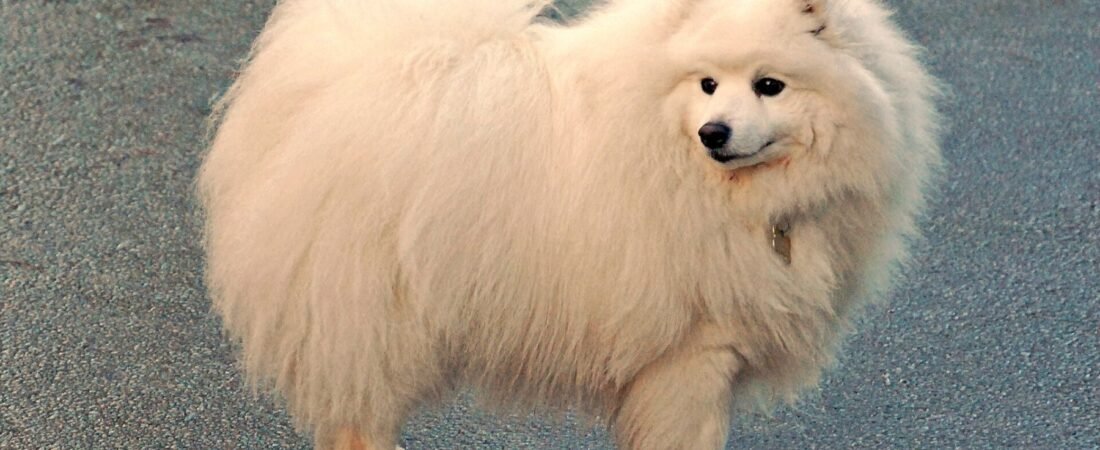
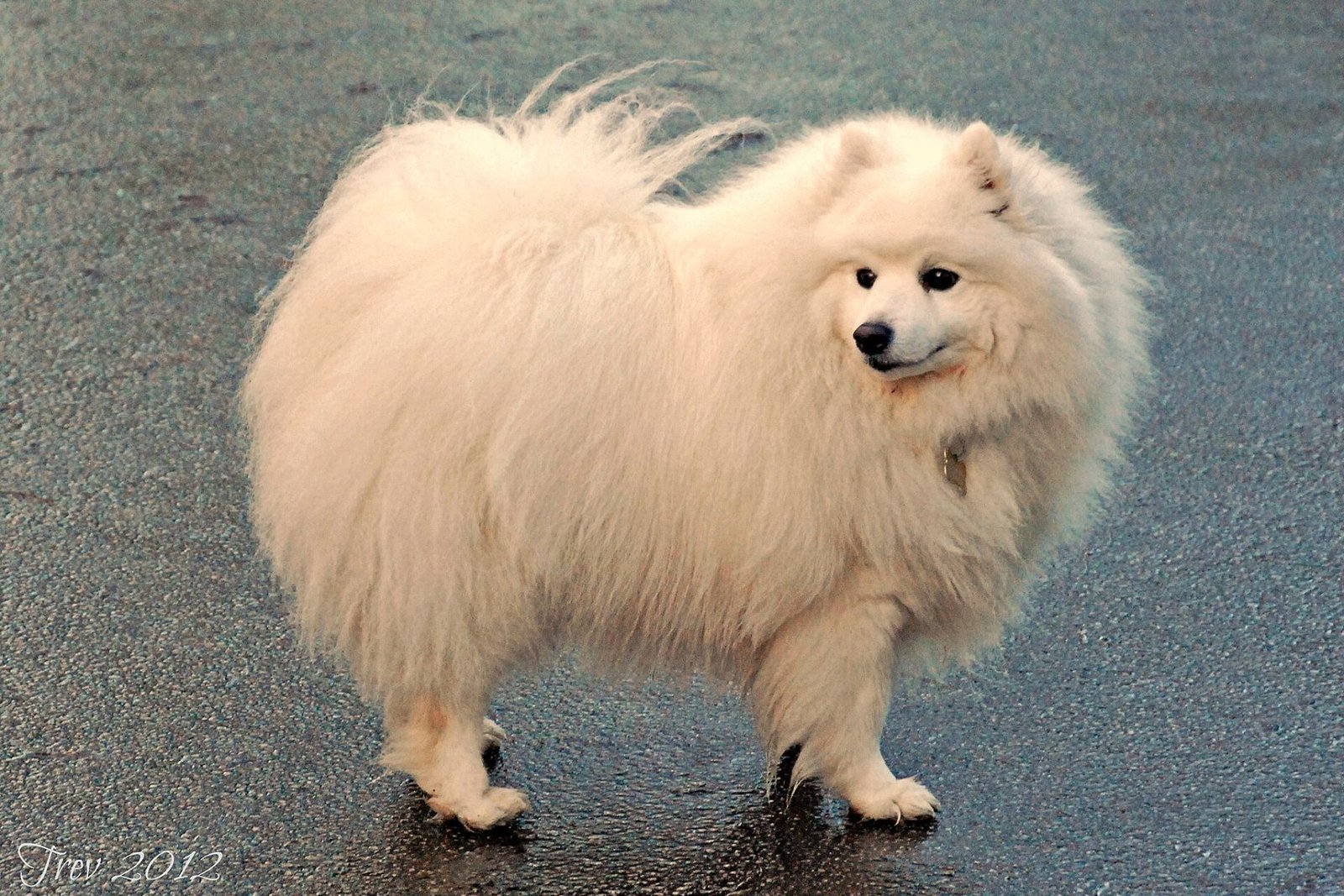
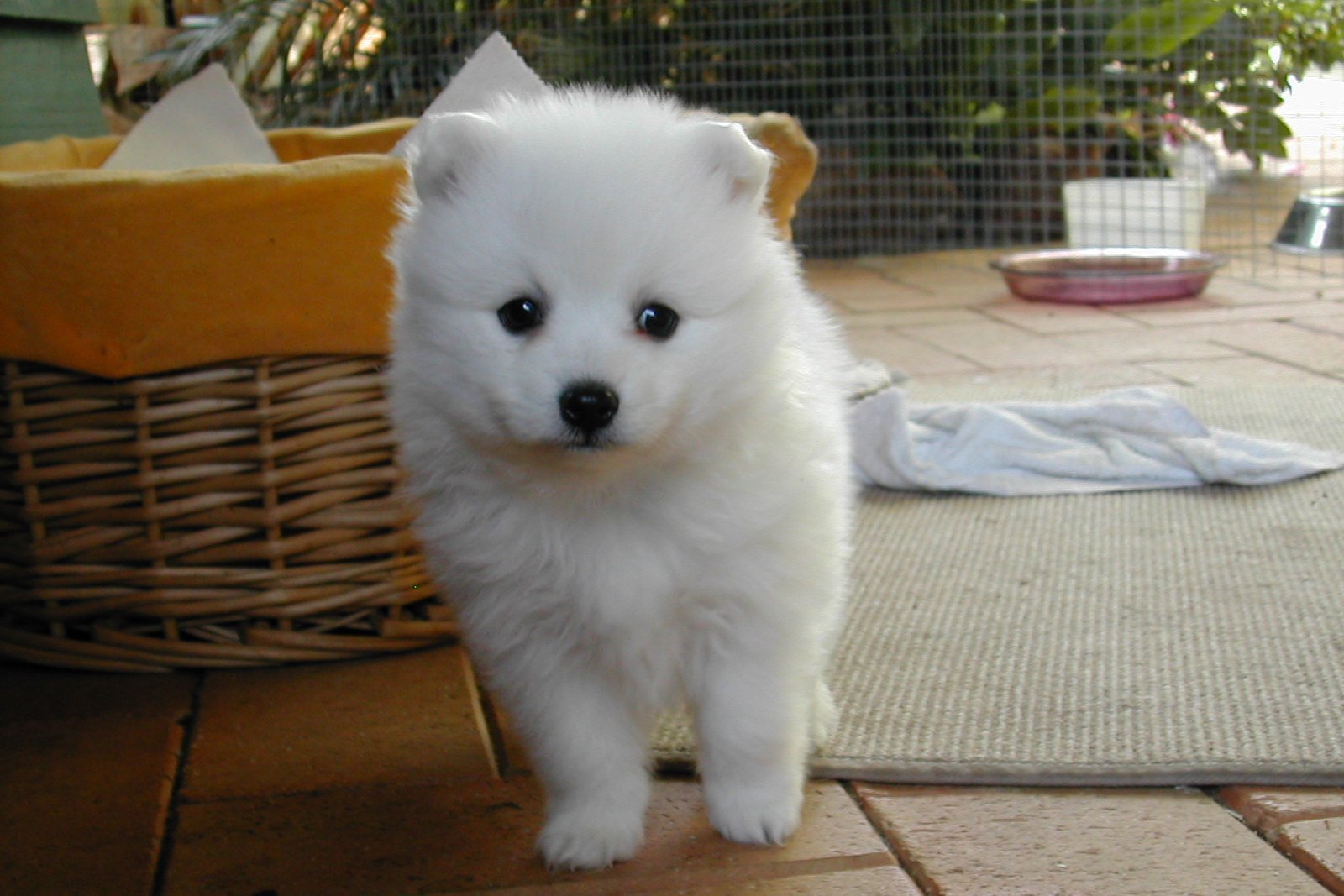
With a snow-white coat, a fluffy tail carried over the back, and a little fox-like face, the Japanese Spitz is hard to miss on a walk. It looks a lot like a small Samoyed or an American Eskimo Dog, and that resemblance is part of its story.
It’s a relatively modern breed with a big, cheerful personality. Here’s what’s worth knowing before you fall for that white fluff.
Japanese Spitz at a glance 🐾
- Origin: Japan
- Height: about 30 to 38 cm (12 to 15 inches) at the shoulder for males, with females slightly smaller (FCI breed standard)
- Size group: small (UK Royal Kennel Club)
- Life expectancy: over 12 years (UK Royal Kennel Club)
- Coat: pure white, with a straight outer coat and a soft, dense undercoat
- Exercise: up to 1 hour a day (UK Royal Kennel Club)
- Grooming: daily, and the coat does shed (UK Royal Kennel Club)
- Temperament: “intelligent, cheerful, keen in sense,” according to the FCI standard
- Best for: people who want a small, lively companion and don’t mind white hair on their clothes
Where the Japanese Spitz comes from
The Japanese Spitz is younger than many breeds. According to the breed standard of the Fédération Cynologique Internationale (FCI), the world dog organization, the breed is said to descend from a large white German Spitz brought to Japan around 1920. It was first shown in Tokyo around 1921.
Over the next 15 years or so, more dogs were brought in from Canada, the United States, Australia, and China. The Japan Kennel Club set a unified breed standard in 1948.
The UK Royal Kennel Club adds that the Samoyed and the White German Spitz are thought to have played a part in the breed’s early days. The breed became known outside Japan after dogs were exported to Sweden, and the Kennel Club in the UK recognized it in 1977.
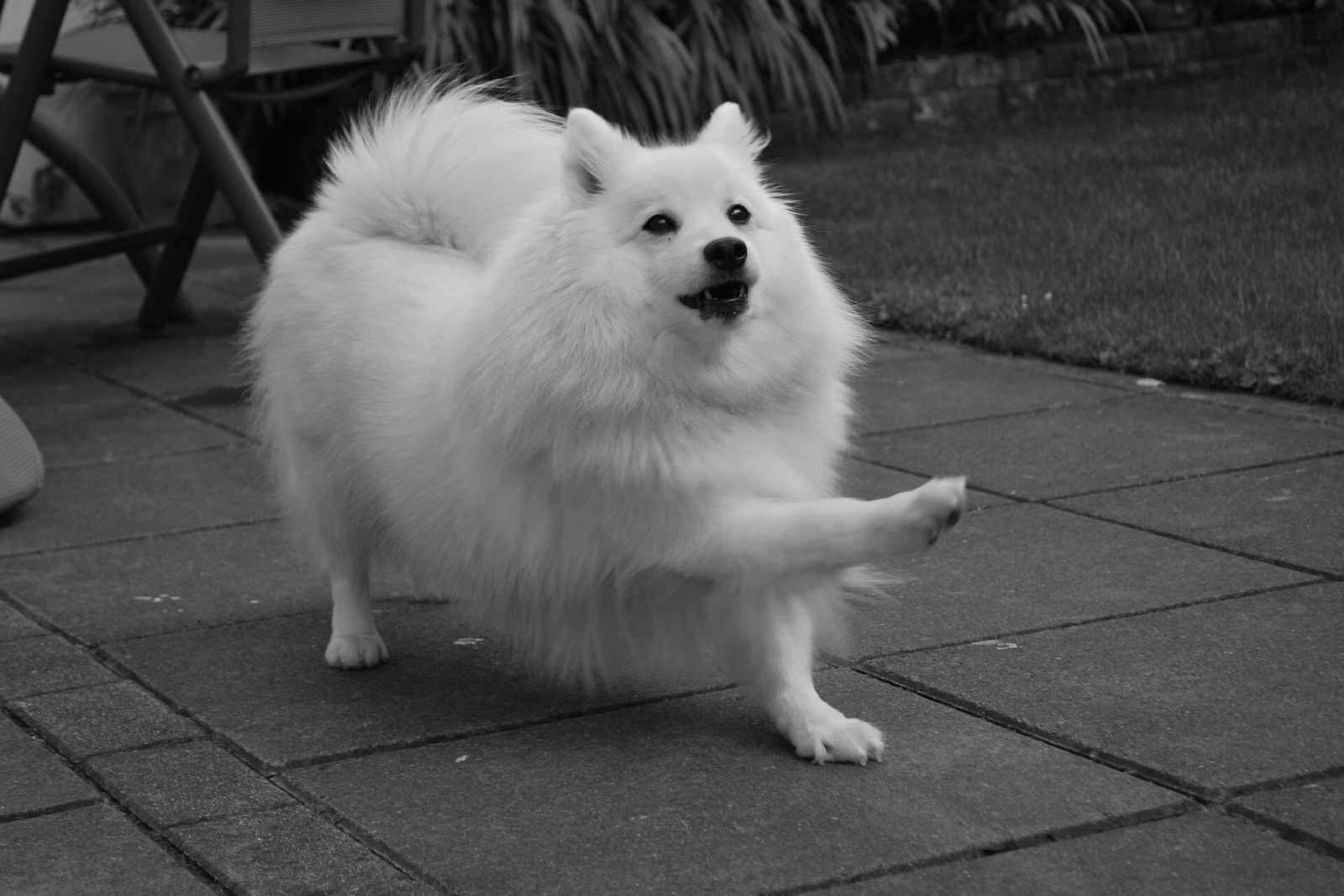
What does a Japanese Spitz look like?
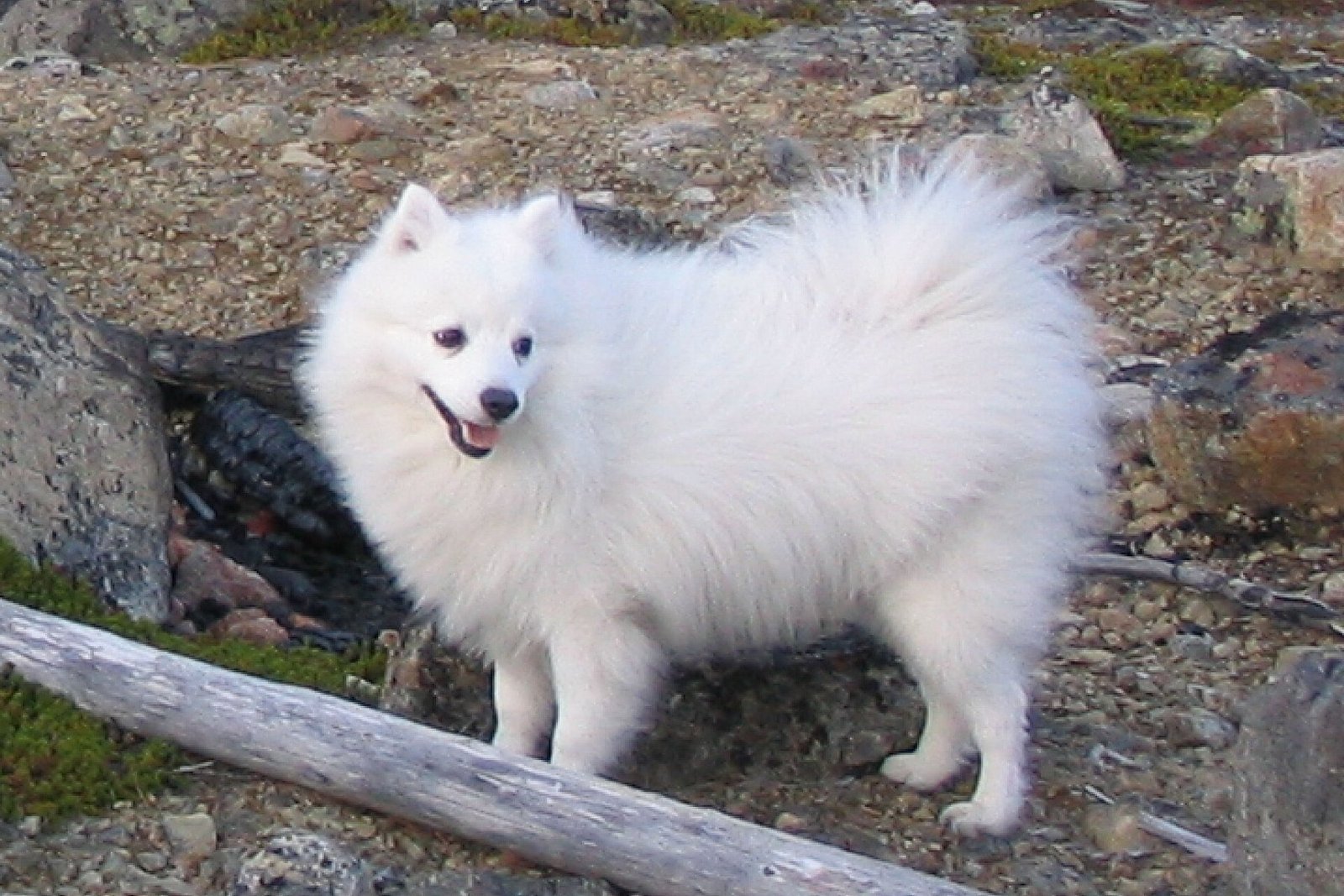
The FCI standard paints a clear picture: a dog “covered with profuse pure white coat, with pointed muzzle, triangular pricked ears, and feathering tail over back.”
A few other features stand out:
- Eyes: moderately large, almond-shaped, and dark, with black rims
- Ears: small, triangular, set high, and standing up
- Tail: moderately long, set high, and carried over the back
- Coat: a straight outer coat that stands off the body, over a short, soft undercoat, with a frill of longer coat from the neck to the shoulders and chest
The only accepted color in the FCI standard is pure white. The UK Royal Kennel Club also lists “white with black points.”
Japanese Spitz personality
The FCI standard describes the breed as “intelligent, cheerful, keen in sense.” FAM Times (FAM타임스), a Korean pet news site, describes the breed as full of affection and playfulness.
The same article says Japanese Spitz dogs are not the type to sleep all day. They love to play and follow their people around, and they tend to handle children’s play well. It also notes that they can be protective of their family and may bark loudly at strangers, so it helps to let new visitors approach slowly and gently.
💡 Good to know: The FCI breed standard says plainly, “Noisy not permitted.” In other words, a well-bred Japanese Spitz isn’t supposed to be a nonstop barker. Early socialization and calm, consistent training help a lot.
How much exercise do they need?
The UK Royal Kennel Club lists exercise needs of up to 1 hour a day for the Japanese Spitz, and says the breed can suit either town or country life and a small house.
FAM Times goes a bit further and suggests planning for at least an hour of play and exercise every day. It also warns that a Japanese Spitz left alone for long stretches may get bored or depressed, which can lead to destructive behavior. If no one is home for most of the day, it’s worth thinking carefully before bringing one home.
If you have a yard, make sure the fence is secure (FAM Times suggests about 1.5 to 1.8 m). FAM Times notes that these dogs may dig under a fence, or jump over one that’s too low.
Grooming that white coat
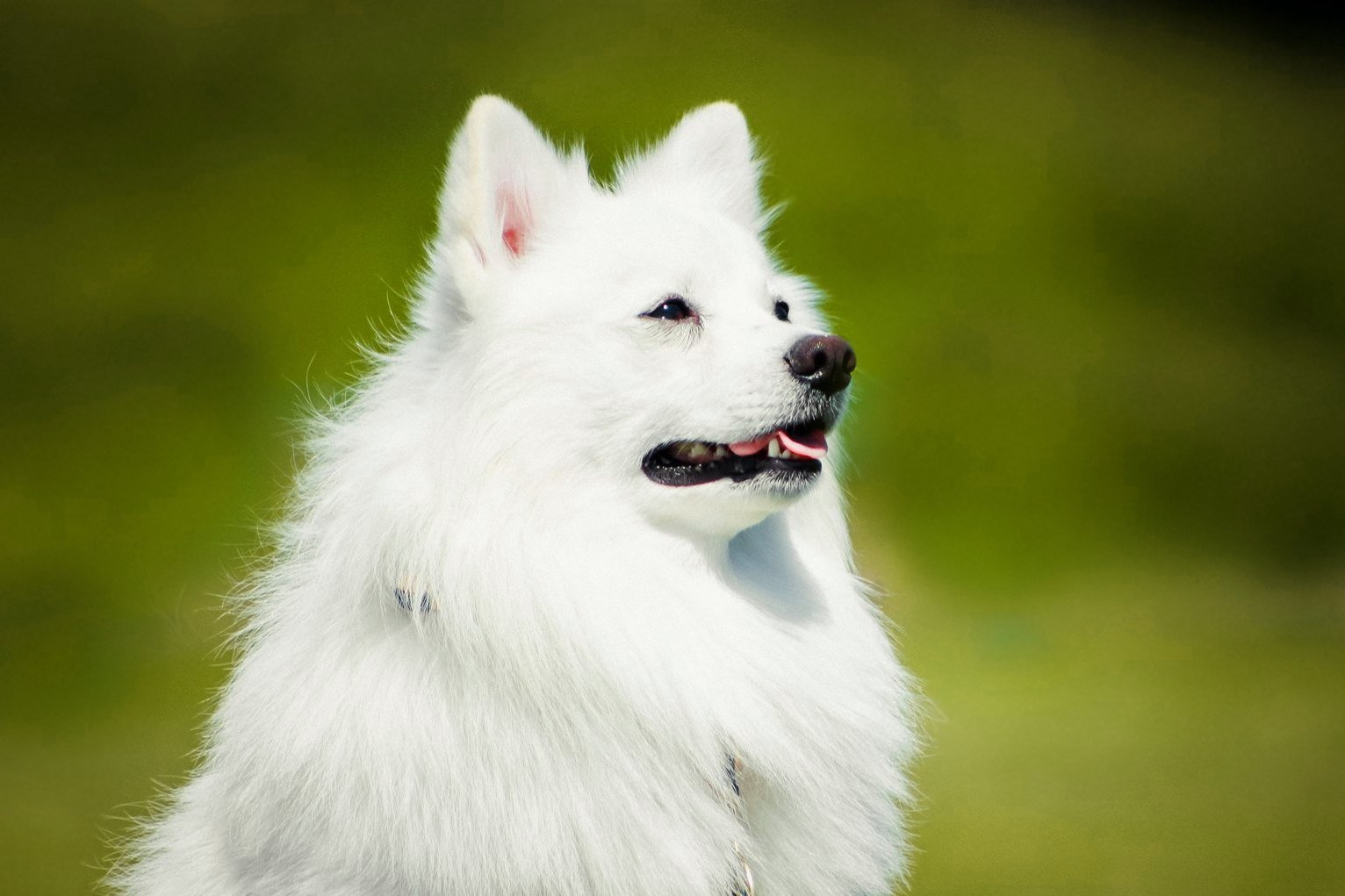
That gorgeous white coat does take work. The UK Royal Kennel Club lists grooming as every day, and confirms that the breed sheds.
The good news is that the coat’s texture helps. FAM Times explains that dirt and mud tend to fall off the coat fairly easily, and these dogs often keep themselves clean, a bit like cats.
A simple routine:
- Brush daily if you can, all the way down to the undercoat, to catch loose hair before it ends up on your sofa
- Bathe when needed (FAM Times suggests about once a week), and dry and brush the coat well afterward
- Keep an eye on the fur under the eyes, since white coats show tear stains easily
- Trim nails and check ears regularly
Japanese Spitz health
The UK Royal Kennel Club places the Japanese Spitz in Breed Watch Category 1, which means no breed-specific points of concern are listed. That’s a good sign, but every breed has health issues to watch for.
The Japanese Spitz Foundation, a nonprofit breed group, lists several conditions reported in the breed, including:
- Patellar luxation: a kneecap that slips out of place, common in many small breeds
- Progressive retinal atrophy (PRA): an inherited eye disease that slowly leads to vision loss. The foundation has reported a form called PRA-rcd4 in Japanese Spitz dogs and runs a DNA testing program for it.
- Watery eyes and tear staining: the foundation links these to narrow tear ducts, prominent eyes, or dry eye
- Other reported issues: such as bladder and kidney stones, epilepsy, cataracts, and dental disease
⚠️ Please talk to your vet if your Japanese Spitz starts limping or skipping a step, bumps into things in dim light, or has eyes that look red or keep running. Catching these early makes a real difference.
Choosing a Japanese Spitz responsibly
If you’re buying a puppy, ask the breeder about health checks for the parents, such as knee and eye exams, and whether they’ve been DNA tested for PRA-rcd4. A good breeder will be happy to show you the results and let you meet the mother.
It’s also worth checking rescues and breed groups, since spitz-type dogs sometimes need new homes.
Bred to be a companion
FAM Times describes the Japanese Spitz as a white-coated dog with an “angel-like face,” and points out that it was bred as a human companion rather than for work or sport.
The same article notes that the breed was officially recognized by the United Kennel Club (UKC) in the United States in 2006, but not by the American Kennel Club (AKC), because of its close resemblance to the American Eskimo Dog.
Fun facts 🐾
Its tail shouldn’t curl too tightly. The FCI standard wants the tail carried over the back, but lists a strongly curled tail as a fault.
It may have started as a “mini Samoyed” idea. FAM Times says one theory is that breeders in early 20th-century Japan wanted a small dog that looked like a Samoyed.
It keeps itself surprisingly clean. That white coat tends to shed dirt easily, and many Japanese Spitz dogs groom themselves, a bit like cats.
Floppy ears are a disqualification. In the FCI standard, the ears must stand up, and drop ears disqualify a dog from the show ring.
Is a Japanese Spitz right for you?
A Japanese Spitz might be a great match if you want a small, cheerful, playful companion, have time for daily play and walks, and don’t mind regular brushing.
A Japanese Spitz might be harder if you’re away from home most of the day, want a dog that barely sheds, or live somewhere a dog’s bark at strangers would cause problems.
Angel Jake Note 🐾
The Japanese Spitz looks like a little cloud, but there’s a real dog with real needs under all that fluff.
They need company, play, and steady brushing for their whole lives. If you can give them that, you may get a bright, happy friend who wants to be part of everything you do.
Medical Disclaimer
I’m not a vet, and nothing here replaces a real exam. If something about your dog feels off, please trust that feeling and call your veterinarian.
Sources
- FCI: Japanese Spitz breed standard (No. 262)
- Royal Kennel Club: Japanese Spitz
- Japanese Spitz Foundation: Guide to Japanese Spitz Health and Genetic Mutations
- FAM타임스: 하얀 털의 천사 같은 얼굴 ‘재패니즈 스피츠’, 강아지 분양받을 때 기억해둘 것 대공개