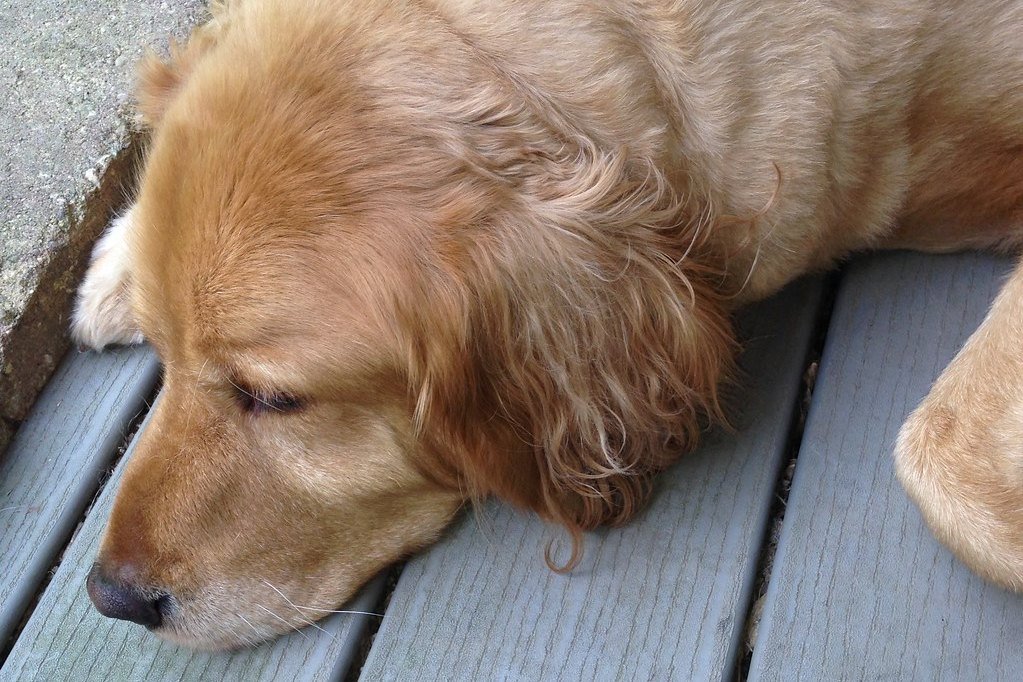
If you’ve ever shared your life with an older dog, you might know this moment. They wander into a room and seem to forget why they came. They look a little lost in a house they’ve known for years. They don’t come running when you call their name, and you can’t tell if it’s their ears or something more.
It’s a hard thing to watch. And for a long time, owners have mostly heard that it’s just old age. A study published on Oct. 6, 2026, in the journal npj Dementia takes canine dementia seriously in a new way. When researchers looked closely at the brains of senior pet dogs, they found changes in the same regions affected in early Alzheimer’s disease in people. That sounds heavy, I know. But the scientists behind it see something hopeful in it, for dogs and for us.
What the researchers actually did
The paper is called “Alzheimer’s disease neuropathological characterization of the dog brain and relationship to biofluid biomarkers and cognitive function.” It was led by Julie Moreno, a neurotoxicologist at Colorado State University, and Caitlin Latimer, an associate professor of laboratory medicine and pathology at the University of Washington School of Medicine. The Dog Aging Project, a long-term study that follows pet dogs through their lives, supported parts of the work.
The team studied the brains of 24 senior pet dogs, all aged 8 or older. These weren’t lab dogs. They lived in homes, and after each dog passed away, their owners agreed to donate the brain to research. Owners came to the study through the Dog Aging Project’s Brain Health Study, their vets, local news, and social media.
Before that, owners had filled out a questionnaire called the Canine Cognitive Dysfunction Rating (CCDR), which asks about the kinds of changes people notice at home. Dogs who scored above 40 were grouped as showing signs of cognitive decline.
The team then mapped two proteins that build up in human Alzheimer’s: amyloid beta, which forms plaques, and a form of tau, which is linked to tangles. They looked at six brain areas, from the prefrontal cortex to the cerebellum. For 14 of the dogs, they also had blood samples to compare.
“No one had mapped this neuropathology in dogs before — that’s what we set out to do,” Latimer said in the UW Medicine press release.
What they found in the dogs’ brains
Amyloid showed up in the neocortex, the brain’s wrinkled outer layer, in every one of the 24 dogs. It appeared in the hippocampus, a key memory area, in 87.5 percent of them. It was much less common deeper in the brain and was missing from the cerebellum entirely. The authors say this pattern partly overlaps the order in which amyloid tends to spread in the earliest stages of Alzheimer’s in people.
Most of the dogs, 71 percent, also had early tau changes, especially in part of the hippocampus.
“I was surprised by how extensive the plaques were in some of these dogs,” Latimer said.
The dogs whose owners had noticed signs of decline had more amyloid in the prefrontal cortex and more tau-positive cells in the visual cortex than the dogs without those signs. So the changes in the brain lined up, at least in part, with the changes people saw at home.
“The dogs we analyzed with CCD – key areas of their brains look a lot like those same areas in humans with dementia,” Moreno said in the CSU press release.
💡 Good to know: Not everything matched human Alzheimer’s. None of the dogs had neuritic plaques, a type of plaque used to stage Alzheimer’s in people, and none reached the “high” level of Alzheimer’s-like changes on the scales the team used. The authors describe what they saw as early-stage changes and say the dog brain isn’t a proven match for any specific stage of the human disease.
Why scientists are so interested in old dogs
Most Alzheimer’s research has relied on mice that are genetically engineered to develop parts of the disease. But about 95 percent of human Alzheimer’s cases develop on their own, later in life, according to the CSU release. Mice don’t naturally develop the protein buildup seen in dementia, Moreno has noted. Dogs do.
The paper also points out that dogs “share human environments, lifestyles, and daily exposures.” And they age on a much shorter timescale than we do, which the authors see as an advantage for research.
In a piece for The Conversation, republished by the Jamaica Observer on Oct. 11, Moreno wrote that 99 percent of Alzheimer’s drugs that looked promising in the lab went on to fail in human trials. She also noted that these diseases often begin about two decades before symptoms bring someone to a clinic.
“It’s exciting because it suggests these dogs could represent a model of the earliest stages of Alzheimer’s disease,” Latimer said.
There was one more early clue. In the blood samples, a marker called GFAP tracked with how much amyloid a dog had in the brain. In her Conversation piece, Moreno suggested it could one day help diagnose cognitive decline in dogs. The paper calls this exploratory, though. Only 14 dogs had blood samples.
Dog dementia is more common than many people think
Canine cognitive dysfunction, or CCD, is the dog version of dementia. Moreno has written that it affects more than a quarter of dogs over age 12. The CSU release says dogs with CCD are typically more than 8 years old, and that signs include disorientation, changes in how a dog interacts with people, and a general decline in how they get through their day.
One owner’s story shows how painful that can be. In a University of South Florida news story republished by Mirage News on Oct. 7, Kate Heath described her 12-year-old pug, Ivy, who developed changes in vision and hearing, disrupted sleep, and disorientation. Her vets could only manage the symptoms. Heath recalled being told, “Dog dementia is a thing, but there’s really no treatment for it.” Ivy was euthanized in February 2024.
“Anybody who’s lived this will tell you it is a very real thing and a very real problem,” Heath said.
⚠️ Please don’t write it off as “just getting old.” If your senior dog seems lost in familiar places, acts differently with the people they love, or just doesn’t seem like themselves, mention it to your vet. They can help figure out what’s going on and talk with you about ways to keep your dog comfortable.
A small spark of hope from Florida
That same USF story is about Aurelie Joly, a research associate at the USF Morsani College of Medicine, who is developing a gene therapy for canine cognitive decline. It uses a modified, non-disease-causing virus to carry instructions into brain cells, so they make a protective protein that reduces oxidative stress.
“It’s like a mini factory inside the body that continuously produces a beneficial protein after a single treatment,” Joly said.
To be clear about where this stands, the therapy has shown promise in earlier animal studies, but it hasn’t been tested in dogs yet. The next steps are making much larger amounts of it and finding new ways to measure whether it works in dogs. The work is funded in part by the National Science Foundation.
Korea is betting on old dogs, too
In June, the Korean pharmaceutical news outlet Dailypharm (데일리팜) reported that the pet health company ONHEAL (온힐) and a team led by Professor Kim Eo-su of Yonsei University College of Medicine had been selected for a National Research Foundation of Korea project worth 2.5 billion won over five years. Their plan is to build a platform that uses pet dogs who naturally develop dementia to test Alzheimer’s drug candidates before they reach human trials. They call it a “Phase 0.5 trial.”
The same report noted that Alzheimer’s clinical trials have a failure rate of about 99 percent, echoing the figure Moreno cites.
💡 Did you know? Korea already has a medicine for dog dementia. In July, the Korean newspaper Seoul Shinmun (서울신문) reported that GNT Pharma’s Jedacure was approved in 2021 and is prescribed at about 2,300 animal hospitals in Korea. The company plans to complete U.S. and EU approvals by 2028, and it’s now working with a genome analysis firm on a blood test to help diagnose dementia in dogs and cats.

What this study can’t tell us yet
Twenty-four dogs is a small group. The study looked at each brain only once, after death, so it can’t show how the changes developed over time. The cognitive scores came from owners, which may miss subtle changes. And the cutoff the team used for “signs of decline” was lower than the validated threshold, which is generally 50, so some of those dogs were better described as at risk.
The study also wasn’t big enough to look at differences by breed, sex, or body size, and the blood test kit was made for human samples, not dogs.
So no, this isn’t a cure, and it isn’t a way to diagnose your dog yet. It’s a careful first map.
Why it still matters
For years, a lot of old dogs have quietly lived with confusion that nobody could fully explain. This study gives that confusion a physical shape. The changes are real, they’re in the brain, and they look a lot like early Alzheimer’s in people.
That matters for research, but it also matters at home. It’s one more reason to take a senior dog’s changes seriously and to talk with your vet about them. And maybe, if the scientists are right, the old dogs we love will help make life better for both species someday. Moreno put it this way: the findings emphasize “the vital role dogs can play in helping us better understand cognitive diseases such as Alzheimer’s.”
Angel Jake Note 🐾
What moved me most about this study was the owners behind those 24 dogs. Saying goodbye to a dog is hard enough. Choosing, in that moment, to help researchers understand what happened inside your dog’s mind is a quiet kind of generosity.
If your senior dog has started to seem a little lost, please don’t carry that worry alone, and don’t feel guilty for noticing it. Write down what you see and bring it to your vet. Your dog may not remember every room in the house anymore, but they still know you’re there.
A Note on This Study
This post summarizes a published study for everyday dog lovers. One study can’t tell the whole story, and its findings may not apply to every dog. For the full methods and limitations, please see the original research linked in the Sources section.
Sources
- npj Dementia (Alsulami et al., Oct. 6, 2026): Alzheimer’s disease neuropathological characterization of the dog brain and relationship to biofluid biomarkers and cognitive function (DOI: 10.1038/s44400-026-00141-4)
- Colorado State University (Oct. 6, 2026): Both dogs and humans with dementia show similar brain patterns
- UW Medicine (Oct. 6, 2026): Similar brain patterns seen in dogs, humans with dementia
- Jamaica Observer / The Conversation (Oct. 11, 2026): Old dogs could teach Alzheimer’s researchers new tricks
- Mirage News / University of South Florida (Oct. 7, 2026): USF Researchers Explore Gene Therapy for Dog Dementia
- Dailypharm (데일리팜, June 17, 2026): 반려견 치매로 신약 검증…온힐-연세의대 연구 착수
- Seoul Shinmun (서울신문, July 27, 2026): ‘설마 우리 멍멍이가 치매인가’…지엔티파마, 세계 최초 반려동물 치매 치료·진단 통합플랫폼 개발에 나서