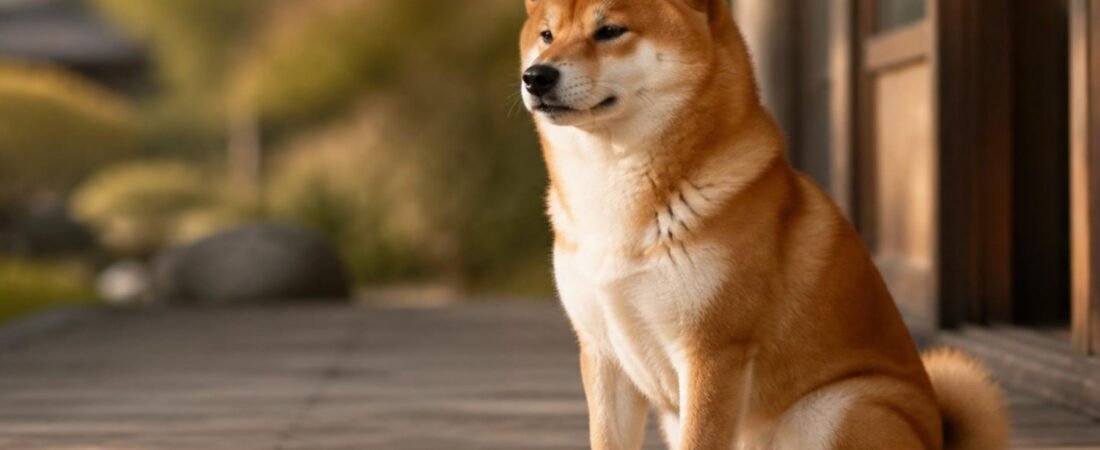
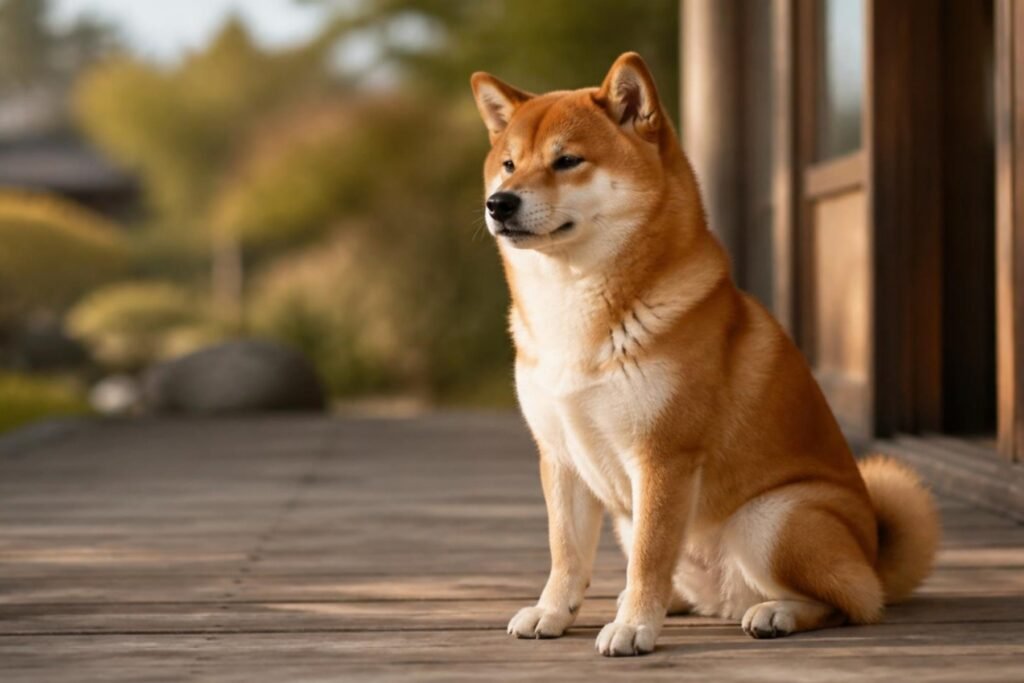
Picture a fox who decided to move in with people, and you’re most of the way to a Shiba Inu. Pointed ears, a bright face, a tail curled over the back, and an expression that seems to say they’re only here because they chose to be.
That attitude comes from a very long history. This small Japanese hunter has lived alongside people for thousands of years, nearly disappeared in the 20th century, and was rebuilt from three regional lines. Much later, one Shiba’s sideways glance became one of the most famous images on the internet.
One of the oldest dogs in the world
The AKC says the Shiba’s ancestors may have accompanied the first immigrants to Japan around 7000 B.C. Wikipedia adds that dogs resembling the Shiba appear in dogū, the clay figurines made during Japan’s prehistoric Jōmon period.
Genetics backs up the old story. Wikipedia describes the Shiba as a “basal breed,” meaning one that predates the modern breeds that took shape in the 19th century. A 2004 study from the National Human Genome Research Institute, described by the Santa Barbara Independent, grouped breeds by their similarity to gray wolves. The oldest group included the Shar-Pei, the Akita, the Chow Chow, and the Shiba Inu.
So what does “Shiba” mean?
“Inu” simply means dog. “Shiba” is the fun part, because nobody is completely sure.
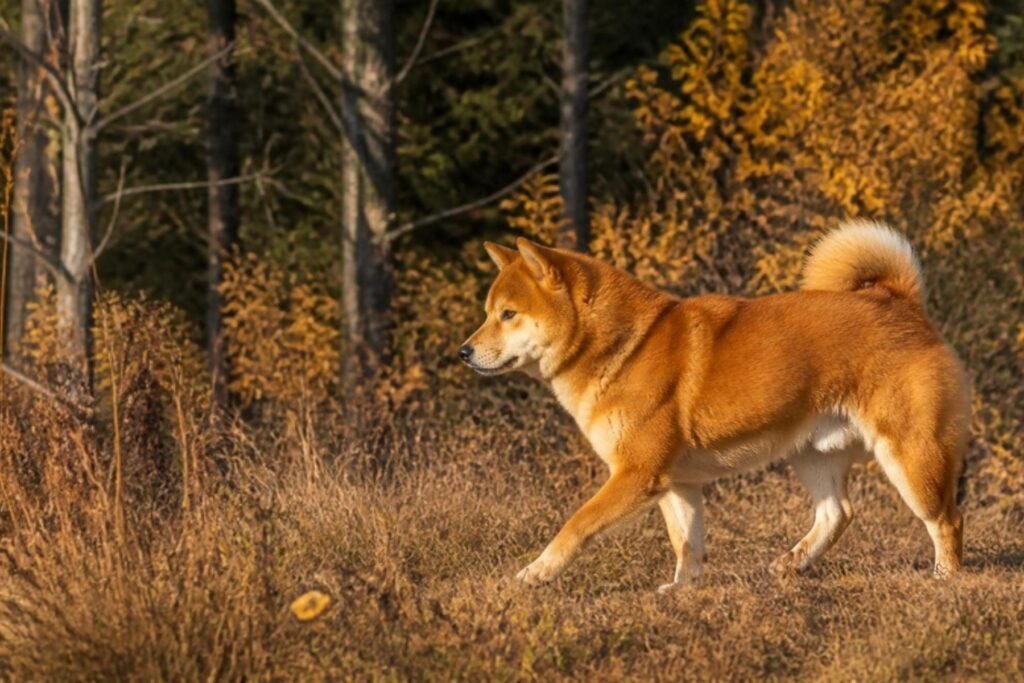
The National Shiba Club of America lists a few theories. “Shiba” can mean brushwood, so the name may come from the thick brush where these dogs hunted. It may describe their color, since the brushwood turns a fiery red in autumn. Or it may come from an old word meaning “small.” National Purebred Dog Day notes that a translation from the Nagano dialect gives you “little brushwood dog,” which neatly combines two of the ideas.
All three fit. A small red dog slipping through the brush is exactly the picture.
A breed that almost disappeared
The Shiba’s first real threat came long before World War II. The AKC explains that during the Meiji era (1868 to 1912), Japan ended its isolation and began importing Western goods, including Western dogs. Those dogs were bred with native Japanese breeds, and Shiba numbers dropped, a decline that grew worse from 1912 to 1926. In 1928, dog lovers in Japan founded the Nihon Ken Hozonkai to protect them.
The effort worked, at least for a while. According to Wikipedia, the first breed standard was published in 1934. Korean Wikipedia gives the exact date the Shiba became a Natural Monument of Japan: December 16, 1936.
Then came the war. The AKC describes food shortages, bombings, and a hard postwar depression, followed by a highly contagious distemper outbreak. The National Shiba Club of America puts it plainly: most of the dogs that didn’t die in bombing raids were lost to distemper in the years after the war.
💡 Did you know? Before the war, there were three main types of Shiba, each named for its home region. National Purebred Dog Day describes the Shinshu as small and mostly red with a dense undercoat, the Mino as a deep mahogany red, and the San’in as larger, mottled black, and known for its independence. After the war, the remaining dogs were interbred to save the breed, and every Shiba today carries a blend of all three.
Most of the survivors were Shinshu dogs, with only a few Mino and San’in left. It’s a little amazing to think about. The confident dog trotting down a sidewalk today exists because people kept three nearly lost lines going.
How the Shiba came to America
The AKC says that in 1954, an American military family returning from Japan brought their Shiba home with them. That dog was the first of its breed in the United States.
The AKC recognized the Shiba in 1992 as its 136th breed, and Wikipedia notes the breed joined the Non-Sporting Group in 1993. In Japan, according to the AKC, the Shiba is the most popular companion dog of all.
Fox face, curled tail, and a coat that blows twice a year
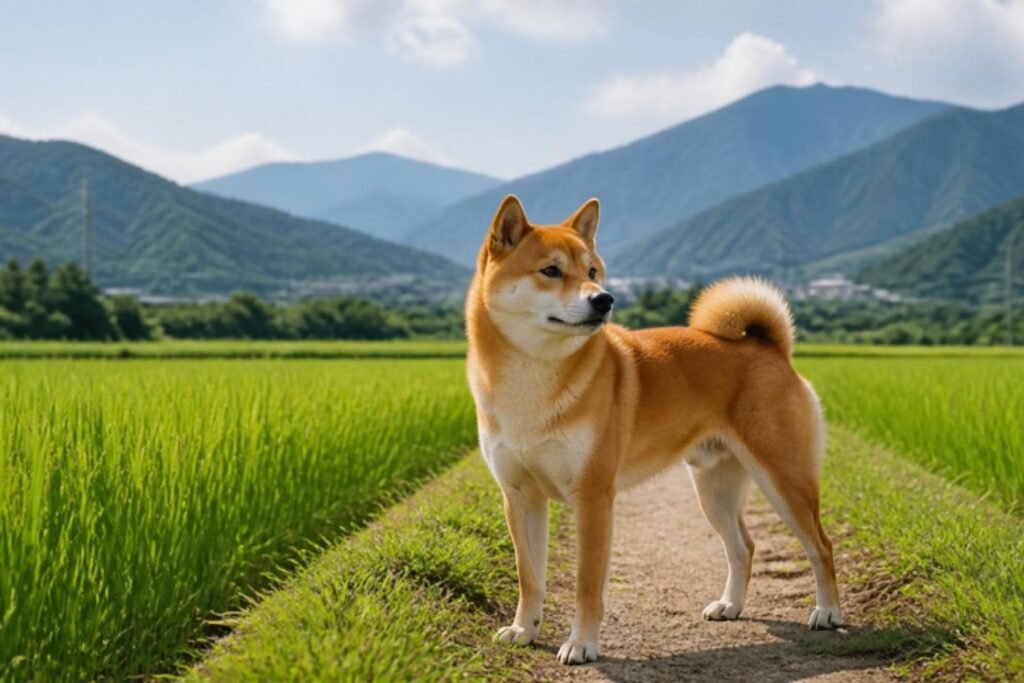
VCA lists the Shiba at 13.5 to 16.5 inches tall and 18 to 25 pounds. They’re compact and muscular, strong for their size.
Wikipedia gives the breed’s colors as red, sesame, black and tan, and cream. Every Shiba also has urajiro, the cream-to-white markings on the cheeks, muzzle, throat, belly, and inside of the legs. It’s a big part of why that face looks so bright.
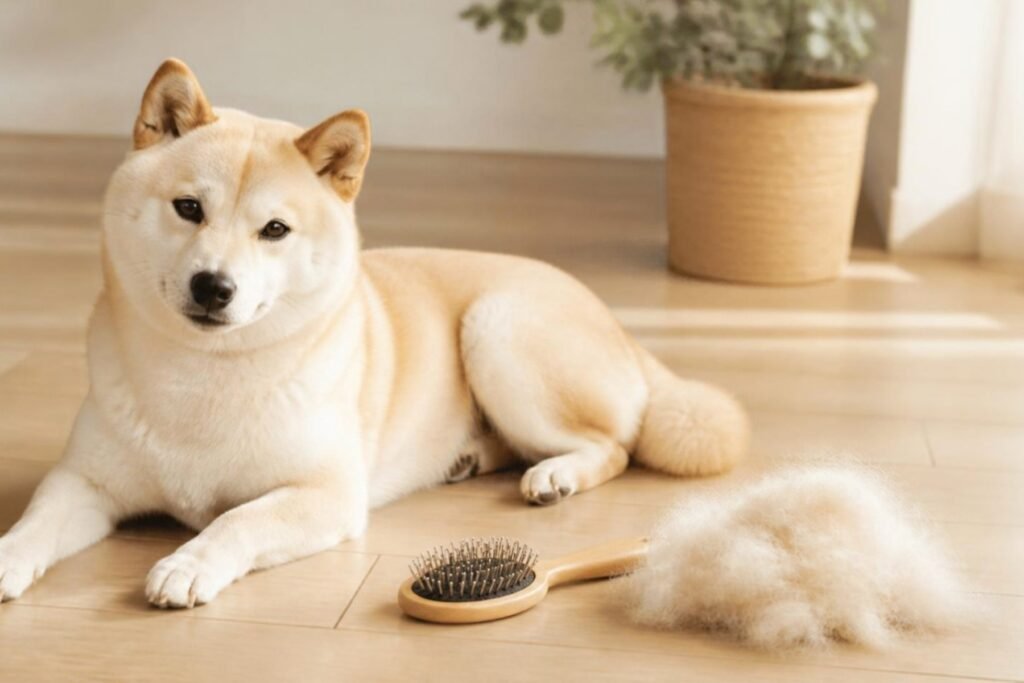
The coat is a double coat, with a stiff outer layer over a soft, plush undercoat. The Farmer’s Dog says Shibas shed moderately all the time and very heavily twice a year, when they “blow” their undercoats. Weekly brushing is usually enough the rest of the year, according to VCA, with more brushing during those big sheds.
A dog with a cat’s habits
People often compare Shibas to cats, and it’s easy to see why. VCA calls the breed naturally fastidious, which makes housetraining relatively easy. The Farmer’s Dog adds that Shibas often lick their paws and legs to clean off dirt, much like a cat grooming after a walk.
The independence is catlike as well. The Farmer’s Dog describes Shibas as more selective about when they want affection, and from whom. They love their people. They just like to decide when.
Personality: loyal, proud, and very vocal
VCA describes the Shiba as devoted to their people and sensitive to their moods. They’re also intelligent but, in VCA’s words, “bore easily” with repetitive obedience drills. Some can be possessive, and aggression toward other dogs is possible, so early socialization matters.
Then there’s the sound. The “Shiba scream” is a loud, high-pitched cry, and The Farmer’s Dog describes it as the noise a Shiba makes when they want to stop something from happening. PetMD notes that Shibas can be quite vocal when they’re stressed or anxious, so it’s worth paying attention to what sets it off.
Korean dog owners know this well. Namuwiki says Shibas are famous for screaming at the vet, sometimes before the shot even happens. Type “시바견” into Google, Naver, or YouTube, and one of the autocomplete suggestions is “시바견 엄살,” which roughly means “Shiba overreacting.” I love that a whole country has quietly agreed on this.
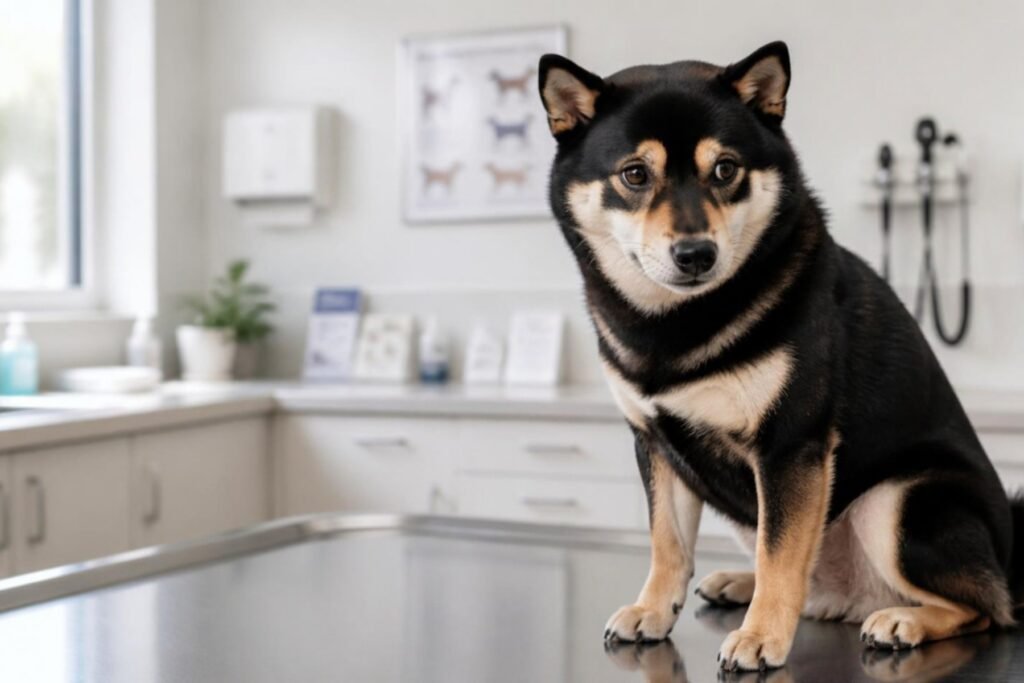
💡 Good to know: The Farmer’s Dog advises never letting a Shiba off leash in an unfenced area. They were bred to hunt, and many will take off after something without looking back. VCA also notes that reliable recall is hard to teach this independent breed.
Health: what to watch for
Let’s start with the happy part. A 2024 study of over 584,000 UK dogs found a median lifespan of 14.6 years for Shiba Inus, compared with 12.5 years for all dogs in the study. VCA gives a typical range of 12 to 15 years.
A long life still comes with a few things to know about:
- Allergies. The National Shiba Club of America calls allergies probably the most common health problem in the breed, with intense itching around the base of the tail, the belly, and between the back legs. With atopy, according to VCA, the immune system overreacts to things like pollen, mold, and dust mites, and dogs feel it in their skin. Symptoms often start between 2 and 6 years of age.
- Luxating patella. Wikipedia cites a survey in which 35% of Shibas had patellar luxation. VCA explains why it happens: when the ligament below the kneecap attaches off-center on the shinbone, it pulls the kneecap out of its groove. You might see a few skipping steps on three legs, then a normal walk again.
- Hip dysplasia. It’s a problem with how the hip joint develops, which can affect how well a dog moves. VCA lists it among the breed’s genetic concerns and recommends Orthopedic Foundation for Animals (OFA) screening for dogs before they’re bred.
Glaucoma deserves its own mention. In a Japanese study of 1,244 dogs published in the Journal of Veterinary Medical Science, Shiba Inus made up 33% of the glaucoma cases, more than any other breed. Every affected Shiba had primary glaucoma with abnormal drainage structures in the eye. When fluid can’t drain from the eye properly, VCA notes, pressure builds up inside it.
⚠️ Please don’t wait. If your Shiba has a red or cloudy eye, squints, seems to be in pain, or has watery discharge, have them seen by a vet the same day. VCA warns that blindness can happen very quickly unless the pressure is brought down, and acute glaucoma is an emergency.
Fun facts and true stories 🐾
The most famous Shiba face came from a shelter. Wikipedia says Kabosu ended up in an animal shelter when her puppy mill shut down, and kindergarten teacher Atsuko Sato adopted her in 2008. Photos Sato posted on her blog in 2010 later inspired the “Doge” meme. In December 2013, two software engineers created Dogecoin as a joke about cryptocurrency speculation, with Kabosu’s face as its logo.
Her hometown gave her a statue. SoraNews24 reports that on November 2, 2023, a statue of Kabosu was unveiled at Sakura Furusato Hiroba Park in Sakura, Chiba, with her paws crossed just like in the famous photo. Kabosu died on May 24, 2024, at age 18, according to Wikipedia.
A Shiba mix once held the world record. In 2011, NPR reported that Pusuke, a Shiba mix in Japan who had been recognized by Guinness World Records as the world’s oldest living dog, died at 26 years and 8 months. His owner said he skipped breakfast that morning for the first time, then died quietly with his family around him.
Korea’s Jindo shares deep roots with the Shiba. In 2018, Korea.net reported on a Rural Development Administration study that compared Korean dogs with 2,258 dogs from 33 other breeds. The Korean breeds in the study, the Jindo, Pungsan, and Donggyeongi, were most closely related to the Shar-Pei, Chow Chow, Akita, and Shiba Inu. Namuwiki notes that the Shiba and the Jindo are both spitz-type dogs, though the Shiba’s face is rounder and more fox-like.
Korea got to know the Shiba through memes. Namuwiki says the Shiba used to be overshadowed by the Akita in Korea, but internet memes since the 2010s have made it the most recognized Japanese breed there.
Is a Shiba Inu right for you?
If you admire a dog with a strong personality, want a clean and fairly low-maintenance companion, and like the idea of earning trust instead of receiving it automatically, a Shiba could be a great match. They’re small enough for many homes, but PetMD says they need plenty of daily exercise and mental stimulation.
Think twice if you want a dog who loves every stranger, comes back the moment you call, or doesn’t mind being handled. Patience matters. So do a secure leash, a good brush for shedding season, and a vet you trust to check those eyes.
Angel Jake Note 🐾
What stays with me about the Shiba is how close it came to disappearing, twice. First crossbreeding with imported dogs, then war and disease. Each time, a few people cared enough to keep these little dogs going.
If a Shiba shares your home, you’re holding a piece of that history. Give them room to be themselves, watch those eyes and that skin, and try to smile through the scream. They’re telling you how they feel, loudly and honestly.
Medical Disclaimer
I’m not a vet, and nothing here replaces a real exam. If something about your dog feels off, please trust that feeling and call your veterinarian.
Sources
- American Kennel Club: Shiba Inu Breed History
- American Kennel Club: Shiba Inu Dog Breed Information
- National Shiba Club of America: Breed History
- National Shiba Club of America: An Overview of Health Problems in the Shiba Inu
- National Purebred Dog Day: The Shiba’s Name: Brushwood, Size or Color?
- National Purebred Dog Day: Mino, San’in, and Shinshu
- Wikipedia: Shiba Inu
- Wikipedia: Kabosu (dog)
- Wikipedia: Dogecoin
- Santa Barbara Independent: A 14,000-Year Friendship
- McMillan et al. (2024): Longevity of companion dog breeds: those at risk from early death
- Kato et al. (2006): Incidence of Canine Glaucoma with Goniodysplasia in Japan
- VCA Animal Hospitals: Shiba Inu
- VCA Animal Hospitals: Glaucoma in Dogs
- VCA Animal Hospitals: Luxating Patella in Dogs
- VCA Animal Hospitals: Inhalant Allergies (Atopy) in Dogs
- PetMD: Shiba Inu
- The Farmer’s Dog: The Shiba Inu Care Guide
- SoraNews24: Japan creates public monument to original doge meme dog
- KCUR/NPR: Pusuke, World’s Oldest Dog, Dies At Age 26
- Korea.net: Researchers explore Korean dog DNA
- 나무위키: 시바견
- 위키백과: 시바견