
Those big bat ears. That squishy little face. The way they snore like a tiny old man. It’s not hard to see why French Bulldogs have captured so many hearts.
The Frenchie has been the American Kennel Club’s most popular breed for the last few years, and it held the No. 1 spot again in the AKC’s 2025 rankings. But behind that sweet face is one of the most surprising histories in the dog world — English lace makers, Parisian cafés, a fight over ears that split two continents, and even a Frenchie aboard the Titanic.
I also think Frenchies are one of the breeds where it matters most to go in with your eyes open, because that adorable flat face comes with real health challenges. So let’s talk about all of it: the history, the fun, the “why,” and the honest part.
A French dog that started in England
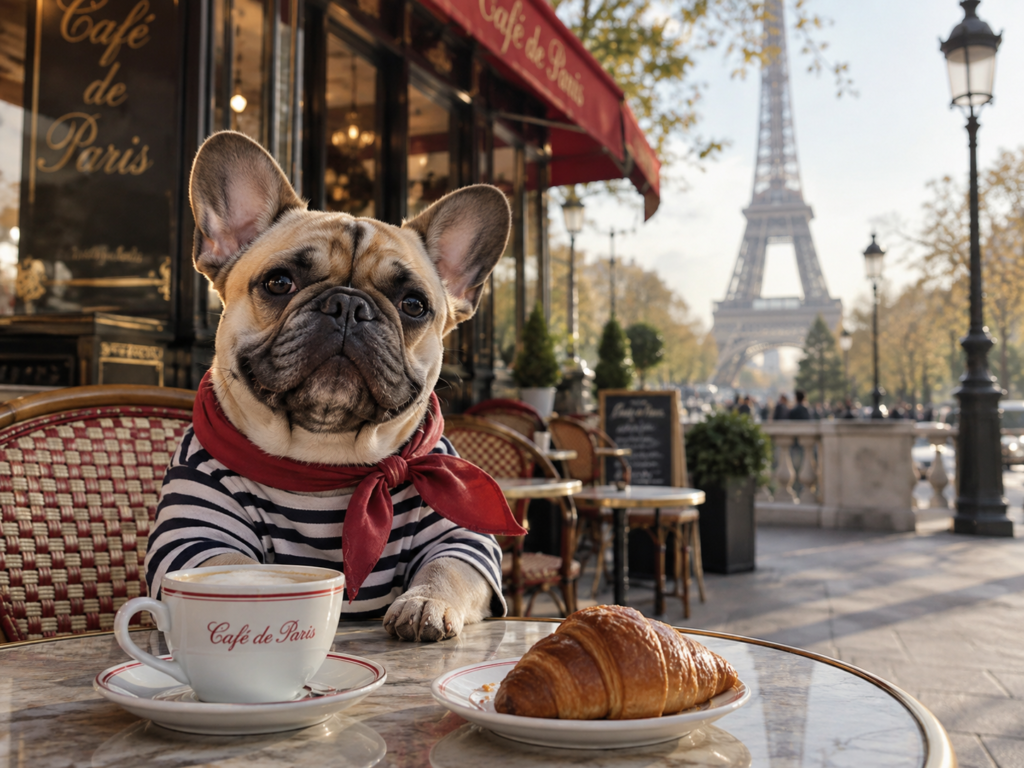
Here’s the first twist: the French Bulldog’s story actually begins in England.
According to the French Bull Dog Club of America, lace workers in Nottingham, England, were especially fond of small “toy” bulldogs. When the Industrial Revolution put many of these craftspeople out of work in the 1800s, a lot of them moved across the Channel to northern France to find jobs — and they brought their little dogs with them.
In France, the small bulldogs became hugely popular, first in Normandy and then in Paris, where they were nicknamed “Bouledogues Français.” They became favorites of working-class Parisians and café society, and even showed up in art. The painter Henri de Toulouse-Lautrec had a Frenchie named Bouboule who appears in his work.
The great ear war of 1897
This is my favorite story about the breed. In the early days, French Bulldogs came with two kinds of ears: upright “bat ears” and folded “rose ears.” British and French breeders tended to prefer rose ears. Americans loved the bat ears.
Frenchies were shown at the Westminster Kennel Club show in New York in the late 1890s, and in 1897 the judge — an Englishman — placed only rose-eared dogs. American fans were furious. They formed the French Bull Dog Club of America and wrote a breed standard that allowed only bat ears. The club says it was the first breed club in the world dedicated to the French Bulldog.
The next year, when plans were made to show both ear types again, the Americans pulled their dogs and held their own show at the elegant Waldorf-Astoria hotel instead. The bat ear won — and that’s why today’s Frenchies have those big, upright ears we all recognize.
A Frenchie on the Titanic
One of the most touching stories in Frenchie history happened in 1912. A young banker named Robert Williams Daniel boarded the Titanic with his prize French Bulldog, Gamin de Pycombe, whom he had reportedly bought in England for £150 — a huge sum at the time.
Daniel survived the sinking. Gamin did not. The dog was reportedly last seen in the water after the ship went down. Daniel later filed an insurance claim of $750 for his lost bulldog. More than a century later, it’s still one of the saddest little footnotes of that night.
Size

Frenchies are small but solid. Most are roughly 11 to 13 inches tall, and adults generally weigh under 28 pounds. They’re compact, muscular little dogs with a lot of personality packed in.
Personality
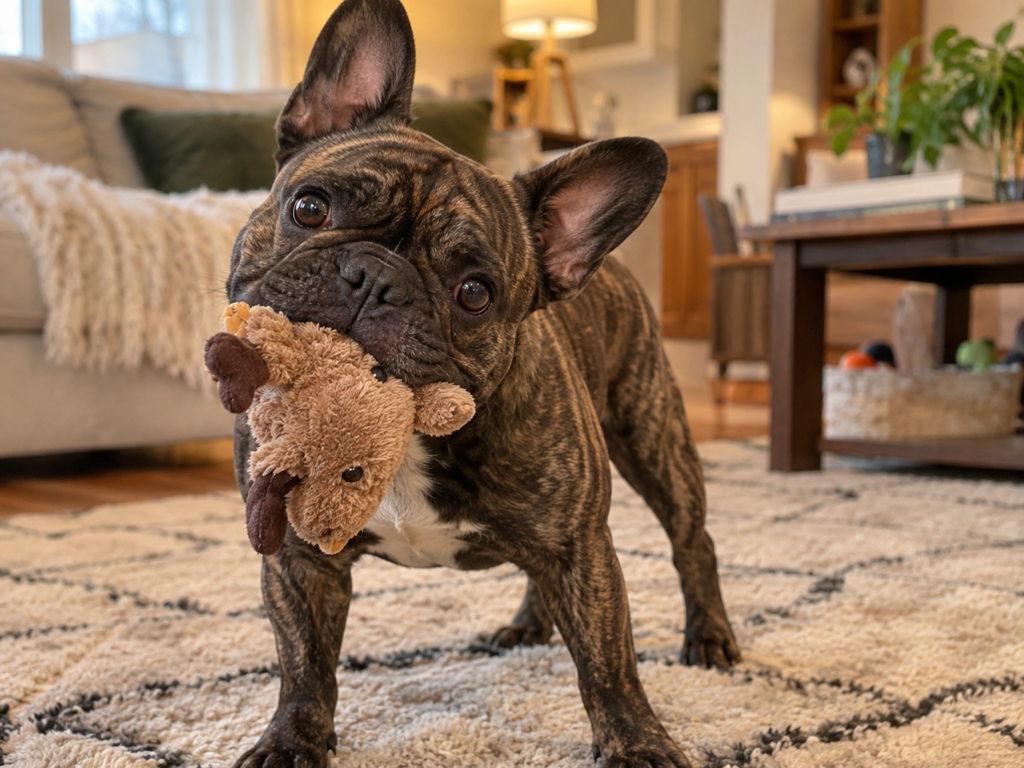
Frenchies are usually playful, alert, and deeply attached to their people. Many are clowns at heart. They tend to bark less than a lot of small breeds, and they generally don’t need huge amounts of exercise, which is part of why they fit so well into city life.
They can also be a bit stubborn. Short, fun training sessions with lots of rewards usually work much better than long, repetitive ones.
Why their faces are flat — and what that means

Frenchies are a brachycephalic breed, which means they were bred to have a shortened skull and flat face. That cute face is the result of people choosing, over many generations, dogs with shorter and shorter muzzles.
The problem is that when the skull gets shorter, the soft tissue inside doesn’t shrink the same way. The Royal Kennel Club explains that in some flat-faced dogs, the soft tissue in the nose and throat is too much for the airway, which partly blocks it. This is called brachycephalic obstructive airway syndrome, or BOAS. Narrow nostrils, a long soft palate, and a tight windpipe can all make breathing harder, and the condition can get worse over time.
That’s why so many Frenchies snore, snort, and pant heavily. Some of those sounds that people find “cute” are actually signs of a dog working harder to breathe.
Research from the Royal Veterinary College’s VetCompass program found that French Bulldogs were much more likely than other dogs to have a number of common disorders, including narrowed nostrils and BOAS, and the researchers encouraged people to “stop and think” before buying a flat-faced dog.
Other health issues, and why they happen
Heat trouble. Dogs cool themselves mainly by panting, and a squeezed airway makes that much less effective. That’s why hot, humid days can become dangerous for Frenchies so quickly.
Skin fold infections. Those adorable facial wrinkles trap moisture and warmth, which is exactly what bacteria and yeast love.
Spine problems. Frenchies are prone to intervertebral disc disease, which can cause back pain and, in serious cases, weakness in the legs.
Difficult births. Most Frenchie puppies are delivered by C-section. Puppies’ large heads and the mothers’ narrow hips often make natural birth difficult or unsafe.
Many can’t swim well. With heavy front ends, short legs, and flat faces, lots of Frenchies struggle in water. Please never leave one unsupervised near a pool, and use a dog life jacket if they’re ever around water.
💡 Did you know? With their heavy front end and short legs, many Frenchies find it really hard to stay afloat. A life jacket isn’t overkill for this breed. It could save their life.
A large 2024 UK study of more than 584,000 dogs, published in Scientific Reports, found that French Bulldogs had one of the shortest life expectancies of the breeds studied, at just under 10 years.
None of this means Frenchies can’t live happy lives. Many do. But it does mean they often need more care, more vet visits, and more attention to their comfort than many other breeds.
The breathing test most people don’t know about

Here’s something I wish every future Frenchie parent knew about. In the UK, the Royal Kennel Club and the University of Cambridge created the Respiratory Function Grading Scheme to check French Bulldogs, Bulldogs, and Pugs for BOAS. Specially trained vets assess dogs from 12 months of age, usually with a short exercise test, and grade their breathing from 0 (no signs) to 3 (severe).
If you’re looking at a breeder, it’s so worth asking whether the parents have had a breathing assessment and what their grades were. Choosing puppies from parents who breathe well is one of the best ways to help the next generation breathe easier.
💡 Good to know: Before choosing a Frenchie puppy, ask the breeder whether both parents have had a breathing assessment and what their grades were. It’s one of the kindest questions you can ask.
Heat can be dangerous
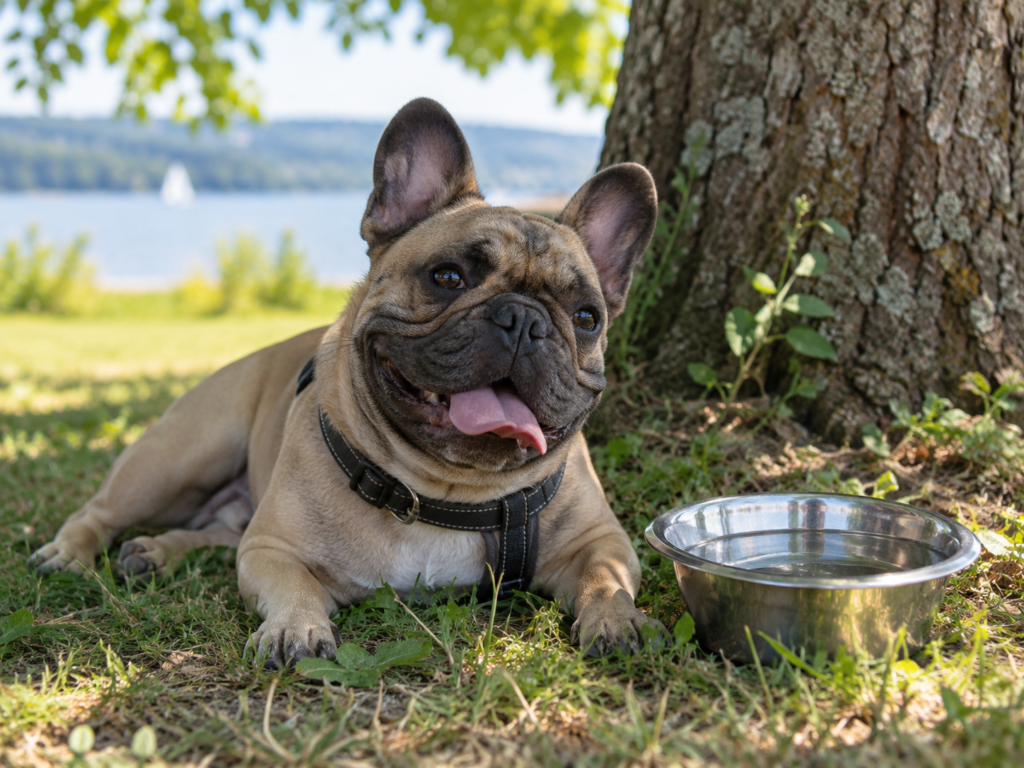
Keep walks short and early on warm days, always have shade and water, never leave a Frenchie in a car, and learn the signs of overheating — heavy, noisy breathing, drooling, weakness, or collapse. If you see those, it’s an emergency.
⚠️ Please don’t wait. If your Frenchie is breathing loudly and heavily, drooling, weak, or collapses on a warm day, move them somewhere cool right away and call your vet or an emergency clinic.
Everyday care

Frenchies have short, fine coats that are easy to care for, but their facial folds need gentle cleaning and drying to prevent irritation. Their ears are worth checking regularly too.
Keeping them at a healthy weight is especially important, because extra weight makes breathing even harder. And many owners prefer a harness instead of a collar to avoid pressure on the neck and airway.
Choosing a Frenchie responsibly
If you’re set on a French Bulldog, please take your time. Ask any breeder about the health of both parents — breathing, spine, and eyes. Look for dogs with more open nostrils and a less extreme face, and be wary of “rare color” or extra-flat-faced puppies marketed as special.
And please consider rescue. Many Frenchies end up needing new homes, often because their families weren’t prepared for their medical needs.
Fun facts 🐾
The bat ear was a very American decision. Without the angry American fans of 1897, today’s Frenchies might all have folded rose ears.
They were artists’ dogs. Toulouse-Lautrec’s Frenchie Bouboule is one of the most famous early French Bulldogs in art.
A Frenchie sailed on the Titanic. Gamin de Pycombe is one of the best-known dogs of that voyage.
They’re quiet for a small dog. Many Frenchies bark surprisingly little — though they make up for it with snorts, grumbles, and snoring.
They ended the Lab’s 31-year reign. When the French Bulldog became the AKC’s No. 1 breed, it ended one of the longest streaks in AKC history.
Is a Frenchie right for you?
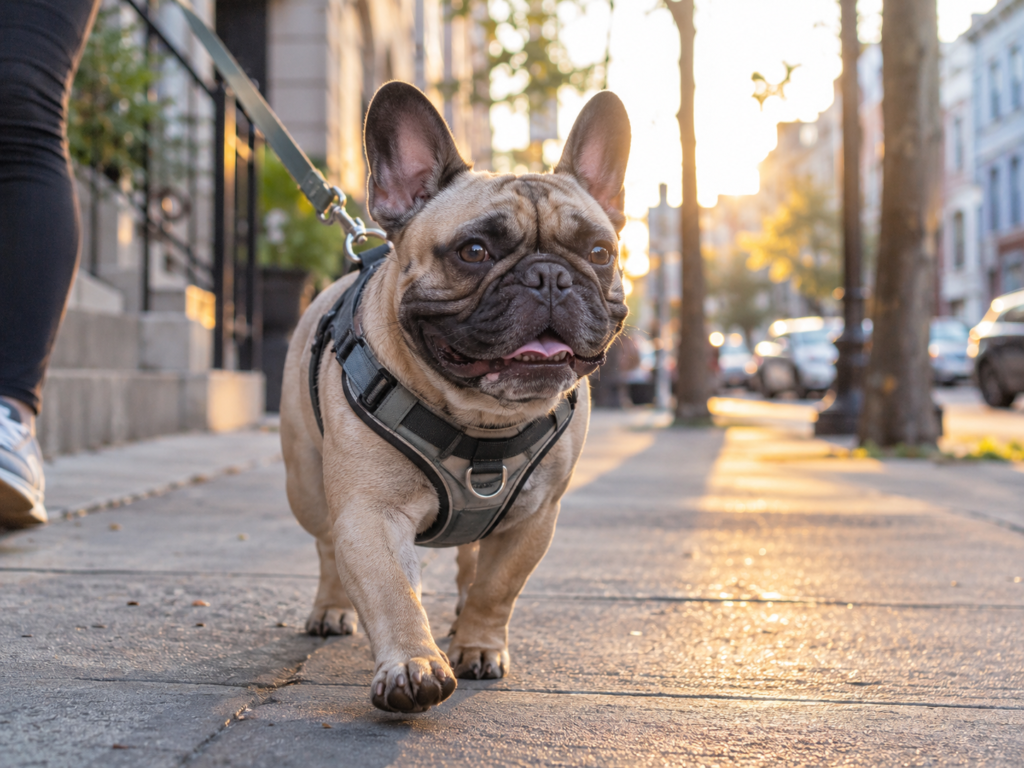
A Frenchie might be a great fit if you want a small, affectionate companion, you live in a smaller space, you’re home a lot, and you’re ready — emotionally and financially — for a breed that may need extra medical care.
It might be harder if you live somewhere very hot, want a jogging or hiking partner, or would struggle with unexpected vet bills.
Angel Jake Note 🐾
I understand why people fall for Frenchies. Their faces are pure love, and their personalities are even bigger than their ears.
But learning where they came from made me see them differently. These little dogs traveled from English lace workshops to Parisian cafés to the Titanic, and they’ve been loved by artists and families for more than a century. They deserve to be loved in a way that also protects them.
When a dog struggles to breathe on a warm day, that’s not a quirk — it’s something they’re living with. If you choose a Frenchie, I hope you’ll protect them from the heat, keep them lean, watch their breathing, and give them a life that’s as comfortable as it is loving.
They give us so much joy. They deserve that much back.
Sources
- American Kennel Club: French Bulldog breed information
- American Kennel Club: The Most Popular Dog Breeds of 2025
- French Bull Dog Club of America: History of the French Bulldog
- Wikipedia: Animals aboard the Titanic
- Royal Kennel Club: Respiratory Function Grading Scheme
- Royal Veterinary College VetCompass: “Stop and think before buying a flat-faced dog”
- O’Neill et al. (2021), French Bulldogs differ to other dogs in the UK in propensity for many common disorders
- McMillan et al. (2024), Longevity of companion dog breeds, Scientific Reports
Related Reading
- When Should You Take Your Dog to the Emergency Vet? Signs You Shouldn’t Ignore
- Pet Insurance: Is It Really Worth It?
- Labrador Retriever: History, Personality, Health & Surprising Facts
Medical Disclaimer
I’m not a vet, and nothing here replaces a real exam. If something about your dog feels off, please trust that feeling and call your veterinarian.