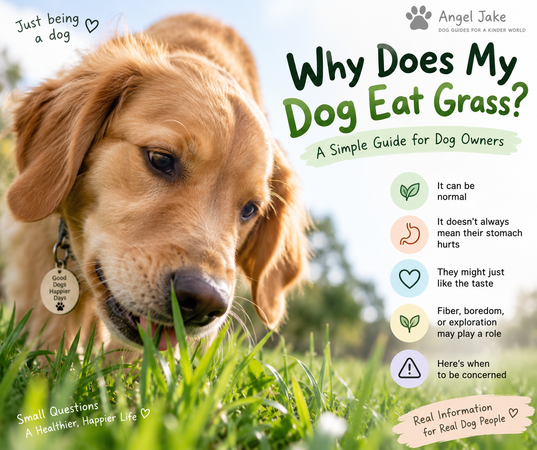
You take your dog outside. They sniff around for a while, find one perfect patch of grass, and then start eating it like you forgot to give them breakfast.
And you’re standing there with the leash thinking, “Why are you doing this?”
A lot of us assume it means our dog’s stomach is upset. Sometimes that’s part of it. But not always. Plenty of healthy dogs eat grass now and then, and surprisingly, researchers still don’t have one clear answer for why.
A little grass is usually okay
Eating grass once in a while is really common in dogs. Some seem to like the taste or the texture, especially fresh, new grass. Others are just exploring the world with their mouths, the way dogs do.
VCA notes that dogs who nibble grass occasionally and otherwise seem healthy may not have a problem at all. So if your dog grabs a few bites on a walk and then carries on like nothing happened, you probably don’t need to worry. What matters more is everything around it.
Is it because their tummy hurts?
This is the explanation most of us have heard. And yes, some dogs who feel nauseous do seem almost desperate to eat grass.
But grass eating doesn’t automatically mean your dog is sick. VCA reports that in research on grass-eating dogs, fewer than one in four vomited often afterward, and only a small number regularly seemed sick beforehand. So the idea that every dog eats grass to make themselves throw up doesn’t really match what researchers have seen. A lot of dogs eat some grass, nothing happens, and off they go.
Then why do some dogs throw up after?
Grass can irritate some dogs’ stomachs, especially if they gulp down a lot of it quickly. Long blades can tickle the throat or stomach and set off vomiting.
But it can go the other way, too. A dog who already feels queasy might suddenly go looking for grass and then vomit soon after. So it’s honestly hard to tell whether the grass caused it or whether your dog was already feeling off. That’s why the overall pattern tells you more than one single episode.
Maybe they just like it
Sometimes the simplest answer is the right one. Some dogs really do seem to enjoy grass. Fresh spring grass smells different, has more moisture, and feels different than older grass. AKC notes that taste and texture alone might be reason enough for some dogs to graze.
So your dog may not be secretly treating a stomach problem. They may just think the lawn tastes good.
Could it be about fiber?
Grass has fiber in it, and fiber supports normal digestion, so some researchers and vets have suggested that dogs may look for grass as roughage.
That doesn’t mean your dog has a nutritional deficiency. Dogs eating a complete and balanced diet are generally getting what they need. But if your dog suddenly starts eating a lot of grass or other non-food things, I’d talk to your vet before changing their food on your own.
Sometimes they’re just bored
Dogs don’t only chew things because they’re hungry. Sometimes it’s because there’s nothing else to do. A dog spending long stretches alone in a yard might chew grass just because it’s something to investigate. VCA and AKC both mention boredom and lack of stimulation as possible reasons.
If that sounds like your dog, more walks, sniffing time, play, a little training, or food puzzles might help more than anything else.
When it’s worth paying closer attention
A few bites now and then is very different from frantic or nonstop grass eating. I’d watch more closely if your dog:
- suddenly eats much more grass than usual
- vomits again and again
- has diarrhea
- stops eating their normal food
- loses weight
- seems tired or not like themselves
- has blood in their vomit or stool
- seems painful or uncomfortable
💡 Good to know: AKC advises having your dog checked if frequent grass eating comes with vomiting, diarrhea, weight loss, appetite changes, or low energy. At that point, the question isn’t really “why the grass?” anymore. It’s “what else is going on?”
Be careful about what’s on the grass
The grass itself isn’t the only thing to think about. Lawns may have been treated with herbicides, pesticides, fertilizers, or other chemicals. And in places where other animals go to the bathroom, there can be parasites too. VCA specifically warns about treated grass and parasite exposure for dogs who graze outdoors a lot.
So even if your dog loves grass, it’s safer not to let them eat from lawns when you don’t know what’s been sprayed there.
Grass isn’t the same as every plant
This one’s important. A dog nibbling plain, untreated grass is very different from a dog chewing garden plants or houseplants, and some plants are toxic to dogs. If you’re not sure what your dog ate, please don’t assume it’s fine just because “dogs eat grass.” Call your vet or a pet poison hotline if you’re worried.
Should you stop them?
If your dog occasionally nibbles clean, untreated grass and feels completely fine, you may not need to. But if it’s becoming excessive, if they get sick afterward, or if you’re not sure what’s on the grass, gently redirect them. Call them over, ask for a cue they know, and reward them for moving on. There’s no need for punishment.
Angel Jake Note 🐾
Dogs have such a funny way of making us question everything. They finish dinner, walk outside, and immediately start eating the lawn. And of course we start worrying — are you sick? Still hungry? Is something missing from your food?
Sometimes there really is something worth checking. But sometimes a dog eating grass is just… a dog eating grass.
I think what matters is knowing the difference between a habit and a change. If your dog has always taken a few bites on walks and feels great, that’s one thing. If they suddenly seem desperate for grass and they’re vomiting, skipping meals, or just not themselves, that’s something else.
They can’t explain that difference to us. So we notice it for them.
Veterinary Sources
I used veterinary information from VCA Animal Hospitals and the American Kennel Club. They describe grass eating as common in dogs, note that many dogs who eat grass don’t seem sick before or vomit after, and agree there’s no single proven reason that explains every dog.
Veterinary sources describe grass eating as common in dogs and note that many dogs who eat grass do not appear sick beforehand and do not vomit afterward. Possible explanations include normal exploratory behavior, taste, dietary fiber, boredom, or gastrointestinal discomfort, but there is no single proven reason that explains every dog.
Related Reading
- Why Does My Dog Eat Poop? What’s Normal, What’s Not, and What Actually Helps
- Why Does My Dog Kick the Grass After Pooping?
- Why Is My Dog Licking Their Paws?
Medical Disclaimer
I’m not a vet, and nothing here replaces a real exam. If something about your dog feels off, please trust that feeling and call your veterinarian.