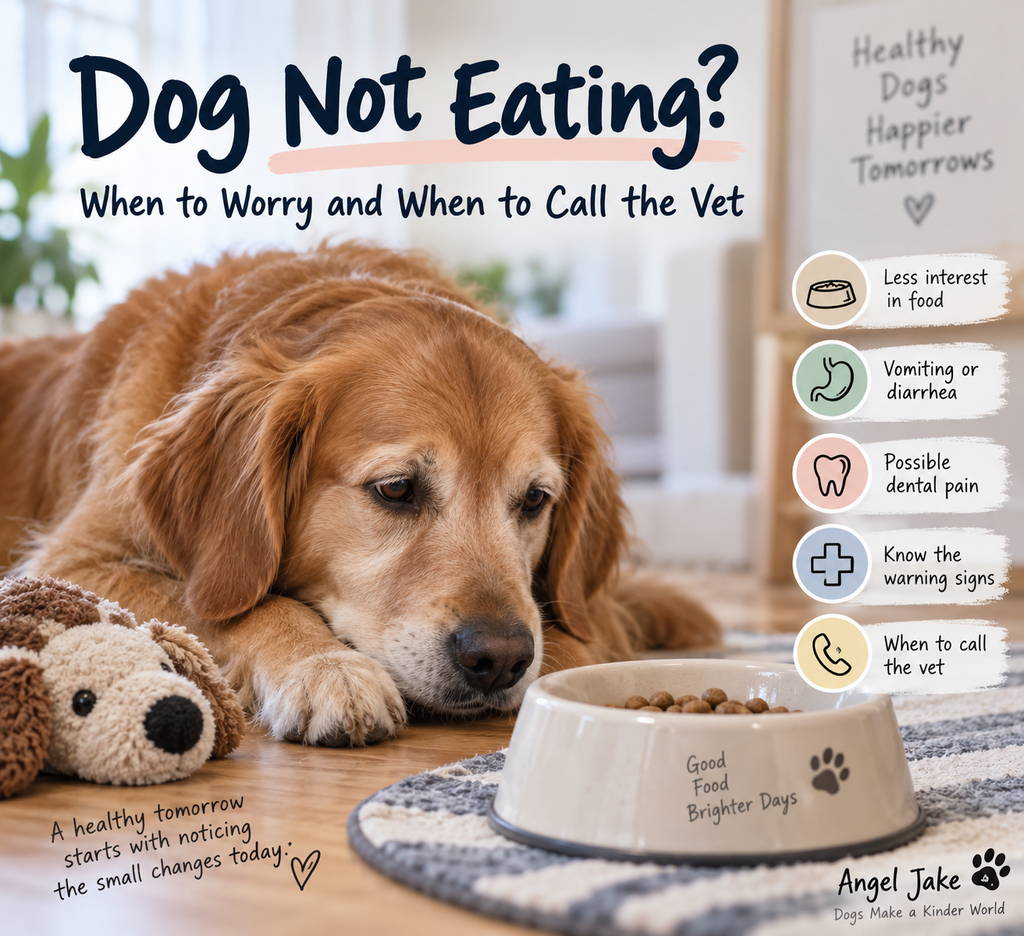
Most dog owners know their dog’s normal eating habits pretty well.
So when a dog suddenly walks away from the food bowl, it can be hard not to worry.
Sometimes a dog simply eats less than usual for a short time.
But a change in appetite can also be one of the first signs that something is wrong.
The difficult part is knowing when to watch closely and when to call the veterinarian.
A Change in Appetite Can Mean Many Different Things
Loss of appetite is not a diagnosis by itself.
Dogs may eat less because of pain, nausea, dental discomfort, digestive problems, stress, medication effects, or other illnesses.
AAHA notes that a sudden change in appetite can be associated with pain, dental problems, illness, or hormonal disorders, especially when other symptoms are present.
That is why it helps to look at the whole dog, not just the food bowl.
Ask yourself:
Is my dog acting normal?
Are they drinking normally?
Are they vomiting?
Do they have diarrhea?
Do they seem uncomfortable?
Are they unusually tired?
Has their breathing changed?
The answers to those questions can matter just as much as whether they finished dinner.
What If Your Dog Skips One Meal?
A single skipped meal does not always mean an emergency.
Some dogs occasionally eat less because of changes in routine, stress, excitement, or mild stomach upset.
But there is no single “safe number of hours” that applies to every dog.
Age, size, medical history, medications, and other symptoms all matter.
A healthy adult dog that skips one meal but is otherwise bright, drinking normally, and acting like themselves may not need emergency care.
But if the loss of appetite continues, your dog seems unwell, or anything else looks unusual, it is reasonable to call your veterinarian rather than simply waiting.
AAHA advises veterinary evaluation when a pet stops eating or becomes unusually picky, especially when the appetite change comes with digestive upset, drooling, or lethargy.
Puppies and Medically Fragile Dogs Need Extra Attention
Young puppies, very small dogs, senior dogs, and dogs with chronic medical conditions may not tolerate missed meals as well as a healthy adult dog.
For example, some very young or toy-breed puppies can be more vulnerable to low blood sugar if they are not eating normally.
Dogs with conditions such as diabetes or dogs taking certain medications may also need faster veterinary guidance if food intake suddenly changes.
If your dog falls into one of these groups, it is safer to contact your veterinarian earlier rather than applying a general “wait and see” rule.
What If Your Dog Will Eat Treats but Not Their Regular Food?
This is common, but it does not automatically mean your dog is simply being picky.
A dog with dental pain may avoid harder food but still take soft treats.
A nauseated dog may refuse a full meal but still accept something especially tasty.
Some dogs also learn that refusing regular food leads to better options.
So the pattern matters.
If your dog repeatedly refuses normal meals but happily eats treats, especially if this behavior is new, mention it to your veterinarian.
It may be behavioral, but medical causes should not be ignored.
Dental Pain Can Affect Appetite
Eating requires chewing, swallowing, and moving the head and neck comfortably.
Problems involving the teeth, gums, mouth, jaw, throat, or esophagus can make eating painful or difficult.
Merck Veterinary Manual notes that abnormalities involving chewing or swallowing are often associated with disease affecting the mouth, teeth, jaw, throat, or esophagus.
Signs that may point toward an oral problem include:
- dropping food
- chewing on one side
- drooling more than usual
- bad breath
- pawing at the mouth
- avoiding hard food
- taking longer to eat
A dog can still be interested in food and yet struggle to eat it.
Loss of Appetite With Vomiting or Diarrhea
Digestive disease can cause several symptoms at the same time.
Merck lists vomiting, diarrhea, abdominal pain, bloating, dehydration, weight loss, and loss of appetite among common signs of gastrointestinal disease.
If your dog is not eating and is also vomiting repeatedly, having significant diarrhea, or becoming weak or dehydrated, contact a veterinarian.
Blood in vomit or stool, black tarry stool, or worsening abdominal pain also needs veterinary attention.
Watch for Abdominal Pain or Bloating
One of the most important things not to ignore is a suddenly enlarged or painful abdomen.
A swollen belly together with repeated unproductive retching, restlessness, weakness, or collapse can be associated with serious conditions such as gastric dilatation-volvulus, or GDV.
That is an emergency.
Do not wait to see whether your dog feels better later.
Go to an emergency veterinary hospital.
Appetite Loss Can Be a Sign of Pain
Dogs do not always cry or whimper when they hurt.
Sometimes the first clue is simply that they stop eating.
Cornell lists reduced appetite, lethargy, reluctance to move, altered sleep, withdrawal, irritability, and panting among possible signs of pain in dogs.
If your dog seems quieter than normal, moves differently, resists being touched, or does not want to get up for food, pain may be part of the picture.
Stress Can Affect Eating Too
Not every case of reduced appetite comes from physical illness.
Stress and environmental changes can affect behavior and digestive function.
Moving to a new home, boarding, travel, a new pet, visitors, or a major routine change can all affect some dogs.
Merck notes that stress can contribute to gastrointestinal and behavioral problems in animals.
But stress should not automatically be blamed for appetite loss.
If the change is persistent or your dog seems physically unwell, medical causes still need to be considered.
What You Can Check at Home
Before calling your veterinarian, it can help to gather a few details.
Notice:
- when your dog last ate a normal meal
- whether they are drinking
- whether they will eat treats or soft food
- whether they have vomited
- whether they have diarrhea
- whether urination is normal
- whether they seem painful
- whether their abdomen looks swollen
- whether their energy level has changed
- whether any medication or diet recently changed
This information can make the conversation with your veterinarian much more useful.
What Not to Do
Avoid giving human medications unless your veterinarian specifically tells you to.
Do not force-feed a dog who is vomiting, painful, bloated, or having difficulty swallowing.
And do not repeatedly offer rich or fatty foods just to make your dog eat, especially if they may have gastrointestinal disease.
The goal is not simply to get calories into them.
The goal is to understand why they stopped eating.
When to Call the Veterinarian
Call your veterinarian if your dog’s appetite does not return, if the change is unusual for them, or if you are worried about their overall condition.
Call sooner if appetite loss is accompanied by:
- vomiting
- diarrhea
- drooling
- lethargy
- weight loss
- pain
- trouble chewing or swallowing
- increased thirst or urination
- behavior changes
AAHA specifically recommends veterinary evaluation when appetite changes are sudden or are accompanied by other signs of illness.
When It May Be an Emergency
Seek emergency veterinary care if your dog has:
- a swollen abdomen with repeated dry heaving
- difficulty breathing
- collapse or severe weakness
- repeated vomiting with worsening condition
- severe abdominal pain
- suspected toxin ingestion
- an inability to keep water down
- signs of shock
- significant bleeding
In those situations, do not wait for appetite to return on its own.
Angel Jake Note 🐾
When a dog who normally loves food suddenly turns away from the bowl, it is hard not to notice.
And sometimes we immediately start thinking of the worst possibility.
But appetite changes are one of those things that make more sense when you look at the whole dog.
How are they acting?
Are they drinking?
Are they comfortable?
Are they still interested in the things they normally love?
I think one of the most useful things we can do as dog owners is learn what “normal” looks like for our own dog.
Because once you know their normal, small changes become much easier to notice.
And when something really does feel wrong, it is okay to call the veterinarian.
You do not have to wait until your dog looks extremely sick before asking for help.
Sometimes noticing a small change early is exactly what helps.
Veterinary Sources
This article was prepared using information from:
- American Animal Hospital Association
- Cornell University College of Veterinary Medicine
- Merck Veterinary Manual
These sources describe appetite change as a possible sign of pain, dental disease, gastrointestinal illness, systemic disease, or stress and recommend veterinary evaluation when the change is persistent or accompanied by other concerning symptoms.
Medical Disclaimer
This article is for general educational purposes only and does not replace veterinary examination, diagnosis, or treatment.
A dog’s risk depends on age, size, medical history, medications, and accompanying symptoms.
If your dog is not eating and appears ill, painful, weak, bloated, or otherwise abnormal, contact a veterinarian promptly.