
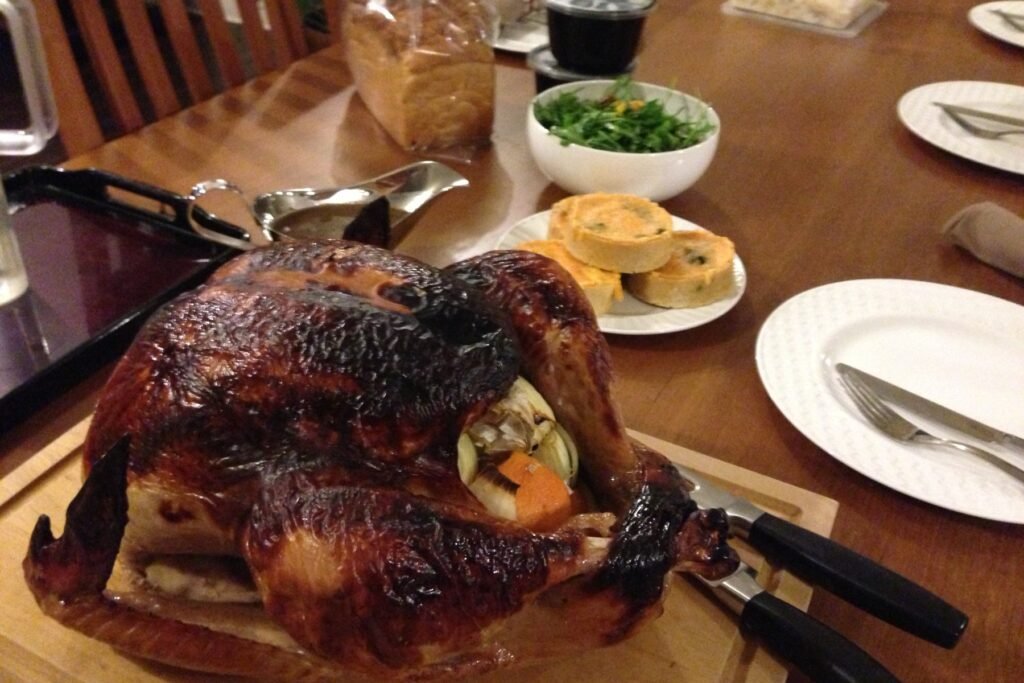
If your dog is anything like most dogs, they know Thanksgiving is coming before you do. The kitchen smells change, the oven stays on all day, and suddenly there are a lot more people standing near the counter. Every dropped crumb feels like a gift.
It’s natural to want your dog to be part of the feast. They’re family, after all. The good news is that a few holiday foods can be shared safely. The tricky part is that some of the most “harmless-looking” dishes on the table are the ones vets worry about most.
What’s actually safe to share?
Plain, simple, and small is the rule. The American Kennel Club (AKC) and the ASPCA both list a handful of Thanksgiving foods that are generally fine for dogs, as long as they’re served without the extras.
- Plain turkey meat. Veterinarian Dr. Sara Ochoa told the AKC that turkey is okay “as long as it has not been prepared with any seasoning.” Take off the skin and every bone first.
- Plain sweet potatoes. Mashed or baked, with no brown sugar, butter, or marshmallows on top.
- Plain green beans. Set a few aside before the butter and salt go in.
- Pure pumpkin puree. Skip pumpkin pie filling, which is already sweetened and spiced.
- Plain potatoes, peas, or apple slices. Cut apples away from the core and seeds.
The ASPCA suggests mixing a few small pieces of turkey, sweet potato, and green beans into your dog’s regular dinner. That way, your dog gets a holiday plate without a sudden pile of rich food.

Why turkey skin and gravy are a problem
This is the part that surprises people. A big part of the danger comes from fat.
Turkey skin is usually coated in butter or oil, and the AKC warns that fatty foods like skin, gravy, and creamy sides can lead to pancreatitis. VCA Animal Hospitals explains that pancreatitis happens when digestive enzymes switch on inside the pancreas instead of in the intestine, so the pancreas starts to digest itself. A fatty meal may trigger it in some dogs.
Signs can include vomiting, diarrhea, a painful belly, low energy, and not wanting to eat. VCA notes that some dogs take a praying position, with their rear end up and their front legs and head down.
⚠️ Please don’t wait if your dog vomits again and again, seems painful, or stands in that praying position after a holiday meal. Call your vet or an emergency clinic. Early treatment matters a lot with pancreatitis.
The bones: why cooked is worse than you’d think
It seems backward, but cooked bones are more dangerous than many people expect. The AKC explains that cooked poultry bones are brittle and can splinter. Those sharp pieces can hurt your dog’s mouth, cause choking, or create a blockage in the intestines that may need surgery.
Raw bones aren’t automatically safe either. Both the AKC and the ASPCA point out that raw or undercooked turkey can carry salmonella. So the safest choice is fully cooked, boneless, skinless meat.
Onions and garlic hide in almost everything
Stuffing, gravy, casseroles, and mashed potatoes often have onion or garlic in them, even when you can’t see it. The Merck Veterinary Manual explains that these plants contain sulfur compounds that damage red blood cells, which can lead to anemia.
Two details make this one sneaky. First, Merck says garlic is 3 to 5 times more toxic than onion. Second, the signs don’t usually show up right away. Damage to red blood cells typically appears 3 to 5 days after a dog eats onion or garlic, so a dog can seem completely fine on Thanksgiving and get sick days later.
Merck also notes that cooked, dried, and powdered forms are all toxic, and concentrated forms like onion powder and dry soup mixes are the ones most often linked to poisoning.
💡 Good to know: Watch for weakness, pale gums, fast breathing, or reddish-brown urine in the days after a big meal. If your dog got into stuffing or anything made with onion or garlic, call your vet even if they seem fine right now.
Raw bread dough can rise inside your dog
This one sounds like a myth, but it’s real. The ASPCA warns that raw yeast dough can keep expanding in a dog’s stomach and cause painful bloating. As the yeast ferments, it also makes alcohol, which the body absorbs. That can leave a dog wobbly and seriously ill.
If you’re baking rolls, keep the rising dough far from the edge of the counter.

Desserts, sweeteners, and the trash can
The dessert table is a minefield for dogs. The ASPCA says chocolate can cause vomiting, tremors, and seizures, and that desserts made with the sweetener xylitol can cause low blood sugar, liver damage, or even death. Raw cake batter with eggs can carry salmonella, too.
And don’t forget the garbage. After dinner, the trash is full of turkey bones, fatty scraps, and onion-heavy leftovers. The ASPCA recommends emptying it during the day or keeping your dog out of that area.
Korea’s holidays bring the same warnings
Thanksgiving isn’t the only feast that sends dogs to the vet. Around Chuseok, Korea’s big harvest holiday, Dr. Lee Se-won of Daegu Barun Animal Medical Center told Maeil Shinmun (매일신문) in 2025 that greasy, heavily seasoned dishes like jeon (savory pancakes) and galbi can strain a dog’s stomach and raise the risk of pancreatitis. He also warned that well-meaning relatives who slip the dog a bite from the table may be giving them “a danger, not love,” and suggested sticking to the dog’s usual food and treats.
Making the day easier for your dog
Food isn’t the only stress on a busy holiday. A few small things help:
- Give your dog a quiet room or a blanket away from the crowd, as the ASPCA suggests.
- Ask guests not to feed the dog and to keep their medications out of reach.
- Stuff a puzzle toy with a little of their own food or a dog-safe treat during dinner.
- Keep emergency numbers handy, including the ASPCA Animal Poison Control Center at (888) 426-4435.
Fun facts 🐾
Turkey is already in a lot of dog food. The AKC points out that turkey is a common ingredient in commercial dog foods, which is one reason plain turkey meat is usually well tolerated.
Pumpkin pie and pumpkin puree are not the same thing. Plain puree is the safe one. Pie filling is already sugared and spiced, and the AKC says pumpkin pie is for people only.
Garlic’s danger is delayed. Because red blood cell damage takes days to show, many dogs who eat onion or garlic look perfectly fine at first, which is why vets want to hear about it right away.
Angel Jake Note 🐾
Holidays are about sharing, and it’s hard to say no to a dog who’s watching every bite. But sharing doesn’t have to mean handing over the gravy boat.
A spoonful of plain turkey, a few green beans, and a little sweet potato in their own bowl is a real treat for a dog. Keeping everything else out of reach is part of the love, too.
Medical Disclaimer
I’m not a vet, and nothing here replaces a real exam. If something about your dog feels off, please trust that feeling and call your veterinarian.
Sources
- American Kennel Club: Which Thanksgiving Foods Can I Give My Dog? Which Should I Avoid?
- American Kennel Club: Can Dogs Eat Turkey? Holiday Safety Tips for Pet Owners
- ASPCA: Thanksgiving Safety Tips
- Merck Veterinary Manual: Garlic and Onion (Allium spp) Toxicosis in Animals
- VCA Animal Hospitals: Pancreatitis in Dogs
- [매일신문: [반려동물 건강톡톡] 추석 명절, 댕댕이 꼭 기억해야 할 건강 수칙은?](https://www.imaeil.com/page/view/2025092915522127848)