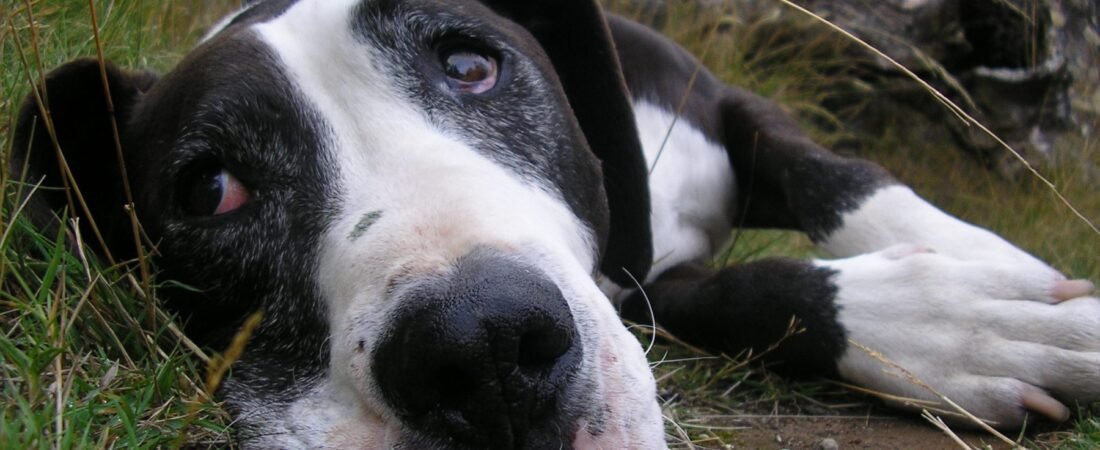

Most of us notice a dog getting older in small ways first. A little gray around the muzzle. A slower start in the morning. Maybe they stare at a wall for a moment, or forget which side of the door opens.
It’s easy to shrug those moments off as “just old age.” A new study from the University of Arizona suggests we might be able to catch the earliest brain changes much sooner than that, and all it takes is a few games with treats.
A 40-minute test built from treat games
The test is called CANID, short for Cognitive Assessment for Neuropsychological Impairments in Dogs. It was published on October 12 in the journal Animal Cognition. Stephanie Hargrave, a Ph.D. student in psychology, led the work, with Dr. Evan MacLean of the university’s College of Veterinary Medicine as senior author.
The idea is simple. Instead of asking owners to fill out a questionnaire about their dog’s behavior, the researchers watch what the dog actually does. CANID takes about 40 minutes and uses three games:
- The cylinder game. A treat sits inside a clear tube. The dog has to resist bumping their nose into the see-through front and walk around to the open end instead. This measures impulse control.
- The hidden treat game. A treat goes behind one of four wooden barriers. The dog has to remember the right spot after waiting up to 40 seconds, sometimes with a distraction in between. This measures short-term memory.
- The detour game. The dog walks around a barrier to reach food. Once they learn the open route, the researchers quietly block it and open the other side. This measures how flexibly the dog can change plans.
The scores from all three games are combined into one number.

What the researchers found
The team tested 239 pet dogs in Tucson and California, then brought many of them back after six months and again after a year. According to the study’s preprint, 140 dogs returned at six months and 118 at twelve months.
Age turned out to matter a lot. In the study data, age explained about 27% of the differences in overall scores between dogs, which the authors describe as a large effect. Older dogs did worse on all three games.
The most striking part is timing. The researchers say CANID can pick up subtle changes in dogs around 7 to 8 years old, well before the obvious signs of dementia that usually show up around 12 to 14.
💡 Did you know? Senior dogs with dementia can develop amyloid plaques in the brain, similar to those seen in people with Alzheimer’s disease. That’s one reason scientists study aging dogs: they may help us understand aging in humans too.
The scores were also fairly steady from one visit to the next, which matters if you want to track one dog over time. MacLean called the tool “an exciting milestone,” and pointed out that pet dogs share our lives in a way lab animals don’t. “Dogs drink the same water we do,” he said. “They breathe the same air.”
Why small dogs may show it more
Here’s a detail that surprises a lot of people. The team saw what looks like one shared path of cognitive decline across breeds. Big dogs and small dogs seem to follow the same curve.
So why might small dogs seem more affected? Large breeds tend to have shorter lives, so many of them may pass away before they reach the point of serious impairment. Smaller, longer-lived dogs, like Chihuahuas, have more years to travel down that path.
How common is this, really?
Probably more common than most owners realize. In a 2019 webinar reported by the Korean veterinary news site Daily Vet (데일리벳), veterinary internist Dr. John McCue shared that 68% of dogs aged 15 or older showed at least one sign of cognitive dysfunction. He also cited a 2010 study in which 14% of dogs over 8 showed signs, yet vets had identified it in only about 2%.
That gap is exactly what tools like CANID are trying to close. Hargrave noted that by the time owners report problems in surveys, “their cognitive impairment is often quite severe.”

💡 Good to know: You can’t run CANID at home. It needs trained staff and special equipment. If your senior dog seems confused, gets “stuck” in corners, sleeps at odd times, or forgets old house rules, mention it at your next vet visit, even if it seems small.
What this could mean for our dogs
Right now, CANID is a research tool. The authors say they still need to check how well it lines up with clinical diagnoses of canine cognitive dysfunction. The dogs also came from a few specific places in Arizona and California, so it’s not yet clear how well the results carry over to every dog.
Still, a test that spots the very first changes matters. If researchers can measure brain aging early and reliably, they can start testing whether diet, exercise, or new treatments actually slow it down.
Owners in the US can join this kind of research through the Dog Aging Project, a nationwide study the University of Arizona takes part in. Tucson-area families can also sign up with the Arizona Canine Cognition Center.
Angel Jake Note 🐾
It’s tough to watch a dog you love start to change. Sometimes the hardest part is not knowing whether what you’re seeing is “normal” or the beginning of something more.
There’s something gentle about a study that starts with games. A treat behind a board. A tube with an open end. Small, kind tests that let a dog show us what’s going on inside. Our older dogs can’t tell us when things start to feel foggy, so anything that helps us notice sooner is worth paying attention to.
A Note on This Study
This post summarizes a published study for everyday dog lovers. One study can’t tell the whole story, and its findings may not apply to every dog. For the full methods and limitations, please see the original research linked in the Sources section.
Sources
- EurekAlert! (University of Arizona): Hide-and-seek for treats offers a new window into cognitive decline in dogs
- Futurity: Games with treats shed light on cognitive decline in dogs
- Hargrave et al.: Cognitive assessment for neuropsychological impairments in dogs (CANID), Research Square preprint
- Dog Aging Project: Characterizing dog cognitive aging using spontaneous problem-solving measures
- 데일리벳: ‘반려견 치매, 생각보다 흔하다’ 인지기능장애 증후군 웨비나 개최