

You find the perfect spot on your dog’s side, start scratching, and suddenly one back leg starts pedaling in the air like they’re riding an invisible bicycle. It’s one of the funniest, sweetest things a dog does — and it can also leave you wondering. Are they loving it? Is it bothering them? Should you stop?
The short version is that the kick isn’t really a choice your dog is making. It’s a reflex, and it happens to be one of the most famous reflexes in the history of science.
What’s actually happening in that leg?
The American Kennel Club (AKC) calls it what it is: “This rhythmic jerking of a hind leg is known as a scratch reflex.” According to Hill’s Pet Nutrition, there’s a cluster of nerves located under the skin in that “tickle spot.” When you scratch it, those nerves fire and send a signal through the spinal cord to the hind leg, and the leg kicks.
The important part is that your dog’s brain doesn’t have to decide anything. “The kicking happens automatically as the dog does not think about this,” says Dr. Mary Burch, a certified applied animal behaviorist and director of the AKC Family Dog Program. Hill’s describes it as “an involuntary response that protects dogs from fleas, ticks and other sources of irritation.”
Veterinarian and behavior expert Dr. Lore Haug of Texas Veterinary Behavior Services compared it to pulling your hand off a hot stove in an interview with Popular Science. Your spinal cord reacts before your conscious brain has caught up, because waiting would cost you a burn. That same article explains that the reflex likely evolved to protect animals from irritants, especially biting bugs that can carry disease. A quick kick might knock a flea loose. The harder you scratch, the stronger the kick can be.
Where’s the spot? It varies. Dr. Burch says dogs are often ticklish on their bellies or sides, and some are ticklish on their ears, neck, or back. “Every dog feels this natural reflex reaction differently,” the AKC adds.
The scientist who studied dogs’ scratching (and won a Nobel Prize)
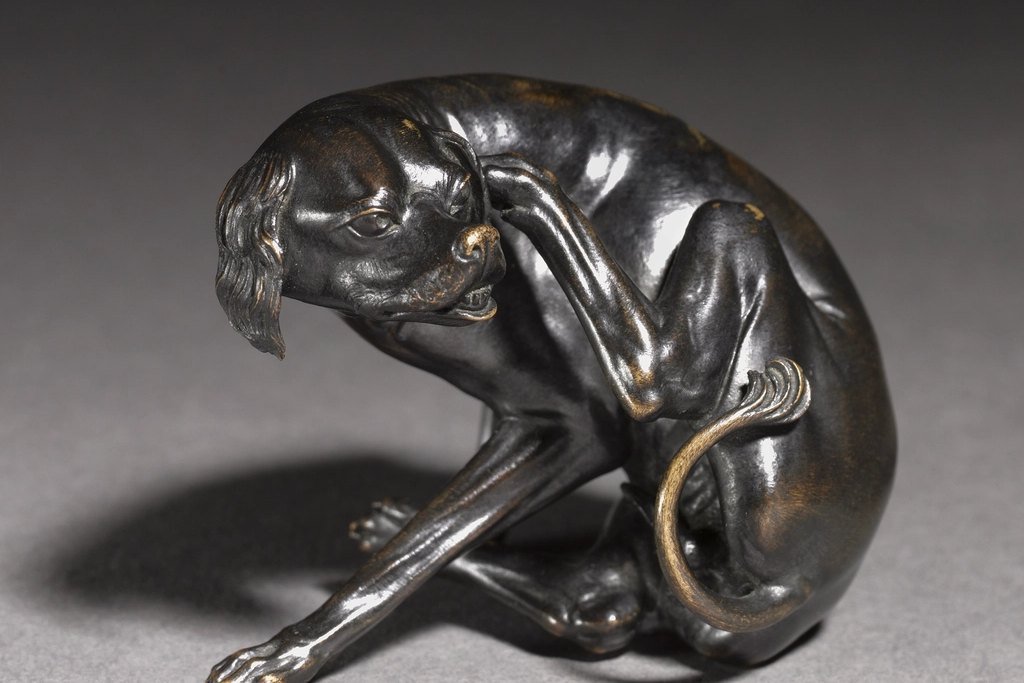
That little kick has a surprisingly serious place in history. In the early 1900s, the British physiologist Charles Scott Sherrington studied it in detail. He published a paper in 1906 called “Observations on the scratch-reflex in the spinal dog” in the Journal of Physiology, and the same year he released a landmark book, The Integrative Action of the Nervous System.
In that book, Sherrington described how stimuli “applied to the skin of the back behind the shoulder evoke a rhythmic flexion (scratching movement) of the hind limb.” According to Hemopet, Sherrington was working at the University of Liverpool, used electrical stimulation in his experiments, and mapped out a “receptive area” of skin that set off the hind leg. These were lab experiments from a very different era of science, and they’re hard for a dog lover to read about today. Still, they helped explain how the spinal cord coordinates movement on its own.
💡 Did you know? Sherrington had his own theory about why dogs scratch this way. “The reflex is presumably adapted to act against the parasitic life which makes the hairy coat a habitat,” he wrote. Hemopet notes he couldn’t actually confirm that the scratching movement combs parasites out.
His wider work on reflexes and nerve cells paid off. Sherrington shared the 1932 Nobel Prize in Physiology or Medicine with Edgar Adrian, “for their discoveries regarding the functions of neurons,” according to the Nobel Prize organization. He lived from 1857 to 1952, and King’s College London notes that he saw reflexes as the basis of the body’s coordination, writing that the nervous system’s work of pulling an animal together “resolves itself into co-ordination by reflex action.”
So the next time your dog bicycles a back leg during a belly rub, you’re looking at the same reflex that helped shape modern neuroscience.
Does my dog actually enjoy it?
This is the question most of us really care about. The kick itself doesn’t tell you much either way. Hill’s says it “doesn’t necessarily mean your dog doesn’t enjoy the sensation of being scratched in that spot,” and Popular Science points out that because the reflex is mainly for swatting bugs, it doesn’t necessarily mean they like it there, either.
So look at the rest of your dog. Dr. Burch says, “Staying in place to accept more tickling is a sign the dog finds tickling enjoyable. Otherwise, the pup would get up and leave.” Hill’s adds that a dog who often rolls over to show you their belly is signaling that they’re comfortable with you.
The AKC lists a few signs that a dog is ticklish: a flick of the ears, a twist in the back, or pulling a foot away. A wrinkled nose can be another clue. And since dogs don’t laugh the way we do, they might pant or sigh instead.
If your dog seems tense or walks off, Dr. Burch recommends stopping. As the AKC puts it, “Walking away is your dog’s way of saying, ‘please stop!’” Hill’s agrees that dogs who don’t like it, or who’ve simply had enough, will usually try to move away.
Why vets care about reflexes
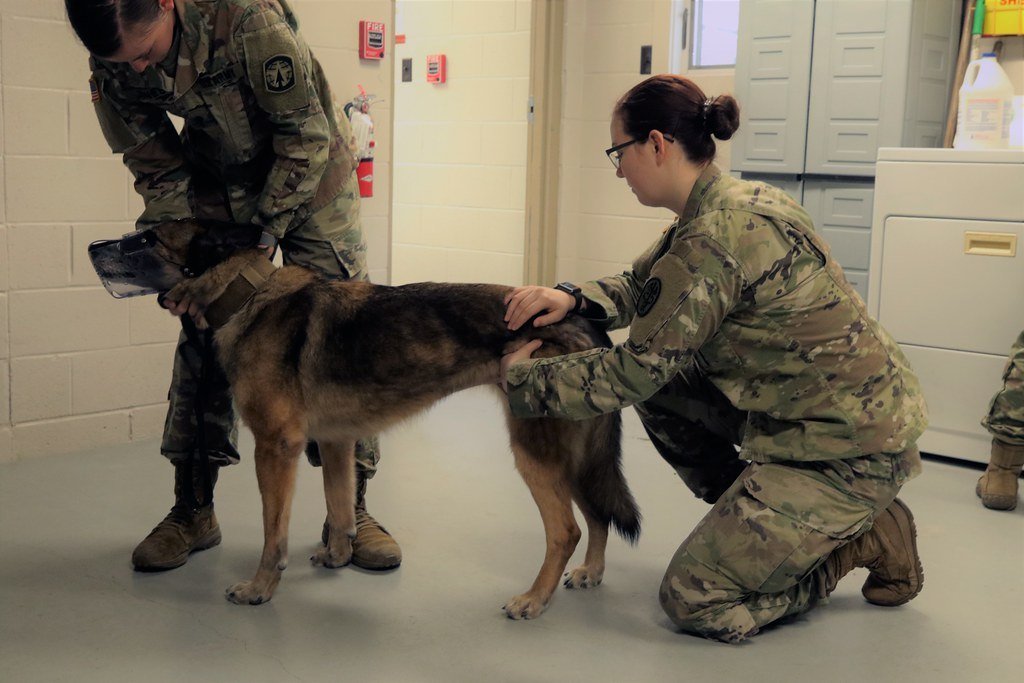
Reflexes aren’t just cute. They’re useful. Popular Science notes the scratch reflex can help a veterinarian tell whether a pet has nerve damage, a bit like a doctor tapping your knee.
During a neurological exam, vets check several spinal reflexes. A University of Guelph veterinary neurology text describes reflexes as “simple and non-conscious reactions” that don’t reach the cerebral cortex, the thinking part of the brain. Each one checks a specific nerve and section of the spinal cord. The patellar reflex is a quick tap below the kneecap that should produce a fast kick of the knee. The withdrawal reflex is a gentle pinch between the toes that should make the leg pull back.
There’s also a skin reflex that feels a lot like a cousin of the scratch reflex. For the cutaneous trunci reflex, the vet lightly pinches the skin beside the spine, and the skin over the chest and belly should twitch on both sides. If the twitch stops at a clear point along the back, the Guelph text explains, it can point to a spinal cord problem one or two vertebrae ahead of that spot.
When scratching (or itching) is a problem
A happy kick during belly rubs is normal. A dog who’s scratching themselves all the time is a different story.
Dr. Haug told Popular Science that the scratch reflex tends to be especially easy to set off in dogs with allergies. Hemopet also notes that the reflex can become heightened when a dog’s body is in distress from conditions like atopic dermatitis, flea allergy, food sensitivity, and canine scabies.
According to a PetSavers client leaflet published through the British Small Animal Veterinary Association (BSAVA), common causes of itchy skin include allergies (to food, fleas, or things in the environment like pollen or house dust mites), parasites such as lice or mites, and infections caused by bacteria or yeast. Several of these can happen at once. Signs to watch for include:
- Nibbling, chewing, or licking, sometimes at skin that looks normal
- Spots or rashes
- Red, sore, or scabbed skin
- Hair loss from scratching
- Extra attention to the ears, face, groin, paws, skin folds, or the area under the tail
PetSavers says itching is rarely an emergency on its own, but serious infections can develop if itchy skin isn’t treated. Itching can also occasionally point to an internal problem, so if your dog shows other signs of feeling unwell, call your vet.
In Korea, the Gyeonggi Veterinary Medical Association (경기도수의사회) ran a public campaign about atopic dermatitis in dogs, built around a simple message: “Itching is pain. If your dog is scratching, talk to your vet.” The association has described itchiness as the most typical symptom of atopic skin disease in pets, and one that many owners find distressing. I think that framing is worth holding on to. Constant scratching isn’t a quirk to wait out.
⚠️ Please don’t wait. If your dog suddenly pulls away, growls, or won’t let you touch a spot they used to love, there may be pain behind it. The AKC says refusing tickling can point to problems like abdominal pain, an ear infection, a sore paw, or a broken toenail, so stop and check in with your vet.
Favorite scratch spots, and how to ask first
Every dog has their own map. Rover lists places many dogs enjoy, including behind the ears, under the chin, the chest, the shoulders, the sides of the neck, and the belly. It also says sensitive areas like the paws, tail, and face can feel uncomfortable for some dogs. “Enjoying touch is very individual,” trainer Nicole Kohanski of Wiggle Butt Academy told Rover, and preferences can even change from day to day.
Kohanski suggests a “pet, pet, pause” approach. Invite your dog to come to you, pet lightly twice, then pause. “Let your dog ask for more by pressing into your hand,” she says.
Writer Eileen Anderson describes a similar consent test for the Pet Professional Guild. Pet your dog, then stop and watch. The question is simple: “If you cause the activity to stop, does the dog take action to make it start again?” She recommends trying it when your dog is relaxed and free to leave, not leashed or tucked into a corner, and suggests the chest as a good place to start.
Dogs who want more might lean into your hand, push their head under it, paw at you to keep going, or melt against you with soft eyes and relaxed face muscles. Dogs who’d rather not might turn their head away, leave, yawn, lick their lips, lift a paw, or show “whale eye,” where you can see the whites of their eyes. Some signals, like rolling onto their back or licking your hand, can mean either relaxation or stress, so Anderson says to read them alongside the rest of your dog’s body language.
💡 Good to know: The AKC says dogs who got used to scratches throughout puppyhood may be more receptive to tickling as adults. Gentle, short sessions that your dog chooses can go a long way.
Fun facts 🐾
Sherrington named the synapse. According to the International Brain Research Organization (IBRO), Sherrington was the first to name the meeting points between nerve cells, back in 1897. King’s College London notes that he called them synapses, reaching the idea independently of Santiago Ramón y Cajal.
The ear can make a leg kick, too. Rubbing a dog’s earflap against the base of the ear can trigger a kick called the pinnal-pedal reflex. Hemopet reports that a 2001 Colorado State University study of 588 dogs with skin disease found the reflex had 93.8 percent specificity for canine scabies, and a 2012 Cornell University study found it in 78.4 percent of dogs with scabies. It isn’t perfect, but it’s a fast, noninvasive clue for vets.
The scratch comes in short bursts. In The Integrative Action of the Nervous System, Sherrington wrote that after the stimulus ends, the leg keeps going for a moment in rhythm, and “six to nine beats usually complete the after-discharge.”
Angel Jake Note 🐾
It’s easy to feel a little guilty after reading that the kick is involuntary. Were they enjoying it, or were we just setting off a switch? The reflex can’t answer that, but your dog can. If they stay put, lean in, or nudge your hand when you stop, you’ve likely found a spot they love.
And if your dog is scratching themselves over and over, or suddenly doesn’t want to be touched, take that seriously. Itchy skin really can hurt, and your vet can help figure out why.
Medical Disclaimer
I’m not a vet, and nothing here replaces a real exam. If something about your dog feels off, please trust that feeling and call your veterinarian.
Sources
- American Kennel Club: Are Dogs Ticklish?
- Hill’s Pet Nutrition: Dog Scratch Reflex and Leg Kicking (Jean Marie Bauhaus)
- Popular Science: Why Does My Dog Kick When I Scratch His Belly?
- Sherrington, C. S. (1906): The Integrative Action of the Nervous System (Internet Archive full text)
- Hemopet: Is That the Spot? Why Does My Dog Kick When I Scratch Him?
- The Nobel Prize: The Nobel Prize in Physiology or Medicine 1932
- The Nobel Prize: Sir Charles Sherrington, Facts
- King’s College London Archives: Charles Scott Sherrington
- IBRO History of Neuroscience (François Clarac, 2005): The History of Reflexes Part 2: From Sherrington to 2004
- University of Guelph, VETM 3430 open textbook: Spinal Reflexes
- PetSavers (BSAVA): My Dog Has Been Diagnosed With Itchy Skin
- Rover: How to Pet a Dog
- Pet Professional Guild (Eileen Anderson): Does Your Dog Really Want to Be Petted?
- 데일리벳 (DailyVet): “반려견에게 가려움은 통증입니다, 수의사와 상담하세요”
- 데일리벳 (DailyVet): 경기도수의사회 “반려견, 긁기 시작하면 수의사와 상담하세요!”