

Your dog flops down next to you, rests their chin on their paws, and lets out a long, dramatic sigh. It sounds so human that it’s hard not to wonder what they’re thinking. Are they happy? Bored? Quietly judging you for ending playtime too soon?
The good news is that sighing is usually a normal, healthy thing. Hill’s Pet Nutrition calls it “a natural bodily response” and describes a sigh as a long breath in and out that’s louder than a regular breath. The trick is reading the rest of your dog, because the same sound can mean very different things.
Happy sigh or “oh, come on” sigh?
The American Kennel Club (AKC) says the most common sounds of pleasure in dogs are moans and sighs. A contented sigh usually comes with a dog lying down with their head on their forepaws, which is probably the exact picture you have in your mind right now.
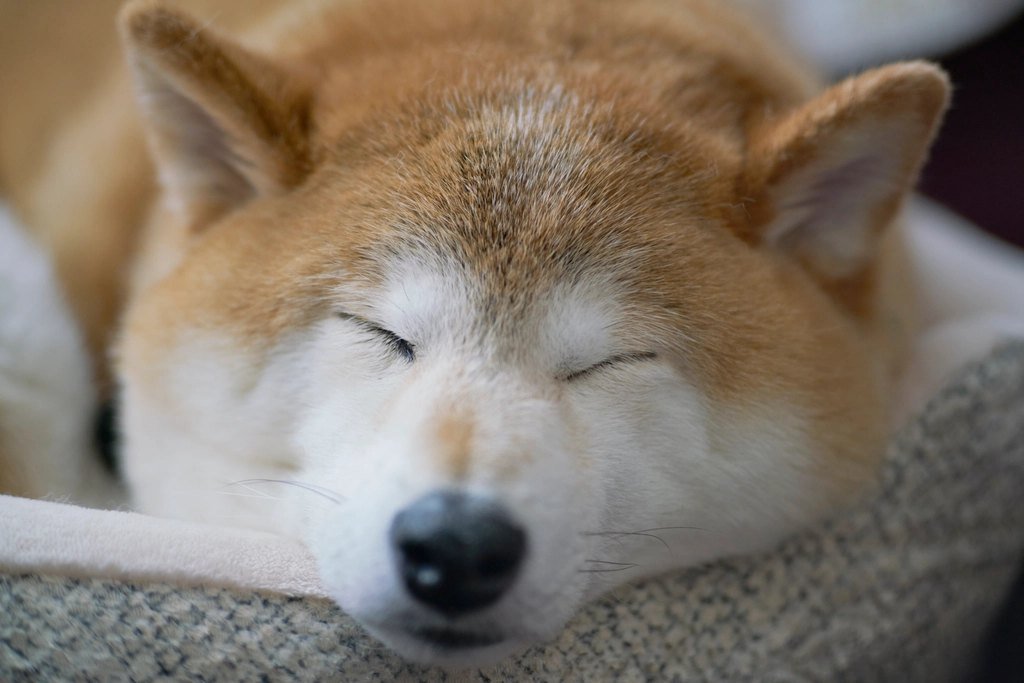
The eyes are the giveaway. According to the AKC, a sigh with half-closed eyes signals pleasure, while a sigh with fully open eyes signals disappointment. So a sleepy, heavy-lidded sigh after a walk is likely bliss. A wide-eyed sigh while they stare at the treat jar you just put away? That one’s probably a complaint.
Korean dog trainer Kang Hyung-wook talked about exactly this on his YouTube channel Bodeum, in a Q&A reported by Wikitree. A viewer asked why their dog plops down and sighs when playtime ends. Kang said dogs really do sigh, and that it may mean something close to what it means for us: the fun is over and begging won’t help, so they might as well rest. He also had a clever test. Calmly and simply say “that’s enough.” If your dog yawns or sighs big, they may just be sorry the game ended. If they don’t, the “stop” cue itself might feel like pressure to them.
Kang added an important caution, too. You can’t decide what a dog means from one behavior alone, so it’s worth looking at it across lots of situations.
Sighing is also your body’s reset button
Here’s the part I find fascinating. Sighs aren’t only about feelings. They do a real physical job.
In 2016, Jack Feldman’s lab at UCLA and Mark Krasnow’s lab at Stanford published a study in Nature that found where sighs come from in the brain. Working with mice and rats, the team, with Peng Li as first author, traced the sigh to small clusters of neurons in the brainstem. As Neuroscience News reported, about 200 neurons make one of two signaling molecules, neuromedin B or gastrin-releasing peptide, and these switch on another group of about 200 neurons that make the breathing muscles take a sigh. When the researchers blocked one of the signals, the sighing rate dropped by half. When they blocked both, the mice stopped sighing completely.
Why would the body bother? The paper explains that sighs happen on their own every few minutes to reinflate the alveoli, the tiny air sacs in the lungs where oxygen and carbon dioxide trade places. Neuroscience News describes them as half a billion delicate, balloon-like sacs, and they can slowly collapse. “The only way to pop them open again is to sigh,” Feldman told the University of Alberta, whose researcher Silvia Pagliardini worked on the project. A sigh pulls in about twice the air of a normal breath.
💡 Did you know? People sigh about every five minutes on average, or roughly 12 times an hour, according to Neuroscience News’ report on the study. The mice sighed about 40 times an hour.
There’s a “reset” idea on the behavior side, too. In a 2010 study in Biological Psychology, researchers led by Elke Vlemincx measured the breathing of 42 healthy adults sitting quietly for 20 minutes. Breathing became more random in the run-up to a sigh and more structured afterward, which led them to conclude that a sigh resets breathing patterns. That research was done in people and rodents, not dogs, so I’d take it as a fun window into how mammal breathing works rather than proof of what’s happening in your dog’s head. Still, it’s a nice thought the next time your dog sighs and melts into the couch.
Groans, huffs, and sighs aren’t quite the same
A sigh is a long breath in and out. Groans are a little different, and they can mean more than one thing.
Dogster, in an article reviewed by veterinarian Dr. Ashley Darby, says some dogs groan happily as they settle into a comfy spot, and that groaning after a long day of play or travel is common. But it also points out that dogs with arthritis or other pain may groan when they lie down, get up, or shift position. Stomach trouble, fluid in the belly, and cognitive changes in older dogs can all play a part too.
Then there’s the breathy little huff some dogs make when they’re having fun. Researcher Patricia Simonet recorded a special exhalation that sounds like a pant, “hhuh, hhuh,” to human ears. When it was analyzed, it covered a wider range of frequencies than ordinary panting. Psychologist Stanley Coren wrote in Psychology Today that in one test, 15 puppies romped around just from hearing a recording of this “dog laugh.”
When breathing changes are worth a closer look

An occasional sigh in a relaxed dog is nothing to worry about. Breathing that looks like hard work is different.
Start by knowing what normal looks like. VCA Animal Hospitals says a normal breathing rate while resting calmly or sleeping is between 15 and 30 breaths per minute. To check, count one breath each time the chest rises and falls, and count for 30 seconds and double it. VCA calls a rise in breathing rate during rest or sleep “an important early clue” of heart failure, and PetMD explains that left-sided heart failure can let fluid build up in the lungs.
Pain matters here too. PetMD says dogs in pain may pant or breathe heavily, so a dog who seems to be sighing, huffing, or breathing hard while doing nothing at all may be uncomfortable.
Flat-faced breeds deserve their own mention. VCA explains that brachycephalic dogs, such as French and English Bulldogs, Pugs, Boston Terriers, Shih Tzus, and Boxers, have shortened skulls that can crowd their airways. Mildly affected dogs breathe noisily, especially with exercise, and many snort when excited and snore when they sleep. More severely affected dogs tire easily and may collapse or faint after exercise. Signs are often worse in hot or humid weather, because these dogs can’t pant and cool off as well.
Call your vet if you notice:
- A resting or sleeping breathing rate that stays above 30 breaths per minute
- Groaning every time your dog lies down, gets up, or changes position
- Heavy breathing or panting when it isn’t hot and they haven’t been active
- Breathing changes with coughing, restlessness, or weakness
- A swollen or distended belly
- Tiring quickly, or collapsing or fainting after exercise, especially in a flat-faced breed
⚠️ Please don’t wait. PetMD lists blue, purple, gray, or white gums, standing with the neck stretched out, and breathing hard from the stomach as signs of a medical emergency. If you see any of these, or if your dog collapses, head to an emergency vet right away.
How to respond to a sigh
Most of the time, you don’t need to do anything at all. If your dog sighs with soft, half-closed eyes and a loose body, they’re probably just settling in. Hill’s suggests a sad-sounding sigh might only call for a belly rub.
If the sigh looks more like disappointment, think about what just happened. Did a game end or a walk get cut short? Kang’s advice is helpful here: keep your “that’s enough” calm and simple, then watch how your dog reacts. If your dog seems tense along with the sighs, it can help to look at their whole body for other signs of stress.
💡 Good to know: Sighs and yawns often show up together in dog body language. Kang notes that dogs sometimes yawn to get their person to stop doing something, which is one more reason to look at the whole picture rather than a single sound.
And if your dog’s breathing just seems off to you, even if you can’t explain why, count those resting breaths for a few days and take a short video to show your vet.
Fun facts 🐾
Sighing has its own brain circuit. According to the 2016 Nature study, getting rid of the receptor-carrying neurons in the brainstem wiped out sighing entirely, including the extra sighs that normally happen when oxygen runs low.
Dog “laughter” may calm other dogs. In a 2005 study at a county animal shelter, Simonet and her colleagues played recordings of the dog-laugh sound and found that stress behaviors dropped significantly while it played. The dogs also approached more and showed more friendly behavior.
You can try “laughing” back. Stanley Coren suggests a breathy, unvoiced “hhuh-hhah-hhuh-hhah” with no throat vibration. He says it works best with moderately anxious or insecure dogs and won’t help a dog whose distress is intense.
Angel Jake Note 🐾
There’s something really sweet about a dog who sighs and settles beside you. It’s one of those small moments that says they feel safe. I think the best thing we can do is enjoy those happy sighs and get curious about the other ones.
If the sighs come with wide, watchful eyes, maybe your dog just wanted five more minutes of fetch. If their breathing ever looks like hard work, though, don’t talk yourself out of calling the vet. You know your dog’s normal better than anyone.
Medical Disclaimer
I’m not a vet, and nothing here replaces a real exam. If something about your dog feels off, please trust that feeling and call your veterinarian.
Sources
- American Kennel Club: How the Sounds Dogs Make Reveal Their Emotions
- Hill’s Pet Nutrition: Why Do Dogs Sigh?
- Nature (Li, Janczewski, Yackle, et al., 2016): The peptidergic control circuit for sighing
- Neuroscience News: Pinpointing the Origin of the Sigh Reflex in the Brain
- University of Alberta Faculty of Medicine & Dentistry: The Science of a Sigh
- Biological Psychology (Vlemincx et al., 2010): Respiratory variability preceding and following sighs: A resetter hypothesis
- Dogster: Why Do Dogs Groan When They Lie Down?
- Psychology Today (Stanley Coren): Do Dogs Laugh?
- Purdue University Center for Animal Welfare Science: Dog Laughter: Recorded Playback Reduces Stress Related Aggression in Shelter Dogs
- VCA Animal Hospitals: Home Breathing Rate Evaluation
- VCA Animal Hospitals: Brachycephalic Airway Syndrome in Dogs
- PetMD: Dog Breathing Heavy? Why It Happens and When To Worry
- 위키트리 (Wikitree): “그만 놀자~” 주인 말에 ‘한숨’ 쉬는 강아지가 속으로 하는 생각