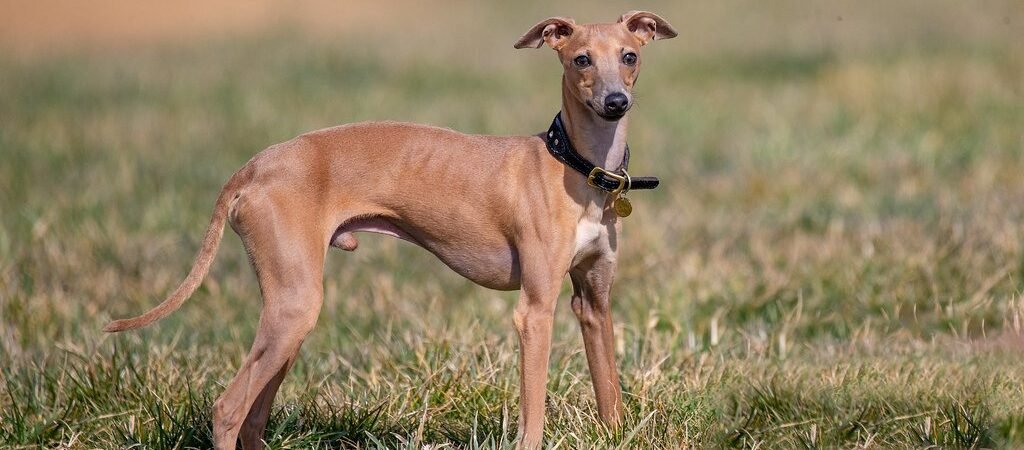
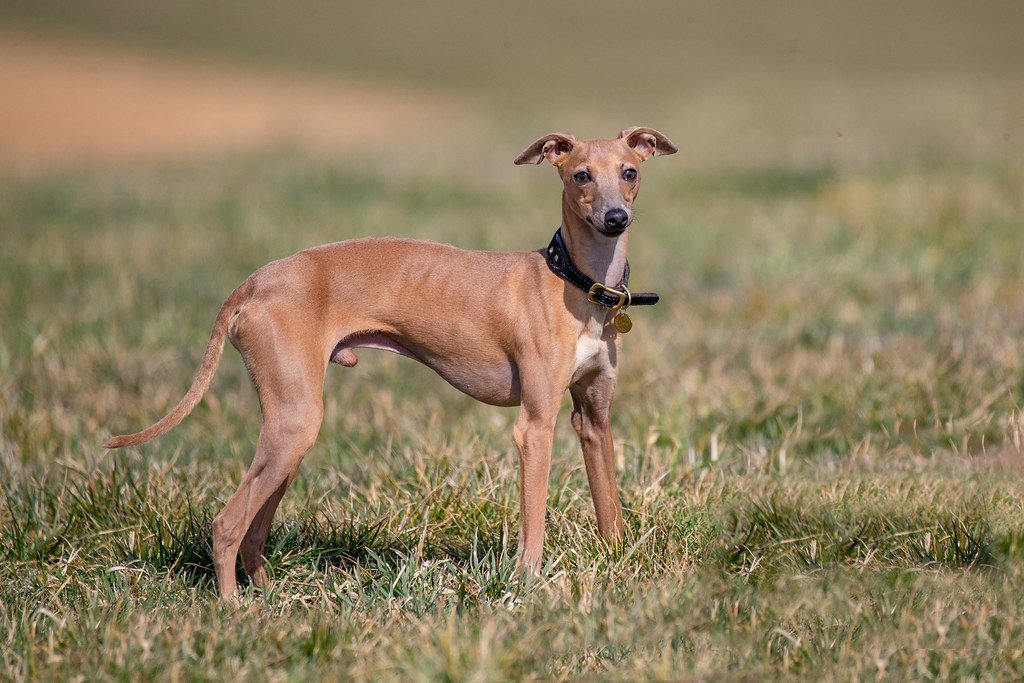
Plenty of people meet their first Italian Greyhound and assume they’re looking at a Greyhound puppy. Then they find out the dog is fully grown. Iggies are real sighthounds in a pocket-sized body, with long legs, a tucked waist, and big, soft eyes that seem to follow you around the room.
They’ve been warming laps for a very long time, from Roman homes to royal palaces. They’re also more fragile in a few specific ways than most small dogs, and a lot of first-time owners don’t find that out until something goes wrong. I’ve gathered what I learned in one place, so you can love one with your eyes open.
Where did the Italian Greyhound come from?
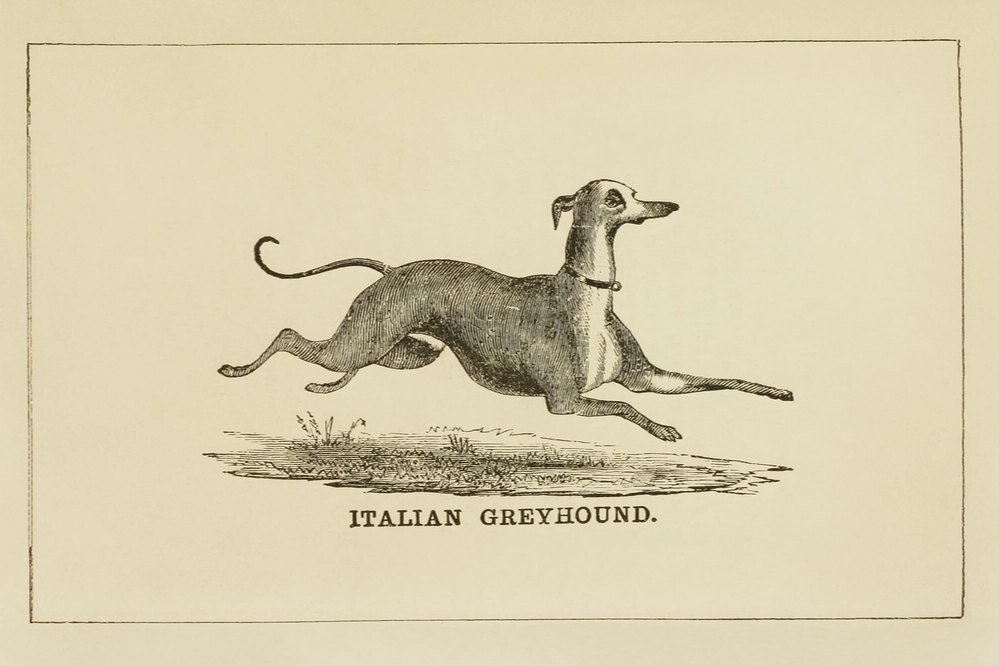
Nobody knows exactly how the breed began. The AKC says sighthounds are thought to have arisen in the region of present-day Greece and Turkey, and that the Italian Greyhound has delighted owners for more than 2,000 years. Kim Brinker of the Italian Greyhound Club of America told the AKC there’s no documented record of whether these little dogs were bred to hunt small game or to be companions. Her guess is both.
The Romans seem to have brought small sighthounds into their homes. The AKC points to architectural remains from A.D. 79 in the ruins of Pompeii, and to marble carvings that show the dogs in hunting scenes and family portraits.
By the 16th century, Italian noblemen had fallen for the breed, which is how it got the name Italian Greyhound. The AKC lists Renaissance artists Giotto, Carpaccio, Memling, Van der Weyden, David, and Bosch among those who painted or sculpted the dogs, and that art helped spread their popularity across southern Europe. An Italian nobleman, Francesco Birago, wrote one of the first descriptions in his 1626 Treatise of Hunting, describing dogs 17 to 19 inches tall. That’s a little taller than today’s ideal.
A favorite of kings and queens
The AKC’s list of royal owners includes Anne of Denmark (consort of England’s James I), Mary Beatrice d’Este of Modena, Frederick the Great of Prussia, Catherine the Great of Russia, and Queen Victoria. VCA Animal Hospitals says the dogs reached England in the 1600s and that their popularity peaked under Queen Victoria, then faded by the early 1900s.
💡 Did you know? Frederick the Great loved his small greyhounds so much that he asked to be buried near them. Royal Central reports that he died at Sanssouci on 17 August 1786 with his greyhound Superbe beside him. His wish wasn’t granted until 17 August 1991, when he was finally laid to rest on the palace’s upper vineyard terrace, in the spot he had chosen near his dogs.
Fame came with a cost. The AKC explains that after dog shows took off in 1859, tiny breeds became a status symbol, and Italian Greyhounds were bred smaller and smaller. Early-1900s breeders had to steer away from that fragile toy version toward a sounder, healthier dog. Then the two World Wars hit European breeds hard. VCA says the breed nearly disappeared in England after World War II, and that high-quality American dogs formed the basis of its revival. On the American side, the AKC recognized the Italian Greyhound in 1886 as its 30th breed.
Built to sprint: why they’re so fast
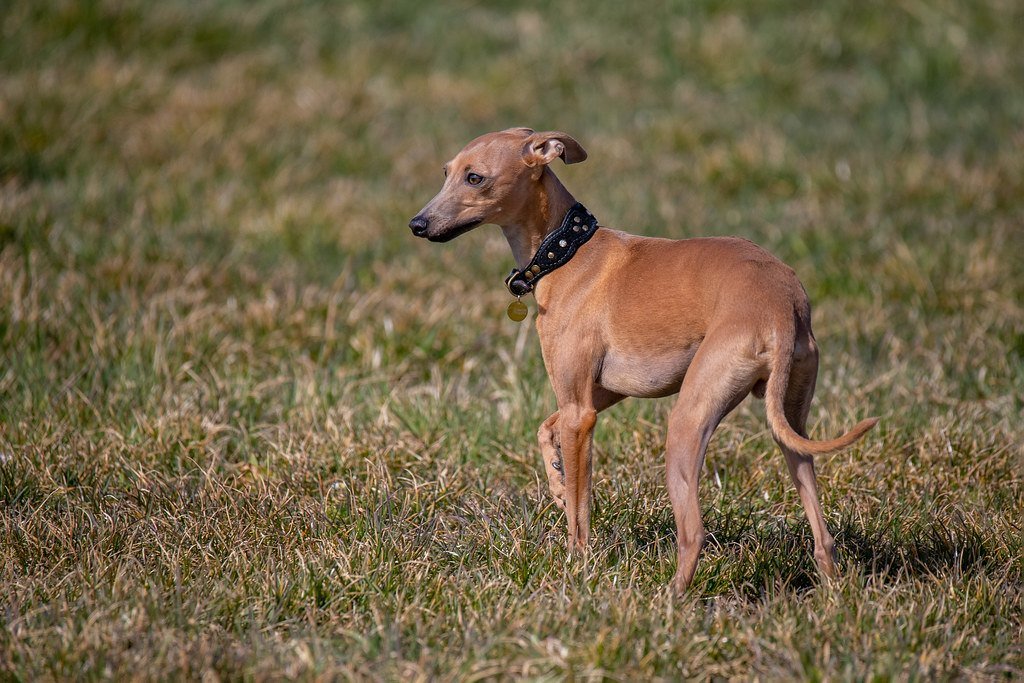
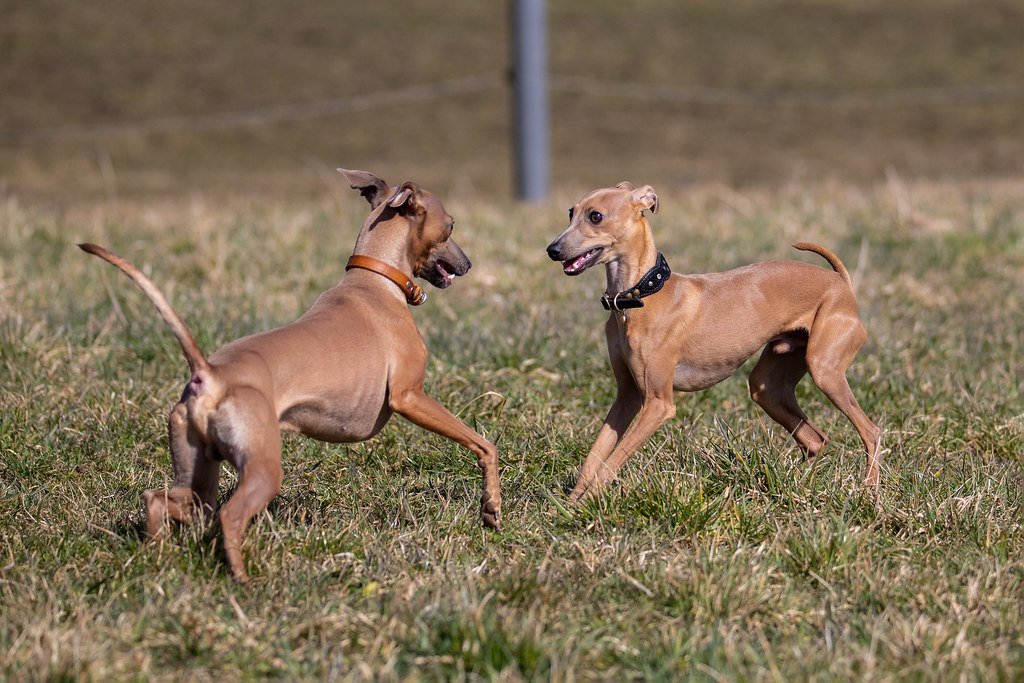
Toy Group or not, an Italian Greyhound is a true sighthound. The AKC says they can reach about 25 miles per hour.
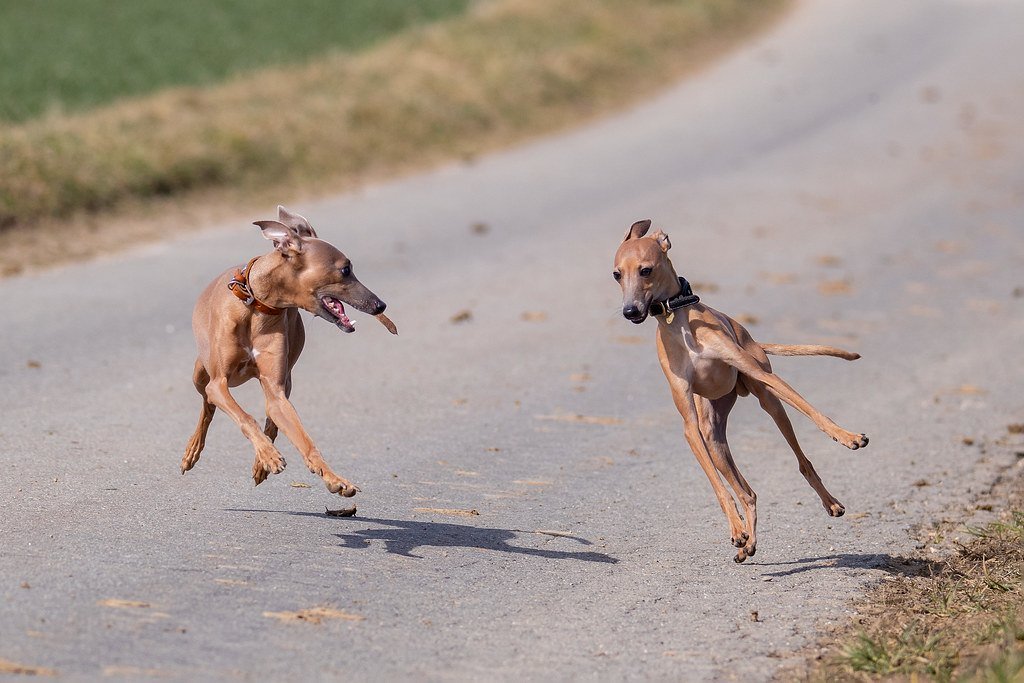
Their speed comes from the same blueprint as their big cousins. The Greyhound Club of America explains that Greyhound-type dogs perfected the double suspension gallop, a running style with moments when all four feet leave the ground. The loin works “as a coil to bring the dog up under himself,” then launches the body forward into the next stride. A very deep rib cage makes room for everything inside, and strong, well-arched feet grip the ground. The club also credits these dogs with “the ability to focus completely on the object of the chase.” If you’ve ever watched one lock onto a squirrel, you know exactly what that means.
That same lean design has a downside. The Italian Greyhound Club of America lists cold sensitivity among the breed’s issues and links it to short hair and low body fat. VCA puts it bluntly: the short coat gives “virtually no protection against cold weather,” so a coat or sweater helps in chilly climates. The AKC adds that wet, damp weather bothers them too, and some even need booties.
Size, coat, and colors
The AKC describes the ideal Italian Greyhound as 13 to 15 inches tall and 7 to 14 pounds. They’re also the smallest of the sighthounds. They’re often confused with Whippets, but the AKC notes that Whippets are bigger, at 19 to 21 inches. In fact, the AKC says Italian Greyhounds helped create the Whippet in the 1800s.
Grooming is easy. VCA describes a short, thin coat that needs only weekly brushing, with below-average shedding.
Personality: why they want to be glued to you
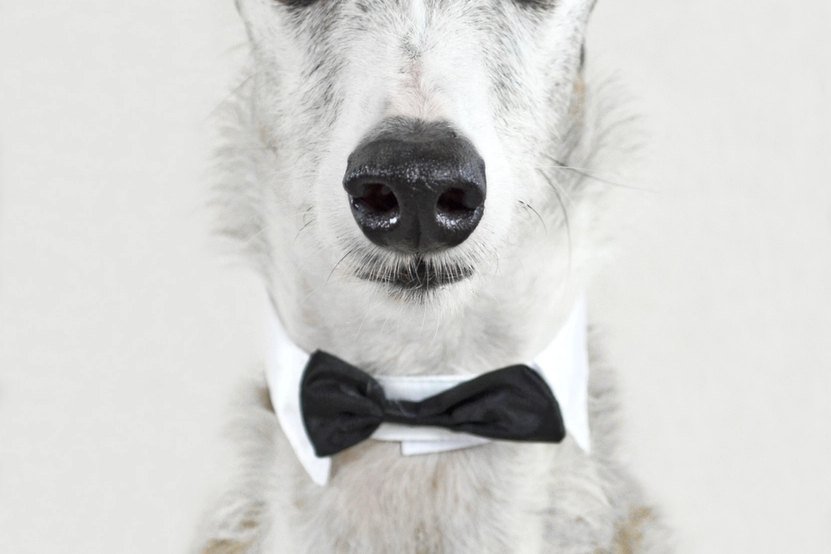
If you want a dog who follows you from room to room, this is your breed. VCA describes Italian Greyhounds as loyal, loving, and often “clingy,” and calls them very sensitive dogs who learn quickly but get bored easily. The AKC says they thrive on human attention, don’t like being left alone, and often do well with another dog for company. Purina adds that they’re nearly always a one-person dog once they bond.
Part of that closeness may simply be about warmth. Purina says they love to snuggle, partly to stay warm. A dog with very little body fat and a thin coat has a good reason to burrow into your lap.
Their sensitivity shapes training, too. VCA says they respond best to reward-based training with food or play, and Purina warns they’re “too delicate and sensitive for all but the quietest of families.”
Then there’s housetraining, which many owners find hard. VCA says the breed “tends to be difficult to housetrain.” The Italian Greyhound Rescue Foundation connects this directly to their bodies: with little fat and little fur, IGs struggle in frost, rain, or a sudden temperature drop, and accidents become more likely. The foundation also says some IGs sneak off to another room when they need to go.
💡 Good to know: The Italian Greyhound Rescue Foundation suggests a steady routine (out after waking, after meals, and before bed), waiting outside until your dog has truly finished, and potty pads or a litter box in harsh weather or homes without a fenced yard.
Italian Greyhounds in Korea
Korean owners know all about the cold. A 2022 guide from the Korean pet outlet Bemypet (비마이펫) calls Italian Greyhounds a breed that truly needs clothes. The article says they’re known to start feeling cold when temperatures drop to around 10℃ to 15℃, and it recommends thick padding or fleece for winter walks. It also mentions a bit of shopping shorthand: Greyhound clothes are called “G” and Italian Greyhound clothes “IG.”
Health: what the research shows
The good news first. A 2024 UK study of nearly 585,000 dogs found a median lifespan of 14.0 years for Italian Greyhounds, compared with 12.5 years for all dogs in the study. The Italian Greyhound Club of America says that “despite their fragile appearance, IGs are both sturdier and healthier than they appear.” Still, a few problems are worth knowing well.
Broken front legs. This is the one that surprises people. In a 2011 study in Veterinary and Comparative Orthopaedics and Traumatology, Piras and colleagues reviewed distal radius and ulna fractures (the lower foreleg, just above the wrist) in toy dogs weighing 5 kg or less. Of the 16 dogs, 8 were Italian Greyhounds, and the average age was just 14.7 months. A 2017 study in Veterinarija ir Zootechnika notes that toy breeds seem prone to these fractures even after minimal trauma, and that small dogs have lower blood vessel density in that part of the bone, which can slow healing. When one Australian vet looked back through his clinic’s files on about 30 IGs, he found seven fractures, mostly in puppies and young adults. It was an informal count, but it’s a sobering one. VCA adds that puppies raised without room to run and jump may be more likely to break a bone when they’re finally allowed to jump off things.
Teeth. PDSA, the UK veterinary charity, lists periodontal disease among the breed’s health problems. Size plays a part. A 2021 study of more than three million US dog records, reported by Vet Times, found that extra-small dogs under 6.5 kg were up to five times more likely to be diagnosed with periodontal disease than dogs of 25 kg or more. The Italian Greyhound Club of America also recommends a DNA test for familial enamel hypoplasia, an inherited enamel defect.
Anesthesia. Sighthounds need a little extra care under anesthesia. Dr. Lesley J. Smith, an anesthesiologist at the University of Wisconsin’s School of Veterinary Medicine, writes that Greyhounds’ slow recovery from thiopental (a barbiturate no longer available in the US) is the only known, documented breed-based drug sensitivity. She explains that injectable drugs move into muscle and then fat as a dog recovers, so lean sighthounds may hold onto those drug levels longer. The Italian Greyhound Rescue Foundation encourages owners to talk with their vet before any procedure, including dental cleanings, and to ask about keeping their dog warm during and after it.
Progressive retinal atrophy (PRA). PRA slowly destroys the retina, and there’s no treatment. UC Davis’s Veterinary Genetics Laboratory reports that PRA affects 2 to 4% of Italian Greyhounds and is usually diagnosed between 1 and 14 years of age, with an average of 6.5 years. UC Davis offers a breed-specific DNA test, and the Italian Greyhound Club of America recommends it for breeding dogs.
Epilepsy. PDSA lists epilepsy, a brain disorder that can cause seizures, among the breed’s conditions. The breed club says seizures have been reported in some IGs, though “not to any great extent.”
⚠️ Please don’t wait if your Italian Greyhound suddenly won’t put weight on a front leg. A fracture above the wrist can happen after a jump that looks harmless, and the 2017 study notes that these breaks don’t always heal smoothly. Getting your dog to a vet quickly gives them the best chance.
Fun facts and true stories 🐾
A royal dog by the king’s side. According to Royal Central, Frederick the Great’s favorite greyhounds included dogs named Biche, Alcmene, Phillis, Diana, and Thisbe. Alcmene was the only one allowed to share the king’s vault.
Catherine the Great posed with one. The AKC points out that the breed appears in Vladimir Borovikovsky’s portrait of the empress.
One goes to work every day. Karen Thayne, the breed club’s historian, told the AKC she takes her IG to the office. “She’s very people-oriented and greets everyone.”
Almost lost, then rebuilt. The AKC says the two World Wars nearly wiped out many of Europe’s breeds, the Italian Greyhound included. In America, fans of the breed founded the Italian Greyhound Club of America in 1950.
Is an Italian Greyhound right for you?
An Italian Greyhound could be a lovely fit if you want a gentle, affectionate companion who wants to be near you most of the day. They’re easy to groom, and VCA says they make a very quiet house dog when their exercise needs are met, which usually means a moderate daily walk or a sprint in a fenced area.
Take a careful look at your life first, though. They don’t like long hours alone, they feel the cold, housetraining can take patience, and their front legs need protecting, especially while they’re young. PDSA notes that bone fragility during growth may make them a poor match for homes with young children. If you go ahead, choose a breeder who tests for PRA and follows the club’s eye, patella, and thyroid screening recommendations, and keep a warm sweater by the door.
Angel Jake Note 🐾
Italian Greyhounds have spent two thousand years at people’s sides, from Roman homes to a Prussian king’s last morning. They look delicate, and in a few ways they are. But what they really ask for is pretty simple: warmth, a soft place to land, someone gentle, and someone close.
If you can give them that, plus a vet who understands sighthounds, they’ll give you their whole heart.
Medical Disclaimer
I’m not a vet, and nothing here replaces a real exam. If something about your dog feels off, please trust that feeling and call your veterinarian.
Sources
- American Kennel Club: Italian Greyhound History: Elegance and Grace With a Mysterious Beginning
- American Kennel Club: Italian Greyhound Facts You May Not Know
- Italian Greyhound Club of America: Health Testing Recommendations (AKC)
- VCA Animal Hospitals: Italian Greyhound
- McMillan et al. (2024): Longevity of companion dog breeds: those at risk from early death (Scientific Reports)
- Dogs Trust: Life expectancy for 155 breeds (McMillan et al. 2024 data table)
- Purina: Italian Greyhound
- PDSA: Italian Greyhound
- Greyhound Club of America: Greyhound Type
- Royal Central: A King’s Grave and His Dogs
- Italian Greyhound Rescue Foundation: Housetraining
- Italian Greyhound Rescue Foundation: Italian Greyhounds, Sighthounds and Anesthesia
- Piras et al. (2011): Treatment of fractures of the distal radius and ulna in toy breed dogs with circular external skeletal fixation
- Ramanauskaitė et al. (2017): Factors That Affect Healing in Cases of Canine Antebrachium Fractures
- Walkerville Vet (Andrew Spanner, BVSc): Broken Legs in Italian Greyhounds
- Vet Times: Study confirms smaller dogs at higher risk of dental problems
- Lesley J. Smith, DVM, DACVAA: Breed Considerations in Anesthesia
- UC Davis Veterinary Genetics Laboratory: Susceptibility to Progressive Retinal Atrophy (PRA) in Italian Greyhounds
- 비마이펫: 그레이하운드 옷 추천 10가지, 필요한 이유 및 고르는 방법