
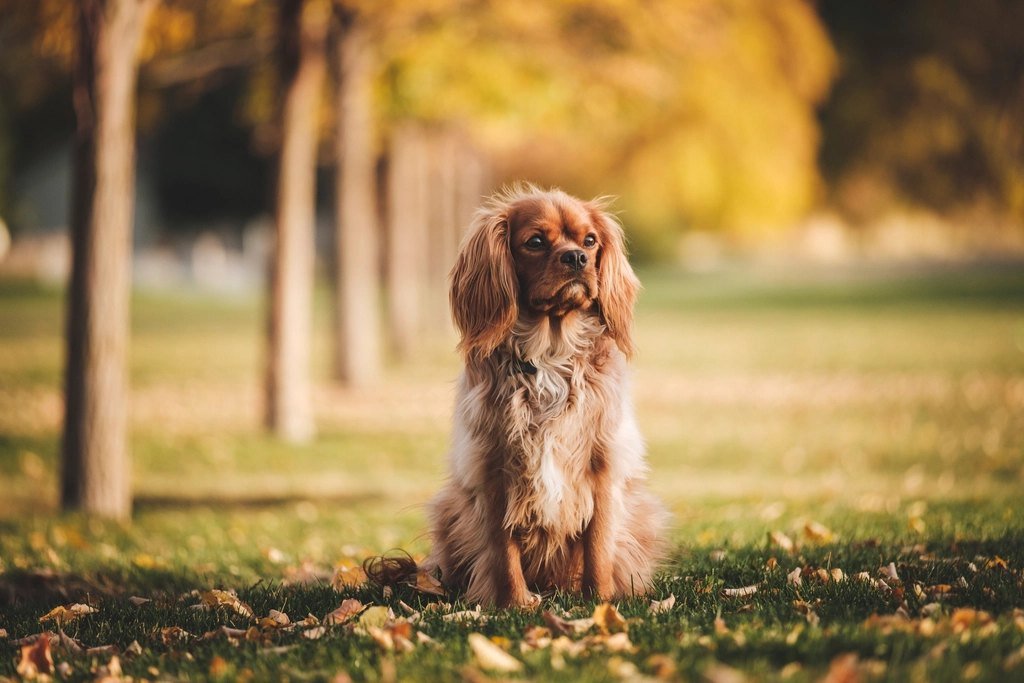
Few dogs have a face quite like a Cocker Spaniel’s. Those big, soft eyes and long, silky ears make it look as if they’re always listening very carefully to whatever you’re saying. Disney picked one to play the heroine of Lady and the Tramp, and a Cocker named Checkers turned up in the middle of a 1952 campaign scandal.
But that sweet face belongs to a bird dog, and a lot of what makes Cockers wonderful (and a few things that make them a handful) comes straight from that working past. So I’ve pulled together where Cockers came from, what the research says about their health, and a few true stories, including why there are actually two Cocker breeds today.
Where did the name “Cocker” come from?
The clue is in the bird. Wikipedia says the Oxford English Dictionary traces “cocker” to the breed’s use in flushing woodcocks, and Purina describes Cockers as bird hunters named for the woodcock they went after. VCA Animal Hospitals explains that spaniels were being developed by at least the 1300s to flush birds into nets or toward waiting falcons.
For a long time, “Cocker” was more a job description than a breed. According to Wikipedia, when the Kennel Club published its first stud books in 1874, any spaniel under 25 pounds went into the Cocker pool. The AKC says Cockers were all classified as Field Spaniels in the 1870s, and it wasn’t until 1883 that they got a separate show class. A dog named Obo, owned by a Mr. Farrow, was exhibited in it. By 1892, classes were reserved for Cocker Spaniels only.
Obo’s son is the dog Americans remember. The AKC says Obo II, a 23-pound son of Farrow’s Obo, was imported from England in 1884, and Wikipedia calls him the father of the modern breed. He was only 10 inches tall, with a long body.
💡 Did you know? Spaniels show up in some strange corners of English history. The AKC says that in 1647, England’s “Witch-Finder General” claimed a witch’s familiar was a fat, legless spaniel named “Jermara.”
One breed becomes two
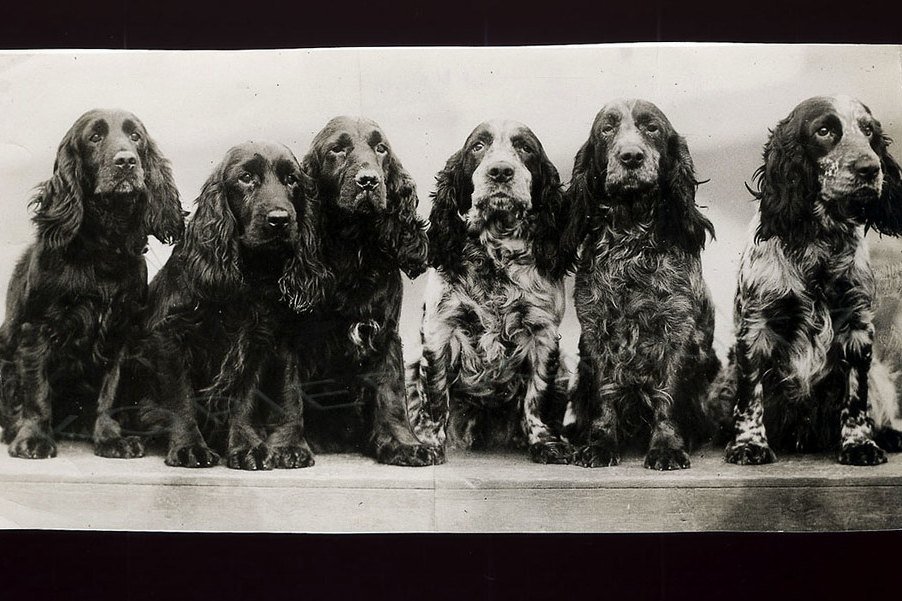
In America, breeders slowly reshaped the Cocker. VCA says American show dogs were bred to be smaller, longer-legged, and rounder-headed than the original English stock, and Wikipedia says the two types were noticeably different by the 1920s.
Fans of the original type pushed back. The AKC says the English Cocker Spaniel Club of America was founded in 1935 to promote the English type. VCA says the AKC split the breed into two varieties in 1936, and in 1946 made them two separate breeds. Wikipedia adds that the UK’s Kennel Club didn’t recognize the American Cocker as separate until 1970.
The names still trip people up. In the US, the AKC calls the American dog simply the “Cocker Spaniel” and the British dog the “English Cocker Spaniel.” Outside the US, VCA notes, it’s flipped: the English dog is the “Cocker Spaniel,” and the other one is the “American Cocker Spaniel.”
Size, coat, and those famous ears
The two breeds are close in size, but the English Cocker is a little bigger. Purina lists American males at 14.5 to 15.5 inches and 25 to 30 pounds, with females at 13.5 to 14.5 inches and 20 to 25 pounds. VCA lists English Cockers at 15 to 17 inches and 26 to 34 pounds.
The coat is long and silky, either flat or wavy, and it takes real work. VCA gives both breeds its top grooming score of 5 out of 5 and recommends brushing and combing two to three times a week to prevent mats. For American Cockers, it also suggests a professional clip about once a month. Purina goes further and recommends daily brushing.
Then there are the ears. They’re a big part of the Cocker’s charm, but they matter for health, too. The Royal Veterinary College (RVC) says the pendulous ear flaps the public loves “may predispose these dogs to ear infections.” Korean pet site Bemypet (비마이펫) explains it simply: droopy ears don’t let much air in, and they get dunked in the water bowl a lot, so inflammation sets in easily.
💡 Good to know: Bemypet suggests cleaning a Cocker’s ears about once a week and choosing a water bowl with a narrow opening and some height, so the ears don’t dip into the water every time they drink. VCA also recommends checking the ears weekly.

Personality: why they’re so cheerful (and so busy)
Wikipedia says the American Cocker is nicknamed the “Merry Cocker,” and the English Cocker is also known as the “Merry Spaniel” because its tail just keeps wagging. VCA describes American Cockers as exuberant, entertaining, and happy, and says they’re outgoing with strangers and usually good with children and other pets.
A lot of that comes from the job. Cockers were bred to hunt alongside a person, flushing birds within reach, so it makes sense that they love company and love to please. VCA says they’re quick to learn and respond best to food-based reward training, though some can be too excitable to mind well. Both breeds tend to struggle when they’re shut out. Wikipedia says they’re easily stressed by loud noises and rough handling, and don’t do well left alone in a backyard.
They also need more exercise than that lapdog face suggests. VCA recommends a daily long walk, a jog, or energetic games, and says a well-exercised Cocker is calm indoors. Bemypet suggests at least an hour of walking a day.
The “rage syndrome” story: myth or real?
If you’ve read about English Cockers, you may have run into “rage syndrome,” or “cocker rage,” the idea that some dogs, especially solid-colored ones, suddenly attack without warning. Wikipedia says the notion of “cocker rage” has been dismissed as a myth. But aggression itself is worth taking seriously, and the research is pretty clear about that.
In 2023, an RVC VetCompass study of 10,313 English Cocker Spaniels under UK veterinary care found aggression in 4.01% of the dogs, making it one of the six most common recorded problems. It showed up more in males than females, and more in solid-colored dogs than multi-colored ones. Among solid colors, the numbers were striking: 12.08% of golden dogs, 6.52% of red, 6.29% of black, and 4.33% of liver. Wikipedia also mentions a 1996 University of Cambridge survey of 932 British households in which owners reported different levels of aggression depending on coat color, and a 2009 study from Barcelona that found more aggression referrals and more impulsive attacks than in other breeds.
What does that mean for you? Most Cockers, including most golden ones, aren’t aggressive. Still, lead author Karolina Engdahl said that “behavioural-related problems should be a key area for veterinary-owner discussions.” If you’re choosing a puppy, it’s fair to ask a breeder about the temperament of the parents, not only their looks.

Health: what the research shows
Let’s start with the good news. A 2024 UK study cited by Wikipedia gave English Cockers a life expectancy of 13.3 years, compared with 12.7 for purebreds overall. The RVC’s VetCompass study found a shorter average of 11.44 years (12.01 for females and 11.00 for males), still slightly above the UK dog average of 11.2. VCA lists 12 to 15 years for the American Cocker.
Ear infections. This is the big one. In the RVC’s 2023 study, otitis externa (inflammation of the outer ear canal) affected 10.09% of English Cockers in a single year, second only to dental disease at 20.97%. The researchers linked the breed’s higher rates of disorders to its long ears and loose skin. A follow-up RVC study in 2024 compared 2,510 English Cockers with 7,813 dogs of other breeds and found the Cockers had almost 15 times the risk of ear discharge.
Eye disease. Cockers have a long list here. Wikipedia says glaucoma affects 5.52% of American Cockers, the highest prevalence of any breed in a US study. The AKC Canine Health Foundation explains that the American Cocker is predisposed to primary angle-closure glaucoma, in which fluid can’t drain from the eye, pressure builds, and the result is painful. Glaucoma can cause permanent vision loss, and UC Davis researchers are working toward a genetic test. Veterinary Vision Center says Cockers also have a higher rate of hereditary cataracts than most breeds. Both breeds can carry progressive rod-cone degeneration, a form of progressive retinal atrophy (PRA) caused by a recessive mutation in the PRCD gene, according to Wikipedia. And in the 2024 RVC study, English Cockers had 7.6 times the risk of dry eye (keratoconjunctivitis sicca).
Hypothyroidism. Wikipedia lists the American Cocker as predisposed to an underactive thyroid, so it’s worth bringing up with your vet.
IMHA. Immune-mediated hemolytic anemia is rarer, but serious. In a 2015 paper in Canine Genetics and Epidemiology, researchers described it as “a life threatening disease” in which the immune system attacks the body’s own red blood cells. They noted that Cocker Spaniels are overrepresented in several studies, which points to genetic factors, though the specific genes they tested weren’t clearly linked to it.
Weight. VCA says Cockers tend to put on weight, and obesity affected 9.88% of English Cockers in the RVC study. RVC co-author Dan O’Neill said that preventing dental, ear, weight, and anal sac problems “can go a long way to helping.”
⚠️ Please don’t wait if an eye looks wrong. Veterinary Vision Center says glaucoma can destroy the optic nerve within hours, and that a red, painful, cloudy, or bulging eye needs same-day care. Squinting or pawing at an eye should be seen within a day.

Fun facts and true stories 🐾
Lady was an American Cocker. Wikipedia says Lady in Disney’s 1955 Lady and the Tramp is an American Cocker Spaniel, and Purina says the film helped boost the breed’s popularity. In the 2019 live-action remake, Lady was played by a dog named Rose.
Brucie was the most photographed dog in the world. My Own Brucie won Best in Show at Westminster in 1940 and 1941, and Wikipedia says he became known as the most photographed dog in the world. The AKC says his sire, Red Brucie, also produced a champion painted by the artist Maud Earl.
A puppy named Checkers helped keep Nixon on the ticket. On September 23, 1952, Richard Nixon, then the Republican nominee for vice president, went on TV to answer accusations about a fund his backers had set up for his political expenses. Wikipedia says the Nixons’ black-and-white American Cocker, Checkers, was a gift from a Texas traveling salesman, Lou Carrol, who shipped the puppy by rail. Six-year-old Tricia Nixon named him. Nixon told viewers that whatever anyone said, “we’re gonna keep it,” and more than 60 million Americans watched or listened. The wave of public support that followed saved his place. Checkers died in 1964 and is buried in a pet cemetery on Long Island.
A president had one long before Nixon. Purina says President Rutherford B. Hayes owned a Cocker named Dot.
Cockers once topped the charts on both sides of the Atlantic. The AKC says Cockers became the most popular breed registered with England’s Kennel Club in 1935. In the US, VCA says the Cocker was the most popular breed from 1936 to 1952 and again from 1983 to 1990. At Crufts, English Cockers have won Best in Show seven times, according to Wikipedia.
Korea had its own Cocker boom. The Korean newspaper Kyunghyang Shinmun (경향신문) reported in 2024 that the breed took off in the early 2000s after a Cocker Spaniel named Woongja (웅자) won people over on an animal variety show. The same article says the boom faded as Cockers, along with Beagles and Schnauzers, picked up the nickname “the three devil dogs” (3대 악마견) for their very lively personalities. Knowing their history, that nickname says less about a “devil” and more about a bird dog who hasn’t had enough to do.
Is a Cocker Spaniel right for you?
A Cocker could be a great fit if you want a cheerful, affectionate, medium-energy dog who wants to be close to you and is usually friendly with kids, strangers, and other pets. They’re small enough for many homes but sporty enough to enjoy long walks, retrieving games, and even swimming.
Think twice if you can’t commit to regular grooming (or the cost of a groomer), weekly ear checks, and an hour or so of activity every day. Cockers don’t love being left alone for long stretches, either. If you go ahead, Veterinary Vision Center suggests asking breeders for the parents’ eye-screening results. Meet the parents if you can, too, and pay attention to their temperament. After that, keep your Cocker lean and their ears dry.

Angel Jake Note 🐾
The Cocker’s reputation has swung back and forth for decades: America’s favorite dog, Disney’s sweetheart, Korea’s “devil dog.” Underneath all of that is the same dog, bred to work beside a person all day and happiest when they get to do just that.
So if your Cocker is bouncing off the walls, try not to take it personally. They might just need a longer walk, a game of fetch, or a little more time with you. And the next time you’re stroking those soft ears, take a quick peek inside. It only takes a second.
Medical Disclaimer
I’m not a vet, and nothing here replaces a real exam. If something about your dog feels off, please trust that feeling and call your veterinarian.
Sources
- American Kennel Club: Cocker Spaniel History
- Wikipedia: American Cocker Spaniel
- Wikipedia: English Cocker Spaniel
- Wikipedia: Checkers speech
- VCA Animal Hospitals: American Cocker Spaniel
- VCA Animal Hospitals: English Cocker Spaniel
- Purina: Cocker Spaniel
- Royal Veterinary College: English Cocker Spaniels – a fairly typical but potentially moody dog
- Royal Veterinary College: New research highlights high risk of ear and eye disease in English Cocker Spaniels in the UK
- AKC Canine Health Foundation: Exploring Genetic Causes of Glaucoma in the American Cocker Spaniel
- Veterinary Vision Center: Why Are Spaniels So Prone to Eye Disease?
- Threlfall et al. (2015): Analysis of DLA-DQB1 and polymorphisms in CTLA4 in Cocker spaniels affected with immune-mediated haemolytic anaemia
- 경향신문: 그 많던 요키·시츄 어디로 갔나…유행 견종이 뭐기에
- 비마이펫 라이프: 코카 스파니엘 성격과 특징, 3대 악마견이라고?