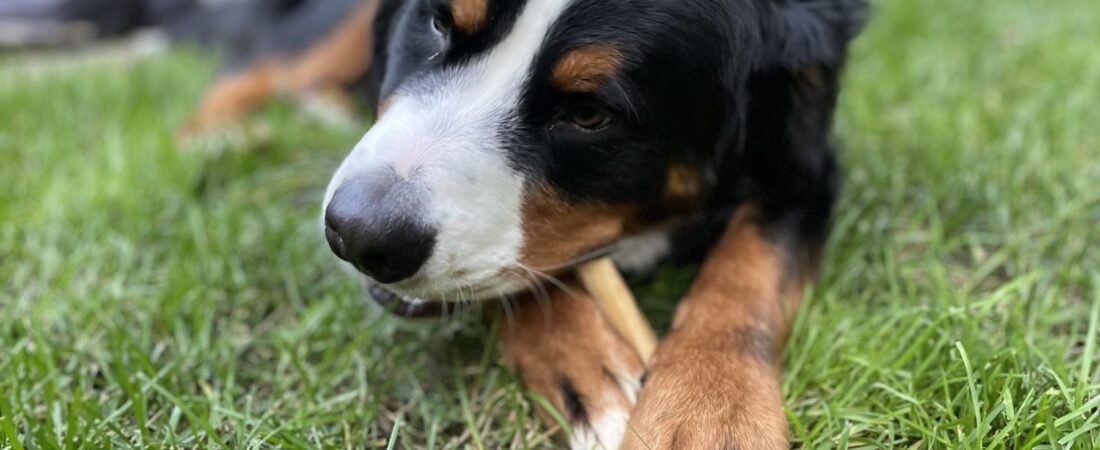
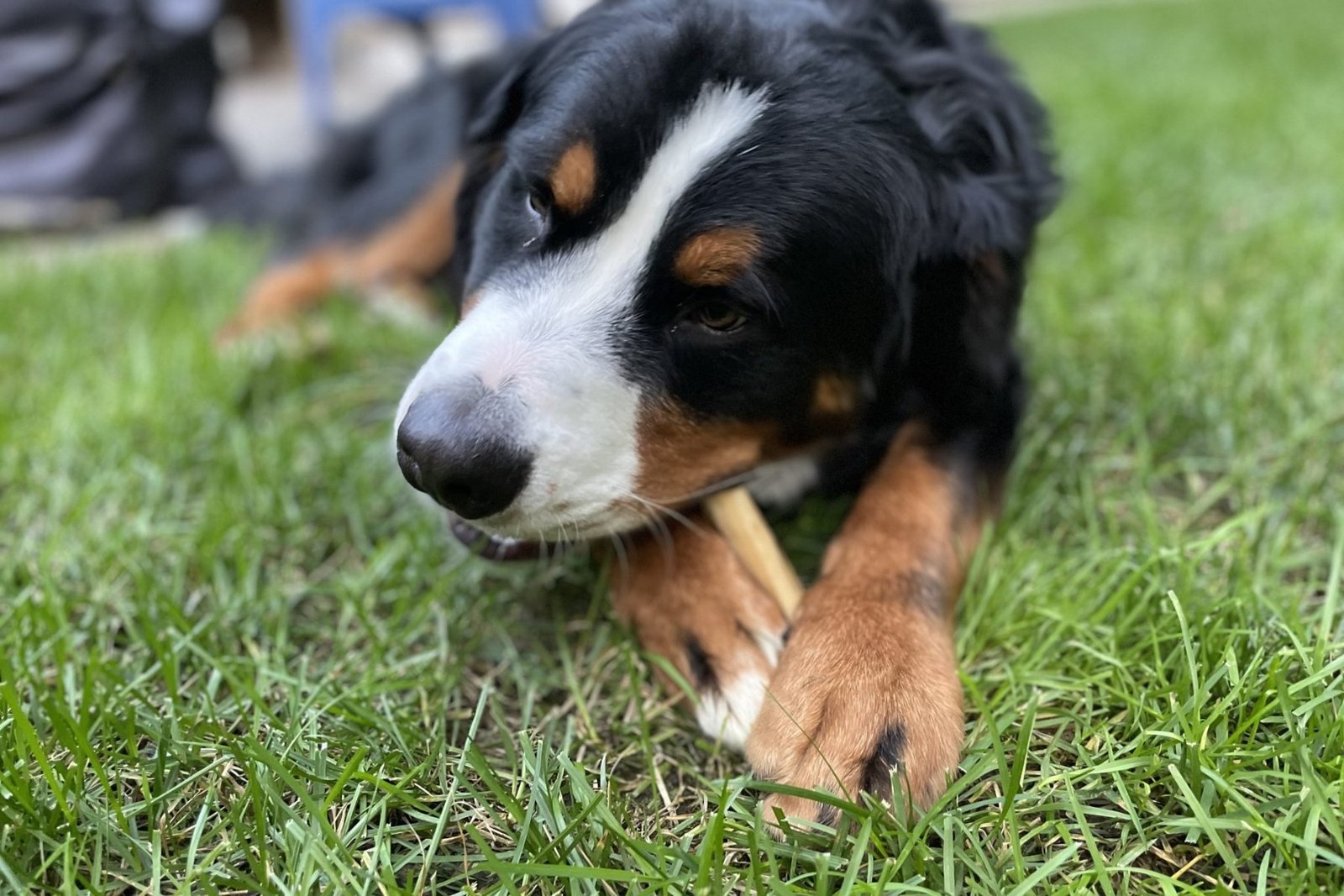
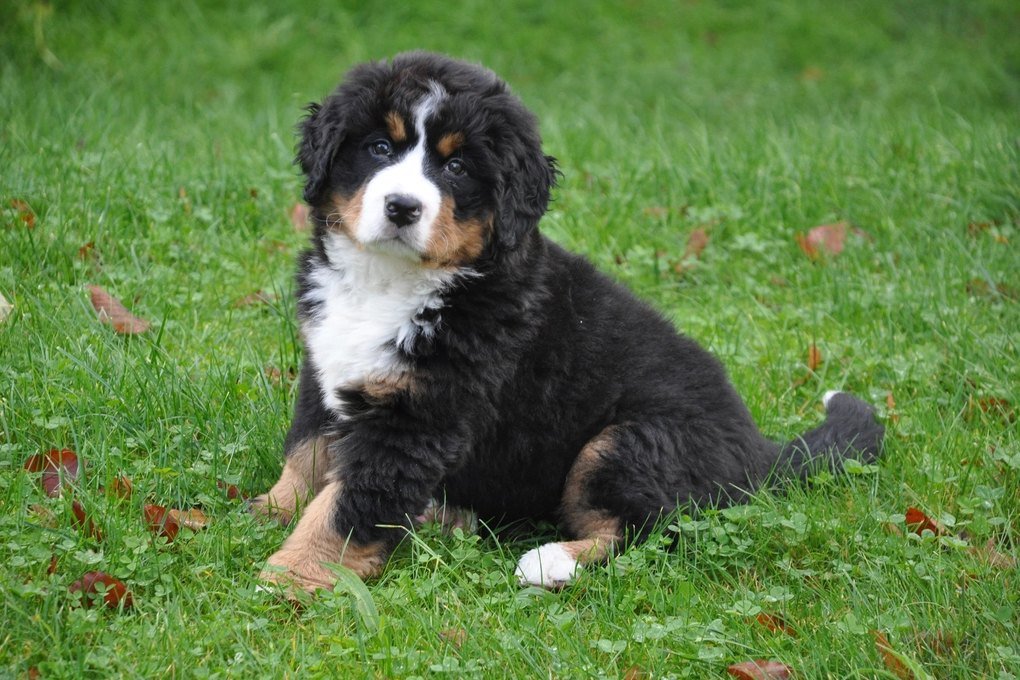
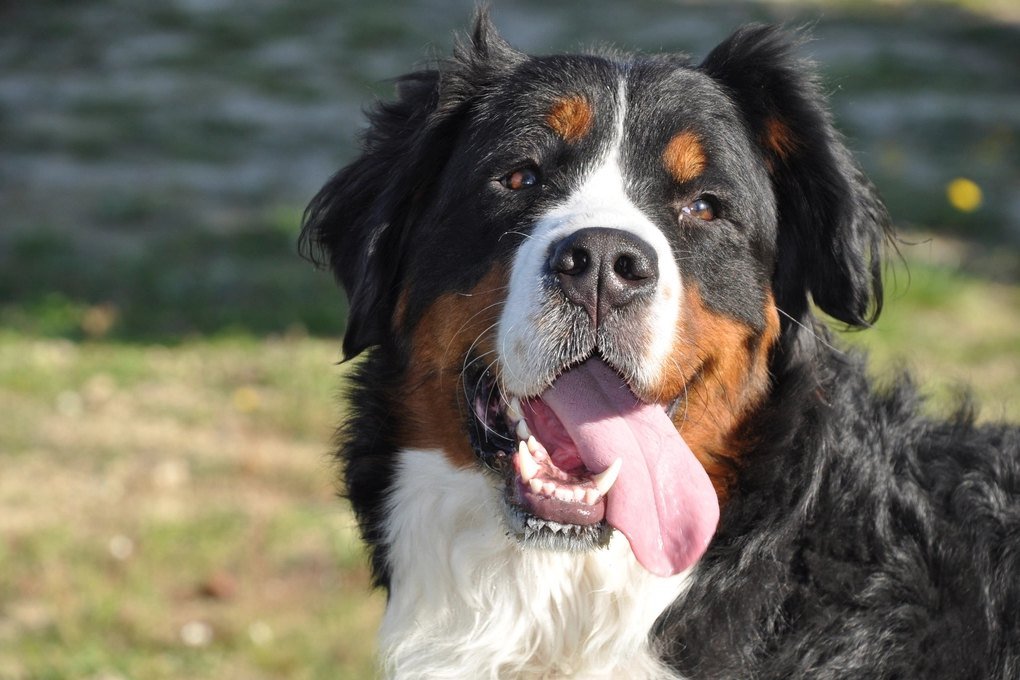
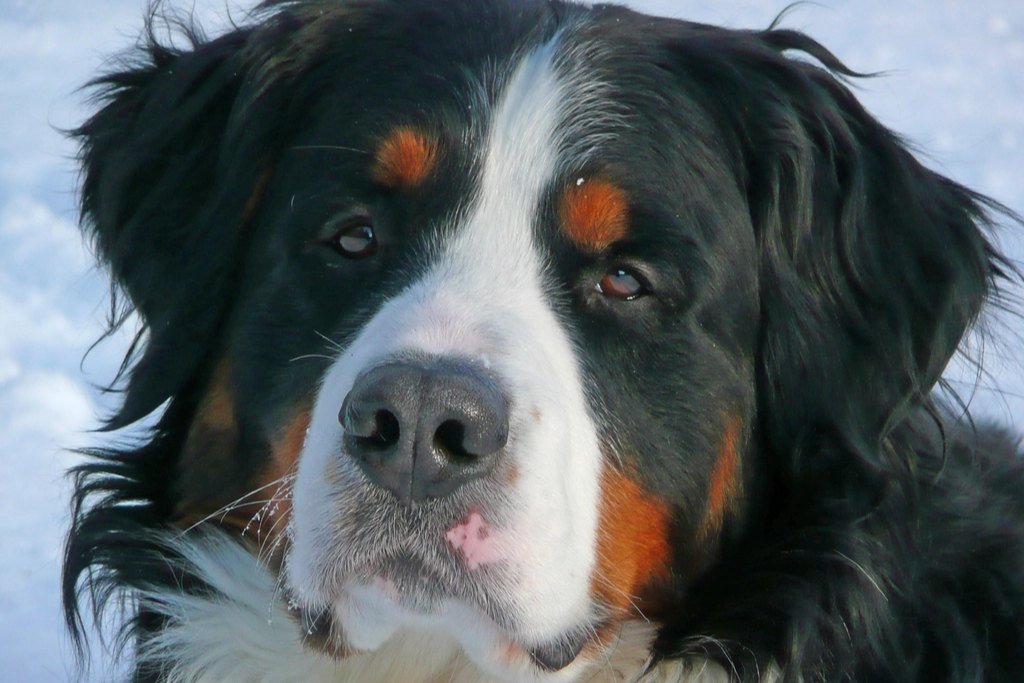
Bernese Mountain Dogs have a way of filling a room. There’s the size, of course, but it’s more than that. The soft black coat, the rust eyebrows, the white blaze down the face, and a calm, steady gaze that seems to say, “I’m here. Everything’s fine.”
Behind that gentle face is a hardworking Swiss farm dog who once hauled milk and cheese to market and nearly vanished before a handful of people brought the breed back. Berners also have shorter lives than many other big dogs, and I know that’s hard to read. I’d rather you hear it gently, with the research and the hopeful parts included, so I’ve put the history, the science, and the stories together here.
Where do Berners come from?
The answer is right there in the name. According to the FCI breed standard, the Bernese Mountain Dog was a farm dog in the canton of Bern, Switzerland. The breed’s first name was “Dürrbächler,” after the hamlet and inn of Dürrbach near Riggisberg, where these big dogs were especially common.
How far back the story goes is a little foggy. Mental Floss says some people believe the Romans brought mastiff-like dogs to Switzerland about 2,000 years ago, while others point to remains of large dogs found there from before the Romans. Either way, these were everyday working dogs, and artists of the time preferred painting hunting dogs and lap dogs, so not much was written down.
On the farm, Berners did a bit of everything. The Bernese Mountain Dog Club of America (BMDCA) describes them as companions and watchdogs that alerted farmers to unfamiliar visitors. They also pulled. Wikipedia says farmers used them to haul carts of milk and cheese, and locals called them “Cheese Dogs.” Mental Floss adds that when cheese plants started opening around 1850, producers used the dogs to pull carts of dairy products and bread to farms.
Berners are one of four Swiss Sennenhund breeds. The AKC says “Sennenhund” loosely means “dairy farmer’s dog,” and the other three are the Greater Swiss Mountain Dog, the Appenzeller, and the Entlebucher. Wikipedia notes that all four share the same colors and markings but come in different sizes. Only the Bernese has a long coat.
The people who brought them back
By the late 1800s, Switzerland’s favorite big dog was the St. Bernard. Mental Floss says the Swiss Kennel Club, founded in 1883, didn’t recognize the mountain dogs at first, and only remote farmers kept the breed going.
That’s where Franz Schertenleib comes in. Mental Floss describes him as an innkeeper who had heard stories about the dog as a child. In 1892, according to the AKC, he went looking for a good example of the breed and couldn’t find one, so other Berner fans joined the search. The FCI standard says dogs of the breed appeared at shows in 1902, 1904, and 1907, and in 1907 breeders from the Burgdorf region founded the “Schweizerischer Dürrbach-Klub” to promote pure breeding.
The other key figure was a scientist. Wikipedia describes Albert Heim as a geology professor in Zürich and a Sennenhund expert who encouraged breeders to take an interest in these dogs. In 1908, Schertenleib showed Heim two short-haired “Bernese” dogs, and Heim saw them as descendants of an old, large working type that had nearly disappeared. Those dogs became the Greater Swiss Mountain Dog, which the Swiss Kennel Club recognized as a separate breed in 1909.
💡 Did you know? The first Berners in America may have come to a Kansas farm. The AKC says farmer Isaac Schliess is believed to have imported them in 1926, and the AKC recognized the breed in 1937.
The Bernese Mountain Dog Club of America followed in 1968. By 2024, Wikipedia says, the Berner ranked 19th in popularity in the US.
Size, coat, and that tricolor face
Berners are big. Purina lists males at 25 to 27.5 inches and 80 to 115 pounds, and females at 23 to 26 inches and 70 to 95 pounds. The FCI standard puts the ideal height for males at 66 to 68 cm.
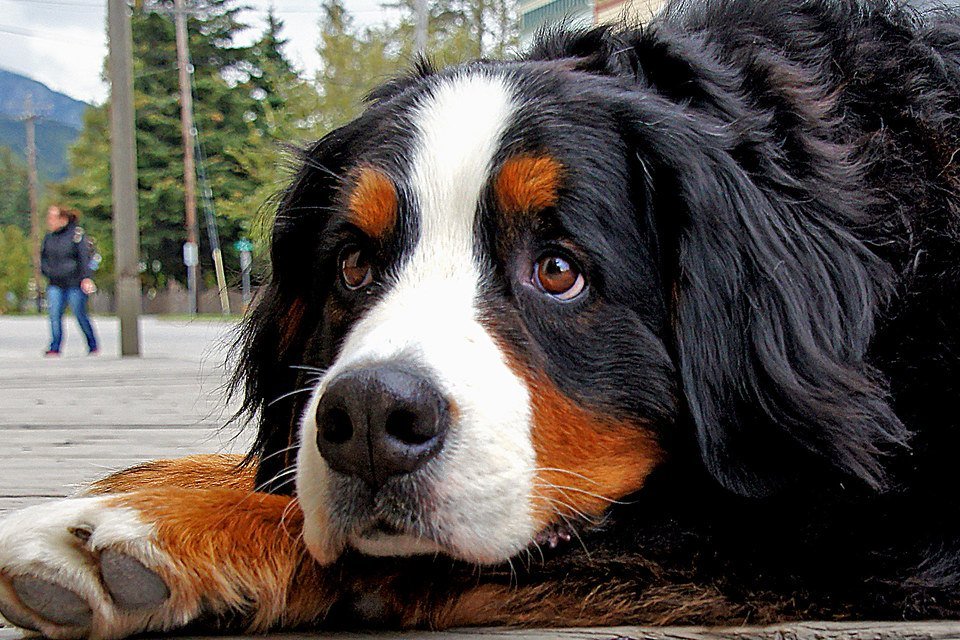
The coat is long, shiny, and straight or slightly wavy. The FCI describes the main color as jet black, with rich tan on the cheeks, above the eyes, on all four legs, and on the chest. The white blaze, muzzle band, and white chest complete the look.
So why that coat? The long, thick fur makes sense for the Alps. Purina says it “protects him in cold conditions,” and Mental Floss notes the breed was developed with strong legs for rocky mountain terrain. The colors are harder to explain. No one I read gives a single reason, but the AKC describes the Roman-era ancestral dogs as large black-and-tan dogs with white markings, and the same pattern runs through all four Swiss mountain breeds today.
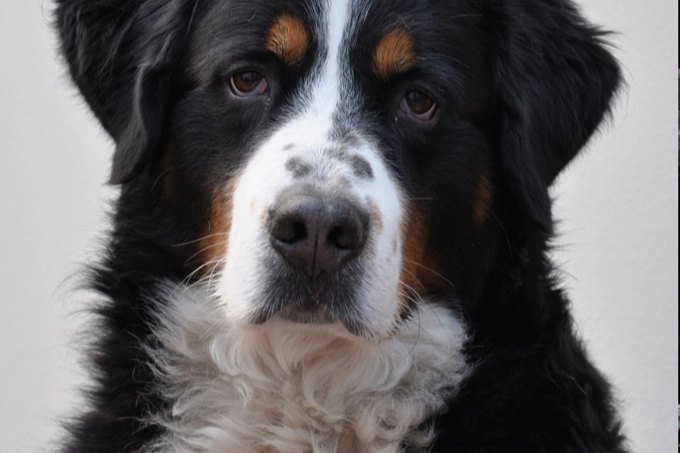
That beautiful coat comes with a lot of hair. Purina says Berners shed throughout the year and more heavily in spring. The PDSA recommends a good brush several times a week, possibly daily in spring and autumn, and puts it plainly: “be prepared for a lot of shedding!”
Personality: calm, loyal, and a little slow to grow up
The AKC sums it up nicely: “Berners are generally placid but are always up for a romp with the owner, whom they live to please.” Purina describes them as calm and confident, affectionate with adults, and patient with children.
A lot of that makes sense when you picture the farm. A dog who walked beside a cart, watched the yard, and spent long days with one family needed to be steady, not jumpy. Wikipedia says Berners tend to attach to one person and have a natural suspicion of strangers, which fits a dog whose job included letting farmers know when someone unfamiliar showed up.
They’re sensitive souls, too. The PDSA says they’re eager to please and prone to separation anxiety. Purina is clear that a Berner “is not an outdoor dog” and thrives when they’re with family. And they take their time growing up. Mental Floss notes that Berners mature more slowly than many breeds, so training needs patience and consistency.
They don’t need nonstop action. Purina rates their energy as low and suggests moderate daily exercise, while the PDSA recommends at least an hour of exercise a day plus training and play for the mind. A long walk or a hike usually suits them well.
Berners in Korea
In Korea, you don’t see Berners very often. Namuwiki (나무위키) says the breed is rare here. The same page warns that, like other dogs from cold regions, Berners have a thick, dense coat and are vulnerable to heat, so owners need a plan for cooling. The Korean pet outlet Bemypet (비마이펫) agrees, saying the breed is very weak in hot weather.
That matters in a Korean summer. VCA Animal Hospitals rates the Berner’s tolerance for warm weather at just 1 out of 5, while giving cold tolerance a full 5. The PDSA advises owners to make sure they don’t overheat, especially in warmer weather.
Namuwiki also mentions a habit some Korean owners may recognize. Berners can nip at people’s heels, a behavior it says was featured on EBS’s There Are No Bad Dogs (세상에 나쁜 개는 없다). The page explains that herding dogs nip at the back legs to move livestock, so this is old farm instinct showing up in the living room. A good trainer can help redirect it.
💡 Good to know: Namuwiki suggests setting up cooling at home and skipping outings on hot days. On a sticky August afternoon, that means an air-conditioned room and a walk that can wait.
Health: what the research shows
This is the part I wish were different. Purina lists a lifespan of 7 to 10 years, and the BMDCA itself says a lifespan of 7 to 8 years “is too short for a large breed dog.” The club also says many Berners do live into their teens, and breeders and researchers are working hard to help more of them get there.
The numbers come from several countries. A 2016 Swiss study of 389 Berners born in 2001 and 2002 found a median life expectancy of 8.4 years, with females (8.8 years) living longer than males (7.7 years). A 2024 UK study, as reported by Wikipedia, found a life expectancy of 10.1 years, compared with 12.7 years for purebreds overall. And a Swedish study from 2005 found that 72% of Berners had died before age 10.
Cancer and histiocytic sarcoma. Cancer is the main reason for those short lives. In the Swiss study, neoplasia (tumors) accounted for 222 of 381 deaths, or 58.3%. In the BMDCA’s 2005 health study, 67% of dogs that died had some form of cancer. The club calls histiocytic sarcoma “the most prevalent cancer in the breed.” A 2009 French study reported that it affects approximately 25% of Berners, with an average onset of about 6.5 years, and that 80% of histiocytic sarcoma diagnoses in France occur in this one breed. The same study found that it runs in families, and later research from the University of Rennes linked five regions of the genome to the risk, each accounting for 5 to 15% of cases.
There’s real progress, though. The BMDCA now offers a histiocytic sarcoma risk test, and its open health database, Berner-Garde, holds records on over 220,000 dogs. The club encourages buyers to ask breeders to go over a puppy’s pedigree with them and explain any health issues in it.
Hip and elbow dysplasia. These joint problems can start early. The BMDCA says elbow dysplasia can affect puppies as young as 5 months, and Wikipedia reports elbow dysplasia rates of 13.91% to 26% across studies. For hips, there’s hopeful news from Switzerland. A study of 3,381 Berners found that hip dysplasia fell from 21.2% to 12.5% between 1995–1999 and 2010–2016.
Bloat (GDV). Purina says Berners, like other large breeds, are at risk of bloat, a life-threatening condition. A Royal Veterinary College VetCompass study found that dogs over 40 kg had 148.7 times the odds of GDV compared with dogs under 10 kg. Many adult Berners fall into that heavier group. The same study found that 79.3% of dogs that had surgery survived to discharge, so fast treatment really matters.
⚠️ Please don’t wait if you see signs of bloat. The American Animal Hospital Association lists restlessness, drooling, trying to vomit without bringing anything up, and a swollen belly as warning signs. The BMDCA says that with bloat, “minutes, not hours, may save a life.” Lumps that keep growing, weight loss, or lameness that won’t go away also deserve a prompt vet visit, since the club notes that early detection of cancer helps increase survival.
Fun facts and true stories 🐾
Cart pulling is now a sport. Berners still love to work. The AKC says the BMDCA set up a drafting and carting program after the club formed in 1968, and according to Dogster, a draft test has three parts: basic control, maneuvering through obstacles, and a group stay followed by a freight haul along a half-mile path with hills. Wikipedia says dogs can earn eight different drafting titles, four as individual dogs and four as brace teams, where two dogs pull one cart together.
The dog carts traveled. Mental Floss says the Swiss trend of using dogs to pull carts spread to Belgium, France, the Netherlands, and Canada.
They can herd, too. On July 1, 2010, according to Wikipedia, the Bernese Mountain Dog became eligible to compete in AKC Herding Events.
They have a sense of humor. Mental Floss says Berners tend to repeat antics that make their people laugh, and one book calls this the “Berner chuckle.”
Is a Bernese right for you?
A Berner could be a wonderful match if you want a calm, affectionate, loyal companion who wants to be wherever you are. They’re big, gentle dogs who enjoy long walks, a bit of drafting or hiking, and a lot of time with their family.
It’s worth pausing if you live somewhere hot without dependable air conditioning, are away for long hours, or can’t handle a lot of hair. Also think honestly about the shorter lifespan and the cost of caring for a large dog. If you do go ahead, look for a breeder who screens hips and elbows, records health data in Berner-Garde, and talks openly about cancer in their lines.
Angel Jake Note 🐾
For centuries, Berners walked beside Swiss farmers, pulled their carts, and watched over their homes. That steady loyalty is still the heart of the breed.
Their time with us may be shorter than we’d like, and that’s not easy to think about. But the people who love this breed are doing something about it, test by test and record by record. If you share your life with a Berner, keep them cool, keep them lean, see the vet early when something seems off, and enjoy every calm, quiet moment they give you.
Medical Disclaimer
I’m not a vet, and nothing here replaces a real exam. If something about your dog feels off, please trust that feeling and call your veterinarian.
Sources
- American Kennel Club: Bernese Mountain Dog History
- American Kennel Club: Bernese Mountain Dog
- FCI Breed Standard: Berner Sennenhund (Bernese Mountain Dog)
- Bernese Mountain Dog Club of America: History
- Bernese Mountain Dog Club of America: Health
- Bernese Mountain Dog Club of America: Diseases and Conditions
- Bernese Mountain Dog Club of America: Cancer
- Wikipedia: Bernese Mountain Dog
- Wikipedia: Albert Heim
- Wikipedia: Greater Swiss Mountain Dog
- Mental Floss: 10 Stocky Facts About Bernese Mountain Dogs
- Purina: Bernese Mountain Dog
- PDSA: Bernese Mountain Dog
- VCA Animal Hospitals: Bernese Mountain Dog
- Dogster: Bernese Mountain Dog Carting
- Klopfenstein et al. (2016): Life expectancy and causes of death in Bernese mountain dogs in Switzerland
- Abadie et al. (2009): Epidemiology, Pathology, and Genetics of Histiocytic Sarcoma in the Bernese Mountain Dog Breed
- Scimex: Some doggos at high risk of rare cancer and these genes explain why
- Ohlerth et al. (2019): Prevalence of Canine Hip Dysplasia in Switzerland Between 1995 and 2016
- RVC VetCompass: Gastric bloat: 80% survival of surgical cases shown in VetCompass study
- AAHA: Understanding Canine Bloat (GDV): A Medical Emergency
- 나무위키: 버니즈 마운틴 독
- 비마이펫 라이프: 버니즈 마운틴 독 성격 및 특징 – 힘이 센 천하장사 강아지!