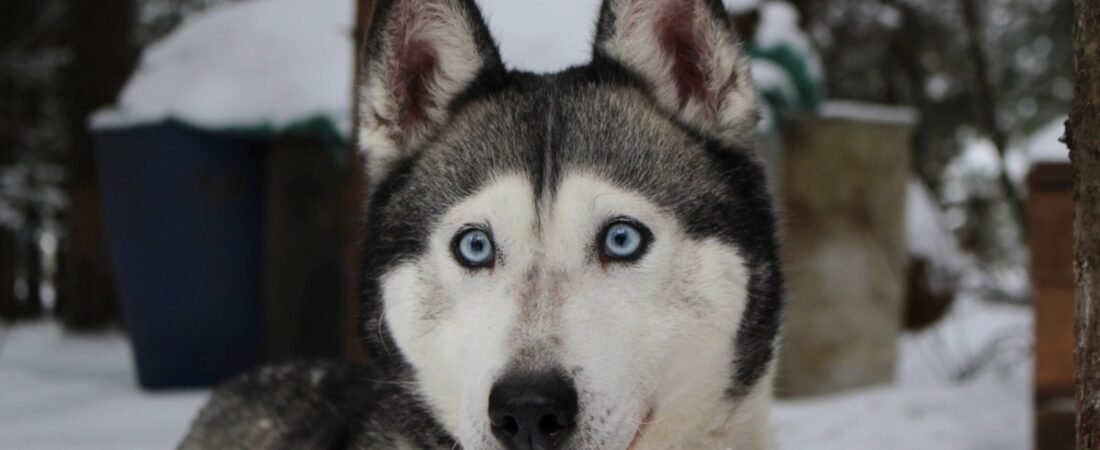
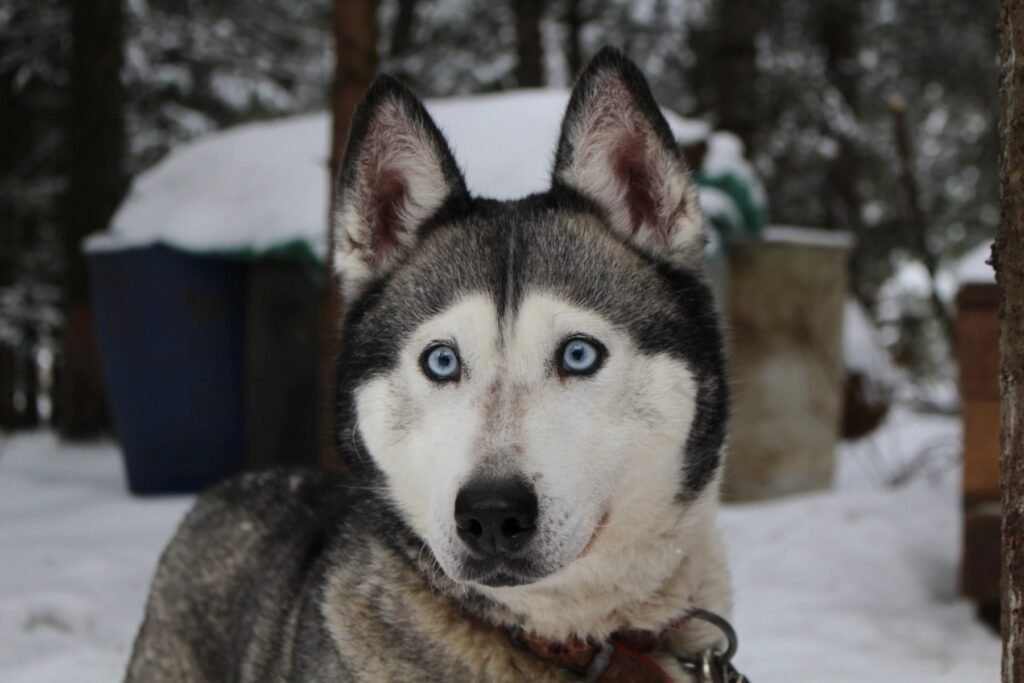
Few dogs stop people on the street quite like a Siberian Husky. The wolfish face, the mask-like markings, and those eyes, sometimes ice blue, sometimes brown, sometimes one of each. Then they open their mouth, and instead of a bark, out comes a long, wavering “awoo” that sounds a lot like they’re arguing with you.
Huskies were made for a world of snow, distance, and teamwork. Once you know where they come from, almost everything about them, from the howling to the escape attempts, starts to make sense.
From Siberia to Alaska
The AKC says the Chukchi people of far northern Siberia used these dogs in harnessed teams for transportation, supporting their hunting, fishing, and trapping. Wikipedia adds that genetic studies link the breed to a lineage more than 9,500 years old, and that Arctic breeds like the Husky carry a small amount of DNA, about 1 to 3%, from the now-extinct Taimyr wolf, which may have helped them adapt to the harsh climate.
Their move to North America came with a race. According to the AKC, a Russian fur trader named William Goosak brought Siberian sled dogs to Alaska in 1909 to compete in the All Alaska Sweepstakes. The next year, Fox Maule Ramsay imported 60 Siberians and entered three teams in the same 408-mile race. A team driven by John “Iron Man” Johnson won in 1910 with a time of 74 hours, 14 minutes, and 37 seconds.
Here’s the funny part. Wikipedia notes that some early settlers called these small newcomers “Siberian Rats.” They didn’t stay a joke for long.
The 1925 serum run to Nome
In the winter of 1925, the town of Nome, Alaska, faced a diphtheria outbreak, and the medicine it needed was far away. Wikipedia describes how 20 mushers and about 150 sled dogs carried the antitoxin serum 674 miles in five and a half days, in a relay that began on January 27 and reached Nome on February 2.
Two dogs became the faces of that story, though the way they were remembered is a little lopsided.
Balto ran the final leg into Nome with musher Gunnar Kaasen, arriving at 5:30 a.m. on February 2, and he became famous almost overnight. According to Wikipedia, a statue of Balto by sculptor Frederick Roth was unveiled in New York’s Central Park on December 15, 1925, the same year as the run.
But Balto and Kaasen covered 53 miles in total. Togo, the lead dog of Leonhard Seppala, led his team over 261 miles, the longest and most dangerous stretch, including a crossing of the perilous Norton Sound in blizzard conditions. The AKC notes that Seppala had already won three All Alaska Sweepstakes races, from 1915 to 1917, with his Siberians.
Wikipedia says the modern Iditarod race honors the serum run, and parts of the two routes overlap.
💡 Did you know? The AKC recognized the Siberian Husky in April 1930, just five years after the serum run.
Size and that remarkable coat
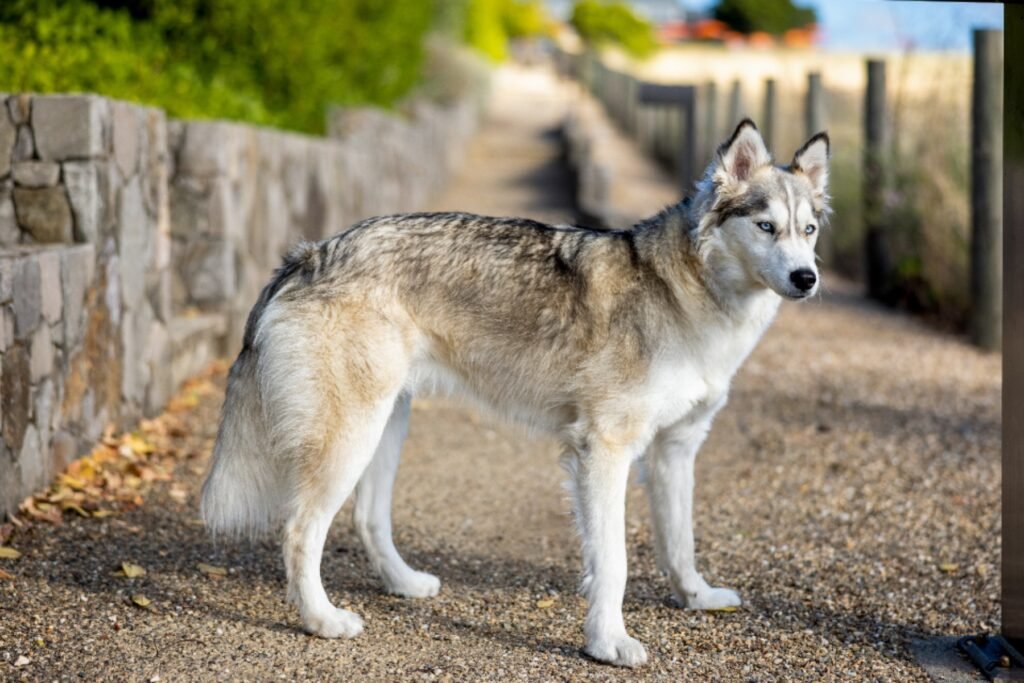
VCA lists the Siberian Husky at 20 to 24 inches tall and 35 to 60 pounds. That’s a medium-sized, athletic dog, and Wikipedia notes they’re much smaller than the Alaskan Malamute.
The coat is the real engineering marvel. It’s a thick double coat, and Wikipedia says it can withstand temperatures as low as −50 to −60 °C. That’s about −58 to −76 °F.
All that insulation comes at a price for owners: hair. VCA rates the Husky 5 out of 5 for shedding and calls it “above average.” Brushing once or twice a week usually works, VCA says, with more during shedding season.
The same coat that keeps them comfortable in a blizzard makes summer hard. VCA rates the breed 5 out of 5 for tolerating cold and only 1 out of 5 for warm weather, and notes that Huskies become overheated fairly easily.
Why can their eyes be blue, or two different colors?
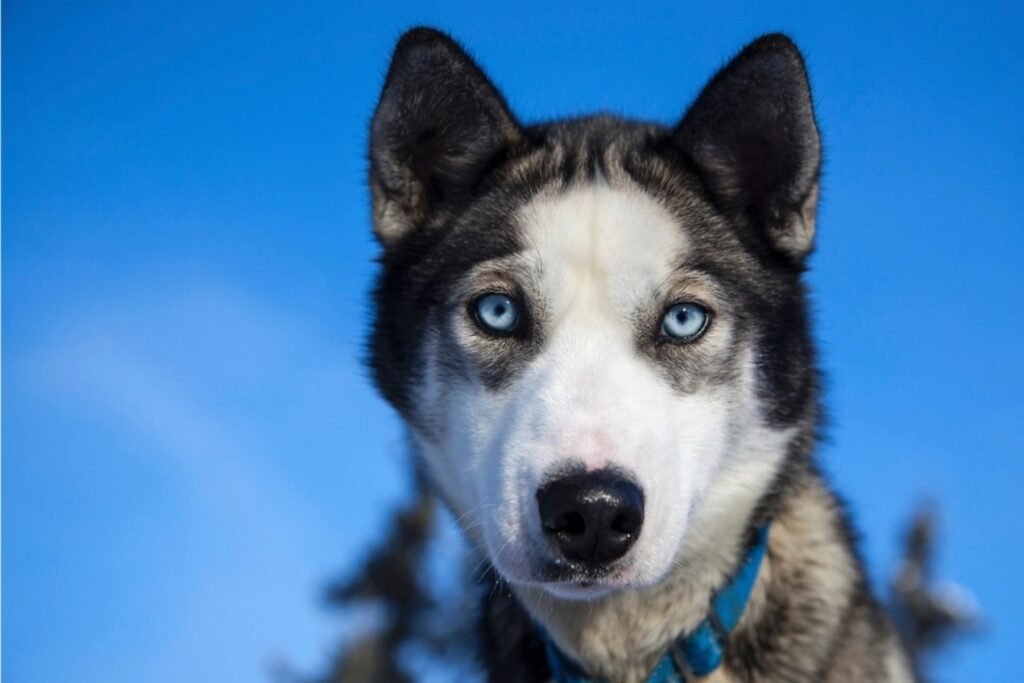
Wikipedia says Husky eyes can be brown, blue, or black, and that one of each, or eyes with two colors in one, are acceptable too.
For a long time, the reason behind those blue eyes wasn’t clear. Then in 2018, researchers at the dog DNA company Embark Veterinary published a study in PLOS Genetics that looked at the DNA of 6,070 dogs. They found that a duplication on canine chromosome 18, near a gene called ALX4, was strongly associated with blue eyes and with heterochromia (two different-colored eyes) in Siberian Huskies. Sci.News reported that one copy of the variant was enough to produce blue eyes or heterochromia, although some dogs who carried it still had brown eyes.
And here’s a lovely detail. As geneticist Kristopher Irizarry told National Geographic, “There’s no blue pigment. It’s about the way the light enters and exits the eye.” Blue eyes come from less pigment, not blue pigment.
Personality: friendly, independent, and very talkative
VCA describes Huskies as “exuberant and adventurous,” affectionate and demonstrative with their families. VCA also mentions their independent, stubborn side, and rates them just 1 out of 5 for ease of training. They’re smart. They just don’t always see the point of doing what you ask.
Then there’s the talking. Wikipedia says Huskies tend to howl instead of bark, and some are known to mimic sirens and even human speech. In an AKC article, Jan Reisen explains that the breed was developed as a sled dog meant to work in a large group, and that pack animals use vocal communication to stay in touch, sometimes over long distances. When a Husky “argues” with you about bedtime, that’s a very old team-communication habit coming out in your living room.
The Korean newspaper Electronic Times (전자신문) summed up the Husky personality nicely in 2016: they can seem cold and blunt, but they like people and are good at reading their owner’s mood.
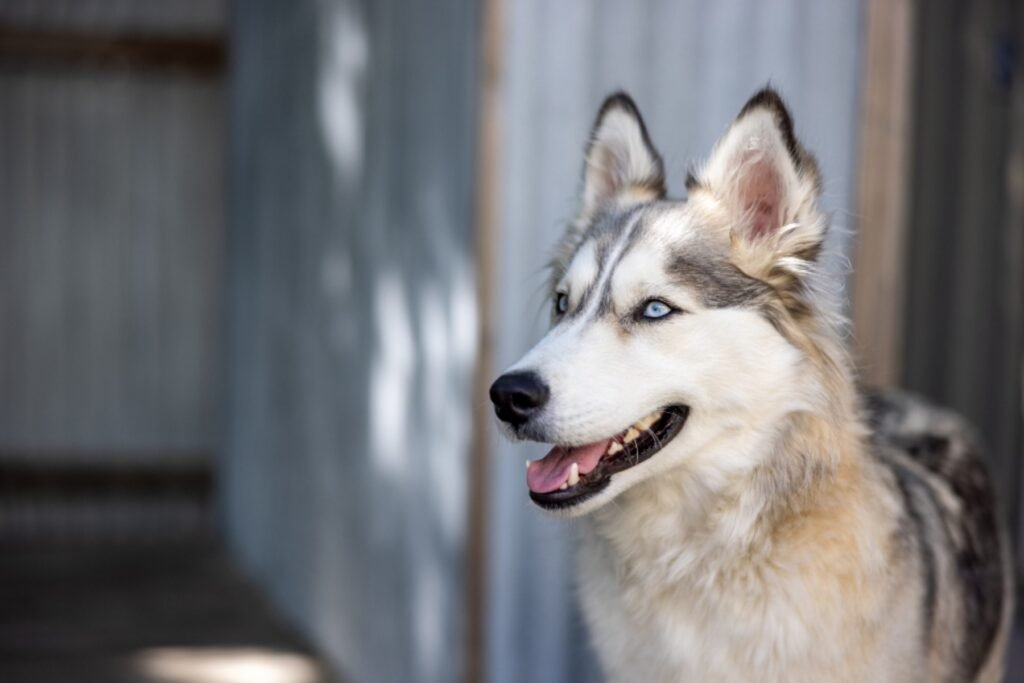
The great escape artist
Wikipedia describes Huskies as escape artists, and VCA warns that Huskies love to run and may roam for miles if they get the chance, and recommends a well-fenced yard. Without enough exercise, they can become overactive and destructive.
It helps to remember what they were bred for. A dog designed to run across Siberia isn’t thinking, “I should stay near the porch.” They’re thinking, “Look how far I could go.”
💡 Good to know: VCA says Huskies need a long walk, or preferably a long jog, every day. Secure fencing, a sturdy leash, and a well-fitted harness can save you a lot of worry.
Health: what to watch for
A 2022 Royal Veterinary College VetCompass study estimated a life expectancy at birth of 9.53 years for Siberian Huskies in the UK, compared with 11.2 years for dogs overall. VCA gives a typical range of 11 to 13 years, and a 2024 UK study cited by Wikipedia found 11.9 years. Numbers vary by study and population, so take them as a rough guide.
Here’s what’s worth knowing:
- Eye disease. The Siberian Husky Club of America lists three hereditary eye diseases in the breed: juvenile cataracts, which can appear as early as 3 months of age; progressive retinal atrophy, which can show up as early as 5 months in affected males; and corneal dystrophy, which seldom affects vision. In a 2021 study in Veterinary Ophthalmology, Huskies with cataracts were much younger than dogs of other breeds with cataracts (an average of 3.5 years versus 9.5 years), and most of their cataracts were hereditary rather than linked to diabetes.
- Zinc-responsive dermatosis. The Merck Veterinary Manual names Arctic breeds, including Siberian Huskies and Alaskan Malamutes, as prone to this skin condition. It causes scaling, crusting, and redness on the face, especially around the eyes and mouth. Merck notes it may come from a higher individual need for zinc or from a diet that’s short on it. Please don’t add zinc supplements on your own, though. Dosing belongs with your vet.
- Overheating. Cornell University’s Riney Canine Health Center lists thick-coated dogs among those at higher risk of heatstroke, and VCA notes Huskies overheat fairly easily.
⚠️ Please don’t wait. If your Husky is panting heavily, drooling, vomiting, weak, or collapses on a hot day, cool them with water and head to a vet immediately. Cornell explains that heatstroke happens when a dog’s body temperature rises to 105 °F or higher, and that it’s a medical emergency that can damage every organ system.
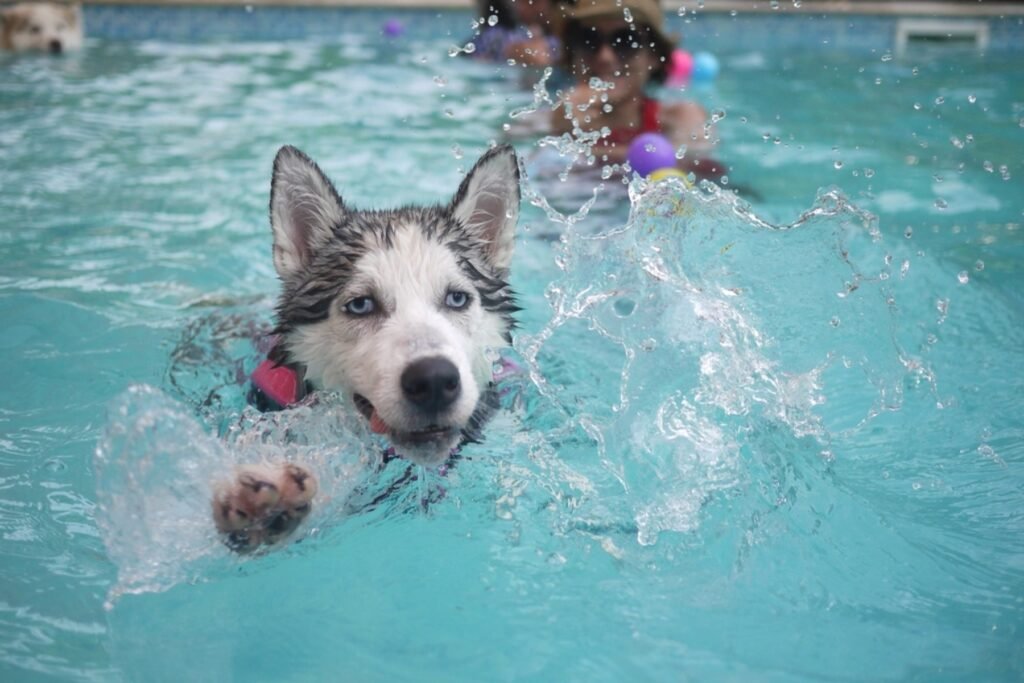
Fun facts and true stories 🐾
Huskies have sung at Carnegie Hall. Jan Reisen writes in the AKC article that composer Kirk Nurock created a “Sonata for Piano and Dog,” with a Siberian Husky “singing” along, and it was performed at Carnegie Hall and on David Letterman’s show.
A 1912 study looked into “talking” dogs. The same AKC article mentions a 1912 Johns Hopkins study which concluded that dog “speech” creates “the illusion in the hearer” of real words. Your Husky saying “I love you”? Pure, sweet imitation.
TV made Huskies too popular. Wikipedia notes that Game of Thrones and Twilight boosted demand for Huskies, and that shelters later saw many surrendered by owners who weren’t ready for them. It’s a good reminder to meet the real breed before falling for a screen version.
Korea has its own sled dog scene. In 2008, the Korean newspaper Maeil Shinmun reported that dog sledding began to spread in Korea after the first race organized by the Korea Dog Sports Federation (대한독스포츠연맹) in 2004, and that there were about 2,000 enthusiasts nationwide. The article noted that Huskies are well known for their speed, and that the 2008 Korean Sled Dog Championship was scheduled for February 15 to 17 at Mount Geumgang.
Korean TV knows the Husky chaos well. In 2016, SBS Biz reported on an episode of SBS’s Animal Farm (동물농장) featuring three mischievous Huskies who had turned a beauty salon upside down, and a behavior expert brought in to help.
Is a Siberian Husky right for you?
A Husky might be a great match if you love the outdoors, enjoy cold weather, and want a friendly, playful companion who’s happy to run with you. Wikipedia calls them friendly and gentle, and a well-exercised Husky is often a delightful one.
It could be a hard fit if you live somewhere hot and humid without air conditioning, want an off-leash dog, or need a quiet home. Expect a lot of fur, a lot of conversation, and some creative escape attempts. Good fencing, daily exercise, regular eye checks, and a vet who knows the breed go a long way.
Angel Jake Note 🐾
The serum run is the part of the Husky story I’d want every owner to know. Dogs ran through blizzards for a town full of strangers, and the longest, hardest stretch was led by a dog who never got Balto’s fame: Togo.
Living with one? Give them a chance to run, keep them cool in summer, and try to answer when they talk to you. They come from a long line of dogs who worked as a team, and to them, you’re part of the team now.
Medical Disclaimer
I’m not a vet, and nothing here replaces a real exam. If something about your dog feels off, please trust that feeling and call your veterinarian.
Sources
- American Kennel Club: Siberian Husky History: From Arctic Protector to Active Companion
- American Kennel Club: Can Huskies Talk and What Are They Saying?
- Wikipedia: Siberian Husky
- Wikipedia: 1925 serum run to Nome
- VCA Animal Hospitals: Siberian Husky
- Merck Veterinary Manual: Miscellaneous Systemic Dermatoses in Animals
- Siberian Husky Club of America: Genetic Defects of the Eye
- Uhl et al. (2021): Cataracts and phacoemulsification in the Siberian Husky
- Teng et al. (2022): Life tables of annual life expectancy and mortality for companion dogs in the United Kingdom
- Cornell University College of Veterinary Medicine: Heatstroke: A Medical Emergency
- Sci.News: Extra DNA Produces Blue Eyes in Huskies
- National Geographic: Researchers find clues to what causes blue eyes in Siberian huskies
- 매일신문: ‘주말마다 雪레요’ 개썰매 타는 사람들
- SBS Biz: 시베리안 허스키 성격, 얌전하게 고치고 싶다면?
- 전자신문 (Electronic Times): 강아지 입양 고려할 5가지, 악마견 비글과 시베리안 허스키의 성격은?