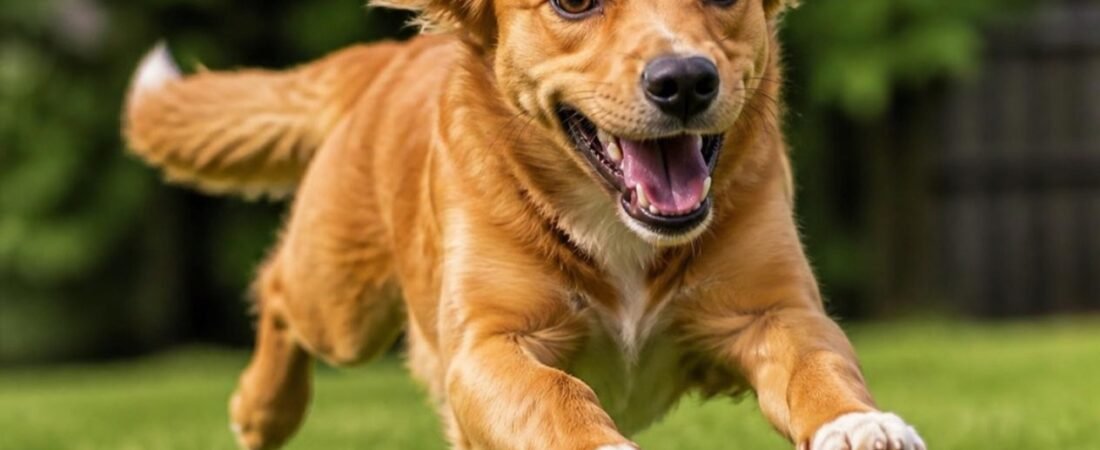
One minute your dog is calm. The next, they’re tearing around the living room like they’ve been launched out of a cannon, ears back, tail tucked, making tight turns around the couch. And then, just as suddenly, they flop down and act like nothing happened.
If you’ve ever laughed out loud at this (or grabbed your coffee cup just in time), you’ve seen the zoomies. And it turns out there’s a lot more going on than pure silliness.
The zoomies have an official name
Scientists and vets have a surprisingly serious name for this very unserious behavior: Frenetic Random Activity Periods, or FRAPs.
Cornell University’s College of Veterinary Medicine describes it like this: dogs get a wild look in their eyes, tuck their rear end, and run in uncontrolled laps around their environment. Episodes usually last anywhere from a few seconds to a few minutes and end as abruptly as they began.
And dogs aren’t the only ones who do it. FRAPs have been described in cats, rabbits, ferrets, pigs, and even elephants. So if your dog zooms, they’re in good company.
Why dogs get the zoomies
Dr. Pamela Perry, a behavior specialist at Cornell, explains that zoomies “appear to be a way to release pent-up energy, or perhaps, to alleviate stress.” In other words, it’s a bit like your dog hitting a reset button.
Some moments seem to set them off more than others. Here’s what vets and behaviorists see most often, and the likely why behind each one.
After a bath
This is the classic one. PetMD, in an article reviewed by veterinary behaviorist Dr. Wailani Sung, explains that baths can feel uncomfortable, and they leave dogs smelling like shampoo instead of like themselves. A burst of running, rolling, and rubbing on everything helps them dry off and bring back familiar scents. That’s also why so many dogs head straight for the carpet, the couch, or the grass after a bath.
After pooping
Yes, really. Many dogs sprint off after doing their business. PetMD describes it as a joyful burst of energy that may come from the feeling of relief. Some people also think it might be a leftover instinct to move away from the spot, but that idea isn’t proven.
In the evening
Lots of dogs get their zoomies at night. Dogs are often more active around dusk, and this is also when people come home and dinner happens. All that excitement arriving at once can spill over into a few wild laps.
When you come home, or after time in the crate
Being reunited with their favorite people or finally being let out after quiet time is a big emotional moment. Cornell lists an owner returning home and exciting events among the common triggers.
Puppies and young dogs
Cornell notes zoomies are most common in puppies and young dogs, though many dogs keep doing them their whole lives. Puppies have, as PetMD puts it, “a seemingly bottomless well of energy.”
A few little-known zoomie facts
💡 Did you know? The tucked tail doesn’t mean fear here. A tucked rear end during zoomies can look worrying, but Cornell says that during happy zoomies, dogs often run with a tucked tail as if they’re playing with another dog, along with loose, wiggly body language and their tongue out.
Zoomies can be contagious. Ethologist Marc Bekoff, a professor emeritus at the University of Colorado Boulder, notes that watching one dog zoom often gets other dogs going too. That’s why dog parks can suddenly turn into a racetrack.
Dogs are surprisingly good at not crashing. Bekoff also points out that zooming dogs usually show impressive awareness of where things are and tend to avoid running into objects, other dogs, and people.
Are zoomies safe?
In most cases, yes. Zoomies are normal, healthy behavior. Bekoff’s advice is to let dogs enjoy them as long as they won’t hurt themselves or anyone else and it’s happening in a safe space.
The main risks come from the environment, not the zoomies themselves. Cornell recommends keeping zooming dogs away from:
- stairs
- slippery floors
- furniture and other obstacles
- roads
Grass is the best surface for zooming. Hard floors, ice, gravel, and loose sand can lead to slips and injuries. If your dog tends to zoom indoors, a few rugs on slick floors can make a big difference, and it’s worth moving anything breakable off low tables.
💡 Good to know: And if your dog zooms in an unfenced area, please don’t chase them. Many dogs think it’s a game and will run even farther. Calling them in a happy voice or running the other way often works better.
When zoomies might mean something else
Most of the time, zoomies are pure joy. But context matters.
PetMD notes that if zoomies happen during stressful moments, like nail trims or vet visits, they may be a sign of stress or anxiety rather than happiness. Cornell also recommends contacting your vet if your dog seems to be in pain, frightened, or anxious during these episodes.
It’s also worth calling your vet if the zoomies seem to come out of nowhere in an older dog, or if they come with things like scratching at the rear end, limping, confusion, or seeming unable to settle. Sometimes what looks like zoomies can be a dog trying to get away from discomfort.
Should you try to stop them?
Usually, no. If your dog is safe, zoomies are a healthy way to burn off energy and let off steam.
If they happen a lot, especially indoors at night, it can help to make sure your dog is getting enough exercise and mental stimulation during the day. Long sniffy walks, fetch, puzzle feeders, and short training games can all take the edge off without taking away the fun.
Angel Jake Note 🐾
There’s something about the zoomies that makes almost everyone smile. Maybe it’s because they’re such a pure, unfiltered burst of joy. No reason, no plan, just a dog feeling so good they have to run.
I love that science has a serious name for it, and I love even more that the experts mostly agree: let them enjoy it. Just clear the path, keep them safe, and maybe keep your coffee somewhere high.
Those wild little laps are one of the happiest things our dogs do. It’s okay to just stop and enjoy the show.
Sources
- Cornell University College of Veterinary Medicine: What are zoomies?
- PetMD: Why Do Dogs Get the Zoomies?
- Psychology Today (Marc Bekoff): It’s OK That Dogs Engage in Zoomies and Enjoy FRAPs
- Wikipedia: Frenetic random activity periods
Related Reading
- How to Tell If Your Dog Is Stressed
- Why Does My Dog Kick the Grass After Pooping?
- Why Is My Dog Scooting Their Butt on the Floor?
Medical Disclaimer
I’m not a vet, and nothing here replaces a real exam. If something about your dog feels off, please trust that feeling and call your veterinarian.