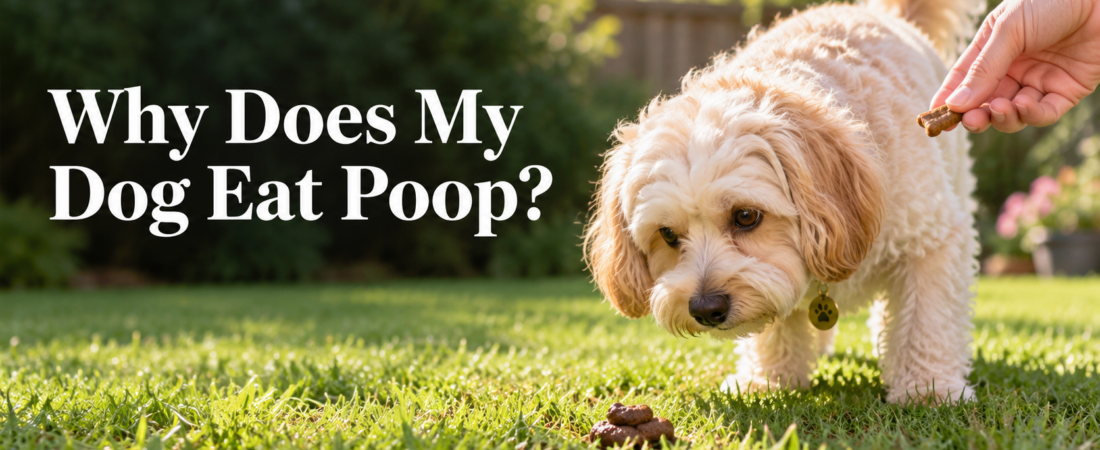
Okay, let’s just say it. There are very few things more horrifying than watching your dog happily eat poop… and then trot over to give you a kiss.
If this is happening in your house, please know you’re not alone, and you’re not a bad dog parent. It even has a real name — coprophagia — and researchers have actually studied it. The good news is that in most dogs, it doesn’t mean something is seriously wrong. The less fun news is that it can be a hard habit to break.
How common is it, really?
More common than most of us would guess. A study led by Dr. Benjamin Hart at UC Davis surveyed dog owners and found that about 1 in 4 dogs had been seen eating poop at least once. About 16% did it often enough to be called serious poop eaters, meaning they’d been caught at least five times.
The same research found some patterns I found kind of fascinating. Most of these dogs went for fresh stool, usually no more than a day or two old. Most preferred other dogs‘ poop over their own. It happened more in homes with several dogs, and dogs described as greedy eaters were more likely to do it. Interestingly, it didn’t seem to be linked to what the dogs were fed or how old they were.
So… why?
Every dog is a little different, but a few reasons come up again and again.
💡 Did you know? One is instinct. Dr. Hart’s theory is that it goes all the way back to dogs’ wild ancestors. Many intestinal parasites don’t become infective until a few days after they’re passed, so eating fresh stool near the den may have been a way to keep the area clean and protect the pack. That would explain why so many dogs only go for the fresh stuff.
Mothers and puppies are part of it too. Mother dogs naturally clean up after their puppies, and that includes their waste. Puppies, meanwhile, explore the whole world with their mouths — poop included. A lot of them grow out of it.
Sometimes it’s about feelings. VCA Animal Hospitals notes that some dogs do it when they’re bored or anxious, or because they’ve learned it gets a big reaction from us.
It can also be a leftover from housetraining. Dogs who were scolded for accidents may start “cleaning up the evidence.” From their point of view, poop means trouble, so making it disappear makes sense. That one breaks my heart a little.
And then there’s the litter box. If you have a cat, you probably already know. A lot of dogs find cat poop impossible to resist.
When it might be a health thing
If your dog has never done this before and suddenly starts, especially as an adult, it’s worth a chat with your vet.
The American Kennel Club lists several medical issues worth ruling out, because they can increase appetite or affect digestion: parasites, malabsorption problems, diabetes, Cushing’s disease, thyroid disease, a diet that isn’t meeting their needs, and some medications like steroids.
I’d also call your vet if the poop eating comes along with other changes — weight loss, vomiting, diarrhea, a big shift in appetite, or your dog just seeming low on energy.
Even when nothing is medically wrong, it’s not totally risk-free. Stool, especially from other animals, can spread parasites and other infections. That’s one more reason to keep up with regular parasite prevention and fecal checks.
What actually helps
Here’s the part a lot of people don’t want to hear. In the UC Davis research, owners reported on 11 different commercial products — mostly tablets and powders meant to make poop taste bad. None of them worked well. The best one only had about a 2% success rate.
So most veterinary advice comes back to something simple: don’t give them the chance.
Pick up right away, both in the yard and on walks. Keep your dog on a leash or close by in places where other dogs’ poop might be around. Work on “leave it” and a solid recall, and reward your dog for coming to you right after they go — this works best when you’re close enough to step in.
If there’s a cat in the house, move the litter box somewhere your dog can’t reach, or try a covered box or a baby gate. And if boredom might be part of it, more walks, play, and puzzle feeders can really help.
💡 Good to know: Please don’t punish them. Yelling can make some dogs more anxious and even more likely to eat the evidence. Calmly redirecting them works so much better.
If you still want to try a deterrent product, ask your vet first. The AKC also points out that if you have more than one pet, every animal whose poop is being eaten would need to get it for it to have any chance of working.
Angel Jake Note 🐾
I think every dog parent has lived this exact sequence: pure disgust, then panic, then “WHY?!”
But what I find strangely sweet about the research is that this gross little habit might come from something protective. Somewhere deep down, some dogs may be trying to keep their space clean and their family safe, in the only way their ancestors knew how.
That doesn’t mean you have to be okay with it. But it helps to remember they’re not doing it to upset you. They’re just being dogs. Sometimes a little too much.
Veterinary Sources
I used information from the American Kennel Club, VCA Animal Hospitals, and Dr. Benjamin Hart’s research at UC Davis, published in Veterinary Medicine and Science in 2018 (“The paradox of canine conspecific coprophagy”).
Related Reading
- Why Does My Dog Eat Grass?
- Why Does My Dog Kick the Grass After Pooping?
- Dog Not Eating? When to Worry and When to Call the Vet
Medical Disclaimer
I’m not a vet, and nothing here replaces a real exam. If something about your dog feels off, please trust that feeling and call your veterinarian.