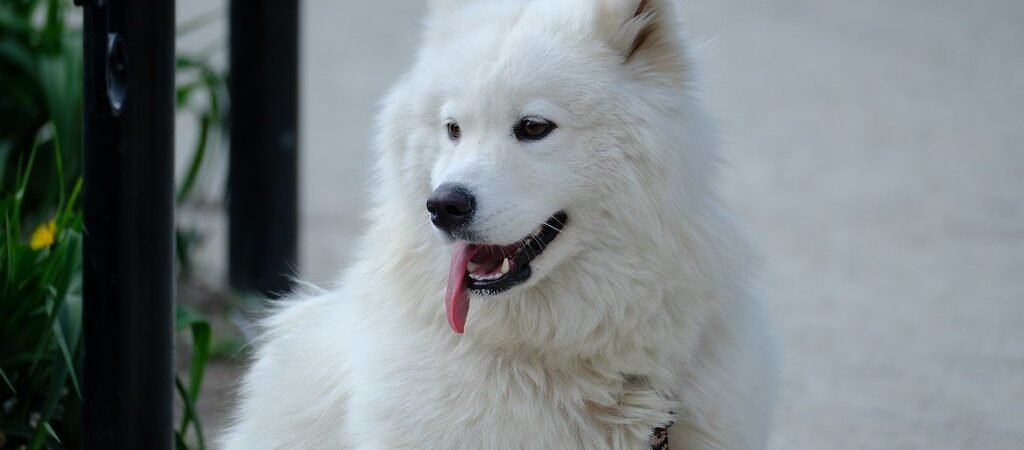
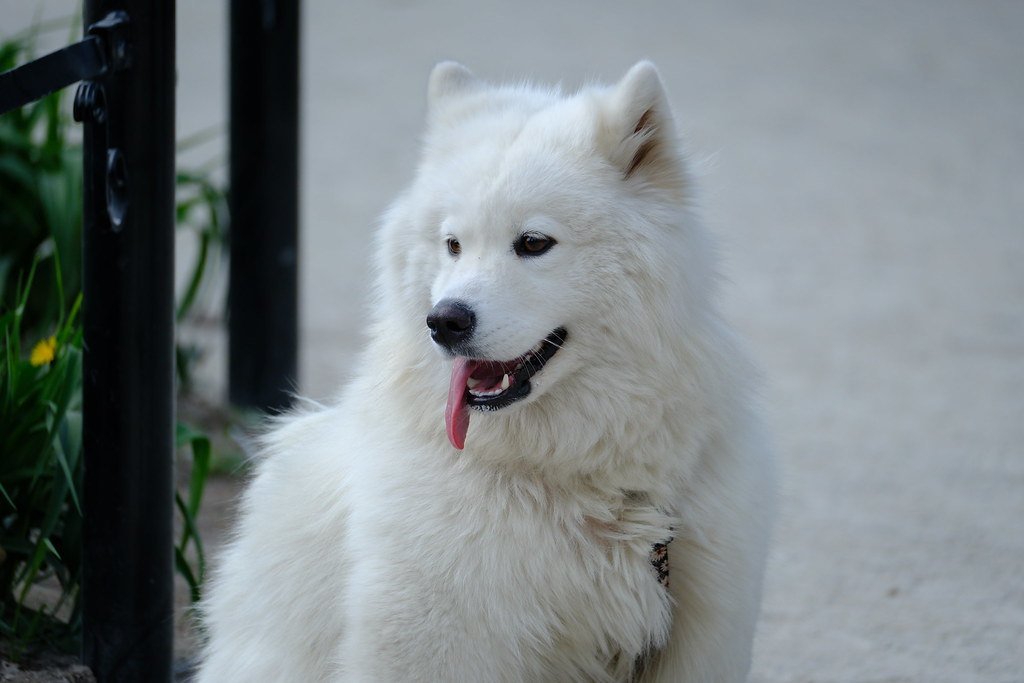
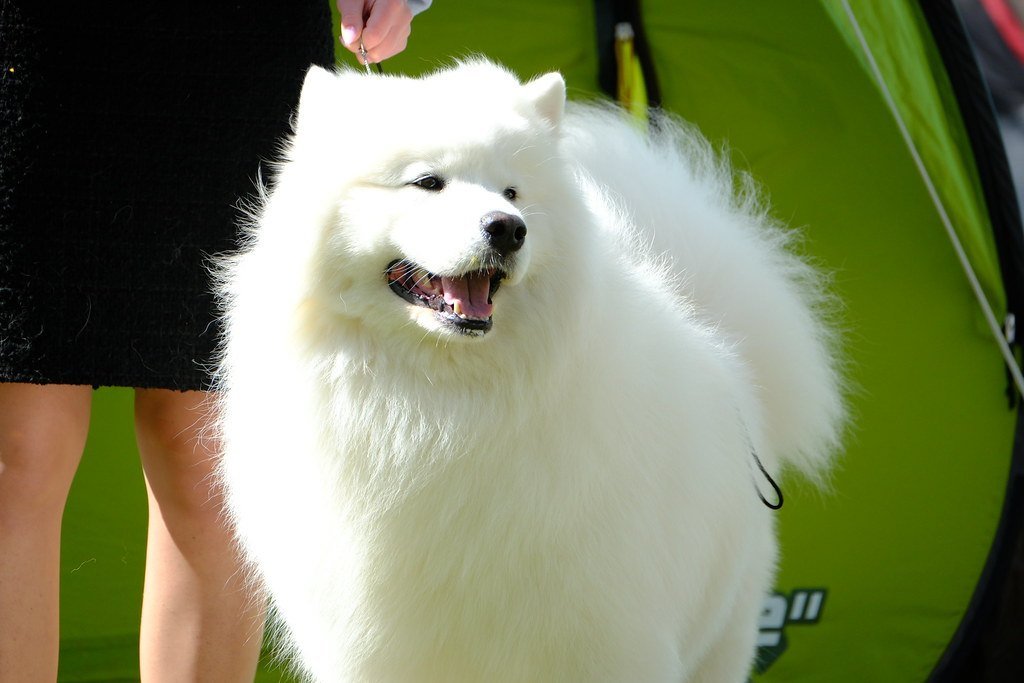
Some dogs look happy. Samoyeds look like they’ve just heard the best news of their lives, every single day. That bright white coat, the dark almond eyes, the corners of the mouth turned up into a grin. It’s hard to walk past one without smiling back.
But behind that cloud of fur is a working dog with a remarkable past. Samoyeds lived inside tents on the Siberian tundra, pulled sleds toward both poles, and once helped rescue 226 stranded passengers. They also carry a few health risks that every Sammy family deserves to know about, so I’ve gathered the history, the science, and the stories in one place.
Where do Samoyeds come from?
The breed is named after the people who kept them. The AKC describes the Samoyed as one of the world’s most ancient breeds, with a history stretching back more than 5,000 years. In northern Eurasia, the Nenets people, who speak a Samoyedic language, herded and bred reindeer on the Russian tundra, and their multi-purpose working dogs were named after them. Wikipedia notes that the Nenets were once pejoratively called “Samoyeds,” and that the breed descends from the Nenets Herding Laika, a reindeer-herding spitz.
These dogs did a bit of everything. The Samoyed Club of America says they were used to hunt, herd reindeer, and haul sledges, and describes the tribespeople as peaceful nomads who treated their dogs as family. That last part was literal. According to the AKC, Samoyeds slept with their owners in the family’s tent, the choom, and helped keep everyone warm on freezing Arctic nights. The AKC calls it “the original three-dog night!”
Their genes are old, too. The AKC lists the Samoyed among the 14 ancient breeds most genetically similar to the wolf, and Wikipedia describes DNA evidence placing them as a basal breed that predates the modern breeds of the 19th century.
To the ends of the earth
When polar explorers needed tough dogs, they went looking for Samoyeds. Mental Floss says Fridtjof Nansen picked them in 1893 for their endurance and trainability. Wikipedia reports that for his Fram expedition (1893–1896), 33 dogs were bought from the Nenets, and Nansen’s notes called them “strong, tough and excellent at pulling sleds.” It’s a hard story, though. Of the 28 dogs that went toward the North Pole, none survived.
The southern story starts with Carsten Borchgrevink, who, according to Wikipedia, brought 90 Samoyeds on his Southern Cross Expedition (1898–1900). Louis Bernacchi, a member of that expedition, described them as “the first dogs ever introduced in Antarctic exploration.” A few of his dogs stayed behind in New Zealand, and Wikipedia says Shackleton later bought nine of them. Robert Falcon Scott took twenty Samoyeds south in 1902.
The most famous finish line came in 1911. The AKC says Roald Amundsen reached the South Pole at least a sled-length behind his Samoyed lead dog, and Mental Floss names that lead dog: Etah.
💡 Did you know? One of Borchgrevink’s dogs, known as “Antarctic Buck,” ended up living for years in a Sydney zoo. According to the AKC, Clara and Ernest Kilburn Scott bought Buck in 1909 and brought him to England, where he joined the dogs that helped shape the breed.
How the Samoyed came to the West
The Kilburn Scotts are the reason the breed exists as we know it. The AKC says Ernest Kilburn Scott joined a Royal Zoological Society expedition to Archangel, Russia, in 1889 and came home with a white puppy he named Sabarka. Wikipedia says he is widely considered the founder of the breed. In 1899, the couple bought eight more dogs from the explorer Frederick Jackson, and they founded the Samoyede Club in 1909. By the time England’s Kennel Club recognized the breed in 1912, the AKC says they had about 50 Samoyeds.
Across the Atlantic, the first Samoyed registered with the AKC was Moustan of Argentau, in 1906. By 1920, just 40 had been registered.
Size, coat, and that famous smile
The Samoyed Club of America lists males at 21 to 23½ inches at the withers and about 45 to 65 pounds, and females at 19 to 21 inches and about 35 to 50 pounds. Purina calls them a medium-sized, high-energy breed.
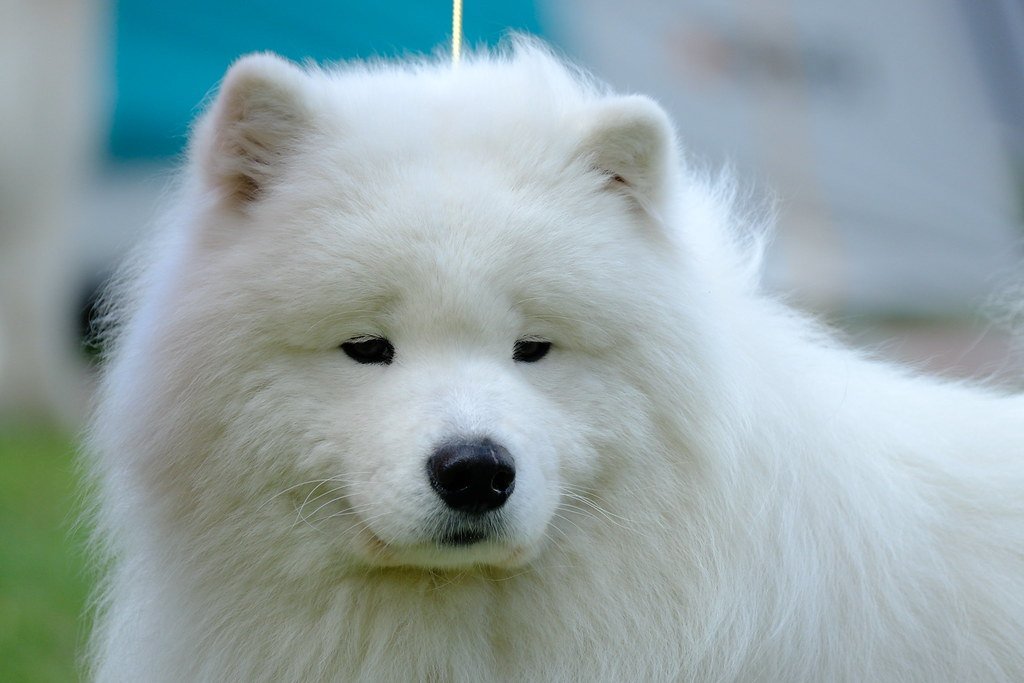
The coat is a double layer. Wikipedia describes long, coarse, straight guard hairs with a hint of silver over a dense, soft, short undercoat, and the breed standard says the coat should “glisten with a silver sheen.” The AKC adds that a proper stand-off coat earns Samoyeds the nickname “Teflon” dogs, because dirt doesn’t stick to it very well.
So why white? Honestly, it comes down mostly to people. The AKC says the dogs’ original name, Bjelkier, meant “white [dog] that breeds white.” Dog historian David Hancock writes that the Samoyed people favored all-white dogs, unlike their neighbors in Kamchatka, who preferred black and white ones. Wikipedia notes that early imports to England came in many colors, but people believed the “true Samoyeds” from Siberia were mostly white. Today, the Samoyed Club of America says any color other than white, cream, or biscuit is a disqualification under the AKC standard.
Then there’s the smile. Those upturned lips aren’t just cute. The AKC explains that the “Sammie smile” helps keep drool from freezing into icicles in the cold. A happy face with a practical job? That feels very Samoyed.
All that fur comes with a cost, of course. Purina recommends brushing daily, and says the coat sheds year-round and even more in spring and fall. The undercoat “blows” out in a big seasonal shed, which Wikipedia says happens once or twice a year. And no, they’re not hypoallergenic. The AKC says no breed truly is, and suggests people with allergies spend time around Samoyeds before bringing one home.
Personality: why they need you close
The Samoyed Club of America describes the breed as “exceptionally social, loyal and vocal.” Purina calls them kind, gentle, and devoted, and says they keep their puppy-like playfulness throughout life.
There’s a reason they’re such people dogs. The AKC points out that Samoyeds were historically kept inside their nomadic owners’ homes, and they still don’t do well when they’re kept apart from the family. Wikipedia adds that a bored Samoyed may become destructive or start digging. Think about it from the dog’s side: thousands of years of sleeping in the family tent, and suddenly they’re alone in an empty apartment all day. No wonder some of them protest.
They’re talkers, too. The club writes that in a Samoyed’s howl, “a distant – but not too distant – echo of the wolf can still be heard,” and Mental Floss says many will happily join in when you sing. What they won’t do is guard the house very well. Wikipedia describes them as friendly and poor guard dogs, though they’ll bark and can be watchful.
They’re athletes at heart. The AKC says Samoyeds have earned top agility titles, beaten traditional herding breeds in herding trials, and excel at weight pulling and therapy work. A Samoyed with a job is usually a happier Samoyed.
Samoyeds and a Korean summer
A dog built for Siberia has a hard time in a Korean August. In a July 2025 article, the Korean outlet Animal Today (애니멀투데이) noted that Samoyeds are adapted to Siberian cold down to about -40°C and struggle in Korean summer heat. The article called indoor air conditioning essential and recommended limiting walks to early morning or late evening, when the sun isn’t out.
💡 Good to know: It’s tempting to shave a Samoyed in summer, but Animal Today says shaving isn’t recommended because it can lead to skin burns and coat damage. Regular brushing helps release heat trapped in the double coat instead.
Health: what the research shows
Purina lists a lifespan of 12 to 14 years, and Wikipedia cites a 2024 UK study that found a median of 13.1 years for Samoyeds, slightly above the 12.7 years for purebreds overall. That’s good news. Still, there are a few conditions every owner should understand.
Samoyed hereditary glomerulopathy. This inherited kidney disease is so tied to the breed that it carries the Samoyed name. Wikipedia explains that it’s caused by a mutation in the COL4A5 gene on the X chromosome, so males are affected far more severely than females. Signs such as protein in the urine can appear around 3 to 4 months of age, and affected males typically show weight loss and wasting. Sadly, affected males are expected to die at roughly 8 to 15 months, while carrier females usually progress much more slowly. Medications such as cyclosporine A and ACE inhibitors can slow the disease, but they can’t cure it. Researchers also study it as a model for Alport syndrome in humans.
Diabetes. This one is easy to miss. A 2025 UK study of 1,072 diabetic dogs, co-authored by Royal Veterinary College researchers and using the RVC’s VetCompass records for comparison, found that Samoyeds had about 23.5 times the odds of adult-onset diabetes compared with crossbreeds. The 17 Samoyeds in that group were diagnosed at an average age of about 8.5 years. Wikipedia describes the breed’s diabetes as similar to human Type 1.
Hip dysplasia. The Samoyed Club of America explains that the hip joint forms abnormally, which leads to wear and painful arthritis, and that keeping a dog at a healthy weight reduces stress on the joint. Here’s some hopeful news: the club reports that breeders’ X-ray screening cut hip dysplasia in screened Samoyeds from 13.21% in the 1980s to 7.22% in 2005–2010.
Eye conditions. The most common form of progressive retinal atrophy (PRA) in Samoyeds is X-linked, according to the club, and it’s seen in 1 to 2% of Samoyeds examined. It usually starts with night blindness and can progress to full blindness, with no treatment available. The club also lists glaucoma, cataracts, and retinal dysplasia/oculoskeletal dysplasia (RD/OSD), a form that affects both the eyes and the development of the front legs. Genetic tests exist for X-linked PRA and RD/OSD, and the AKC notes that the Samoyed Club of America asks breeders to screen for eyes, hips, both DNA tests, and the heart.
⚠️ Please don’t wait if something seems off. If a young male Samoyed puppy is losing weight or seems to be wasting away, ask your vet about a kidney check. And if an eye looks red, waters a lot, or your dog is squinting or bothered by light, the Samoyed Club of America lists these as signs of glaucoma and says early diagnosis improves the outlook.
Fun facts and true stories 🐾
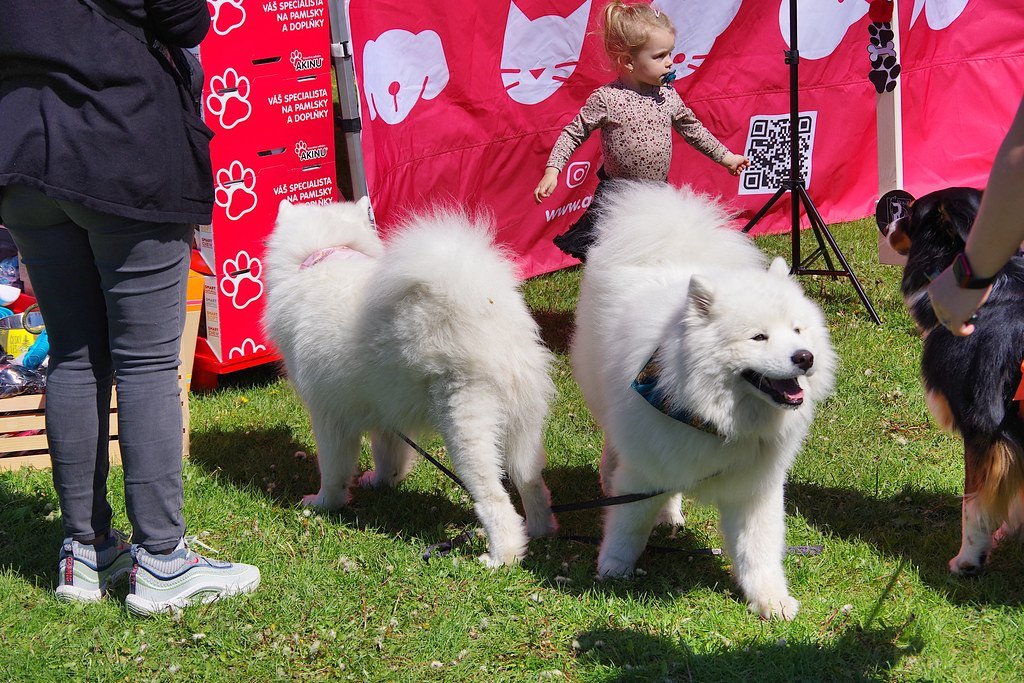
People knit with Samoyed fur. Wikipedia says shed Samoyed fur is sometimes used as a wool alternative, with a texture similar to angora, and Mental Floss calls the yarn warm and strong. The Samoyed Club of New Zealand recommends blending about 75% wool with 25% Samoyed fiber, and says that several World War II airmen shot down into the water survived partly thanks to a Samoyed jersey.
A Samoyed led a famous rescue. The AKC tells the story of Rex of White Way, nicknamed the “Blizzard King,” who led the 1952 rescue of 226 passengers trapped at Donner Pass. He took part in more than 30 rescue operations.
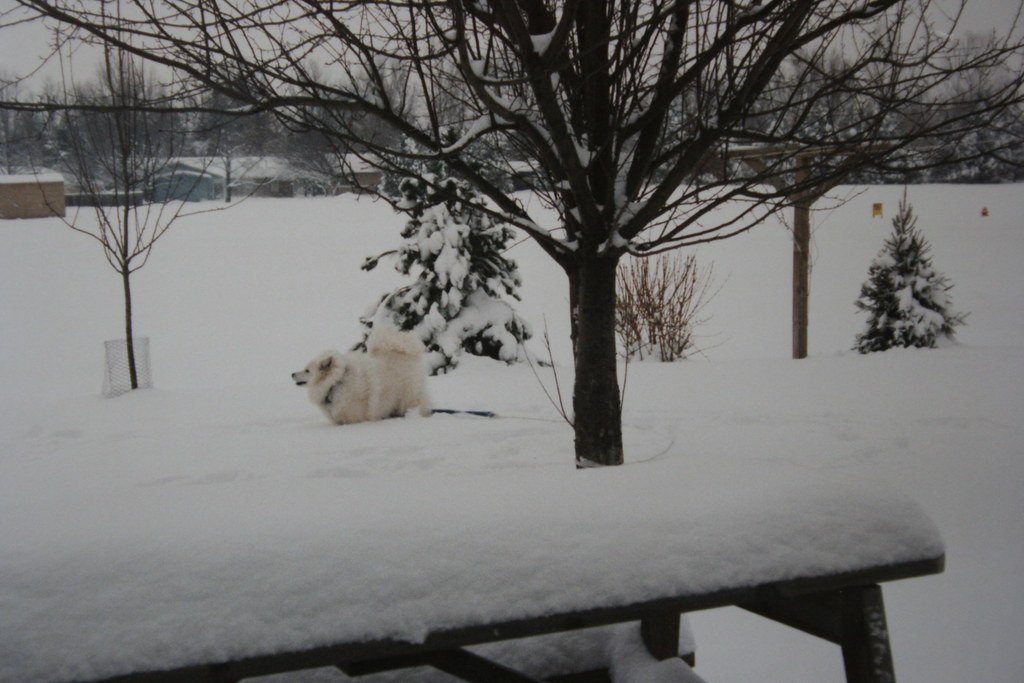
They didn’t need coats at minus 50. In the 2007 Norm Vaughn Serum Run, the AKC says an all-Samoyed team was the only team that didn’t need dog coats in temperatures that reached minus 50.
A queen kept them. According to Mental Floss, Queen Alexandra (Alexandra of Denmark) kept Samoyeds in the royal kennel, and a 1903 issue of Country Life described them as “alike fascinating in puppyhood and a noble dog when adult.”
Korea noticed that smile years ago. Back in November 2014, the Korean outlet The Fact (더팩트) reported growing interest in the breed among dog owners as more people learned about its personality. The story ran with a capture from SBS’s Animal Farm (동물농장), and its headline offered a tip for owners: Samoyeds are “weak in the heat.”
Is a Samoyed right for you?
A Samoyed could be a wonderful match if you want a cheerful, social, chatty companion who wants to be part of everything you do. They’re playful for life, friendly with people, and happiest with a job, whether that’s long walks, dog sports, or pulling a sled.
It’s worth pausing if you’re out of the house for long hours, live in a hot climate without dependable air conditioning, or aren’t ready for daily brushing and a living room full of white fluff a couple of times a year. If you do go ahead, choose a breeder who screens for hips, eyes, the heart, and the DNA tests the breed club recommends, and keep your Sammy lean.
Angel Jake Note 🐾
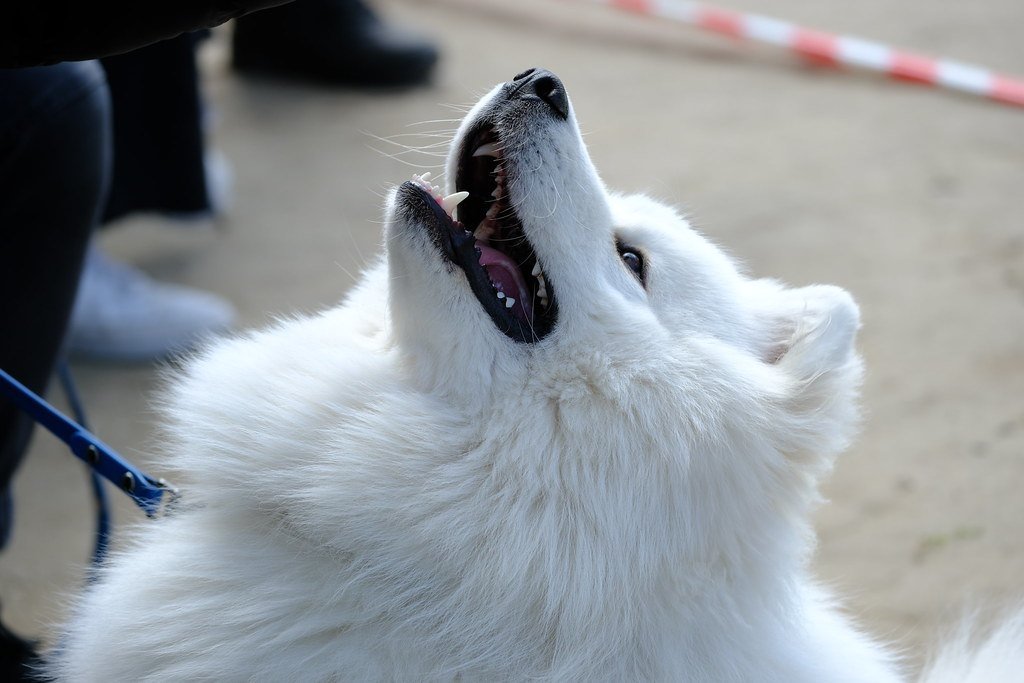
For thousands of years, Samoyeds slept beside their families and helped keep them warm. That instinct never left. The smile, the chatter, the need to be near you: all of it comes from a dog who was bred to be close.
So the kindest things you can give a Samoyed are simple ones: your company, a cool place in summer, a good brush, and a vet who knows the breed. They’ll give you that smile back every day.
Medical Disclaimer
I’m not a vet, and nothing here replaces a real exam. If something about your dog feels off, please trust that feeling and call your veterinarian.
Sources
- American Kennel Club: 10 Things You Probably Didn’t Know About the Smiling Samoyed
- American Kennel Club: Samoyed History: Arctic Working Sled Dogs
- Samoyed Club of America: The Samoyed
- Samoyed Club of America: Breed Origin and History
- Samoyed Club of America: Health Issue – Skeletal System
- Samoyed Club of America: Health Issue – Eyes
- Wikipedia: Samoyed dog
- Wikipedia: Samoyed hereditary glomerulopathy
- Purina: Samoyed
- Mental Floss: 10 Facts About the Samoyed
- David Hancock: Colour Prejudice; Whites Only for a Breed With Keen Discriminating Sight
- The Samoyed Club of New Zealand: Spinning
- Denyer et al. (2025): Epidemiology and clinical management of 1072 dogs with diabetes mellitus in a UK diabetes register
- 애니멀투데이: “지친다 지쳐” 한여름 더위가 야속한 ‘썰매개’
- 더팩트: 사모예드 주인을 위한 팁! ‘더위에는 약해요’