

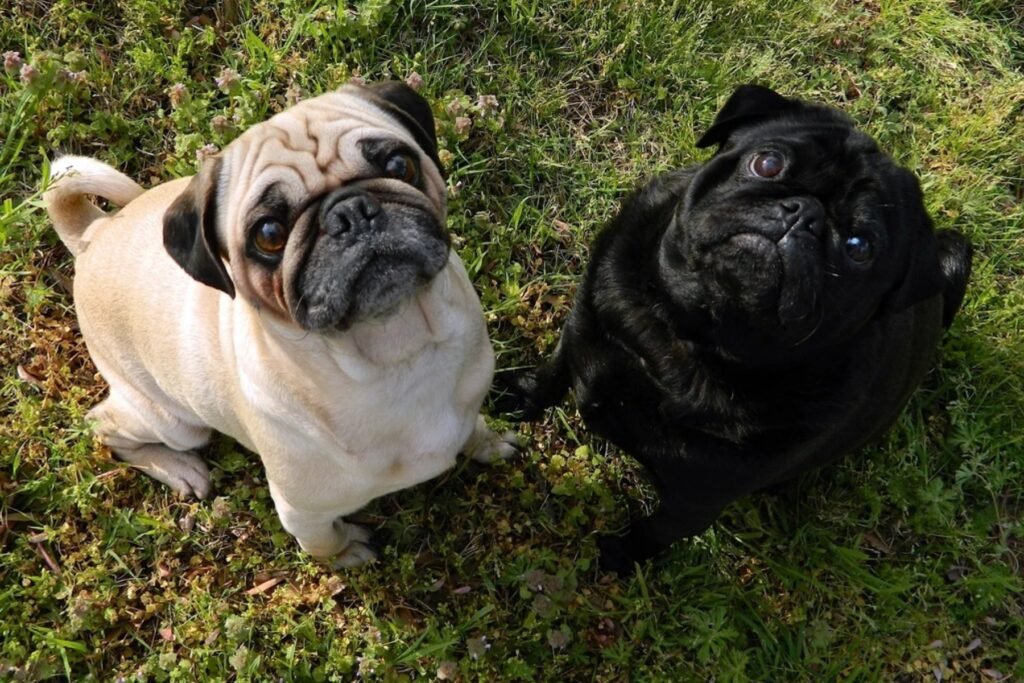
There’s something about a Pug’s face that makes people smile before they even realize it. The big dark eyes, the wrinkled forehead, the little curled tail, the snorts and snuffles. Pugs look like they’re always about to tell you a joke.
They’ve been making people happy for a very long time. Pugs were companions to Chinese emperors, mascots of a Dutch royal family, and the symbol of a secret society. Their history is full of surprises. So, honestly, is their health, and that’s the part every Pug lover deserves to understand.
An ancient dog from China
The AKC traces the Pug’s roots back to around 400 B.C. in China, which makes them one of the oldest dog breeds. They were bred as companions for the wealthy, and unlike many breeds, their job has never changed. The AKC puts it simply: they’ve performed just one very important job, keeping us company.
According to the AKC, Pugs were treated like royalty as companions to Chinese emperors and their families, and they also kept Tibetan Buddhist monks company in their monasteries. Exactly where the breed first came from, though, the AKC admits is still a mystery.
Even the wrinkles have a story. According to the AKC, Chinese breeders tried to create a pattern of wrinkles on the forehead that resembled the Chinese character for “prince.”
And here’s a surprise. Pugs and Bulldogs look like cousins, but the AKC says DNA testing has shown they aren’t actually related.
The Pug who saved a prince
From China, the AKC says, the Pug’s popularity spread to Japan and Russia and eventually to Europe. Once they arrived, one of them became a hero.
The AKC tells the story this way. In 1572, Spanish assassins tried to reach William, Prince of Orange, known as William the Silent. His Pug, Pompey, raised the alarm. He heard the assassins sneaking up to the prince’s tent and began barking, and Country Life likewise describes Pompey warning him of the Spanish attack. The story stuck, and the Pug became the official dog of the House of Orange.
The Dutch royal connection traveled to England too. Country Life says William III and Queen Mary brought Pugs to London in 1688, where they were at first called “Dutch mastiffs.”
💡 Did you know? According to the AKC, a secret society called the Order of the Pug was founded in 1740 and chose the Pug as its symbol because Pugs are loyal and trustworthy. New members reportedly had to wear a dog collar and scratch at the door to be let in.
Size and coat
The Pug Dog Club of America’s breed standard gives a desirable weight of 14 to 18 pounds for both males and females, and Hill’s lists a height of about 11 to 12 inches. The AKC standard accepts two colors, fawn or black, and the breed’s motto is “multum in parvo,” Latin for “much in little.”
Hill’s describes the coat as short but dense, and a double coat at that. A quick daily grooming, even a swipe with a hound mitt, usually does the job, along with a gentle wipe of the face with a damp cloth. Those facial wrinkles deserve attention too, and you’ll see why in the health section.

Personality: a born companion
The breed standard describes the Pug as “an even-tempered breed, exhibiting stability, playfulness, great charm, dignity, and an outgoing, loving disposition.” Hill’s adds that Pugs aren’t usually given to a lot of barking, digging, or chewing, tend to get along well with other dogs, and are sturdy enough for life with children.
Interestingly, the 2022 Royal Veterinary College study you’ll read about below found that Pugs had lower risk of aggression than other dogs. That fits the even-tempered, loving dog the breed standard describes, one who mostly wants to be near you.
Exercise needs are modest. Hill’s suggests around 20 minutes of daily activity, which helps a lot with weight control. Walks should be gentle, though, and timed carefully when it’s warm.
Why that flat face matters
The Pug’s short face has a name: brachycephalic. VCA explains that “brachy” means shortened and “cephalic” means head. The bones of the face are compressed, which gives that pushed-in look and affects how easily the dog can breathe.
That can lead to brachycephalic obstructive airway syndrome, or BOAS. VCA describes several problems that can come together: narrow nostrils (stenotic nares), an elongated soft palate that partly blocks the windpipe, everted laryngeal saccules, a narrow trachea, and, over time, laryngeal collapse. Affected dogs may breathe noisily, snort when excited, snore when asleep, tire easily, and struggle in the heat because they can’t pant effectively.
This matters because snoring and snorting can sound “normal” for a Pug. They’re common, but they can also be signs that a dog is working hard to breathe. VCA notes that surgery to widen the nostrils and shorten the soft palate tends to work best when it’s done early, before secondary damage develops, and that keeping a healthy weight helps.
Pugs and the heat
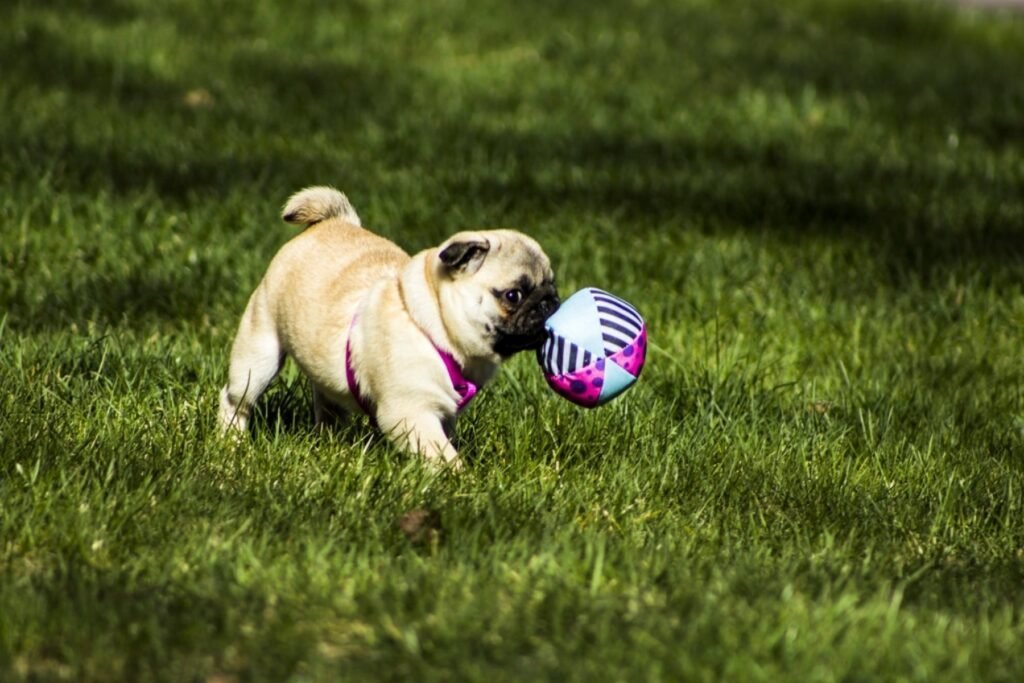
Dogs don’t sweat the way we do. Cornell University’s Riney Canine Health Center explains that dogs have sweat glands only on their paws and rely on panting to cool down, and it lists brachycephalic breeds like Pugs among the dogs at higher risk of heatstroke. Hill’s says Pugs don’t do well in hot, humid weather and must be watched carefully for heatstroke.
Korean vets warn about this too. In a 2024 column for the Korean newspaper Maeil Shinmun, veterinarian Park Soon-seok wrote that short-nosed breeds such as French Bulldogs and Pugs are extremely vulnerable to heat, and recommended summer walks early in the morning, before sunrise. He also suggested bringing ice water and a cooling vest.
💡 Good to know: Cornell lists the signs of heatstroke as heavy panting, drooling, vomiting, diarrhea, weakness, and collapse. For a Pug, it’s safest to avoid hard exercise in hot, humid weather, keep shade and water nearby, and never leave them in a car.
Health: what the research shows
Hill’s lists a lifespan of 12 to 15 years for Pugs and says many live to 14 or 15. But a 2022 Royal Veterinary College VetCompass study of UK dogs that died between 2016 and 2020 estimated a life expectancy at birth of 7.65 years for Pugs, compared with 11.2 years for dogs overall. Individual Pugs vary a lot, but it’s a number worth knowing.
That same year, the RVC published a large study, led by Dr. Dan O’Neill, comparing 4,308 Pugs with 21,835 other dogs in the UK. Pugs had 1.86 times the odds of being diagnosed with at least one disorder in a year. They had higher risk for 23 of 40 common conditions and lower risk for 7. In announcing the results, the RVC said Pugs can no longer be considered a typical dog from a health perspective. Some of the biggest differences:
- BOAS. About 54 times the risk compared with other dogs, and narrowed nostrils about 51 times the risk.
- Eye ulcers. About 13 times the risk. VCA notes that breeds with short muzzles and prominent eyes, such as Pugs, are especially prone to corneal ulcers.
- Skin fold infections. About 11 times the risk, which is why cleaning those wrinkles matters.
- Obesity. About 3.4 times the risk. VCA lists weight control as part of managing BOAS, so keeping a Pug lean really counts.
Pug dog encephalitis deserves its own mention. VCA describes meningoencephalitis of unknown origin, a group of inflammatory brain diseases caused by an abnormal immune response, and notes a documented genetic risk in Pugs. Signs can include seizures, tremors, blindness, a head tilt, or walking in circles. In a study of necrotising meningoencephalitis (NME) described by Vet Times, a third of genetically at-risk young Pugs had reproducible neurological abnormalities, compared with none of the low-risk dogs. Treatment involves immune-suppressing medication, and VCA says dogs whose MRI and spinal fluid results improve after three months of treatment typically have a good long-term outlook.
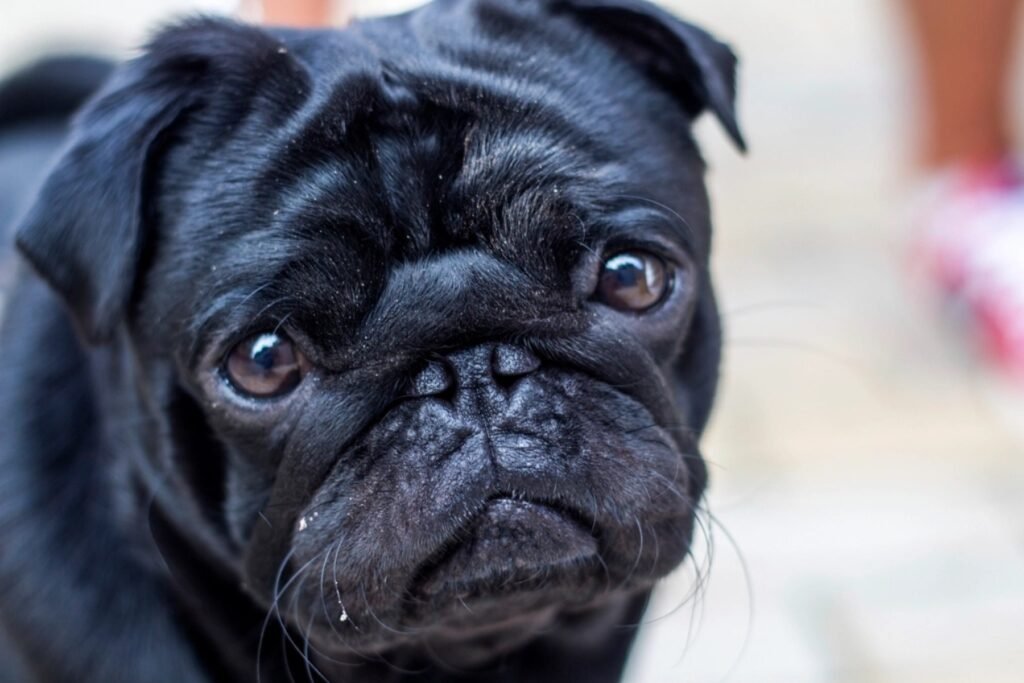
Those big, beautiful eyes are vulnerable in another way, too. An ophthalmology review from Indy Animal Eye Clinic notes that in flat-faced breeds with shallow eye sockets, even minimal trauma can push an eye out of its socket, which is called proptosis. It’s a true emergency.
⚠️ Please don’t wait. If your Pug is squinting, tearing, rubbing an eye, or has discharge, call your vet the same day, and if an eye ever bulges forward out of the socket, go to an emergency vet right away. VCA warns that very deep corneal ulcers may need hospital care or even surgery, and the Indy Animal Eye Clinic review says the first priority with proptosis is keeping the eye lubricated until a vet can treat it.
Fun facts and true stories 🐾
A group of Pugs is called a grumble. The AKC confirms it, and honestly, it couldn’t be more perfect.
Josephine’s Pug bit Napoleon. The AKC reports that Josephine Bonaparte’s Pug, Fortune, bit Napoleon on the couple’s wedding night after Josephine refused to banish the dog from their bed. The AKC adds that while Josephine was imprisoned, Fortune carried messages from the prison to her first husband.
Queen Victoria was a big fan. Country Life says Queen Victoria kept 36 Pugs in the royal kennels at Windsor. The AKC puts it simply: “Queen Victoria loved Pugs.”
Black Pugs were once a novelty in Britain. Country Life reports that Lady Brassey introduced black Pugs to Britain in 1886, and the Princess of Wales helped make them popular.
Korean media covered the Pug study too. In May 2022, the Korean health outlet Kormedi covered the RVC findings under the headline “건강 안 좋아…퍼그 ‘전형적인 개’로 보기 어렵다,” roughly “Poor health… Pugs are hard to see as a ‘typical dog,’” bringing the breed’s health debate to Korean readers.
Is a Pug right for you?
A Pug could be a lovely match if you want an affectionate, gentle, people-loving companion who’s happy with short walks and long naps on the couch. They’re small, sociable, and, according to Hill’s, usually good with other dogs and sturdy enough for kids.
It’s worth thinking carefully if you live somewhere hot without reliable air conditioning, or if your budget can’t stretch to possible airway surgery, eye care, or skin treatment. Choose a breeder who takes breathing seriously, keep your Pug lean, and find a vet who’s comfortable with flat-faced breeds.

Angel Jake Note 🐾
Pugs have done one job, faithfully, for more than 2,000 years. Emperors, princes, and queens all wanted the same thing ordinary families want today: a small dog who stays close.
For the Pug on your couch, the kindest things you can do are simple. Keep them cool, keep them lean, clean those wrinkles, and listen to their breathing. A snore can be adorable, but it can also be your Pug asking for a little help.
Medical Disclaimer
I’m not a vet, and nothing here replaces a real exam. If something about your dog feels off, please trust that feeling and call your veterinarian.
Sources
- American Kennel Club: Pug History: From Emperors’ Companions to Family Pets
- American Kennel Club: Facts About the Pug That You May Not Know
- Pug Dog Club of America: AKC Pug Standard
- American Kennel Club: What Was the Pug Bred to Do?
- Country Life: The humble pug has long been the darling dog of royalty
- Hill’s Pet Nutrition: Pug
- O’Neill et al. (2022): Health of Pug dogs in the UK: disorder predispositions and protections
- Royal Veterinary College: New research shows Pugs have high health risks and can no longer be considered a typical dog from a health perspective
- Teng et al. (2022): Life tables of annual life expectancy and mortality for companion dogs in the United Kingdom
- VCA Animal Hospitals: Brachycephalic Airway Syndrome in Dogs
- VCA Animal Hospitals: Corneal Ulcers (Ulcerative Keratitis) in Dogs
- VCA Animal Hospitals: Meningoencephalitis of Unknown Origin
- Vet Times: Abnormalities in pugs at risk of necrotising meningoencephalitis
- Indy Animal Eye Clinic: Globe Proptosis – Canine
- Cornell University College of Veterinary Medicine: Heatstroke: A Medical Emergency
- [매일신문: [박순석의 동물병원 24시] 여름철 반려견 건강 정보](https://www.imaeil.com/page/view/2024071615022034062)
- 코메디닷컴: 건강 안 좋아…퍼그 ‘전형적인 개’로 보기 어렵다